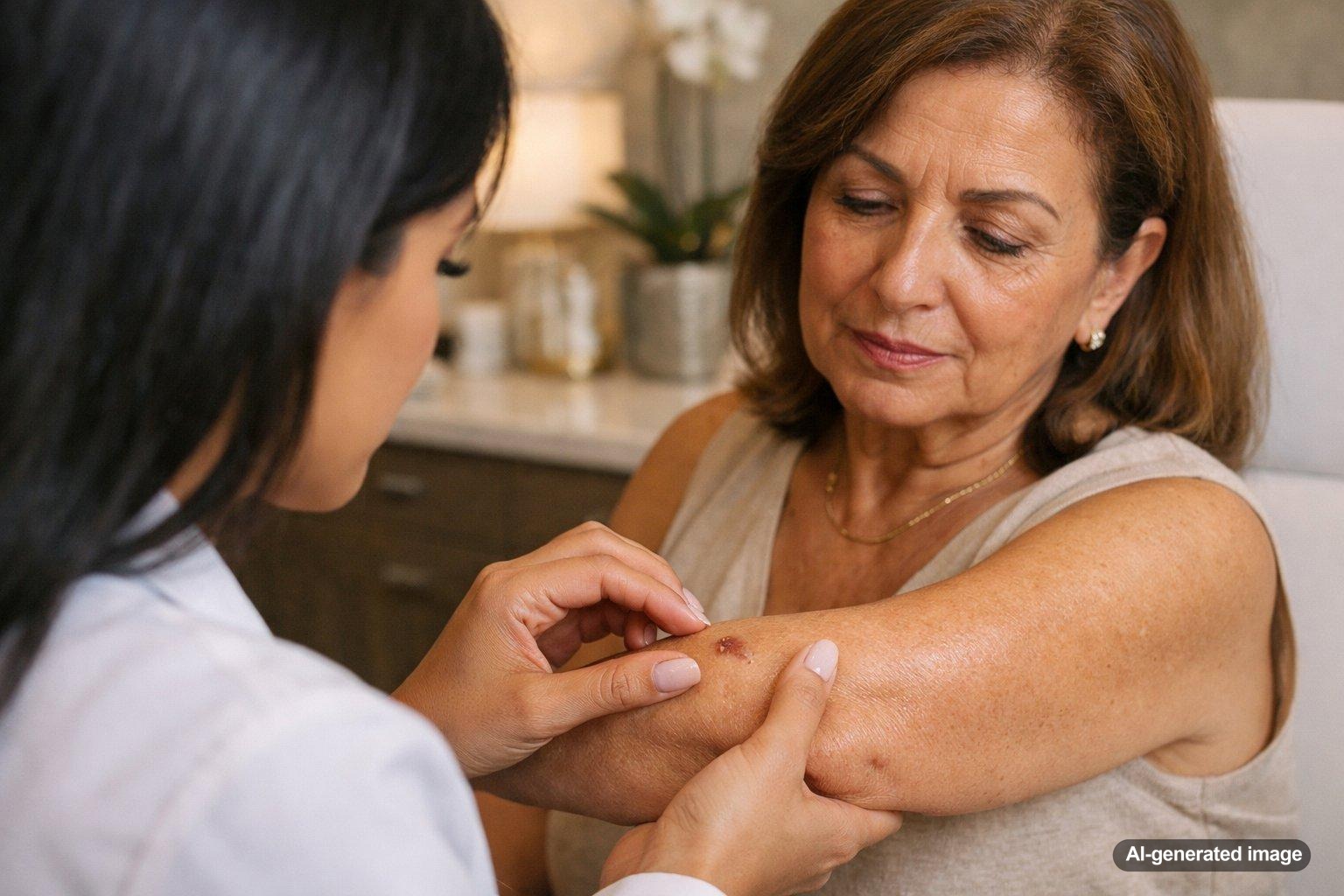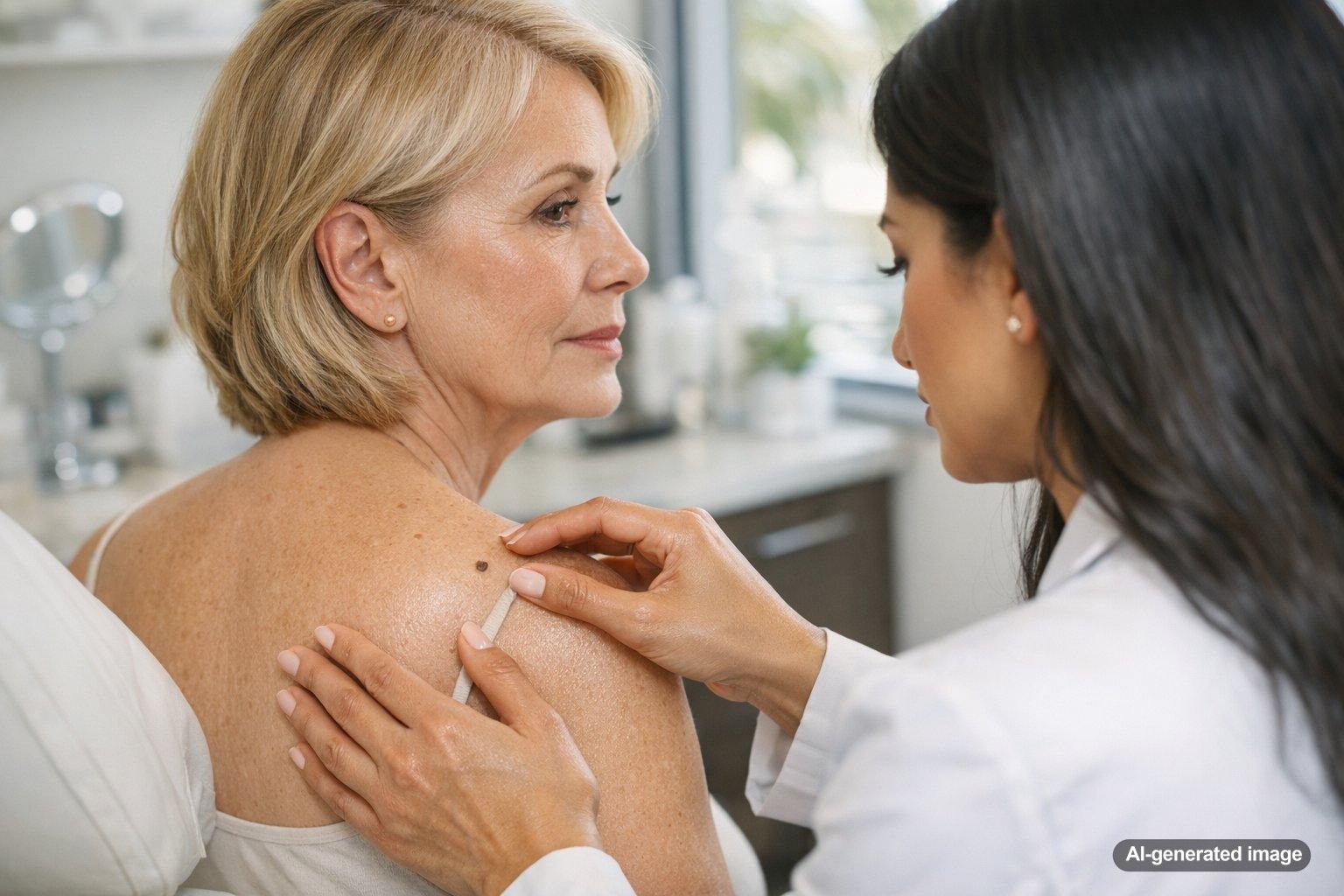


In many cases, a dermatologist can tell when a mole looks concerning just by examining it closely. Experienced dermatologists are trained to spot patterns that raise suspicion, including asymmetry, irregular borders, multiple colors, growth, or bleeding. They may also use a dermatoscope, a handheld magnifying device that helps reveal details not visible to the naked… Read more »
Tag: Sun Protection
How XERF Treats Actinic Keratosis Without Surgery: A Dermatologist’s Guide in Ft. Lauderdale
Melasma vs. Sun Spots: Choosing the Right Laser Treatment
Not every dark spot should be treated the same way. That is especially true when comparing melasma and sun spots. They can look similar at first glance, but they behave differently, respond differently to heat and light, and often need different treatment strategies. The short version is this: sun spots are often more straightforward to… Read more »
Is That New Mole Cancer or Just an Ingrown Hair?
A new spot can be surprisingly hard to read on your own. Sometimes it is an irritated hair follicle or a small ingrown hair after shaving, waxing, or friction. Other times, a new or changing lesion deserves a closer look, especially if it does not behave like a typical pimple or razor bump. The short… Read more »
Is That New Dark Spot Skin Cancer or Just Age Spots?
A new dark spot can be something harmless, such as an age spot, but it can also be a sign that your skin needs a closer look. The tricky part is that several common growths and sun-related changes can overlap in color, shape, or texture, especially on the face, chest, shoulders, arms, and hands. The… Read more »
Tetra CoolPeel CO2 for Fine Lines and Sun Damage Without Weeks of Downtime in South Florida
In South Florida, it does not take long for sun exposure to show up on the skin. Fine lines, rough texture, and uneven tone can slowly become more noticeable, especially if you spend time outdoors year-round or travel here often. Tetra CoolPeel CO2 is one option people ask about when they want a refreshed look… Read more »
Sunscreen and Reef Safety: What the Labels Mean
“Reef safe” sounds reassuring, but it can also be confusing. Many sunscreen shoppers assume it is a regulated promise, when in reality it is often a marketing phrase rather than a standardized label term. That matters, especially if you want to protect your skin without feeling like you have to decode the bottle in the… Read more »
Mineral vs Chemical Sunscreen: How to Choose
Choosing sunscreen can feel more complicated than it should. Mineral formulas, chemical formulas, tinted options, invisible finishes, and long ingredient lists can make a simple daily step feel surprisingly confusing. The good news is that there is not one “perfect” sunscreen for everyone. In most cases, the best choice is the one you will actually… Read more »
Photodynamic Therapy vs. Topical Chemo for Sun-Damaged Skin in Fort Lauderdale
In Fort Lauderdale, year-round sun exposure can leave skin looking rough, blotchy, and chronically weathered long before anything feels urgent. For many people, the real question is not whether the skin is sun-damaged, but which treatment path makes the most sense when rough precancerous spots or widespread sun injury start to show up. Two common… Read more »
Why Does My Sunscreen Burn My Eyes Hours Later?
If your sunscreen feels fine when you apply it but starts burning your eyes later in the day, you’re not imagining it. This is a very common frustration, especially in hot, humid climates like South Florida where sweat, oil, and sunscreen can slowly move across the skin. In many cases, the problem is not that… Read more »