

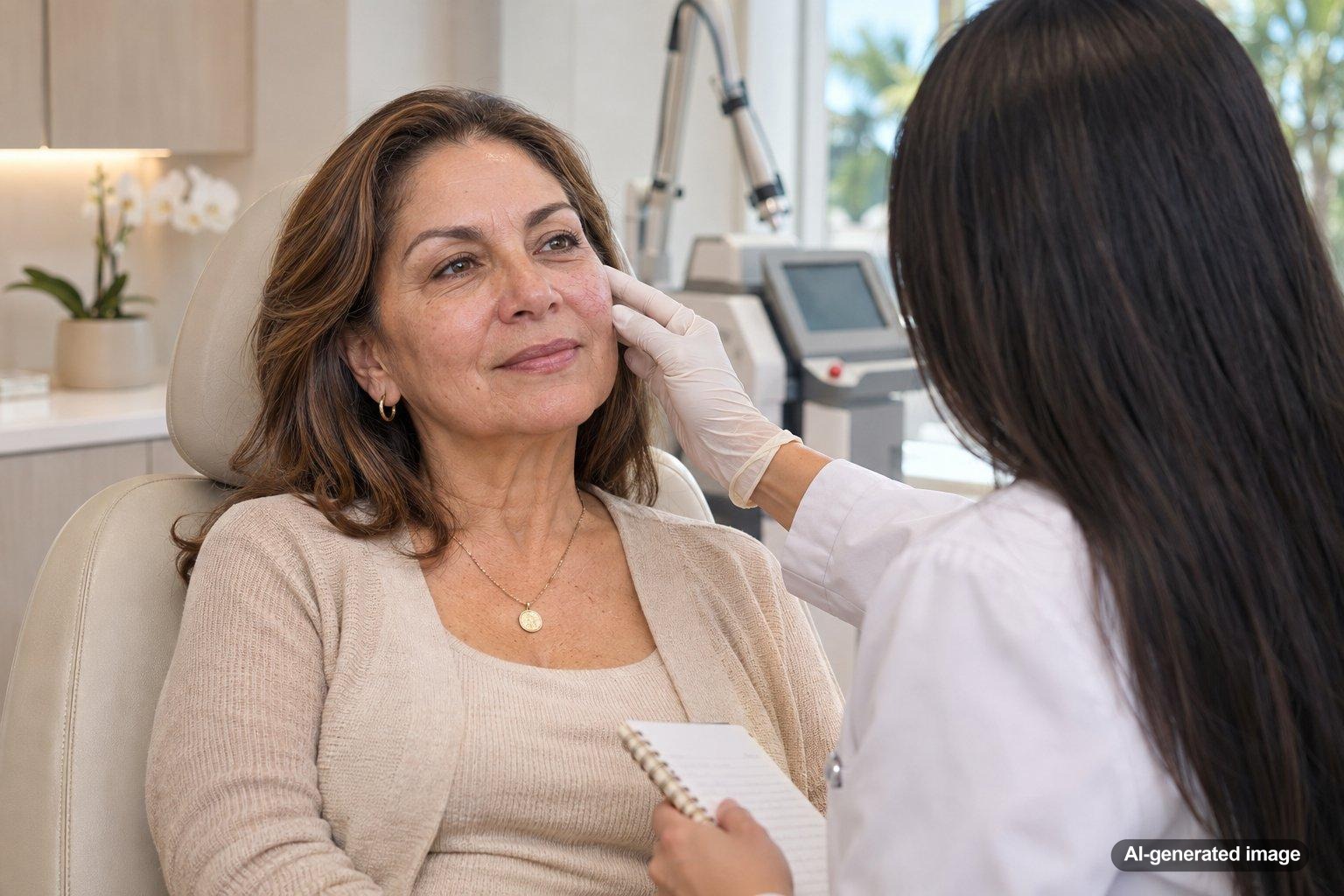
Yes, laser treatment can remove or significantly reduce the appearance of certain spider veins on the face. These delicate red, pink, or occasionally bluish vessels often appear around the nose, across the cheeks, or on the chin. Although they are frequently harmless, their visibility can make the complexion appear persistently flushed or uneven.
Vascular laser treatments target the blood within these small vessels, encouraging the treated vessels to close and gradually become less noticeable. Results depend on the size, depth, and location of the vessels, along with skin characteristics and the underlying cause. Some people achieve meaningful improvement with a limited number of sessions, while others need additional treatments. A dermatologist can examine the vessels and explain which approach is appropriate.
Quick Answer: Can Lasers Get Rid of Facial Spider Veins?
- Yes, certain facial spider veins respond well to vascular lasers. Treatment can reduce their appearance and may clear individual vessels.
- Laser energy targets blood within the vessel. The treated vessel can then gradually become less visible as the body clears it.
- Results vary. Vessel diameter, depth, skin tone, underlying conditions, and treatment settings influence the response.
- More than one session may be necessary. A dermatologist can recommend an individualized treatment plan.
- New spider veins may appear later. Treating existing vessels does not eliminate the factors that contribute to developing additional visible vessels.
What Are Spider Veins on the Face?
Facial spider veins are small, enlarged blood vessels located close enough to the skin’s surface to become visible. The medical term commonly used for these vessels is telangiectasia, or telangiectases in the plural.
They may look like fine red threads, short branching lines, or a delicate network of vessels. Some appear individually, while others create a patch of diffuse redness. Facial telangiectases are particularly common around the sides of the nose and across the central cheeks.
The term broken capillaries is frequently used to describe these markings. However, the vessels are not necessarily physically broken. In many cases, they are persistently dilated superficial blood vessels that have become visible through the skin.
Facial spider veins are not the same as the larger varicose veins that may develop in the legs. Their anatomy, associated conditions, and treatment approaches can differ.
Why Do Spider Veins Develop on the Face?
Several factors can contribute to visible facial blood vessels. Identifying these factors helps a dermatologist distinguish isolated cosmetic concerns from redness associated with a broader skin condition.
- Accumulated sun exposure: Ultraviolet exposure can contribute to skin changes that make superficial blood vessels more noticeable over time.
- Rosacea: This inflammatory skin condition can involve persistent facial redness, flushing, sensitivity, and visible blood vessels.
- Genetic predisposition: Some individuals are more likely to develop prominent superficial vessels.
- Age-related skin changes: Changes in skin thickness and structure can make underlying vessels easier to see.
- Repeated flushing: Heat, temperature changes, and other individual flushing triggers may contribute to persistent facial redness, particularly in people with rosacea.
- Skin irritation or certain medications: Repeated irritation and prolonged or inappropriate use of some topical corticosteroids may contribute to visible vessels.
Not every red line on the face is a spider vein. Persistent redness can have several causes, and a dermatologist can determine whether the visible area represents telangiectasia, rosacea, another vascular finding, or a different skin concern.
How Does Laser Treatment Remove Facial Spider Veins?
Vascular laser treatment uses carefully selected wavelengths of light that are absorbed by hemoglobin, the pigment in red blood cells. This absorption produces controlled heat within the targeted vessel.
The heat can damage the vessel lining, causing the treated vessel to close. Over time, the body gradually clears or remodels the treated vessel, making it less prominent at the skin’s surface.
This process is called selective photothermolysis. The goal is to deliver enough energy to affect the unwanted vessel while limiting injury to nearby skin.
Different vessels require different treatment approaches. A very fine red vessel near the nose may respond differently from a larger or deeper bluish vessel on the cheek. The dermatologist considers the appearance and location of the vessel, skin pigmentation, and other clinical factors when selecting a treatment.
Importantly, vascular laser treatment targets visible vessels. It does not necessarily correct the underlying condition responsible for their development.
Which Laser Treatments Are Used for Facial Spider Veins?
Several types of vascular lasers can be used to address facial telangiectases. The appropriate technology depends on the characteristics of the vessels and the surrounding skin.
KTP Lasers
Potassium titanyl phosphate, or KTP, lasers use a wavelength that can be absorbed efficiently by hemoglobin. They are commonly considered for selected superficial red vessels, including fine telangiectases around the nose and cheeks.
Pulsed Dye Lasers
Pulsed dye lasers are another established approach for visible superficial blood vessels and certain forms of facial redness. They may be considered when redness is associated with rosacea or when multiple small vessels are present.
Nd:YAG Lasers
Long-pulsed Nd:YAG lasers can reach deeper structures than some shorter-wavelength vascular lasers. They may be useful for selected larger or deeper facial vessels, although careful treatment selection is particularly important.
Intense Pulsed Light
Intense pulsed light, or IPL, is not technically a laser. It delivers a range of light wavelengths and may be used to improve certain patterns of diffuse redness and visible superficial vessels.
Laser and light-based approaches are not interchangeable for every patient. A dermatologist can explain which technology is likely to offer a reasonable balance of potential improvement and treatment-related risks.
Can Laser Treatment Remove Spider Veins Around the Nose and Cheeks?
Yes. The sides of the nose and central cheeks are common areas for facial vascular treatment.
Spider veins around the nose: Fine red vessels may become prominent along the nasal folds, sides of the nostrils, or bridge of the nose. Certain superficial vessels can respond to vascular laser treatment, although their small size and location require precision.
Spider veins on the cheeks: Cheek vessels may occur as isolated branching lines or as part of more widespread redness. When rosacea is involved, laser treatment may reduce visible vessels while other strategies address flushing and skin sensitivity.
Vessels near the eyes: The anatomy around the eyes requires particular caution. Treatment suitability depends on the precise location and whether appropriate eye protection and treatment techniques can be used. A dermatologist should evaluate these vessels rather than assuming they can be treated like vessels elsewhere on the face.
How Many Laser Sessions Does It Take to Remove Facial Spider Veins?
There is no universal number of treatments. Some small, isolated vessels may improve substantially after a single session, while more extensive networks or persistent facial redness may require a series of visits.
The number of sessions can depend on:
- The size and depth of the targeted vessels.
- The number of visible vessels and the total treatment area.
- Whether the redness is associated with rosacea.
- Skin tone, recent sun exposure, and individual skin response.
- The type of device used and the clinician’s treatment strategy.
When multiple sessions are recommended, appointments are generally spaced to allow the skin to recover and the treatment response to become apparent. The interval is individualized rather than fixed for every patient.
A realistic treatment plan focuses on reducing the visibility of the vessels without promising complete clearance.
What Does Facial Spider Vein Laser Treatment Feel Like?
Patients often describe vascular laser pulses as brief snapping, stinging, or warming sensations. The intensity varies with the device, treatment settings, skin sensitivity, and area being treated.
Some vascular laser systems incorporate cooling features designed to improve comfort and help protect the skin during treatment. The clinician may also use other appropriate comfort measures.
A session for a small group of isolated vessels may be relatively brief, while more extensive treatment requires additional time. Before proceeding, the dermatologist can explain the anticipated sensations, protective measures, and what to expect during the appointment.
What Happens After Laser Treatment for Facial Spider Veins?
The treated area may appear temporarily red, warm, or mildly swollen. Some vessels look darker or more noticeable immediately after treatment before gradually fading. Depending on the laser and settings, temporary bruising or purplish discoloration may also occur.
Recovery varies. Some people return to ordinary activities quickly, while others experience visible changes that take longer to settle.
Less common but important potential complications include blistering, burns, changes in skin pigmentation, and scarring. These possibilities are among the reasons that device selection, treatment settings, and clinician expertise matter.
Patients with deeper skin tones or recent tanning may require additional consideration because pigment changes can be more noticeable or persistent. A dermatologist experienced in treating a range of skin tones can discuss individualized precautions.
If severe pain, blistering, worsening swelling, or other unexpected symptoms develop after a procedure, contact the treating clinician promptly.
Can Facial Spider Veins Come Back After Laser Treatment?
A successfully treated vessel may become difficult to see or no longer be visible. However, this does not mean new vessels cannot develop in the same area.
Sun exposure, rosacea, inherited tendencies, and other contributing factors may continue to affect superficial facial vessels. As a result, some people develop additional spider veins over time and may consider further treatment.
When rosacea is present, an individualized approach to skin care and flare management can be an important complement to vascular treatment. Laser procedures can address visible vessels, but they do not eliminate the underlying tendency toward rosacea-related redness.
What Can You Do at Home to Help Protect Your Skin?
Home care cannot reliably close established facial telangiectases, but a gentle routine may support skin comfort and help limit avoidable irritation.
- Use daily sun protection: Consider a broad-spectrum sunscreen with SPF 30 or higher, along with shade and protective clothing.
- Keep skin care gentle: Choose a mild cleanser and moisturizer suited to your skin, particularly if flushing or sensitivity is an issue.
- Avoid aggressive scrubbing: Harsh exfoliation and repeated friction can irritate already sensitive skin.
- Notice personal flushing triggers: If certain temperatures, beverages, or activities repeatedly worsen redness, discuss practical adjustments with your dermatologist.
- Avoid unverified home vein-removal techniques: Do not attempt to puncture, cauterize, or chemically destroy visible vessels.
- Follow individualized post-treatment instructions: After laser treatment, the clinician may recommend temporary changes to sun exposure, skin care products, or activities.
Cosmetics can temporarily camouflage facial redness, but creams marketed for broken capillaries should not be assumed to remove established visible vessels. Treatment claims and actual effects may differ.
When Should You See a Dermatologist for Facial Spider Veins?
A dermatologist can assess facial spider veins even when the main concern is cosmetic. Evaluation is especially useful when it is unclear whether the visible markings are superficial blood vessels or part of another skin condition.
Consider scheduling an evaluation if:
- Facial redness is persistent or becoming more noticeable.
- Visible vessels are accompanied by frequent flushing, burning, or sensitivity.
- A vessel or surrounding area bleeds repeatedly without an obvious explanation.
- A new or changing spot resembles a blood vessel but also develops crusting, ulceration, or other unusual features.
- Visible vessels appear suddenly or alongside other unexplained symptoms.
- You are considering laser treatment and want an individualized discussion of suitability, expected improvement, and possible side effects.
Persistent or changing lesions deserve an appropriate skin examination rather than being treated automatically as a cosmetic vascular concern. If facial redness occurs with eye pain, light sensitivity, or vision changes, seek prompt medical assessment.
Frequently Asked Questions
Can laser treatment completely remove facial spider veins?
Some individual vessels may clear to the point that they are no longer visible, but complete clearance cannot be predicted. Other patients experience partial improvement or need multiple sessions. The response depends on the vessels and the treatment selected.
Is laser treatment for facial spider veins painful?
Laser pulses can cause brief stinging or snapping sensations. Many treatments are manageable with appropriate cooling or other comfort measures, but individual sensitivity varies. Your clinician can describe what to expect with the proposed device.
Is there downtime after laser spider vein removal?
Downtime varies by treatment. Temporary redness and swelling are possible, and some vascular laser settings can cause bruising. A dermatologist can explain whether visible recovery changes are likely and how they may affect your schedule.
Can laser treatment help spider veins caused by rosacea?
Yes. Vascular lasers may reduce visible blood vessels associated with rosacea. They do not address every feature of rosacea, so skin care, trigger management, and other dermatologist-directed treatments may also be appropriate.
Can facial spider veins disappear naturally?
Some temporary redness or flushing can resolve without treatment, but established facial telangiectases often remain visible. A dermatologist can help determine whether a persistent mark represents a blood vessel and whether treatment is worthwhile.
Is laser treatment better than sclerotherapy for facial spider veins?
Vascular laser and light treatments are commonly used for small superficial facial vessels. Sclerotherapy is more commonly associated with treating certain veins in the legs. The most appropriate approach depends on the vessel’s anatomy and location, and facial treatment should be selected by a qualified clinician.
Choosing a Personalized Approach to Facial Spider Veins
Laser treatment can be an effective option for reducing or clearing selected facial spider veins, particularly when the vessels are superficial and clearly identified. The goal is to improve their appearance while accounting for the skin’s sensitivity, pigmentation, and underlying vascular conditions.
At Waverly DermSpa, we offer Excel V+ and can help you understand whether it may be appropriate.
For patients in Fort Lauderdale, including seasonal residents and visitors, a consultation with Dr. Maryann Mikhail, MD, can help establish realistic expectations and discuss treatment timing, anticipated recovery, and personalized options.
Ready to get help?
Schedule an appointment or send a message and our team will get back to you.
Prefer to call? 954-666-3736
This article is for educational purposes and is not medical advice. For diagnosis and personalized treatment, please book an appointment with a board-certified dermatologist.
Sources & Further Reading
- American Academy of Dermatology (AAD) – Lasers and lights: How well do they treat rosacea?
- DermNet – Facial red vein and vascular birthmark treatments
- American Academy of Dermatology (AAD) – Skin conditions that lasers can treat
