

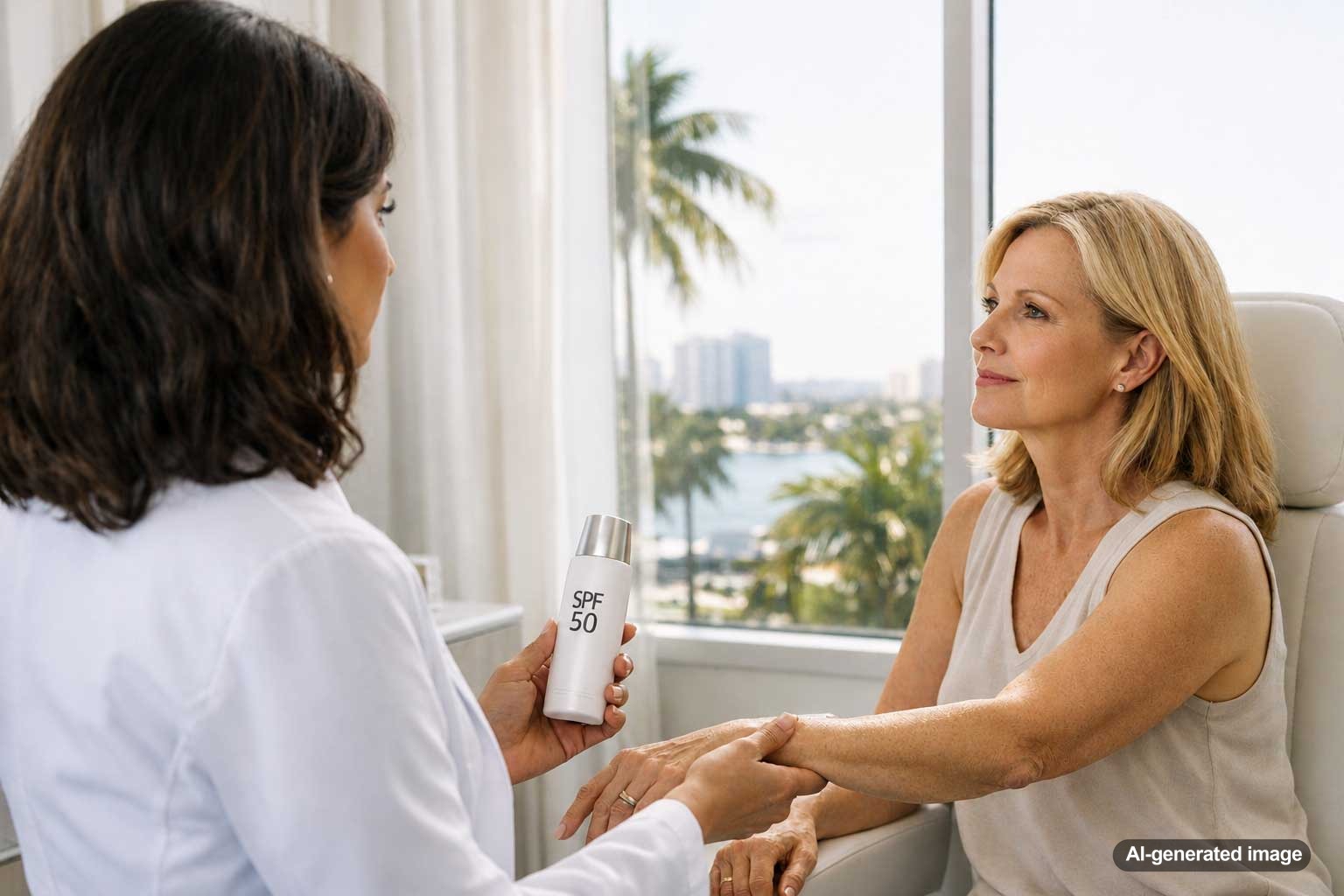
Yes, daily SPF indoors can matter, especially if you spend time near bright windows, drive often, or are working on concerns like discoloration, melasma, redness, or visible signs of sun exposure. Window glass can reduce some UV exposure, but it may not block all UVA, the longer-wavelength ultraviolet light associated with skin aging and pigmentation changes.
That does not mean you need to be anxious about every ray of daylight. A calm, consistent routine is usually the most practical approach: broad-spectrum sunscreen in the morning, thoughtful shade when possible, and extra protection when you will be close to glass for long periods.
Quick answer
- If you sit near windows most days, daily SPF is a wise habit.
- If you drive often in Fort Lauderdale sun, sunscreen can help protect exposed areas like the face, neck, chest, and hands.
- Choose broad-spectrum SPF 30 or higher for everyday use.
- Window tint, shades, hats, and UV-protective sunglasses can add helpful layers of protection.
- If you have a history of skin cancer, melasma, or photosensitivity, ask your dermatologist for personalized guidance.
Why window UV exposure matters
Sunlight includes different types of ultraviolet radiation. UVB is more closely associated with sunburn and is partly blocked by many types of glass. UVA can pass through some window glass more easily, which is why indoor exposure may still matter when you are sitting beside a sunny window or spending time in a car.
UVA exposure is not always obvious because it may not cause an immediate burn. Over time, repeated exposure can be associated with visible skin changes such as uneven tone, dark spots, fine lines, and worsening of certain pigmentation concerns. For many patients, especially in South Florida, daily sun protection is less about perfection and more about reducing cumulative exposure in a realistic way.
When SPF indoors is most useful
Indoor sunscreen is usually most relevant when daylight reaches your skin for extended periods. You may benefit from daily SPF indoors if:
- You work beside a window or in a bright room for several hours.
- You commute or drive frequently during the day.
- You sit near glass doors, large windows, or floor-to-ceiling windows.
- You are treating hyperpigmentation, melasma, redness, or sun-related texture changes.
- You use skincare ingredients or treatments that can make sun protection especially important.
- You have a personal or family history of skin cancer or many moles.
What to look for in an indoor daily sunscreen
For everyday indoor and outdoor use, look for the words broad spectrum on the label. Broad-spectrum sunscreen is designed to help protect against both UVA and UVB. SPF 30 or higher is a practical benchmark for most daily routines.
The best sunscreen is one you are comfortable using consistently. Many people prefer lightweight lotion, gel, or mineral formulas for daily facial use. If you wear makeup, sunscreen can still be applied as the last step of morning skincare before makeup. Reapplication may be helpful if you are near strong light for hours, sweating, touching your face, or going outdoors later in the day.
What else can help besides sunscreen?
Sunscreen is only one part of a thoughtful sun-protection plan. For window UV exposure, small environmental changes can make a meaningful difference without making your routine feel complicated.
- Move your desk or favorite chair a little farther from direct sunlight when possible.
- Use blinds, shades, or curtains during peak bright hours.
- Consider professionally installed UV-protective window film for spaces where you spend long periods.
- Wear UV-protective sunglasses when driving or sitting in bright light.
- Keep sunscreen near your morning skincare products so daily use feels automatic.
Fort Lauderdale lifestyle considerations
In Fort Lauderdale, sun exposure often comes from everyday moments rather than a full beach day: driving, walking between appointments, sitting on a patio, boating, or working near a bright window. Snowbird residents and international visitors may also experience a sudden increase in sun intensity compared with their usual climate.
For this reason, a simple morning SPF habit can be especially helpful here. It supports the skin through routine exposure, not just planned outdoor activities.
When to see a dermatologist
A dermatologist can help you personalize sun protection if you are dealing with persistent discoloration, melasma, frequent sunburns, many moles, a history of skin cancer, or medications that may increase photosensitivity. You should also schedule an evaluation if you notice a mole or spot that is changing, bleeding, not healing, or looks different from your other spots.
Professional guidance can also be useful if sunscreen irritates your skin or breaks you out. There are many formula types, and your clinician can help you choose an option that fits your skin type and goals.
FAQ
Do I need sunscreen if I am indoors all day?
If you are away from windows and not exposed to direct daylight, your indoor UV exposure may be lower. If you sit near windows, drive, or step outside during the day, daily broad-spectrum SPF is a smart, low-effort habit.
Can UVA come through car windows?
Some UVA can reach the skin through vehicle glass, especially through side windows. If you drive often, consider sunscreen on exposed areas and UV-protective sunglasses. Window film may also be helpful where allowed by local regulations.
Is SPF in makeup enough?
Makeup with SPF can add support, but many people do not apply enough makeup to get the labeled level of protection. A dedicated broad-spectrum sunscreen under makeup is usually more reliable.
Should I reapply sunscreen indoors?
It depends on your exposure. If you are beside a sunny window for hours, sweating, touching your face, or going outside later, reapplication can be helpful. If you are mostly away from daylight, a morning application may be enough for routine indoor time.
Can sunscreen help with dark spots?
Consistent sun protection may help reduce the appearance of worsening discoloration from UV exposure. For existing dark spots or melasma, a dermatologist can evaluate your skin and discuss appropriate options.
Ready to get help?
Schedule an appointment or send a message and our team will get back to you.
Prefer to call? 954-666-3736
Disclaimer: This article is for educational purposes and is not medical advice. For diagnosis and personalized treatment, please book an appointment with a board-certified dermatologist.
Sources & further reading
- The Skin Cancer Foundation – UV Window Film & Tint
- American Academy of Dermatology (AAD) – How to select a sunscreen
- U.S. Food and Drug Administration (FDA) – Sunscreen: How to Help Protect Your Skin from the Sun
