

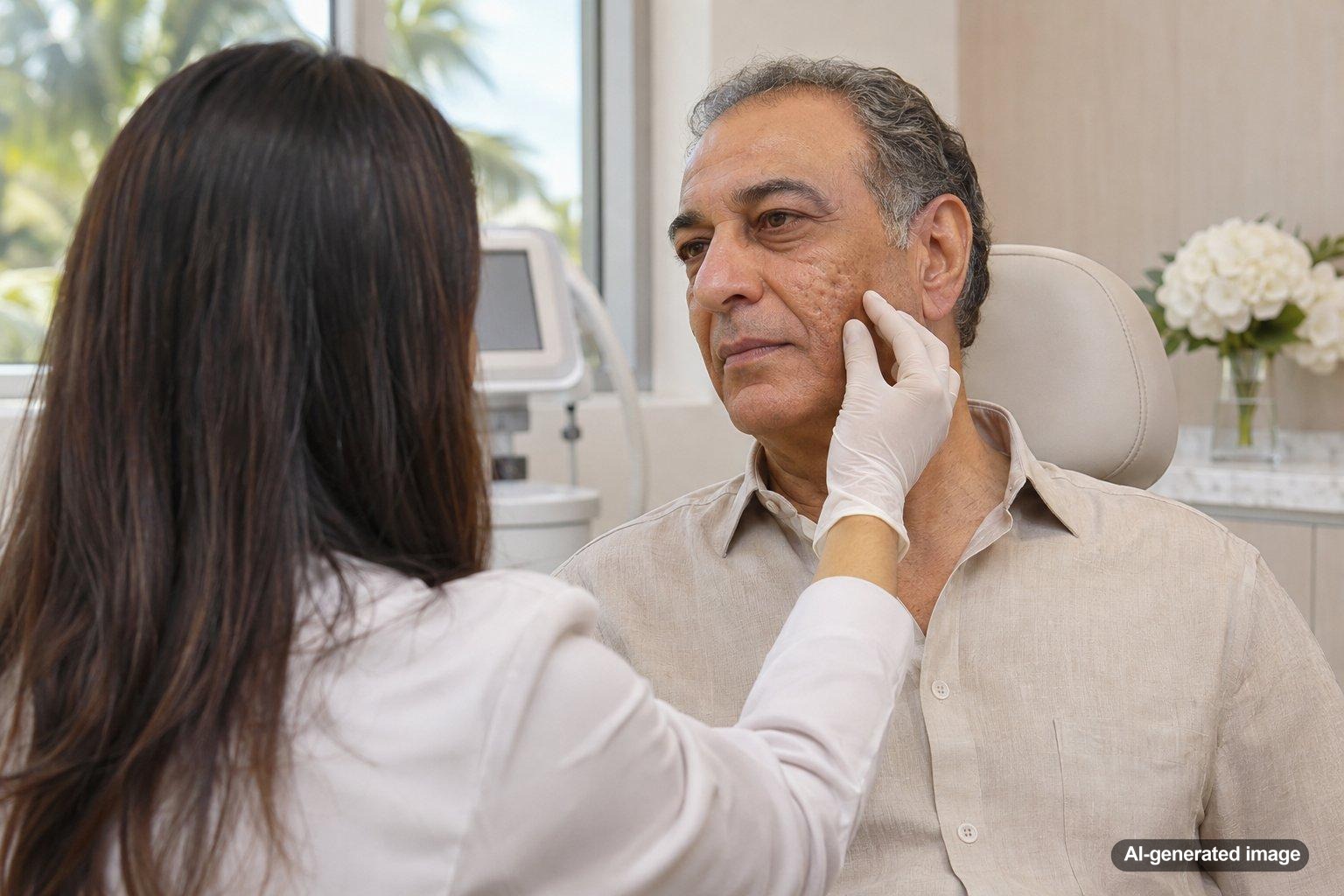
CO2 laser resurfacing can be an effective option for improving certain depressed acne scars, but it is not the right approach for every scar or every skin type. The strongest candidates generally have stable acne, realistic expectations, and scars that may respond to controlled resurfacing. Skin tone, pigmentation history, medical conditions, and the ability to accommodate recovery all influence the decision.
If you are considering CO2 laser treatment for acne scars, the most important first step is understanding what kind of scarring you have. A dermatologist can examine scar depth, distribution, skin characteristics, and previous treatments to determine whether laser resurfacing makes sense alone or as part of a broader plan. The goal is meaningful improvement in texture, not the expectation that every scar will disappear.
Quick Answer: Who Is a Good Candidate for CO2 Laser Resurfacing?
- People with certain depressed acne scars: Rolling scars and some boxcar scars may respond to resurfacing, depending on their depth and structure.
- People whose active acne is controlled: Addressing ongoing breakouts helps reduce the likelihood of developing additional scars during a treatment plan.
- People who can accommodate recovery: CO2 resurfacing can involve redness, swelling, peeling, and a period of careful skin protection.
- People with an acceptable pigmentation and healing risk profile: Skin tone and previous responses to inflammation or procedures need individual evaluation.
- People with realistic expectations: Improvement may be gradual, multiple approaches may be appropriate, and complete scar removal is not a realistic treatment promise.
How Does CO2 Laser Resurfacing Improve Acne Scars?
CO2 laser resurfacing uses laser energy to create controlled injury in the skin. This process removes or affects portions of the outer skin layers and stimulates a remodeling response in the underlying tissue. As healing progresses, collagen remodeling may soften certain scar edges and improve uneven surface texture.
Fractional CO2 resurfacing treats the skin in a pattern of microscopic treatment zones, leaving areas of untreated tissue between them. This differs from traditional fully ablative resurfacing, which treats the entire selected surface more continuously. The approach, treatment settings, and recovery requirements can vary considerably.
Laser resurfacing is particularly relevant to acne scars that create visible depressions or textural irregularities. It does not reliably correct every scar architecture, and it is not interchangeable with procedures that release deeply tethered scars or address isolated narrow defects.
Which Acne Scar Types May Respond Best?
Rolling Scars
Rolling scars create broad, shallow depressions that give the skin an uneven or wave-like appearance. Some may improve with resurfacing, particularly when surface texture is a major component. However, rolling scars can be attached to deeper tissue by fibrous bands. When tethering is significant, subcision may be considered before or alongside resurfacing.
Boxcar Scars
Boxcar scars have more defined edges and may be shallow or deep. Shallow boxcar scars can be reasonable candidates for CO2 resurfacing because blending their edges may make them less noticeable. Deeper boxcar scars may require additional techniques, and laser treatment alone may produce limited improvement.
Ice Pick Scars
Ice pick scars are narrow, deep depressions extending into the skin. Their shape makes them more difficult to improve with surface resurfacing alone. Depending on the individual scar, a dermatologist may discuss focused approaches such as chemical reconstruction techniques or punch procedures.
Raised Acne Scars
Hypertrophic scars and keloids differ from depressed scars because they involve excess scar tissue. They generally require a different assessment and treatment strategy. A history of keloid formation is also important when evaluating the risks of ablative laser treatment.
What Factors Make Someone a Stronger Candidate?
Good candidacy involves more than identifying a particular acne scar type. A dermatologist considers how the skin behaves, whether other problems are active, and what the patient hopes to achieve.
- Stable skin condition: Active inflammatory acne should generally be managed before focusing on existing scars.
- Appropriate scar characteristics: Texture changes that can be improved through resurfacing are more favorable than scars requiring substantial structural release.
- Reliable sun protection: Protecting healing skin from ultraviolet exposure is an important part of reducing complications and unwanted pigmentation changes.
- Reasonable recovery flexibility: Patients should be able to follow aftercare instructions and accommodate temporary changes in appearance.
- Realistic treatment goals: Patients who understand that improvement varies and combination treatments may be necessary are better prepared for the process.
Does Skin Tone Affect CO2 Laser Candidacy?
Yes. Skin tone and pigmentation history are central considerations when deciding whether CO2 resurfacing is appropriate. Ablative laser treatment produces inflammation, and inflammation can sometimes trigger post-inflammatory hyperpigmentation, particularly in skin with greater melanin activity. Some patients may also experience areas of reduced pigmentation.
Darker skin tones are not automatically excluded from every form of laser resurfacing. However, the balance of potential improvement and pigment-related risk requires careful evaluation. Device selection, treatment intensity, previous pigmentation problems, and the clinician’s experience with the patient’s skin type all matter.
People with a history of melasma, persistent dark marks after acne, or pigmentation changes following previous procedures should discuss those experiences before treatment. A dermatologist may recommend a more conservative treatment strategy or an alternative procedure.
When Might CO2 Laser Resurfacing Not Be the Right Choice?
Several circumstances may lead a dermatologist to postpone treatment, modify the approach, or recommend something else.
- Ongoing inflammatory acne: New breakouts can create additional scars and complicate the treatment plan.
- Current skin irritation or impaired healing: Inflamed, injured, or poorly functioning skin may need attention before an ablative procedure.
- History of difficult scarring: Keloid formation or unusual wound healing may affect procedural risk.
- Significant pigmentation concerns: A tendency toward prolonged post-inflammatory hyperpigmentation can influence the treatment recommendation.
- Recent tanning or substantial sun exposure: These factors may increase pigmentation concerns and affect treatment scheduling.
- Relevant medical conditions or medications: Conditions that affect healing and certain medications can change the safety assessment.
- Inability to follow recovery instructions: Appropriate aftercare is important because ablative resurfacing temporarily disrupts the skin barrier.
These considerations do not automatically rule out every laser procedure. They are reasons for an individualized medical discussion. Your dermatologist should review relevant health history, medications, previous cosmetic treatments, and healing experiences before recommending treatment.
What Should You Do Before Considering Acne Scar Laser Treatment?
Preparation begins with protecting the skin and gathering useful information for your consultation. You do not need to establish a complicated skincare routine or attempt aggressive exfoliation before an assessment.
- Keep skincare gentle: Use products your skin tolerates and avoid unnecessary irritation.
- Practice consistent sun protection: Minimize tanning and use appropriate broad-spectrum sunscreen as part of your regular routine.
- Document previous treatments: Bring information about past lasers, microneedling, peels, acne medications, and any unusual healing reactions.
- Identify your main concern: Consider whether depressed scars, enlarged-looking pores, discoloration, or overall texture bother you most.
- Discuss travel and scheduling: Healing skin needs protection, so planned vacations, outdoor activities, and work commitments may affect timing.
Do not discontinue prescribed medications or introduce strong treatment products solely to prepare for a laser appointment without guidance from your treating clinician.
What Is Recovery Like After CO2 Laser Resurfacing?
Recovery depends on whether treatment is fractional or fully ablative, the intensity of treatment, the area treated, and individual healing characteristics. More aggressive resurfacing generally requires more involved recovery and aftercare.
Temporary redness, swelling, warmth, crusting, peeling, and sensitivity can occur. Some procedures leave the skin visibly affected for several days or longer, while residual pinkness or redness may persist beyond the initial healing period. Recovery time should be discussed for the exact treatment proposed rather than estimated from the name of the laser alone.
Because the skin barrier is temporarily disrupted, aftercare commonly emphasizes gentle cleansing, clinician-recommended moisture or wound care, and careful sun avoidance. Your clinician may also provide specific instructions about makeup, exercise, swimming, and when to resume active skincare ingredients.
Possible complications include prolonged redness, pigmentation changes, infection, acne-like eruptions, delayed healing, and additional scarring. Any unexpected worsening, significant pain, or concerning healing changes should be evaluated promptly by the treating clinician.
Professional Options: CO2 Laser and Other Acne Scar Treatments
Acne scars often have more than one structural pattern. That is why a thoughtful treatment plan may involve different techniques for different areas of the face.
- Fractional or ablative laser resurfacing: May help soften certain depressed scars and improve overall textural irregularities.
- Microneedling: May be considered for selected acne scars when a different balance of treatment intensity and recovery is preferred.
- Radiofrequency microneedling: Delivers energy at controlled depths and may be an option for some patients, depending on scar characteristics and risk factors.
- Subcision: May help release fibrous attachments beneath tethered rolling scars.
- Focused scar procedures: Techniques such as punch excision or specialized chemical treatments may be considered for certain deep, narrow scars.
- Combination treatment: A personalized sequence may address scar tethering, depth, and surface texture more effectively than choosing one procedure for every scar.
None of these approaches is universally preferable. The choice depends on scar anatomy, skin type, medical history, expected recovery, and individual priorities.
At Waverly DermSpa, we offer Tetra CoolPeel CO2 and can help you understand whether it may be appropriate. The availability of a CO2-based treatment does not mean that every acne scar is suitable for that particular resurfacing approach.
When Should You See a Dermatologist About Acne Scars?
A dermatology consultation is worthwhile when acne scars cause persistent textural changes, when you are unsure whether a mark is a scar or discoloration, or when previous treatments have produced disappointing results. It is also helpful before investing in an aggressive procedure with meaningful recovery requirements.
Seek an evaluation before cosmetic resurfacing if you have ongoing painful breakouts, persistent irritation, unexplained skin changes, a history of problematic wound healing, or previous complications from cosmetic treatments.
An in-person assessment allows a dermatologist to distinguish scar types, evaluate pigmentation risk, and discuss what degree of improvement may be realistic. It also provides an opportunity to compare laser resurfacing with less aggressive or more targeted alternatives.
Frequently Asked Questions
Can CO2 laser resurfacing completely remove acne scars?
Complete removal is not a realistic expectation for most established acne scars. CO2 resurfacing may improve the appearance of selected scars by softening edges and reducing visible textural differences. The amount of improvement varies with scar depth, skin characteristics, and treatment approach.
Is fractional CO2 laser better than traditional CO2 resurfacing?
Neither approach is automatically better for everyone. Fractional resurfacing treats selected microscopic zones, while traditional fully ablative approaches treat the selected surface more continuously. The potential benefits, risks, treatment intensity, and recovery requirements differ. A dermatologist can explain which approach, if either, is appropriate.
How many CO2 laser sessions are needed for acne scars?
There is no single session count that applies to everyone. Some treatment plans use one more intensive procedure, while others involve staged sessions or different treatments for individual scar types. Your clinician can discuss a reasonable plan after examining the scars.
Can people with darker skin get CO2 laser resurfacing?
Some people with darker skin tones may be candidates, but pigmentation changes are an important concern. A dermatologist should assess skin tone, previous post-inflammatory hyperpigmentation, and the expected risk of the proposed procedure before recommending treatment.
Does CO2 laser resurfacing help acne marks as well as scars?
Depressed scars and flat discoloration are different concerns. CO2 resurfacing primarily targets skin texture and may not be the preferred treatment for brown or red marks left after acne. In some patients, resurfacing-related inflammation can worsen discoloration. An accurate assessment helps avoid treating the wrong problem.
Can CO2 laser treatment be combined with subcision?
Yes, selected patients may benefit from a treatment plan involving both techniques. Subcision addresses fibrous attachments beneath certain depressed scars, while resurfacing targets surface irregularities. Whether to combine or sequence treatments requires an individualized evaluation.
Ready to get help?
Schedule an appointment or send a message and our team will get back to you.
Prefer to call? 954-666-3736
This article is for educational purposes and is not medical advice. For diagnosis and personalized treatment, please book an appointment with a board-certified dermatologist.
