

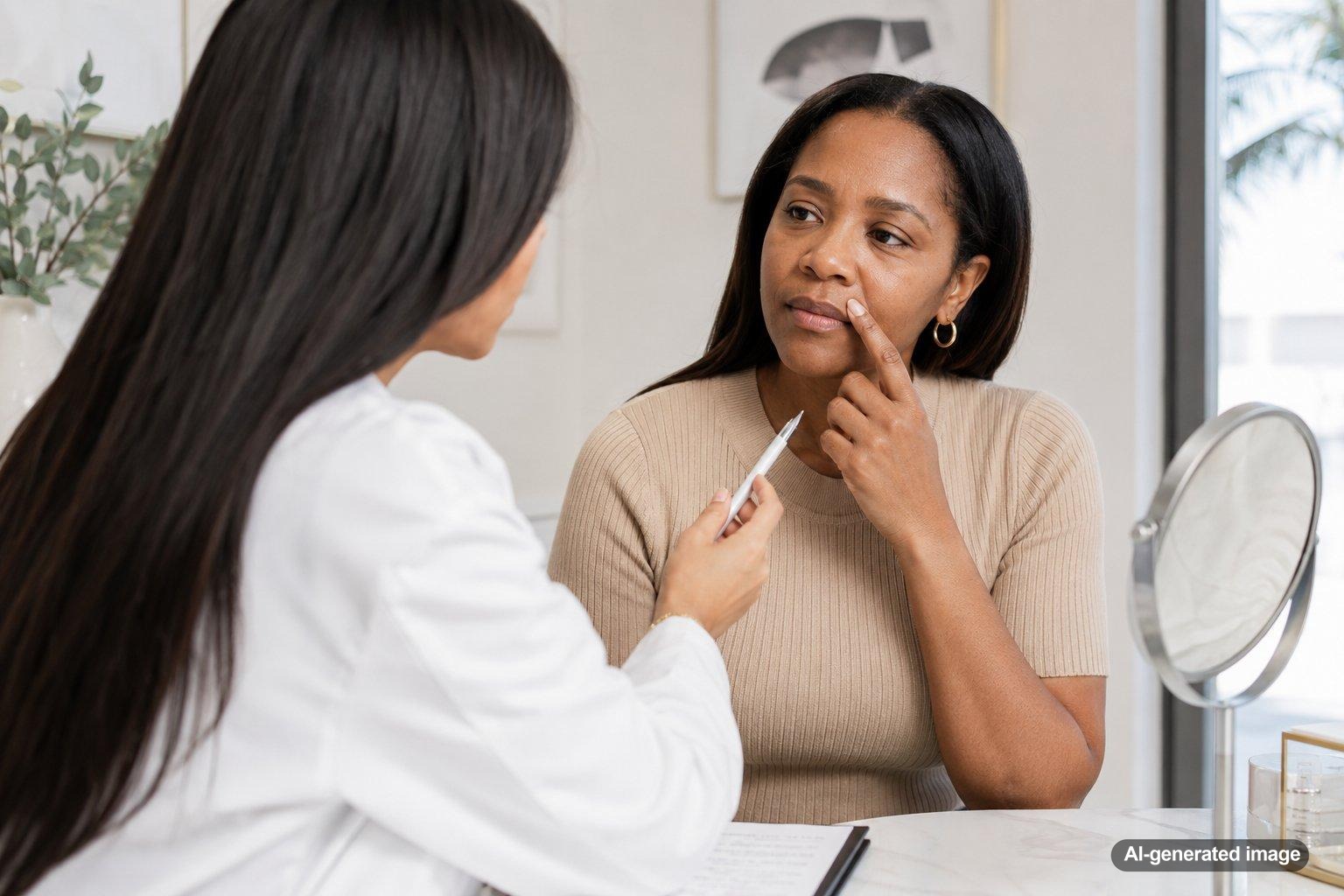
A darker upper lip is often related to extra pigment, repeated irritation, sun exposure, hormonal influences, or the shadow created by facial hair beneath the skin. The color may develop gradually, become more noticeable during sunny months, or linger after waxing, threading, shaving, or a skin reaction.
Although this concern is common, several different factors can look similar. A dermatologist can distinguish true hyperpigmentation from melasma, irritation, hair shadow, and other causes, then help you choose an approach that respects your skin tone and sensitivity.
Quick answer
- Sun exposure can deepen existing pigment, even when you aren’t intentionally tanning.
- Melasma may create a brown or gray-brown patch above the lip that can resemble a faint mustache.
- Waxing, threading, shaving, or irritating products can leave temporary inflammation followed by lingering discoloration.
- Facial hair shadow can make the area appear darker even when the surface skin has little additional pigment.
What upper lip discoloration is
Upper lip discoloration is a visible difference in color between the skin above the lip and the surrounding face. In many cases, it reflects hyperpigmentation, which means the skin has produced or retained more melanin in that area. Melanin is the pigment that gives skin, hair, and eyes their color.
The upper lip is especially vulnerable because it receives regular sun exposure and is frequently exposed to friction, hair removal, saliva, cosmetics, and active skincare ingredients. More than one factor may be involved at the same time. For example, hair removal can irritate the area while sunlight makes the resulting pigment more noticeable.
Common causes and triggers
- Sun exposure: Ultraviolet and visible light may stimulate pigment production and make an existing patch look darker. South Florida’s year-round sunshine can make consistent protection particularly important.
- Melasma: This pigment condition commonly appears as symmetrical brown or gray-brown patches. It may affect the upper lip, cheeks, forehead, or bridge of the nose and can be influenced by light exposure and hormonal changes.
- Post-inflammatory hyperpigmentation: Skin sometimes produces extra pigment after irritation or inflammation. Waxing, threading, shaving, acne, dermatitis, and aggressive exfoliation are possible triggers.
- Hair removal practices: Hot wax, repeated passes with a razor, or forceful threading may disturb sensitive skin. Waxing can be especially irritating when combined with certain exfoliating skincare products.
- Hair shadow: Dark hair beneath or just above the skin may create a blue, gray, or brown cast. Brightening products generally won’t remove a shadow caused primarily by hair.
- Product irritation: Fragrance, harsh scrubs, strong acids, and active ingredients used too frequently may weaken the skin barrier and contribute to discoloration.
- Lip licking or friction: Repeated moisture, rubbing, or wiping can irritate the delicate area around the mouth and leave uneven color behind.
What you can do at home
Begin with a gentle, consistent routine rather than trying several strong brightening products at once. If the area feels dry, itchy, tender, or flaky, focus first on calming the skin. Use a mild cleanser, a fragrance-free moisturizer, and avoid scrubbing the upper lip.
Daily sun protection is one of the most practical steps for preventing pigment from becoming more noticeable. Choose a broad-spectrum sunscreen that you can apply comfortably around the mouth, and reapply during extended outdoor exposure. A tinted mineral sunscreen may be worth considering because visible light can be relevant for some forms of facial pigmentation.
If hair removal seems to trigger the discoloration, pause the irritating method and allow the skin to settle. Avoid waxing skin that is already sensitive or recently treated with strong exfoliating ingredients. When shaving, use a clean razor, lubrication, light pressure, and as few passes as possible.
Over-the-counter ingredients such as azelaic acid, niacinamide, vitamin C, and gentle exfoliating acids may help support a more even-looking tone for some people. Introduce one product at a time, start slowly, and stop if burning, swelling, or persistent irritation develops. More isn’t necessarily better when treating an area as delicate as the upper lip.
Professional options
A professional evaluation can clarify whether the darkness is primarily pigment, melasma, irritation, visible hair, or a combination. This distinction matters because each concern may call for a different plan.
Depending on the evaluation, common options may include clinician-guided topical treatments, carefully selected chemical peels, microneedling, laser or light-based procedures, or a hair-reduction approach when shadow is a major contributor. Procedures that apply heat or light require thoughtful selection because inappropriate settings may worsen discoloration, particularly in deeper skin tones. Your clinician can help you weigh the likely benefits, limitations, and risk of irritation.
At Waverly DermSpa, we offer Chemical Peels and can help you understand whether they may be appropriate.
When to see a dermatologist
Consider scheduling an evaluation if the discoloration persists despite a gentle routine and consistent sun protection, continues to spread, repeatedly returns, or affects how comfortable you feel about your skin. It is also worth getting checked if the area becomes painful, intensely itchy, swollen, crusted, or persistently scaly.
Seek prompt medical attention for a new or changing spot with irregular borders, multiple colors, bleeding, ulceration, or rapid evolution. These features do not identify a diagnosis on their own, but they should be examined rather than treated as routine pigmentation.
Frequently asked questions
Why does my upper lip look like it has a mustache even after hair removal?
The appearance may come from pigment in the skin, hair visible beneath the surface, or both. If the darkness remains immediately after hair removal, a dermatologist can help determine whether melasma, post-inflammatory pigment, or residual hair shadow is contributing.
Can waxing make the skin above my lip darker?
Waxing may irritate the skin, especially when the wax is too hot, the area is treated repeatedly, or the skin barrier is already sensitive. That inflammation can be followed by lingering pigment in some skin tones.
Will exfoliating remove upper lip discoloration?
Gentle exfoliation may improve some superficial unevenness, but frequent or aggressive exfoliation can create more irritation and make pigment look worse. The appropriate approach depends on what is causing the color difference.
Does sunscreen help if the discoloration is already present?
Sunscreen won’t erase existing pigment by itself, but consistent protection may help prevent the area from becoming darker and can support other treatment approaches.
Why does the area get darker during the summer?
Stronger and more frequent light exposure can stimulate pigment production. Heat and outdoor activity may also make it harder to maintain sunscreen coverage around the mouth, especially with sweating, eating, and drinking.
Can professional treatment completely remove the darkness?
Results vary with the cause, depth of pigment, skin tone, sun exposure, and tendency for the condition to return. A dermatologist can explain which improvements may be realistic and create a plan designed to minimize irritation.
Ready to get help?
Schedule an appointment or send a message and our team will get back to you.
Prefer to call? 954-666-3736
This article is for educational purposes and is not medical advice. For diagnosis and personalized treatment, please book an appointment with a board-certified dermatologist.
