

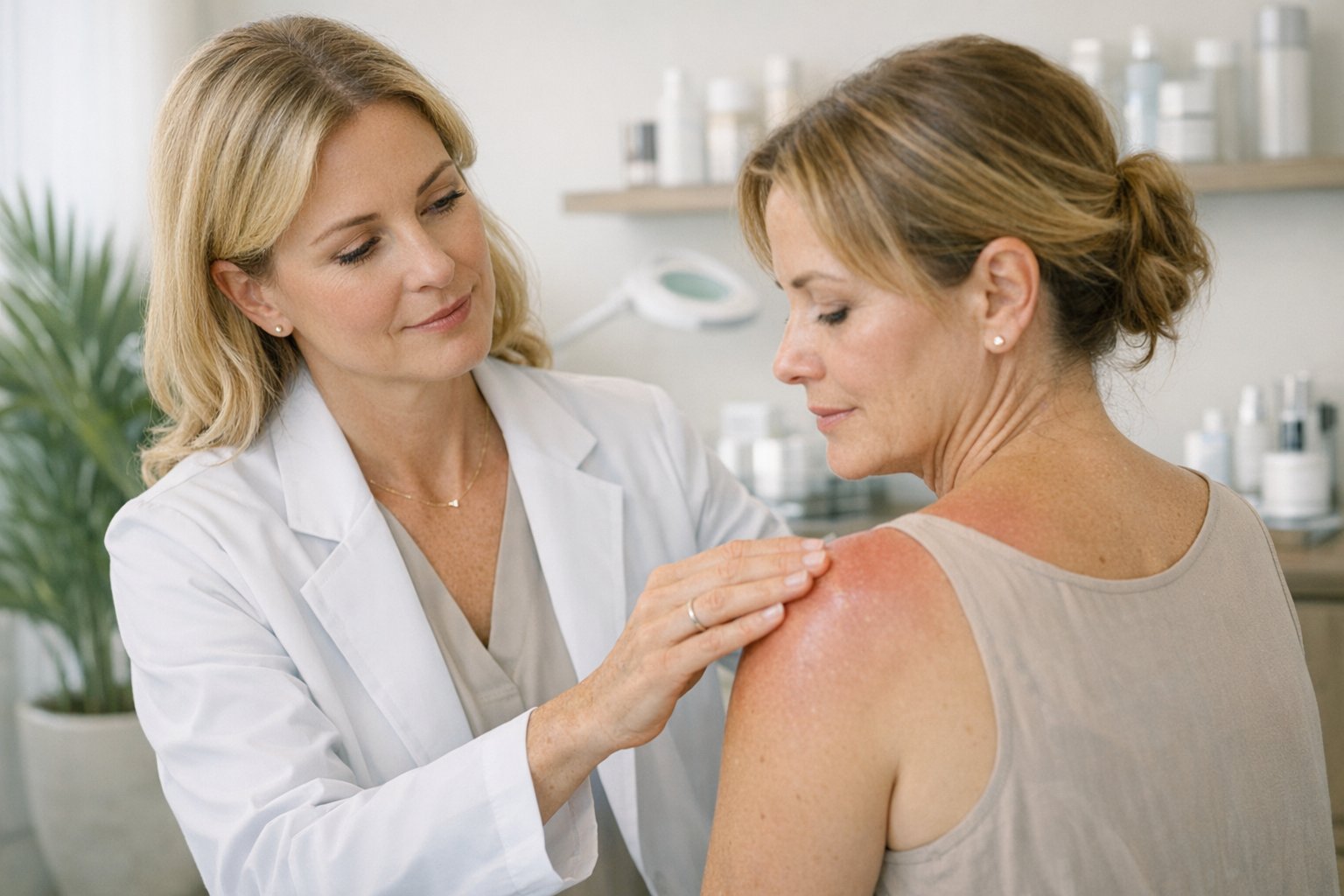
Sunburn happens fast, and it can feel surprisingly intense—especially in South Florida, where the sun reflects off water, sand, and pool decks. Most sunburns improve with gentle care, but some deserve medical attention so you can stay safe and protect your skin’s barrier as it heals.
Quick answer
- Seek medical care if you have widespread blistering, severe pain, or burns covering a large area.
- Get evaluated urgently if you develop fever, chills, confusion, fainting, severe headache, or signs of dehydration.
- Eye involvement, facial swelling, or burns in infants and people with weakened immune systems should be checked promptly.
- If redness spreads, you notice pus, or symptoms are worsening instead of slowly improving, it’s worth getting checked.
What a sunburn is (in plain English)
A sunburn is a type of skin injury caused by too much ultraviolet (UV) exposure. UV rays inflame the skin and can damage the outer barrier, which is why sunburn may feel hot, tight, itchy, or painful. Some people also notice swelling, tenderness, or peeling a few days later as the skin sheds damaged cells.
Common causes and triggers
- Long outdoor time without reapplying broad-spectrum sunscreen
- Midday sun exposure, especially near water, sand, or reflective surfaces
- Cloudy days (UV can still reach skin)
- Recent travel from a less sunny climate (skin may be less acclimated)
- Using skincare products that increase sensitivity (for some people), then being in strong sun
- Forgotten areas like the scalp line, ears, tops of feet, lips, and back of the neck
What you can do at home
If your sunburn feels mild to moderate and you’re otherwise feeling well, supportive care may help you stay comfortable while your skin recovers. Keep it gentle—the goal is to calm inflammation and protect the barrier.
- Cool the skin: Use cool (not icy) compresses or a cool shower for short periods. Pat dry instead of rubbing.
- Moisturize: Apply a simple, fragrance-free moisturizer to reduce tightness. Many people prefer lightweight lotions or gels; avoid heavily fragranced products.
- Protect blisters: If blisters appear, avoid popping them. Intact blisters help protect healing skin.
- Hydrate: Sunburn can be associated with fluid loss, especially after long days outside. Sip water regularly.
- Avoid further sun exposure: Stay out of direct sun until the burn settles, and cover up with tightly woven fabric, a wide-brim hat, and UV-protective sunglasses.
- Skip irritants: Avoid exfoliants, retinoids, strong acids, scrubs, and hot tubs until your skin feels normal again.
If you’re unsure which products are appropriate for your skin type or you’re dealing with significant discomfort, a dermatologist can evaluate and guide you toward options that fit your situation.
Professional options
When a sunburn is more severe, treatment is less about “fixing it instantly” and more about preventing complications and supporting healthy healing. A dermatologist can assess burn depth, the size of the affected area, and your overall symptoms.
- Assessment and guidance: Confirm whether the burn appears superficial or more significant, and review your skin history and risk factors.
- Barrier-support and wound care: Recommendations may focus on protecting fragile skin and blisters while reducing discomfort.
- Symptom relief: Depending on severity, your clinician may discuss topical or oral options that may help with inflammation or itching, tailored to your needs and medical history.
- Evaluation for complications: If there are signs of dehydration, heat-related illness, or skin infection, you may be advised to seek urgent evaluation.
In-office guidance can be especially helpful for people with very sensitive skin, a history of eczema/rosacea flares, or anyone who tends to react strongly to sun exposure.
When to see a dermatologist
If any of the following apply, it’s a good idea to seek medical evaluation. If symptoms feel severe or systemic, urgent care or the emergency department may be the safest choice.
- Widespread blistering, blistering on the face, or significant swelling
- Severe pain that feels hard to control, or burn covering a large area of the body
- Fever, chills, nausea/vomiting, severe headache, confusion, or fainting
- Signs of dehydration (very dry mouth, dizziness, low urine output, or unusual fatigue)
- Eye pain, light sensitivity, vision changes, or sunburn on the eyelids
- Burns in infants, young children, older adults, or anyone with a weakened immune system
- Redness that spreads beyond the sunburned area, increasing warmth, pus, or red streaking
- Symptoms that are worsening after the first day or two instead of gradually improving
FAQ
Is peeling a sign I did permanent damage?
Peeling is a common part of the healing process after UV injury. It doesn’t tell you, by itself, what long-term impact may be. What matters most is preventing repeated burns and building consistent sun-protection habits going forward.
What does “sun poisoning” mean?
“Sun poisoning” is a non-medical term people use when a sunburn comes with whole-body symptoms like fever, chills, nausea, dizziness, or severe headache. If you feel systemically unwell, it’s worth being evaluated promptly.
Should I pop sunburn blisters?
In general, it’s best not to pop blisters because the blister roof helps protect healing skin. If a blister breaks on its own, keep the area clean and protected and consider getting medical guidance, especially if redness spreads or drainage appears.
Can I put aloe or moisturizer on a sunburn?
Many people find simple, fragrance-free moisturizers soothing. If you use aloe, choose a formula without added fragrance or alcohol to reduce stinging. If anything burns on application, rinse it off and switch to a gentler option.
How can I prevent this next time?
Think in layers: broad-spectrum sunscreen applied generously and reapplied, protective clothing and hats, shade during peak hours, and extra care near water or sand. If you tend to burn easily, a dermatologist can help you build a realistic, skin-friendly sun-protection plan.
Ready to get help?
Schedule an appointment or send a message and our team will get back to you.
Prefer to call? 954-666-3736
Disclaimer
This article is for educational purposes and is not medical advice. For diagnosis and personalized treatment, please book an appointment with a board-certified dermatologist.
