

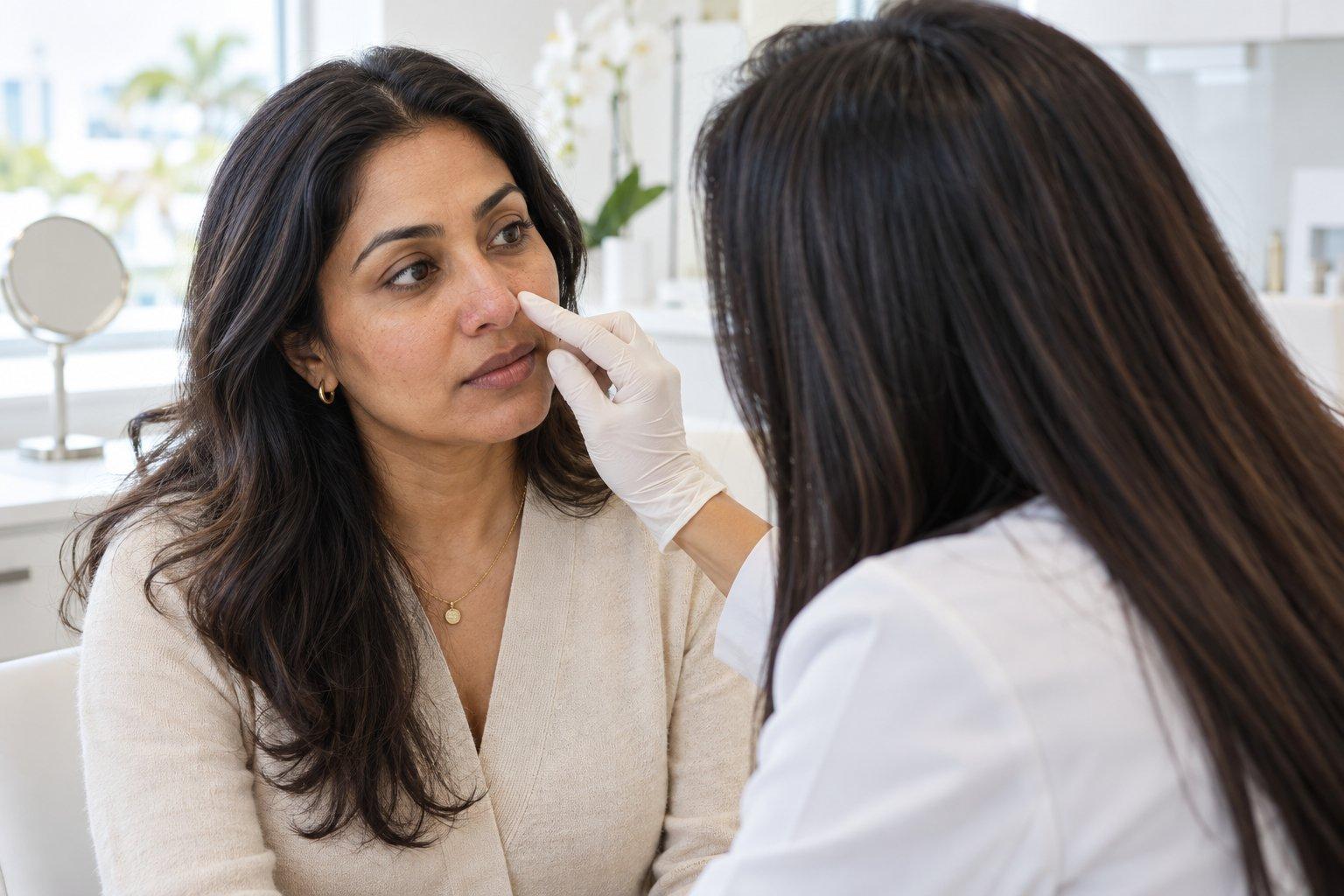
Noticing a few tiny red or purple lines on just one side of your nose can be puzzling, especially when the other side looks completely clear. These delicate lines may be small blood vessels that have become visible near the skin’s surface, often called telangiectasias. Although they can appear on both sides of the face, there is no requirement for them to develop symmetrically.
Differences in sun exposure, skin sensitivity, local irritation, and the natural arrangement of superficial blood vessels can all contribute to an uneven appearance. In many situations, these vessels are simply a cosmetic concern. However, a new or changing area deserves closer attention, particularly when it is accompanied by other skin changes. Understanding why the vessels appear can help you decide whether gentle skincare, observation, or a dermatology appointment is the most appropriate next step.
Quick Answer: Why Are Tiny Veins Visible on Only One Side of My Nose?
- Uneven sun exposure: One side of the nose may receive more ultraviolet exposure over time, contributing to changes in superficial blood vessels.
- Natural vessel patterns: Small facial blood vessels are not arranged identically on both sides of the face.
- Localized irritation: Repeated rubbing, friction, or skin inflammation may make vessels more noticeable in one area.
- Rosacea-related changes: Facial redness and visible vessels can be associated with rosacea, although visible vessels alone do not establish that diagnosis.
- Gradual skin changes: Aging and cumulative sun damage can make certain superficial blood vessels easier to see.
What Are the Tiny Red or Purple Lines on the Nose?
Tiny visible vessels around the nose are often described as broken capillaries, spider veins, or facial thread veins. The medical term commonly used for these fine, widened superficial blood vessels is telangiectasia.
Despite the familiar phrase ‘broken capillaries,’ these vessels are not necessarily broken or leaking. They are often small, dilated blood vessels that remain visible through the skin. They may look like delicate red threads, short branching lines, or small networks of pinkish-purple vessels.
The sides of the nose and the creases where the nose meets the cheeks are common places to notice these changes. The vessels may be easier to see in bright natural light, after exercise, or when the surrounding skin becomes flushed.
It is also possible for what appears to be a visible vein to represent another skin change. A dermatologist can examine the area and determine whether the appearance is consistent with superficial blood vessels or warrants additional evaluation.
Why Would Visible Veins Develop on Only One Side?
The two sides of the face experience slightly different environmental conditions and daily habits. Even small differences can become noticeable over time, particularly around the nose, where superficial vessels may be easy to see.
1. One Side May Receive More Sun Exposure
Ultraviolet exposure can contribute to changes in the skin and its superficial blood vessels. Someone who regularly sits beside a sunny window, spends time outdoors with one side of the face more exposed, or has a history of uneven sun exposure may notice more visible vessels on one side.
In sunny environments such as Fort Lauderdale, cumulative exposure can be relevant even when the skin does not frequently burn. Window glass may also allow some ultraviolet A radiation to pass through, depending on the type of glass.
2. Your Blood Vessels Are Not Perfectly Symmetrical
The arrangement of tiny blood vessels naturally varies across the face. A superficial vessel may sit closer to the surface on one side, have a slightly different shape, or become more prominent in one particular location.
This natural variation can help explain why a single visible line appears on one side of the nose while the corresponding area on the other side looks clear.
3. Repeated Rubbing or Friction May Contribute
Everyday habits can affect the skin around the nose. Frequent nose wiping, rubbing during seasonal allergies, pressure from eyeglasses, or repeated friction during cleansing may aggravate a localized area.
Friction does not automatically create dilated vessels, but persistent irritation can increase redness and make existing superficial vessels more noticeable. If one side of the nose experiences more contact than the other, the difference may become more apparent.
4. Rosacea Can Affect the Face Unevenly
Rosacea is an inflammatory skin condition that can involve facial flushing, persistent redness, sensitivity, and visible superficial blood vessels. It commonly affects central facial areas, including the nose and cheeks.
Although rosacea often involves both sides of the face, the visible changes do not always appear equally. One side may develop more noticeable vessels or redness than the other.
Having a few visible vessels does not necessarily mean rosacea is present. A dermatologist considers the overall skin appearance, symptoms, and history before determining whether an underlying inflammatory condition may be involved.
5. Aging and Skin Changes Can Make Vessels Easier to See
Over time, changes in skin structure and cumulative environmental exposure can make superficial blood vessels more apparent. Some individuals naturally have thinner or more translucent skin, which can also influence how easily the vessels are seen.
These changes may be uneven, particularly when one area has experienced more sunlight or irritation than another.
Does Having Visible Veins on One Side Mean Something Is Wrong?
Not necessarily. A few stable, fine blood vessels on one side of the nose can be a relatively ordinary skin finding, especially when there is no pain, bleeding, persistent scaling, or noticeable change in the surrounding skin.
However, the appearance alone cannot establish the cause. Certain inflammatory conditions and other skin abnormalities can produce redness or visible blood vessels, so it is useful to pay attention to the surrounding skin rather than focusing only on the red lines.
Consider whether the vessels have been present for years, appeared gradually, or developed recently. Also notice whether the area has become raised, irritated, crusted, tender, or prone to bleeding. These details can help a dermatologist assess the finding.
Can Tiny Visible Nose Veins Go Away on Their Own?
Some temporary facial redness fades after a trigger passes. For example, flushing associated with heat, exercise, or irritation may become less noticeable once the skin settles.
Established telangiectasias are different from temporary flushing. Once a superficial vessel remains persistently dilated and visible, it may not disappear simply because the surrounding redness improves.
Gentle skincare and sun protection can help minimize irritation and support overall skin health, but topical products generally cannot be relied upon to remove an established visible blood vessel.
If the vessels are cosmetically bothersome, a dermatologist can discuss whether an office-based treatment is appropriate after confirming what is causing the appearance.
What Can You Do at Home?
Home care should focus on limiting unnecessary irritation and protecting the surrounding skin rather than attempting to physically remove the vessels.
- Use daily sun protection. A broad-spectrum sunscreen with SPF 30 or higher can help protect the skin from further ultraviolet damage. Reapply as appropriate during outdoor exposure.
- Cleanse gently. Choose a mild cleanser and avoid aggressive rubbing around the nose.
- Support the skin barrier. A simple, fragrance-free moisturizer may help reduce dryness and irritation, particularly if the area feels sensitive.
- Notice flushing triggers. Heat, hot beverages, alcohol, and certain skincare products can contribute to facial flushing in susceptible individuals. Personal triggers vary.
- Avoid picking or squeezing. Visible blood vessels are not clogged pores. Pressing or manipulating them may irritate the skin without improving their appearance.
- Review irritating products. If strong exfoliants or other active skincare products repeatedly cause burning or persistent redness, consider discussing your routine with a skincare professional.
Trying to puncture, scrape, burn, or otherwise remove a visible vessel at home can injure the skin and should be avoided. Likewise, a home device should not be assumed to be appropriate for treating facial blood vessels without professional guidance.
What Professional Treatments May Help Visible Nose Veins?
When superficial vessels remain visible and are a cosmetic concern, professional treatment may be considered. The first step is an evaluation to identify the type of vessel and determine whether an underlying skin condition needs attention.
Vascular Laser Treatments
Vascular lasers are designed to deliver energy that is absorbed by components of blood within targeted vessels. Depending on the technology and the individual vessel, this may reduce the appearance of certain superficial facial blood vessels.
Treatment selection depends on factors such as vessel size, depth, color, skin tone, medical history, and the surrounding skin condition. Temporary redness, swelling, bruising, or pigment changes may occur, and additional sessions may be considered depending on the response.
Not every visible facial vessel is suitable for the same laser approach. A dermatologist can explain the potential benefits, limitations, and risks for your particular skin.
Managing Associated Facial Redness
If the visible vessels occur alongside persistent redness or symptoms suggestive of rosacea, professional care may also focus on managing the underlying inflammatory condition.
Depending on the evaluation, options may include adjustments to skincare, identifying triggers, or discussing prescription therapies when appropriate. These approaches address different aspects of facial redness and may not remove established vessels.
Why an Individualized Assessment Matters
The nose is a prominent facial area with delicate contours and varying vessel patterns. A treatment approach that is reasonable for a small superficial red vessel may not be appropriate for a deeper blue vessel or a different type of skin finding.
At Waverly DermSpa, we offer Excel V+ and can help you understand whether it may be appropriate.
When Should You See a Dermatologist?
A stable, painless visible vessel may not require urgent attention. Nevertheless, a dermatology appointment is reasonable when the appearance is new, persistent, or difficult to identify, or when you would like to discuss cosmetic treatment.
Professional evaluation is particularly important if you notice:
- A new area of visible vessels that is enlarging or changing noticeably.
- Repeated bleeding, crusting, or a sore that does not heal.
- A new bump, thickened area, persistent scaly patch, or change in the skin surrounding the vessels.
- Ongoing redness accompanied by burning, stinging, or inflammatory bumps.
- Unexplained pain, swelling, or a significant change in the color of the affected area.
Persistent or changing skin lesions should not be dismissed as harmless broken capillaries without examination. In some cases, visible blood vessels can appear around skin growths or other conditions that require medical assessment.
If redness or swelling develops suddenly and is accompanied by severe pain, fever, or rapidly worsening symptoms, seek prompt medical care rather than waiting for a routine cosmetic consultation.
Frequently Asked Questions
Why do I have a tiny red vein on the left side of my nose but not the right?
A single visible vessel may reflect natural differences in superficial blood vessel patterns, uneven sun exposure, or localized irritation. There is no particular significance to the left side versus the right side by itself. A dermatologist can examine a new or changing vessel to clarify its cause.
Are tiny red veins around the nose the same as broken capillaries?
The terms are often used interchangeably in everyday conversation. Many of these fine lines are actually dilated superficial blood vessels, called telangiectasias, rather than blood vessels that have physically broken.
Can allergies or frequent nose blowing cause visible vessels?
Frequent rubbing and nose blowing can irritate the skin and make redness or existing superficial vessels more noticeable. These habits do not necessarily explain every persistent visible vessel, and other factors may be involved.
Can skincare products remove visible veins on the nose?
Moisturizers, sunscreen, and gentle skincare can support the surrounding skin and help limit irritation. However, skincare products generally do not eliminate established dilated vessels. Professional vascular treatments may be discussed when the vessels are confirmed and treatment is appropriate.
Does a visible vein on one side of my nose mean I have rosacea?
No. Rosacea is one possible explanation for facial blood vessels, but isolated visible vessels can occur without rosacea. Associated flushing, persistent redness, sensitivity, and other symptoms may help a dermatologist distinguish among possible causes.
Will laser treatment remove every visible vessel on my nose?
Responses to vascular laser treatment vary. Some vessels may become less noticeable, while others may require additional treatment or respond incompletely. New visible vessels can also develop over time. Your dermatologist can discuss realistic expectations after evaluating your skin.
Ready to get help?
Schedule an appointment or send a message and our team will get back to you.
Prefer to call? 954-666-3736
This article is for educational purposes and is not medical advice. For diagnosis and personalized treatment, please book an appointment with a board-certified dermatologist.
