

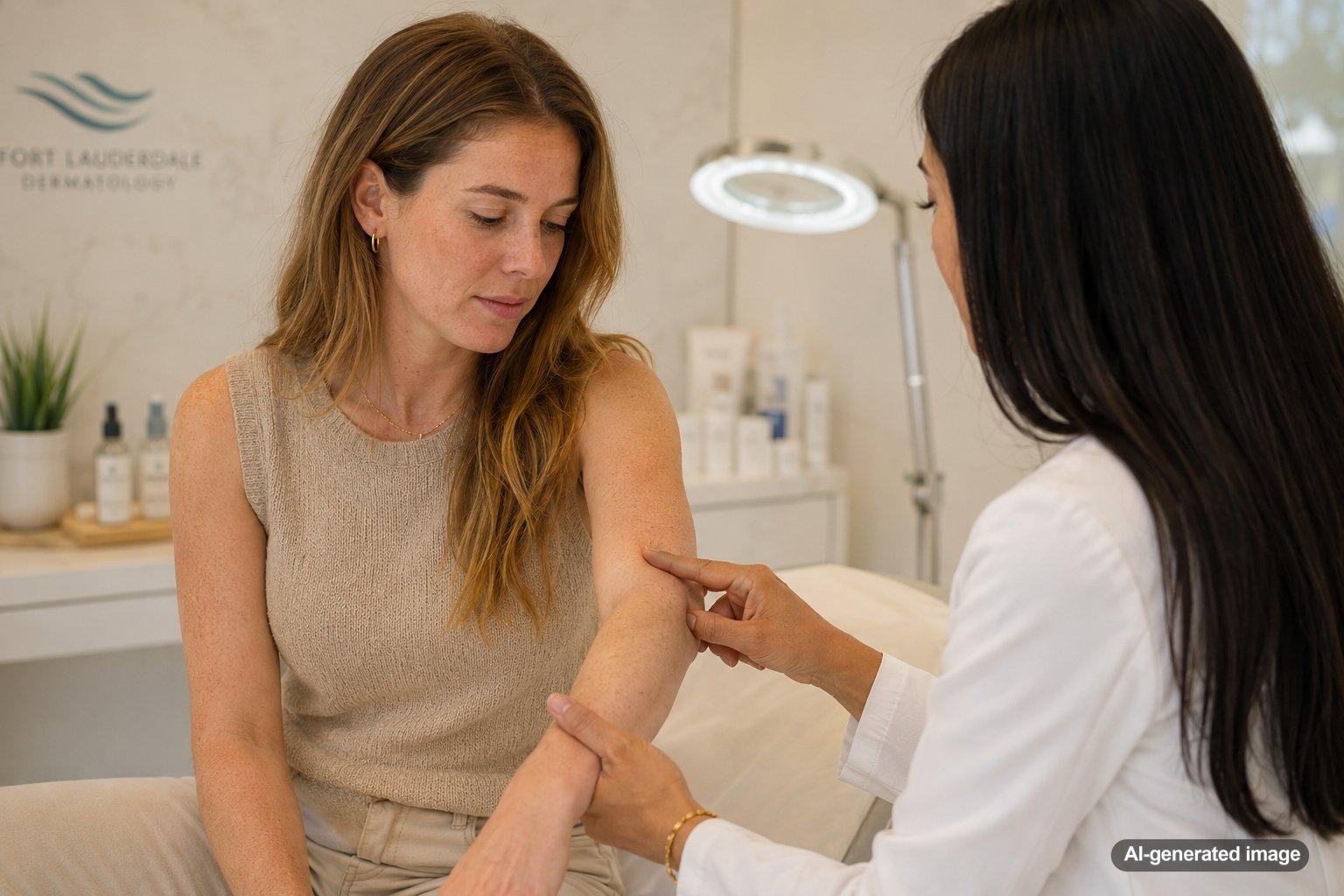
If tiny, intensely itchy bumps seem to appear on your arms after spending time in sunlight, one possible explanation is polymorphous light eruption, commonly shortened to PMLE. This is a photosensitivity reaction in which sun exposure can trigger an inflammatory rash, often on skin that has recently gone from being covered to receiving more ultraviolet light.
PMLE can look different from one person to another, so bumps alone cannot confirm the cause. Other sun-related reactions, medications, contact exposures, and skin conditions can produce similar symptoms. A dermatologist can evaluate the pattern, timing, appearance, and possible triggers if the rash is recurring or difficult to explain.
Quick answer
- PMLE is a type of skin reaction associated with sensitivity to ultraviolet light.
- It commonly causes itchy bumps, raised patches, or occasionally small blisters on sun-exposed areas such as the arms, upper chest, and neck.
- The reaction often develops after increased sun exposure, particularly when skin has not been exposed regularly.
- Limiting additional ultraviolet exposure and using consistent sun protection may help while the skin settles.
- Because several other conditions can resemble PMLE, recurring or significant symptoms are worth discussing with a dermatologist.
What is polymorphous light eruption?
Polymorphous light eruption is a photosensitive skin condition in which ultraviolet radiation triggers a delayed inflammatory response. The word polymorphous reflects the fact that the eruption can take several forms. Some people develop clusters of small bumps, while others notice raised patches, tiny blisters, or areas that resemble eczema.
Within a particular person, however, the reaction often tends to look fairly similar each time it occurs. The rash is commonly itchy and may sometimes feel irritated or mildly burning.
PMLE often affects areas that receive intermittent rather than constant sun exposure. The arms, upper chest, front of the neck, and lower legs are common locations. The timing can provide another clue: symptoms may begin within several hours or by the next day or two after ultraviolet exposure.
Why can sunlight suddenly cause itchy bumps?
The exact biological mechanism behind PMLE is not completely understood. It appears to involve an abnormal immune response to changes produced in the skin by ultraviolet radiation. Both UVA and UVB exposure may be relevant, and UVA can penetrate ordinary window glass.
PMLE is often associated with periods when sun exposure increases after the skin has been relatively covered. For someone who spends much of the year indoors or in a cooler climate, a sunny vacation can create a particularly noticeable change in ultraviolet exposure. That pattern can also be relevant for seasonal visitors arriving in South Florida.
Some people find that episodes become less frequent as a season progresses and the skin receives repeated exposure. This phenomenon is sometimes described as skin hardening or acclimatization. It should not be interpreted as a reason to deliberately increase unprotected sun exposure, since ultraviolet radiation also contributes to sunburn, premature skin aging, and skin cancer risk.
Common triggers and patterns
Situations that can be associated with a PMLE flare include:
- A sudden increase in outdoor sun exposure after spending weeks or months mostly covered or indoors.
- Long periods outside during vacations, beach days, boating, sports, gardening, or sightseeing.
- Exposure during spring or early summer when sun habits change.
- Travel from a less sunny climate to a location with stronger or more consistent ultraviolet exposure.
- Ultraviolet exposure from artificial sources such as tanning beds.
Not every itchy eruption after sunlight is PMLE. Certain medications and topical products can increase photosensitivity. Solar urticaria can cause rapidly developing hives after light exposure. Contact with plants, fragrances, or other substances followed by sunlight may also create distinctive reactions. Inflammatory and autoimmune conditions can sometimes produce photosensitive rashes as well.
What can you do at home?
If you develop a mild rash after sun exposure, conservative skin care and reducing additional irritation may help while you arrange evaluation if needed.
- Limit further ultraviolet exposure while the rash is active. Additional exposure may make some photosensitive eruptions more persistent or uncomfortable.
- Use broad-spectrum sun protection. Protective clothing, shade, and appropriate sunscreen can reduce ultraviolet exposure. Remember that sunscreen works best as one part of a broader sun-protection routine.
- Keep irritated skin comfortable. Cool compresses and a gentle, fragrance-free moisturizer may be soothing for some people.
- Avoid scratching when possible. Scratching can further irritate the skin and may damage the surface.
- Keep track of the timing. Note when the rash appeared, how long you were outdoors, what areas were exposed, and whether you had recently started a medication or skincare product.
Taking clear photographs when the rash is most visible can also be useful if the eruption fades before your dermatology appointment.
How a dermatologist may evaluate a sun-related rash
A dermatologist may begin by examining the eruption and reviewing the relationship between your symptoms and ultraviolet exposure. Details such as how quickly the rash develops, which areas are affected, whether covered areas are spared, how long symptoms last, and whether the same pattern has occurred before can help narrow the possibilities.
Your medication list, supplements, topical products, travel history, and recent changes in outdoor activity can also be relevant. In situations where the diagnosis is uncertain, a clinician may consider additional testing to distinguish PMLE from other photosensitive disorders. Depending on the circumstances, this can include laboratory testing, a skin biopsy, or specialized phototesting.
Professional management depends on the severity, frequency, and diagnosis. Some people need little more than preventive sun protection and symptom management. For more troublesome episodes, a dermatologist may discuss prescription anti-inflammatory treatment or, in selected recurring cases, medically supervised phototherapy. These options require individualized evaluation rather than self-treatment.
When should you see a dermatologist?
It is worth getting checked if the rash is recurring, severe, unusual for you, or interfering with normal activities. An evaluation is also important when the relationship to sunlight is unclear because several conditions can resemble one another.
Seek prompt medical attention for a rash that is widespread, significantly painful, rapidly worsening, associated with fever or feeling ill, or accompanied by other concerning symptoms. You should also mention any new medication, supplement, or topical product that appeared around the same time as the reaction.
A dermatologist can evaluate whether PMLE is a reasonable possibility and whether another photosensitive, inflammatory, allergic, medication-related, or autoimmune process should be considered.
FAQ
Can PMLE look like tiny pimples?
It can sometimes appear as clusters of very small raised bumps, particularly on exposed areas such as the arms. Appearance alone is not enough to distinguish PMLE from folliculitis, heat-related eruptions, contact reactions, or other rashes.
How soon after sunlight can PMLE appear?
The timing varies. A reaction may become noticeable within several hours after ultraviolet exposure or develop later, including the following day. The timing and distribution are useful details to tell your dermatologist.
Why does it happen on my arms but not my face?
PMLE often affects areas that receive intermittent sun exposure. The face and hands may receive sunlight more consistently throughout the year, while areas such as the upper arms may suddenly receive much more exposure during warmer weather or vacations. Individual patterns vary.
Can PMLE happen through a window?
Potentially. UVA radiation can pass through ordinary window glass, so some photosensitive individuals may notice reactions despite being indoors or inside a vehicle. How important this is varies from person to person.
Does PMLE mean I am allergic to the sun?
PMLE is sometimes informally described as a sun allergy, but it is more accurately considered a photosensitivity disorder involving an abnormal skin response to ultraviolet exposure. Other conditions can also cause sunlight sensitivity, so the label does not establish a diagnosis.
Should recurring sun rashes be evaluated even if they disappear?
Yes, particularly if the episodes are frequent, uncomfortable, changing, or unexplained. Many rashes improve before an appointment, which is why photographs and a record of sun exposure can be helpful during evaluation.
Ready to get help?
Schedule an appointment or send a message and our team will get back to you.
Prefer to call? 954-666-3736
This article is for educational purposes and is not medical advice. For diagnosis and personalized treatment, please book an appointment with a board-certified dermatologist.
