

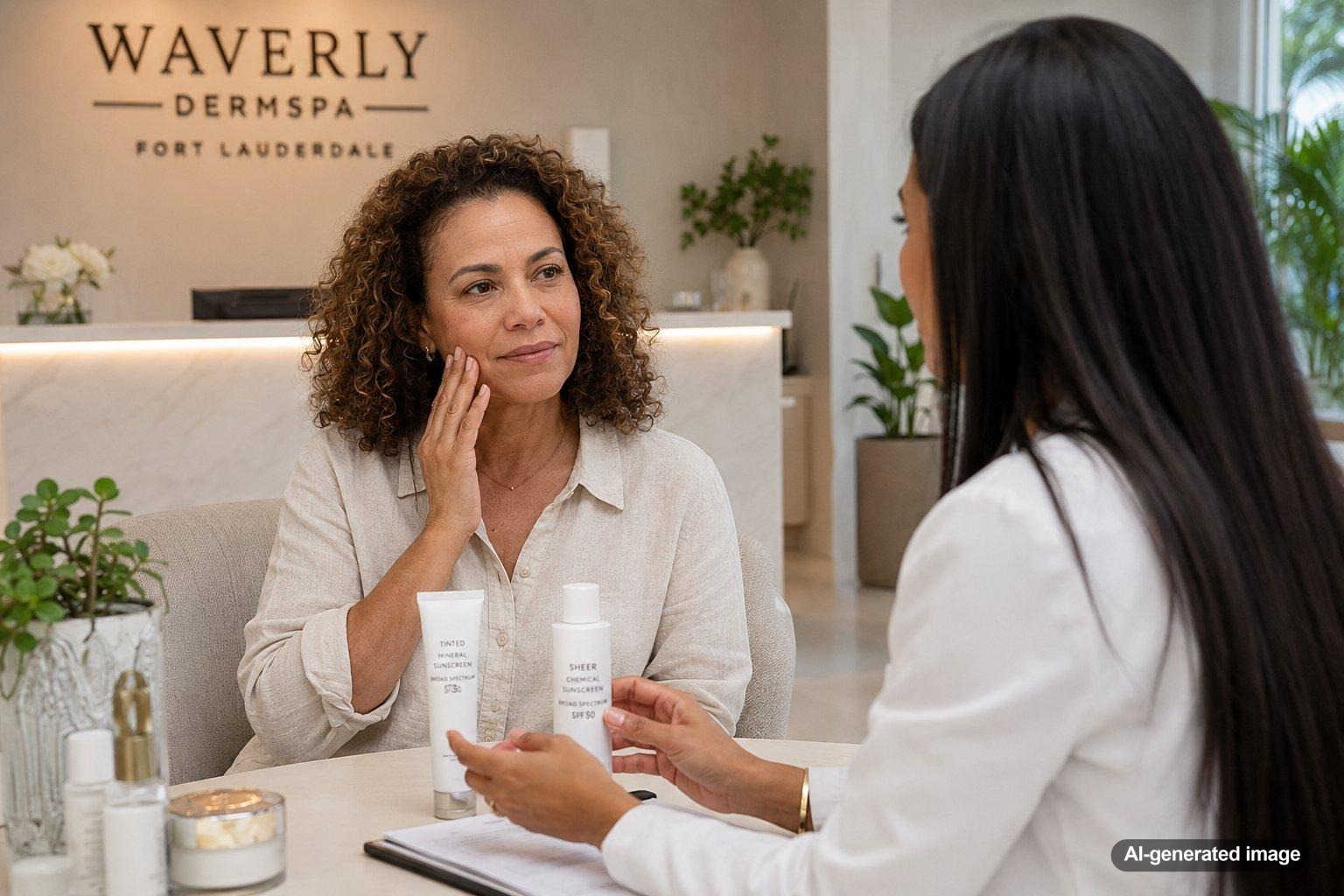
For rosacea-prone skin, sunscreen is not just a beach-day step. UV exposure and heat can be common triggers for facial redness, flushing, and sensitivity, so daily protection can be part of a steady, skin-supportive routine.
The main question is often whether mineral or chemical sunscreen is the better fit. In general, many people with rosacea prefer mineral formulas because they sit on the skin and are often less likely to sting. Still, the best choice is the one your skin tolerates well and that you can use consistently.
Quick answer
- Mineral sunscreen uses active ingredients such as zinc oxide and titanium dioxide and is often a good starting point for sensitive, rosacea-prone skin.
- Chemical sunscreen absorbs UV rays through organic filters and may feel lighter, but some formulas can sting or feel warm on reactive skin.
- Tinted mineral sunscreen may be helpful because tint can soften the look of redness while offering daily sun protection.
- Texture matters: fragrance-free, non-irritating, broad-spectrum SPF products are usually better tolerated than heavily fragranced or harsh formulas.
- Personalization matters: if sunscreen regularly burns, worsens redness, or causes bumps, a dermatologist or skin care professional can help you narrow the options.
Mineral vs. chemical sunscreen: how they differ
| Comparison point | Mineral sunscreen | Chemical sunscreen |
|---|---|---|
| Common active ingredients | Zinc oxide, titanium dioxide | Organic UV filters that vary by formula |
| Typical feel | Can feel creamy or protective; some formulas may leave a cast | Often lighter or more transparent on the skin |
| Rosacea-prone skin considerations | Often preferred for sensitive skin because it may be less likely to sting | May work well for some people, but certain formulas can feel irritating |
| Best use case | A calm, conservative starting point for reactive skin | A possible option when mineral formulas feel too heavy or visible |
Why sunscreen matters when you have rosacea-prone skin
Rosacea is often associated with a more reactive skin pattern. Many people notice that sun exposure, heat, alcohol, spicy foods, stress, or certain skin care products can make redness or flushing more noticeable. While triggers vary from person to person, sun protection is one of the more practical daily steps because it supports the skin barrier and helps reduce avoidable irritation from UV exposure.
For someone in Fort Lauderdale or visiting South Florida, sunscreen can be especially important because sun exposure is part of daily life much of the year. A steady routine can be more helpful than saving sunscreen for vacations, outdoor workouts, or beach days only.
When mineral sunscreen may be the better fit
Mineral sunscreen is often the first place to start for rosacea-prone or sensitive skin. Zinc oxide and titanium dioxide are physical UV filters, and many mineral products are made with fewer fragrance-heavy or sting-prone ingredients. That does not mean every mineral sunscreen will feel perfect, but it can be a calmer category to explore.
- Choose broad-spectrum SPF 30 or higher for daily use.
- Look for fragrance-free and sensitive skin labeling when possible.
- Consider tinted mineral sunscreen if redness or a white cast is a concern.
- Patch test a small area first if your skin tends to react quickly.
When chemical sunscreen may still be reasonable
Chemical sunscreen is not automatically wrong for rosacea-prone skin. Some people prefer it because it can feel sheer, lightweight, and easier to layer under makeup. The challenge is that certain formulas may sting, especially around the cheeks, nose, or eyes, or may feel uncomfortable during flushing episodes.
If you prefer a chemical sunscreen, keep the rest of the formula simple. Avoid fragrance, strong exfoliating acids in the same morning routine, and products that leave the skin feeling hot or tight. If a formula repeatedly burns, it is reasonable to stop using it and try a gentler option.
Common sunscreen triggers to watch for
- Fragrance or essential oils, which can bother sensitive skin.
- Alcohol-heavy formulas, which may feel drying or sharp on the skin.
- Very matte products, which can sometimes emphasize dryness or tightness.
- Heavy occlusive textures, which may feel uncomfortable for some people with warmth or flushing.
- Layering too many actives, such as exfoliating acids, retinoids, and brightening products without guidance.
What you can do at home
Keep your morning routine simple: gentle cleanser if needed, lightweight moisturizer, and sunscreen. Apply enough sunscreen to cover the face, neck, and exposed areas, and reapply when outdoors, sweating, swimming, or after towel drying. Hats, sunglasses, shade, and avoiding peak heat can also support sunscreen rather than replacing it.
If your skin is flaring, scale back to the basics. A bland moisturizer and a gentle mineral SPF may be easier to tolerate than a long routine with multiple treatment steps. For many people, consistency with a simple routine is more realistic than chasing a perfect product.
Professional options when sunscreen is not enough
Sunscreen can help protect the skin, but it does not replace evaluation for persistent redness, bumps, visible vessels, burning, or eye irritation. A dermatologist can discuss rosacea triggers, topical or oral prescription options when appropriate, and whether redness-focused procedures may be worth considering.
At Waverly DermSpa, we offer Excel V+ and can help you understand whether it may be appropriate.
When to see a dermatologist
- Redness, flushing, or bumps are getting worse despite a gentle routine.
- Your skin burns or stings with most products.
- You notice eye redness, grittiness, swelling, or irritation.
- You are unsure whether redness is rosacea, acne, eczema, irritation, or another condition.
- You have a changing, bleeding, painful, or non-healing spot that needs medical evaluation.
FAQ
Is mineral sunscreen always better for rosacea?
Not always, but it is often a practical starting point. Many people with sensitive or rosacea-prone skin tolerate mineral formulas well, especially fragrance-free zinc oxide options. Individual reactions vary, so comfort and consistency matter.
Can chemical sunscreen make rosacea worse?
Some chemical sunscreen formulas may sting or feel irritating for reactive skin, but not everyone has that experience. If a product repeatedly causes burning, warmth, or redness, it may not be the right formula for you.
Should I choose tinted sunscreen?
Tinted mineral sunscreen can be useful if you want sun protection with a softer appearance of redness. It may also feel more cosmetically elegant than untinted mineral sunscreen, especially for daily wear.
What SPF should I use?
A broad-spectrum SPF 30 or higher is a common daily recommendation. Reapplication and protective habits, such as hats and shade, are also important when you are outdoors.
What if every sunscreen burns?
Stop using products that repeatedly irritate your skin and simplify your routine. A dermatologist can evaluate whether your skin barrier is disrupted, whether rosacea is active, or whether another condition may be contributing.
Ready to get help?
Schedule an appointment or send a message and our team will get back to you.
Prefer to call? 954-666-3736
Disclaimer
This article is for educational purposes and is not medical advice. For diagnosis and personalized treatment, please book an appointment with a board-certified dermatologist.
Sources & further reading
- American Academy of Dermatology (AAD) – How to prevent rosacea flare-ups
- American Academy of Dermatology (AAD) – How to select a sunscreen
- U.S. Food and Drug Administration (FDA) – Sunscreen: How to help protect your skin from the sun
