

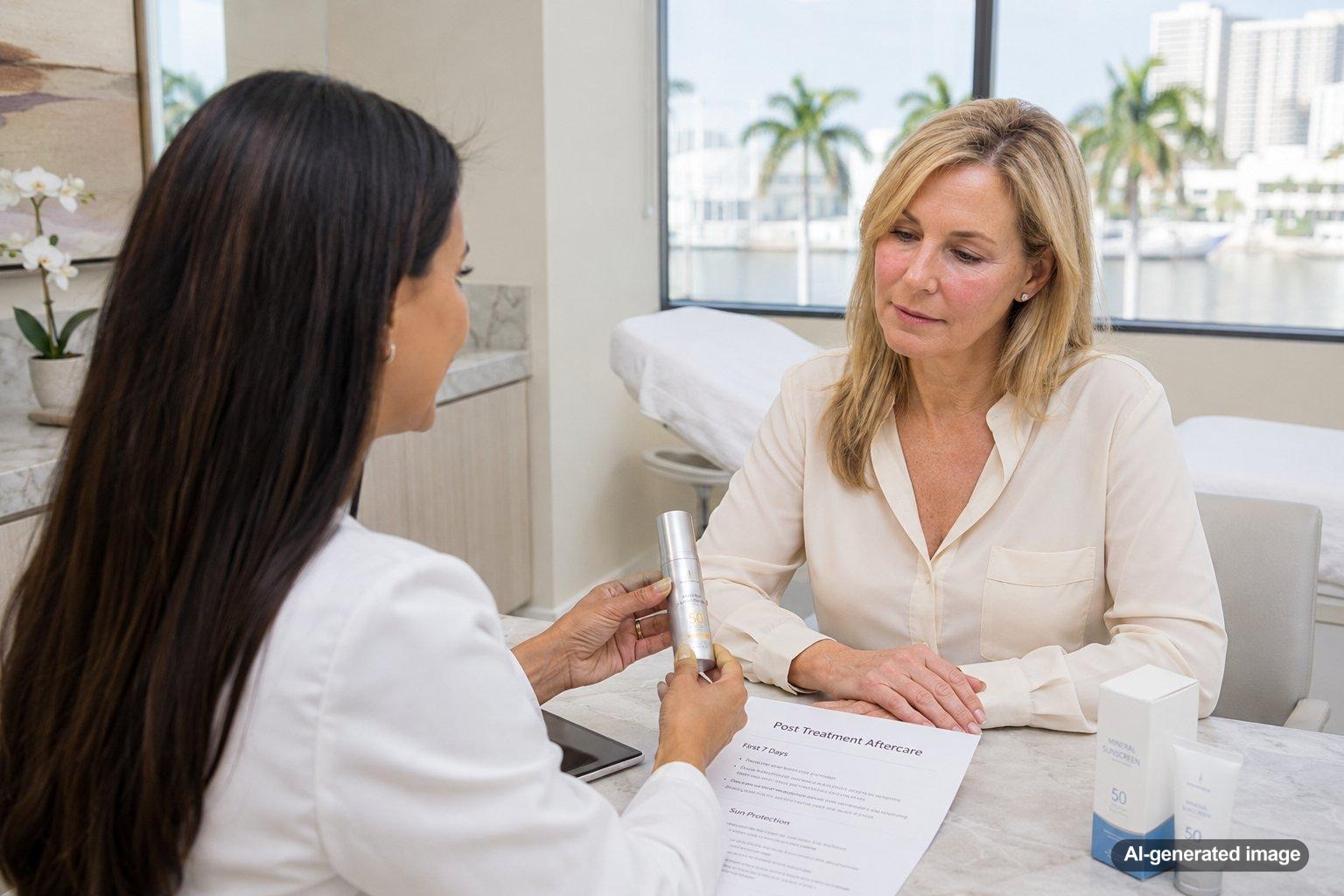
If you’ve had Tetra CoolPeel CO2 treatment, one of the most important parts of recovery is protecting freshly treated skin from ultraviolet exposure. There isn’t one universal number of days that applies to every patient because treatment settings, the area treated, skin type, healing response, and your clinician’s protocol can all affect aftercare.
A practical way to think about it is in two phases: avoid intentional or prolonged sun exposure while your skin is actively healing, then continue diligent sun protection for the weeks that follow. This matters especially in Fort Lauderdale, where strong sunlight can be difficult to avoid even during routine errands.
Quick answer
- Avoid deliberate sun exposure while your skin is healing. Do not plan beach days, tanning, prolonged poolside time, or extended outdoor activities immediately after treatment.
- Follow your clinician’s specific timeline. Tetra CoolPeel CO2 settings can vary, so your personal aftercare instructions take priority over a general rule.
- Continue heightened sun protection after the initial recovery period. Recently treated skin can remain more vulnerable to irritation and unwanted pigment changes.
- Use physical protection when possible. Shade, a wide-brimmed hat, and appropriate sunscreen can reduce exposure during necessary outdoor activities.
- Do not use tanning beds or intentionally tan. Artificial ultraviolet exposure is not a safe substitute for outdoor sun avoidance.
Why sun protection matters after Tetra CoolPeel CO2
Tetra CoolPeel CO2 is a fractional carbon dioxide laser treatment designed to create controlled treatment zones in the skin. Although CoolPeel protocols are intended to limit excess thermal injury compared with more aggressive traditional CO2 resurfacing approaches, the treated skin still needs time to recover.
During recovery, the skin barrier may temporarily be more sensitive. Ultraviolet exposure during this period can contribute to irritation and may increase the likelihood of uneven pigmentation, particularly in people who are prone to post-inflammatory hyperpigmentation.
The American Academy of Dermatology emphasizes that sun protection is important before and after laser procedures and recommends protecting treated skin from sunlight while it heals. Cleveland Clinic likewise advises sun avoidance and ongoing broad-spectrum sunscreen use after laser resurfacing.
How long should you avoid direct sun?
Rather than relying on a single calendar number, the safest approach is to avoid intentional direct sun throughout the active healing phase and follow the timeline provided by the clinician who performed your treatment. Your skin should not be treated as fully recovered simply because you feel comfortable returning to work or normal indoor activities.
Even when visible redness or sensitivity improves relatively quickly, disciplined sun protection should continue. General laser-resurfacing guidance recommends ongoing protection for weeks after treatment, and daily sun protection remains valuable beyond the immediate recovery period.
If you have a vacation, boating trip, beach day, outdoor sporting event, or another situation involving substantial sun exposure, tell your clinician before scheduling treatment. It may make sense to choose a treatment date that gives your skin more time away from intense ultraviolet exposure.
What counts as sun exposure in South Florida?
Sun avoidance does not necessarily mean remaining indoors continuously. It means avoiding unnecessary ultraviolet exposure while making reasonable adjustments when you need to go outside.
In Fort Lauderdale, exposure can happen during ordinary activities, including:
- Walking the dog during bright daytime hours
- Driving for extended periods
- Eating on an uncovered patio
- Walking along the beach or Intracoastal
- Boating or fishing
- Outdoor workouts
- Spending time beside a pool
- Attending daytime festivals, sporting events, or outdoor markets
Water, pavement, sand, and other surfaces can also reflect light, so being near the beach or pool can involve meaningful exposure even if you are not intentionally tanning.
How to protect your skin when you have to go outside
Your treatment provider should give you specific instructions about when to begin or resume sunscreen because freshly treated skin may require a particular post-procedure routine. Follow those directions rather than adding products on your own immediately after treatment.
Once your clinician says sunscreen is appropriate, commonly recommended sun-protection measures include:
- Using a broad-spectrum sunscreen with SPF 30 or higher
- Wearing a wide-brimmed hat when the treated area is on the face, neck, or chest
- Choosing shade whenever possible
- Limiting unnecessary time outdoors during periods of intense sunlight
- Reapplying sunscreen according to product directions, particularly with extended outdoor exposure
- Avoiding tanning beds and intentional tanning
If sunscreen stings, burns, or seems to irritate freshly treated skin, contact your treatment provider for guidance instead of repeatedly applying a product that feels uncomfortable.
What should you do during the first part of recovery?
Post-procedure skin can feel warm, tight, dry, rough, or sensitive depending on the treatment settings and individual response. Your clinician may recommend a simplified routine while the skin barrier recovers.
General conservative care often means keeping the routine gentle and avoiding unnecessary irritation. Do not scrub, pick, peel, exfoliate, or introduce strong active ingredients unless your clinician has told you they are appropriate. When your normal skincare products can be restarted depends on the treatment intensity and your skin’s response.
It is also helpful to avoid thinking of visible peeling or redness as the only measure of healing. Skin may still need protection after it looks considerably better.
Why pigment changes are a concern
One reason clinicians emphasize sun protection after laser treatment is the possibility of post-inflammatory pigment changes. When skin has recently undergone a controlled procedure, ultraviolet exposure can encourage unwanted darkening in susceptible individuals.
Risk is not identical for everyone. Your natural skin tone, history of hyperpigmentation or melasma, treatment settings, recent tanning, medications, skincare routine, and cumulative sun exposure may all affect how your clinician approaches treatment and aftercare.
If you have melasma or a history of developing dark marks after irritation, mention that before treatment so the dermatologist can evaluate your skin and discuss an appropriate plan.
Can you go to the beach after CoolPeel?
A beach day immediately after treatment is generally not a good recovery activity. Beaches combine direct ultraviolet exposure with reflected sunlight, heat, wind, salt water, and often sweating. Those conditions can be difficult to reconcile with careful post-laser skin care.
If an upcoming South Florida vacation or beach event is important to you, discuss the timing before treatment rather than trying to fit recovery around intensive outdoor exposure afterward.
What about driving after treatment?
Short necessary trips are different from intentionally spending hours outdoors, but sun protection can still matter in the car. If the treated area is exposed to daylight during driving, follow your clinician’s advice regarding sunscreen and physical protection.
A hat can be useful when practical, and planning errands outside peak daylight hours may make sun avoidance easier during early recovery.
When should you contact your dermatologist?
Some temporary redness, sensitivity, dryness, or textural change may occur after laser resurfacing, but your treatment provider should explain what is expected for your specific procedure. Contact a dermatologist if your recovery seems significantly different from the instructions you received or if you develop concerning symptoms.
Seek professional guidance for issues such as:
- Increasing pain rather than gradual improvement
- Marked swelling that concerns you
- Blistering or unexpected skin breakdown
- Drainage or other signs that may suggest infection
- Persistent or worsening discoloration
- A reaction to a recommended post-procedure product
- Any recovery change that you are unsure about
A dermatologist can evaluate the skin directly and determine whether additional care is appropriate.
Frequently asked questions
Can I be outside the day after Tetra CoolPeel CO2?
Necessary brief outdoor exposure may be different from intentional sun exposure, but freshly treated skin should be protected carefully. Avoid recreational sun and follow the aftercare instructions from your treatment provider regarding sunscreen, hats, shade, and timing.
When can I start wearing sunscreen after CoolPeel?
Follow the instructions given by the clinician who performed your treatment. The timing can depend on how the skin was treated and how it is healing. Once sunscreen is appropriate, broad-spectrum SPF 30 or higher is commonly recommended after laser resurfacing.
Can I go boating after CoolPeel?
Boating can involve intense direct and reflected ultraviolet exposure, so it is not an ideal activity during the initial healing period. Discuss planned boating or extended outdoor activities with your clinician when scheduling treatment.
What if I accidentally get sun after CoolPeel?
Move out of direct sunlight and resume the protective measures recommended by your clinician. If the skin becomes unusually red, painful, blistered, or develops concerning discoloration, contact your treatment provider for evaluation.
Should I avoid sun even after the redness is gone?
Yes, ongoing sun protection remains important after visible redness improves. Recently treated skin can continue recovering after it looks more normal, and general laser-resurfacing guidance supports diligent sun protection for weeks after treatment.
Is CoolPeel easier to schedule in winter?
Some people find laser treatments easier to plan during periods when they expect less outdoor activity. In South Florida, however, meaningful ultraviolet exposure occurs throughout the year, so season alone does not replace careful sun protection.
At Waverly DermSpa, we offer Tetra CoolPeel CO2 and can help you understand whether it may be appropriate.
Ready to get help?
Schedule an appointment or send a message and our team will get back to you.
Prefer to call? 954-666-3736
This article is for educational purposes and is not medical advice. For diagnosis and personalized treatment, please book an appointment with a board-certified dermatologist.
Sources & further reading
- American Academy of Dermatology (AAD) – 10 things to know before having laser treatment for your scar
- Cleveland Clinic – Carbon Dioxide Laser Resurfacing
