

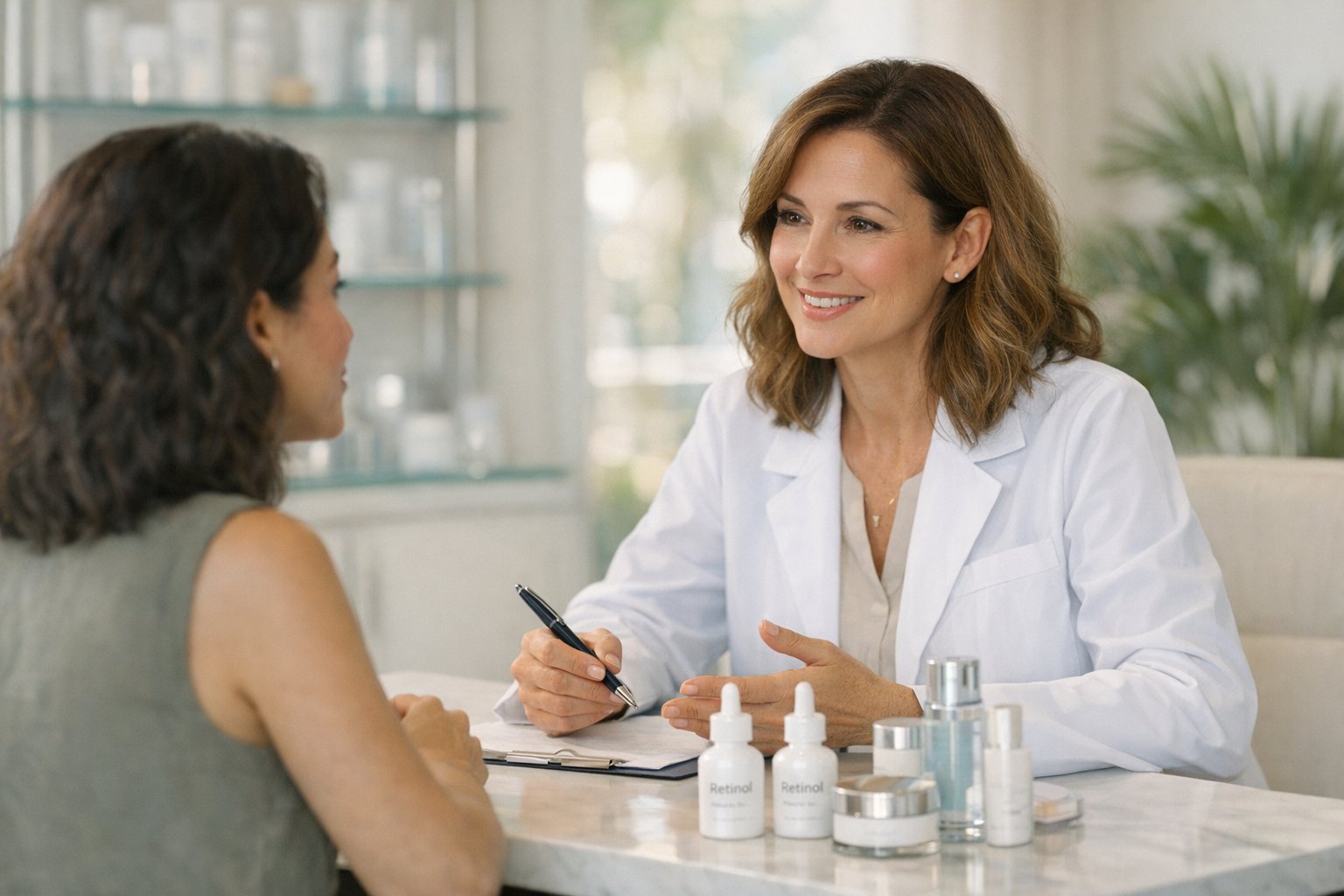
If you have ever stared at a label that says retinol, retinal, or retinoid and wondered which is actually stronger, you are not alone. These ingredients are closely related, but the differences matter for comfort, consistency, and how quickly your skin can tolerate them.
Quick answer
- Retinol is an over-the-counter vitamin A derivative that needs multiple conversion steps in skin before it becomes active.
- Retinal (also called retinaldehyde) is one step closer to the active form, so it is often considered more potent than retinol at similar strengths.
- Prescription retinoids (like tretinoin, tazarotene, and trifarotene) are active medications that can be more effective for acne and photoaging, but may be more irritating.
- Any retinoid can cause dryness and sensitivity, so starting slowly and using moisturizer matters as much as the product choice.
What it is (plain English)
Retinoids are a family of vitamin A related ingredients used in skincare and dermatology. The core difference is how much work your skin must do to convert the ingredient into the active form that binds to receptors and changes how skin cells behave. In general, fewer conversion steps often means a stronger effect per application, but also a higher chance of irritation if you move too fast.
Three common categories you will see are:
- Retinol: Widely available over the counter. Your skin converts it through multiple steps before it becomes active.
- Retinal (retinaldehyde): Also over the counter in many products. It is one step closer to the active form than retinol.
- Prescription retinoids: Dermatology medications (such as tretinoin, tazarotene, or trifarotene) that are already active in the skin, so they do not rely on the same conversion pathway as retinol or retinal.
Common causes/triggers
When people say a retinoid is not for them, it is usually not the ingredient itself. It is the way it is introduced, the strength, the formula, or the rest of the routine. Common triggers that can make retinoids feel harsh include:
- Starting too often (for example, nightly right away)
- Using too much product (more is not better with retinoids)
- Applying to damp skin, which can increase penetration and stinging
- Layering with other strong actives on the same nights (exfoliating acids, strong acne treatments, or multiple actives at once)
- Skipping moisturizer or using a cleanser that leaves skin tight
- Not using daily broad-spectrum sunscreen, which can make sensitivity feel worse
- Cold, dry weather or frequent travel, which can stress the skin barrier
What you can do at home
These are conservative, comfort-first steps that many people use to help tolerate retinoids. If you are unsure what fits your skin, a dermatologist can help you personalize the plan.
- Start low and slow: Begin 2 nights per week, then increase only when your skin feels calm between uses.
- Use a pea-sized amount: A thin film is typically enough for the full face. Applying more often increases irritation without guaranteeing better results.
- Apply to dry skin: After cleansing, wait until skin is fully dry before applying.
- Moisturize intentionally: Use moisturizer before and after (the ‘sandwich’ method) if you are sensitive or new to retinoids.
- Protect the corners: A thin layer of moisturizer can help around the nose creases, mouth corners, and under-eye area if those zones get irritated.
- Keep the routine simple: On retinoid nights, pair with a gentle cleanser and a plain moisturizer.
- Wear sunscreen daily: Broad-spectrum sunscreen is part of the retinoid routine, not an optional add-on.
- Pause, do not push: If you develop significant burning, swelling, or a rash-like reaction, stop and consider getting evaluated.
Professional options
If you are trying to address acne, discoloration, or visible signs of sun exposure and over-the-counter retinoids are not getting you where you want to be, professional guidance can make the process more efficient and comfortable.
- Prescription retinoids: A dermatologist can evaluate whether a prescription option (and which formulation) fits your skin goals and sensitivity.
- Barrier-friendly routines: Sometimes the most helpful change is adjusting cleanser, moisturizer, and frequency so you can stay consistent.
- In-office treatments: Depending on your goals, professional treatments may be used alongside a retinoid plan. If appropriate for you, options can include chemical peels, microneedling, or laser-based treatments with a customized pre- and post-care routine.
When to see a dermatologist
Retinoids can be part of a smart routine, but there are times it is best to get expert guidance. Consider booking an evaluation if:
- You have persistent acne, painful breakouts, or acne that is leaving marks or scars
- Your skin becomes very irritated, swollen, blistered, or develops a persistent rash with retinoid use
- You have eczema, rosacea, or very sensitive skin and are not sure how to introduce retinoids safely
- You are pregnant, trying to conceive, or nursing and want guidance on what is appropriate for you
- You are using multiple prescription or active treatments and want a plan that minimizes irritation
FAQ
Is retinal stronger than retinol?
Often, yes. Retinal is one conversion step closer to the active form than retinol, so it may feel more effective at similar strengths. Comfort still depends on the formula and how you use it.
Are prescription retinoids always better?
Not always. Prescription retinoids can be more potent for acne and photoaging, but they are not automatically the best fit for every skin type or lifestyle. Consistency and tolerability matter.
Can I use a retinoid every night?
Some people can, but many do best by building up gradually. If nightly use causes dryness or stinging that does not settle, backing down in frequency can help you stay consistent long term.
What should I not mix with retinoids?
Many people avoid layering multiple strong actives on the same night, especially exfoliating acids or irritating acne products. A simple routine on retinoid nights is often easier to tolerate.
Why is sunscreen so important with retinoids?
Retinoids can make skin feel more sensitive, and sun exposure can worsen irritation and uneven tone. Daily broad-spectrum sunscreen helps protect results and comfort.
How do I know which one to choose?
If you are new, sensitive, or prefer over-the-counter options, starting with a gentle retinol or a low-strength retinal used a few nights per week is common. If acne is persistent or you want a prescription approach, a dermatologist can evaluate and tailor the plan.
Ready to get help?
Schedule an appointment or send a message and our team will get back to you.
Prefer to call? 954-666-3736
Disclaimer
This article is for educational purposes and is not medical advice. For diagnosis and personalized treatment, please book an appointment with a board-certified dermatologist.
Sources & further reading
- American Academy of Dermatology: Retinoid or retinol?
- Cleveland Clinic: Retinol (overview and how to use)
