

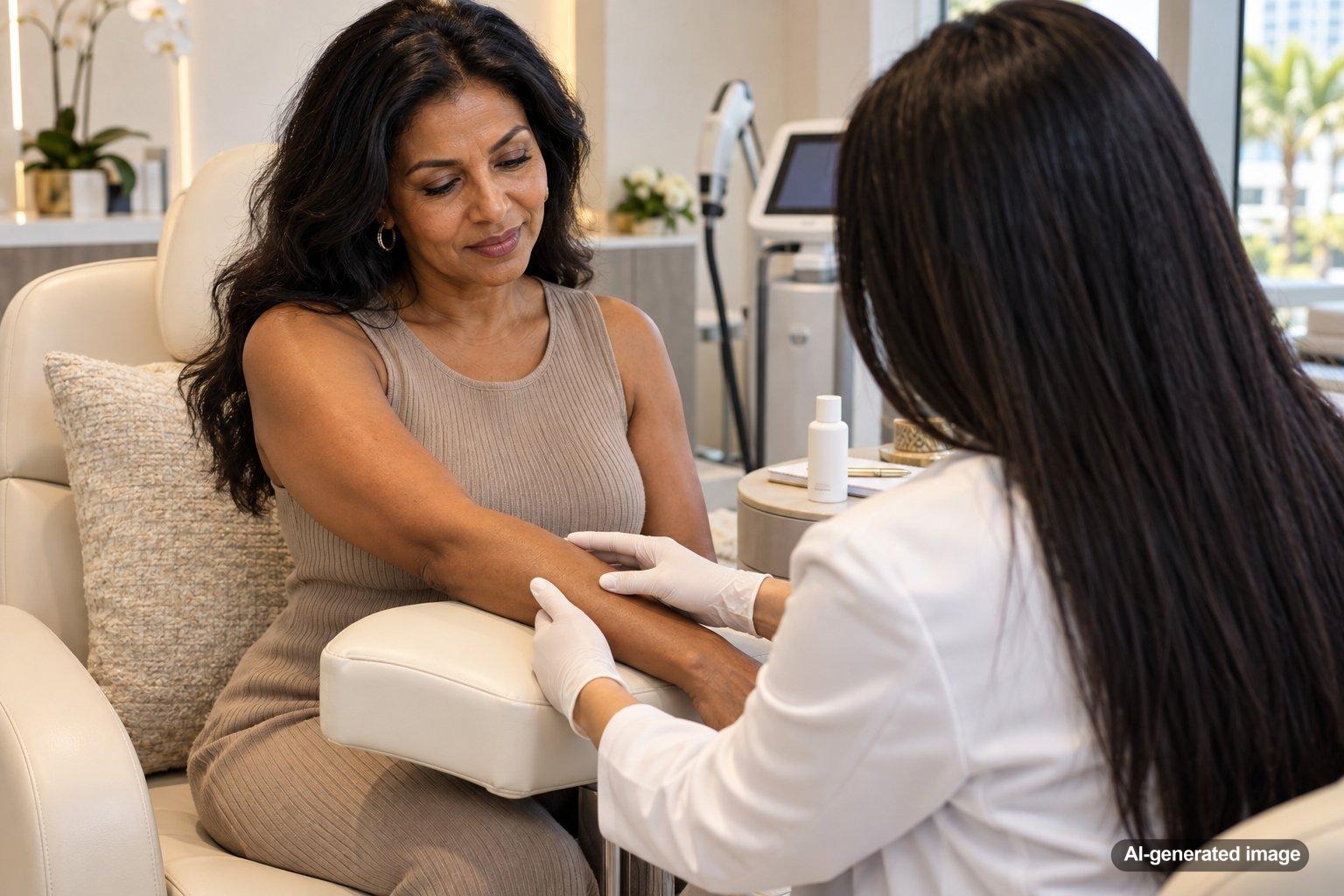
Laser hair removal can be an effective option for reducing unwanted hair on darker skin tones, but preventing unwanted pigmentation changes requires thoughtful planning. Because laser energy interacts with melanin, the pigment that gives skin and hair their color, treatment settings and device selection are particularly important for people with melanin-rich skin.
The most effective way to lower the risk of hyperpigmentation is to choose a clinician experienced with darker skin, discuss appropriate laser technology, avoid tanning, and follow carefully tailored skin care instructions before and after treatment. Although no laser procedure is entirely without risk, these precautions can help protect the surrounding skin while targeting unwanted hair.
Quick Answer: How Can You Reduce Hyperpigmentation Risk?
- Choose an experienced provider. Look for a clinician who regularly performs laser hair removal on your skin tone and understands pigmentation-related complications.
- Ask about the laser technology. Long-pulsed 1064-nm Nd:YAG lasers are often preferred for darker skin because their wavelength reduces energy absorption by superficial epidermal melanin compared with some shorter-wavelength devices.
- Avoid tanning and unnecessary sun exposure. Recent tanning can increase the likelihood of adverse skin reactions during treatment.
- Protect your skin barrier. Avoid unnecessary irritation before and after appointments, and follow your clinician’s instructions about potentially irritating skin care products.
- Report unusual reactions promptly. Blistering, significant pain, crusting, or persistent discoloration deserves professional assessment before another session.
Why Is Hyperpigmentation a Concern With Laser Hair Removal on Dark Skin?
Laser hair removal works by directing concentrated light energy toward pigment within hair follicles. That energy is converted into heat, which can damage structures responsible for hair growth. Ideally, enough energy reaches the follicle while the surrounding skin remains protected.
However, melanin is also present in the epidermis, the outermost layer of skin. Darker skin contains more epidermal melanin, which may absorb some of the laser energy intended for the hair follicle. If excessive heat affects surrounding tissue, inflammation or injury may follow.
One possible consequence is post-inflammatory hyperpigmentation (PIH), a condition in which the skin produces or redistributes pigment after irritation or injury. It may appear as brown, gray-brown, or darker patches in the treated area.
People with darker complexions can be more susceptible to noticeable pigmentation changes after inflammation. These marks may fade gradually, but their duration varies with the severity of the reaction, the depth of pigmentation, sun exposure, and individual skin characteristics.
Laser treatment can also occasionally cause hypopigmentation, which produces lighter patches rather than darker ones. This is a different pigment complication and may be more difficult to reverse.
Choose Laser Technology Appropriate for Your Skin Tone
Not all hair removal lasers interact with skin pigment in the same way. Wavelength, pulse duration, energy delivery, cooling, and operator technique influence treatment safety.
Why Nd:YAG Lasers Are Often Considered for Darker Skin
The long-pulsed 1064-nm Nd:YAG laser is commonly used for hair removal in people with darker skin tones. Its longer wavelength penetrates more deeply and is absorbed less strongly by epidermal melanin than shorter wavelengths commonly used for hair removal.
This can allow energy to reach pigmented hair follicles while reducing some of the risk to surrounding skin. However, Nd:YAG treatment can still cause burns, discoloration, and other complications when used inappropriately.
Suitability depends on several factors, including skin tone, hair thickness, hair color, treatment area, recent sun exposure, and previous reactions to light-based procedures.
What About Diode and Alexandrite Lasers?
Diode lasers may be appropriate for some darker skin types when the device, settings, and cooling methods are carefully selected. Alexandrite lasers have stronger interaction with melanin and generally require greater caution in deeply pigmented or recently tanned skin.
There is no single ideal device for every person. A dermatologist can help determine which technology and treatment approach are appropriate for your individual skin characteristics.
Common Factors That Increase the Risk of Dark Spots
Hyperpigmentation risk is influenced by more than natural skin color. Several circumstances can make the skin more vulnerable to inflammation or thermal injury.
- Recent tanning: Additional epidermal pigment can increase laser energy absorption in the surrounding skin.
- Inappropriate treatment settings: Excessive energy or unsuitable pulse duration may increase unwanted heating.
- Inadequate cooling: Poor protection of the skin surface may contribute to irritation or thermal injury.
- Existing inflammation: Active irritation, sunburn, or damaged skin can make treatment less predictable.
- Previous pigmentation problems: A history of dark marks after acne, burns, waxing, or other irritation may signal a tendency toward PIH.
- Insufficient provider experience: Inadequate assessment of darker skin tones can increase the likelihood of preventable complications.
- Post-treatment irritation: Scratching, aggressive exfoliation, or friction may intensify inflammation during recovery.
- Sun exposure during healing: Ultraviolet exposure can darken existing pigmentation and make discoloration more noticeable.
Recognizing these factors before treatment gives the clinician an opportunity to modify the plan or postpone the procedure when appropriate.
How to Prepare Your Skin Before Laser Hair Removal
Schedule a Consultation Before Your First Session
A consultation allows the provider to examine your skin tone, assess the treatment area, review your medical history, and discuss any previous pigmentation changes.
Be prepared to mention a history of hyperpigmentation, keloid scarring, unusual reactions to cosmetic treatments, and recent sun exposure. Also disclose medications, topical treatments, and skin care ingredients you use regularly.
Ask which laser will be used, whether the operator has experience treating similar complexions, and how the clinic manages pigment-related complications.
Avoid Tanning Before Treatment
Natural tanning, tanning beds, and sunless tanning products can interfere with treatment planning. A recent tan may make it harder to distinguish your baseline pigmentation and can affect how laser energy interacts with the skin.
If your skin has recently darkened from sun exposure, tell your clinician. Treatment may need to be postponed until the tan has faded. The appropriate interval depends on your skin and the procedure.
Protect Your Skin From UV Exposure
Use a broad-spectrum, water-resistant sunscreen with SPF 30 or higher on exposed skin, along with protective clothing and shade when practical.
In Fort Lauderdale, routine outdoor activities, driving, beach visits, and time spent near the water can create opportunities for substantial sun exposure. Planning treatment around vacations and outdoor commitments may make sun protection easier.
Keep Your Skin Care Routine Gentle
Before treatment, avoid introducing harsh new exfoliating products or procedures that could irritate the intended treatment area.
Ask your clinician whether to temporarily pause retinoids, exfoliating acids, benzoyl peroxide, or other potentially irritating ingredients. Do not independently discontinue prescribed medications without appropriate medical guidance.
Your provider may recommend shaving before treatment while avoiding waxing, plucking, or threading, which remove the hair follicle’s target. Follow the specific preparation instructions supplied by your clinic.
Does a Test Spot Help Reduce the Risk?
For some patients, a clinician may recommend treating a small area first and observing the skin’s response before proceeding with a larger region.
A test spot can provide useful information about immediate skin tolerance and whether adjustments may be needed. It may be particularly helpful when there is uncertainty about skin response, a history of pigmentation problems, or concerns about a specific treatment area.
However, a satisfactory test spot cannot predict every delayed reaction or eliminate the risk of hyperpigmentation. Pigment changes may become apparent after the immediate treatment response has settled.
The clinician should determine whether testing is appropriate and how long the skin should be observed before continuing.
How to Care for Dark Skin After Laser Hair Removal
Thoughtful aftercare helps minimize additional inflammation while the treated skin recovers.
Use Gentle Cleansing and Moisturizing
Wash the area gently with a mild cleanser and lukewarm water. Avoid vigorous rubbing, abrasive washcloths, and unnecessary friction.
A simple, fragrance-free moisturizer may help support skin comfort when your clinician confirms it is appropriate. Avoid applying numerous active products to skin that is temporarily sensitive.
Limit Heat and Irritation
Your provider may recommend temporarily avoiding hot baths, saunas, intense exercise, or activities that produce substantial heat and friction in the treated area.
Wear comfortable clothing when possible, particularly after treatment in areas such as the bikini line, underarms, or thighs. Avoid scratching or picking at any crusting or irritated skin.
Practice Consistent Sun Protection
Protect the treated area from direct sunlight while it heals. Follow your clinician’s instructions about when sunscreen can be applied to the area, especially if there is irritation or broken skin.
Once appropriate, continue using broad-spectrum SPF 30 or higher and physical sun protection. Sun avoidance is particularly important if dark marks are developing.
Delay Strong Exfoliating Products
Retinoids, exfoliating acids, scrubs, and other active skin care products may worsen irritation if resumed too early.
Ask your clinician when to restart your usual routine. The answer depends on the treatment settings, the body area, and how quickly your skin returns to its normal condition.
What If Dark Spots Appear After Treatment?
If darker patches develop after laser hair removal, avoid assuming that they are harmless or attempting to remove them immediately with aggressive products.
A dermatologist can assess whether the discoloration is consistent with post-inflammatory hyperpigmentation, a burn-related reaction, or another pigment change.
Depending on the examination, professional management may involve conservative skin care, sun protection, monitoring, or selected topical treatments. Prescription pigment treatments may be considered in appropriate cases, but the choice depends on the cause and condition of the skin.
Additional laser sessions, chemical peels, or exfoliating treatments should not be used to correct new pigmentation without professional evaluation. Further inflammation can sometimes make discoloration worse.
It is also important to distinguish darker patches from lighter patches, since the underlying changes and treatment considerations differ.
Professional Options for Safer Treatment Planning
For patients with darker skin, professional treatment planning involves more than selecting a laser wavelength. An experienced clinician considers the full combination of skin characteristics, device capabilities, and treatment history.
Important considerations include:
- Individual skin assessment: Evaluation of baseline pigmentation, tanning, hair color, hair density, and any existing inflammation.
- Appropriate device selection: Choosing technology that is suitable for the patient’s skin and hair characteristics.
- Careful treatment parameters: Adjusting energy, pulse duration, and other device settings based on clinical assessment.
- Epidermal protection: Using appropriate cooling methods when indicated.
- Monitoring between sessions: Reviewing skin reactions before repeating or changing treatment.
- Realistic expectations: Discussing the possibility of multiple appointments, incomplete hair reduction, and potential adverse effects.
Skin color alone does not automatically exclude someone from laser hair removal. What matters is whether the treatment can be performed with suitable technology, careful technique, and a realistic understanding of individual risk.
At Waverly DermSpa, we offer Excel HR Laser Hair Removal and can help you understand whether it may be appropriate.
When Should You See a Dermatologist?
A dermatology consultation is particularly valuable before treatment if you have experienced significant pigmentation changes from previous laser procedures, burns, waxing, or other forms of skin irritation.
Professional assessment is also advisable if you have active inflammatory skin symptoms in the proposed treatment area, a recent tan, a history of unusual scarring, or uncertainty about whether your skin is ready for another session.
After treatment, contact your provider promptly if you notice:
- Blistering or a suspected burn.
- Severe or increasing pain.
- Significant crusting or skin breakdown.
- Increasing redness, warmth, swelling, or drainage.
- New areas of pronounced darkening or lightening.
- Persistent irritation that does not improve as expected.
Rapidly worsening symptoms, spreading redness, or fever warrant prompt medical attention. Do not continue additional laser sessions over an unresolved reaction without evaluation.
Frequently Asked Questions
Can people with very dark skin have laser hair removal?
Yes, laser hair removal may be an option for people with very dark skin when appropriate technology and experienced clinical technique are used. A dermatologist can evaluate the balance between potential benefits and pigmentation-related risks.
Which laser is commonly preferred for darker skin?
The long-pulsed 1064-nm Nd:YAG laser is frequently preferred for deeply pigmented skin because it has relatively low absorption by superficial epidermal melanin. However, the device alone does not determine safety. Settings, cooling, skin condition, and operator experience remain important.
Can laser hair removal cause permanent dark spots?
Post-inflammatory hyperpigmentation often improves over time, but some marks may persist for an extended period. Severe injury can cause more lasting skin changes. A dermatologist can evaluate persistent discoloration and discuss reasonable management options.
Should I use a skin-lightening cream before laser hair removal?
Do not start a pigment-lightening product solely to prepare for laser treatment without consulting your dermatologist. Some ingredients can irritate the skin, and not everyone benefits from pretreatment. The appropriate approach depends on your medical history and skin condition.
Is it normal for skin to look darker immediately after laser hair removal?
Temporary redness, swelling around follicles, and changes in the appearance of treated hairs may occur. However, new dark patches, blistering, or substantial discoloration should not automatically be considered part of routine recovery. Contact your treatment provider for an assessment.
Does avoiding the sun completely prevent hyperpigmentation?
No. Sun protection is an important precaution, but hyperpigmentation can also develop from laser-related inflammation or thermal injury. Appropriate device selection, clinical technique, and aftercare all contribute to reducing risk.
The Bottom Line
Reducing hyperpigmentation risk during laser hair removal on dark skin begins before the first treatment. Experienced clinical care, an appropriate laser, careful attention to tanning and sun exposure, and gentle aftercare can help limit avoidable irritation.
Because melanin-rich skin may respond differently to heat and inflammation, individualized assessment is more valuable than relying on a standard treatment protocol. Discussing previous pigmentation problems and monitoring your skin between sessions can help your dermatologist make informed decisions about future treatments.
Ready to get help?
Schedule an appointment or send a message and our team will get back to you.
Prefer to call? 954-666-3736
Disclaimer
This article is for educational purposes and is not medical advice. For diagnosis and personalized treatment, please book an appointment with a board-certified dermatologist.
Sources & further reading
- DermNet – Laser therapy in skin of colour
- American Academy of Dermatology (AAD) – Laser hair removal: Preparation
- Cleveland Clinic – Laser Hair Removal
- DermNet – Postinflammatory hyperpigmentation
