

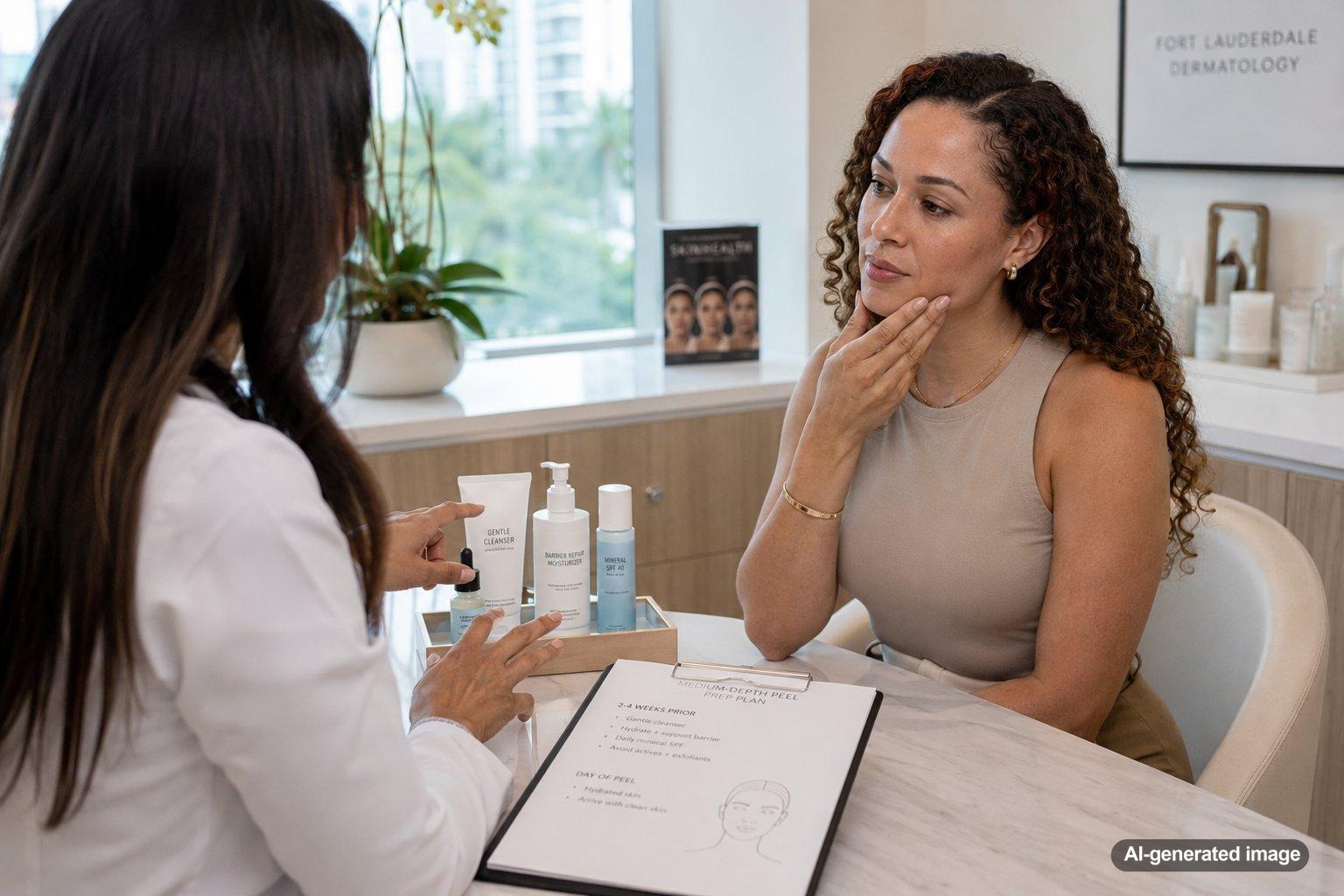
Preparing for a medium-depth peel in humid South Florida is about more than pausing a few skincare products. Heat, sweat, strong UV exposure, pool time, and outdoor activity can all make the skin feel more reactive before and after treatment. A thoughtful prep plan helps your dermatologist evaluate whether your skin is ready, supports a calmer barrier, and lowers the chance of avoidable irritation.
The best approach is individualized. Skin tone, pigment history, acne tendency, recent sun exposure, cold sore history, travel plans, and current skincare products can all affect timing. In Fort Lauderdale, planning around humidity and sun exposure is especially important because freshly treated skin needs a more controlled environment while it heals.
Quick answer
- Start with a consultation so your clinician can confirm whether a medium-depth peel is appropriate for your skin and goals.
- Keep your skin calm and well moisturized in the days leading up to treatment.
- Avoid tanning, sunburn, waxing, aggressive exfoliation, and irritating actives before your peel unless your clinician gives different instructions.
- Plan for indoor, low-sweat downtime after treatment, especially in hot and humid South Florida weather.
- Tell your dermatologist about prescriptions, recent procedures, pregnancy or nursing, cold sores, pigment changes, and any history of scarring.
What a medium-depth peel is
A medium-depth peel is a professional chemical peel designed to reach deeper than a light, surface-level peel. It may be considered for concerns such as uneven tone, visible sun damage, rough texture, certain types of discoloration, and some signs of aging. Because it affects more than the very outer surface of the skin, it requires careful selection, preparation, and aftercare.
Medium-depth peels are not casual spa treatments. Your clinician should review your skin type, skin tone, medical history, pigment risk, medications, recent procedures, and lifestyle before recommending a peel strength. The goal is not to make the skin as irritated as possible. The goal is a controlled treatment with a recovery plan that fits your skin and schedule.
Why humid South Florida weather changes the prep plan
Humidity itself is not automatically a problem, but the lifestyle that comes with South Florida weather can complicate peel timing. Heat can increase sweating, sweat can sting sensitive skin, and strong UV exposure can be difficult to avoid if you are walking, driving, boating, golfing, exercising outdoors, or spending time near a pool or beach.
- Sun exposure: A recent tan or sunburn can make peel timing less ideal and may increase the risk of irritation or uneven pigment.
- Sweat: Heavy sweating can make freshly treated skin feel more uncomfortable and may interfere with the calm recovery environment your skin needs.
- Pool and beach routines: Chlorine, saltwater, wind, and sunscreen reapplication can be difficult to manage during early recovery.
- Travel schedules: Many visitors want a peel before an event or trip, but medium-depth peel timing needs more room than a quick glow treatment.
- Air conditioning: Indoor air can feel drying, so barrier support before and after treatment matters.
How to prepare your skin before a medium-depth peel
Book the consultation before you commit to a date
A consultation helps determine whether a medium-depth peel is the right level of treatment. Your dermatologist may recommend a lighter peel, a different resurfacing option, or a staged plan depending on your pigment history, sensitivity, active breakouts, melasma tendency, or recent sun exposure.
Bring your full skincare list
Bring or list everything you use, including prescription creams, retinoids, exfoliating acids, acne products, brightening products, scrubs, masks, and at-home devices. Do not assume a product is too simple to mention. Even a cleanser, toner, or body exfoliant can matter if it makes your skin dry or reactive.
Pause irritating steps only as directed
Your clinician may ask you to stop certain exfoliating or sensitizing products before the peel. This can include retinoids, strong acids, scrubs, or other active ingredients, depending on your skin and the peel plan. Do not stop prescription medication without asking the clinician who prescribed it or the dermatologist performing your peel.
Prioritize sunscreen before treatment
Before a medium-depth peel, consistent sun protection is essential. In South Florida, that usually means daily broad-spectrum sunscreen, shade, hats, sunglasses, and avoiding intentional tanning. If you have had a sunburn, recent tan, or heavy outdoor exposure, tell your clinician before proceeding.
Support your skin barrier
In the days before treatment, many people do best with a simple routine: gentle cleanser, moisturizer, and sunscreen. Avoid experimenting with new active products right before your peel. Skin that is already stinging, peeling, windburned, sunburned, or unusually dry may not be ready.
Avoid waxing and aggressive exfoliation
Waxing, threading, strong exfoliation, dermaplaning, harsh scrubs, and at-home peel pads can make the skin more vulnerable before a chemical peel. Ask how long to pause these steps for your specific treatment area.
Plan your recovery environment
Choose a treatment date that allows you to stay cool, avoid heavy exercise, and limit direct sun exposure afterward. A medium-depth peel may involve visible peeling, redness, tightness, and sensitivity. Your exact recovery can vary, so schedule it with flexibility rather than placing it right before a wedding, vacation, photo session, or outdoor weekend.
What to avoid right before your peel
- Intentional tanning, including outdoor tanning and tanning beds
- Recent sunburn or heavy UV exposure
- New skincare products that have not been tested on your skin
- Scrubs, strong exfoliating masks, or at-home peel products
- Waxing or other hair removal on the treatment area unless cleared by your clinician
- Outdoor workouts that leave your skin overheated or irritated immediately before treatment
- Pool, beach, or boating plans that make sun avoidance difficult
What you can do at home
Home prep should be conservative. Use a gentle cleanser, moisturize consistently, and apply sunscreen every morning. If you are outdoors, reapply as directed on the product label and use physical shade whenever possible. In Fort Lauderdale, protective clothing, a wide-brim hat, and planning errands outside peak heat can make a real difference.
Hydration, sleep, and avoiding last-minute skincare experiments can also help keep your skin less reactive. If your skin becomes irritated, itchy, sunburned, or unusually dry before your appointment, contact the office before proceeding. Your peel may need to be adjusted or postponed for safety.
Professional options and timing
A dermatologist can help decide whether a medium-depth peel, a lighter peel series, laser-based resurfacing, microneedling, or another approach is more appropriate. For some skin tones or pigment-prone conditions, pretreatment and timing may be especially important. For others, a gentler plan may be a better starting point.
At Waverly DermSpa, we offer Chemical Peels and can help you understand whether it may be appropriate.
When to see a dermatologist before moving forward
Schedule a dermatologist evaluation before a medium-depth peel if you have a history of melasma, keloids or raised scars, cold sores, recent isotretinoin use, active rash, infection, open skin, recent sunburn, pregnancy or nursing considerations, or a history of pigment changes after procedures. You should also speak with a dermatologist if you are unsure whether a spot is sun damage, a mole, or something that needs medical evaluation before cosmetic treatment.
FAQ
Can I get a medium-depth peel in the summer in Fort Lauderdale?
Sometimes, but timing matters. If you can reliably avoid direct sun, heavy sweating, pool time, and outdoor events during recovery, your dermatologist may consider it. If your schedule makes sun avoidance unrealistic, it may be better to wait.
How long before a peel should I stop retinol or exfoliating acids?
The timing depends on your skin, the product strength, and the peel being used. Your clinician will give specific instructions. Do not stop prescription products without medical guidance.
Can I work out after a medium-depth peel?
Heavy workouts are often paused during early recovery because heat and sweat can make treated skin more uncomfortable. Ask your clinician when it is reasonable to restart exercise based on your peel depth and skin response.
Is a medium-depth peel good for melasma?
Melasma-prone skin needs careful evaluation because irritation and sun exposure can sometimes worsen discoloration. A dermatologist can help decide whether a peel belongs in your plan or whether another approach is safer.
What should I do if I get sunburned before my appointment?
Contact the office before coming in. Sunburned or recently tanned skin may not be ready for a medium-depth peel, and your clinician may recommend rescheduling.
Can I wear makeup right after a peel?
Your clinician will tell you when makeup is appropriate. With medium-depth peels, the skin barrier needs time to recover, so it is important not to cover, rub, or pick at treated skin before you are cleared.
Ready to get help?
Schedule an appointment or send a message and our team will get back to you.
Prefer to call? 954-666-3736
This article is for educational purposes and is not medical advice. For diagnosis and personalized treatment, please book an appointment with a board-certified dermatologist.
Sources & further reading
- American Academy of Dermatology (AAD) – Chemical peels: Preparation
- American Academy of Dermatology (AAD) – Chemical peels: FAQs
- Cleveland Clinic – Chemical Peels: Types of Peels, Conditions Treated, What to Expect
- Mayo Clinic – Chemical peel
