

Planning for photodynamic therapy (PDT) can feel straightforward until you start wondering about the recovery. The good news is that most people can prepare well with a few practical expectations and a calm, conservative plan for caring for treated skin.
Quick answer
- Expect temporary redness and sensitivity, and plan to keep treated skin away from bright light as directed by your clinician.
- Keep skincare simple: gentle cleansing, bland moisturizing, and strict sun avoidance while your skin is reactive.
- Do not pick or scrub. Let flaking and crusting resolve on its own.
- Call your dermatologist if you are concerned about worsening pain, spreading redness, drainage, fever, or eye symptoms.
What PDT is (in plain English)
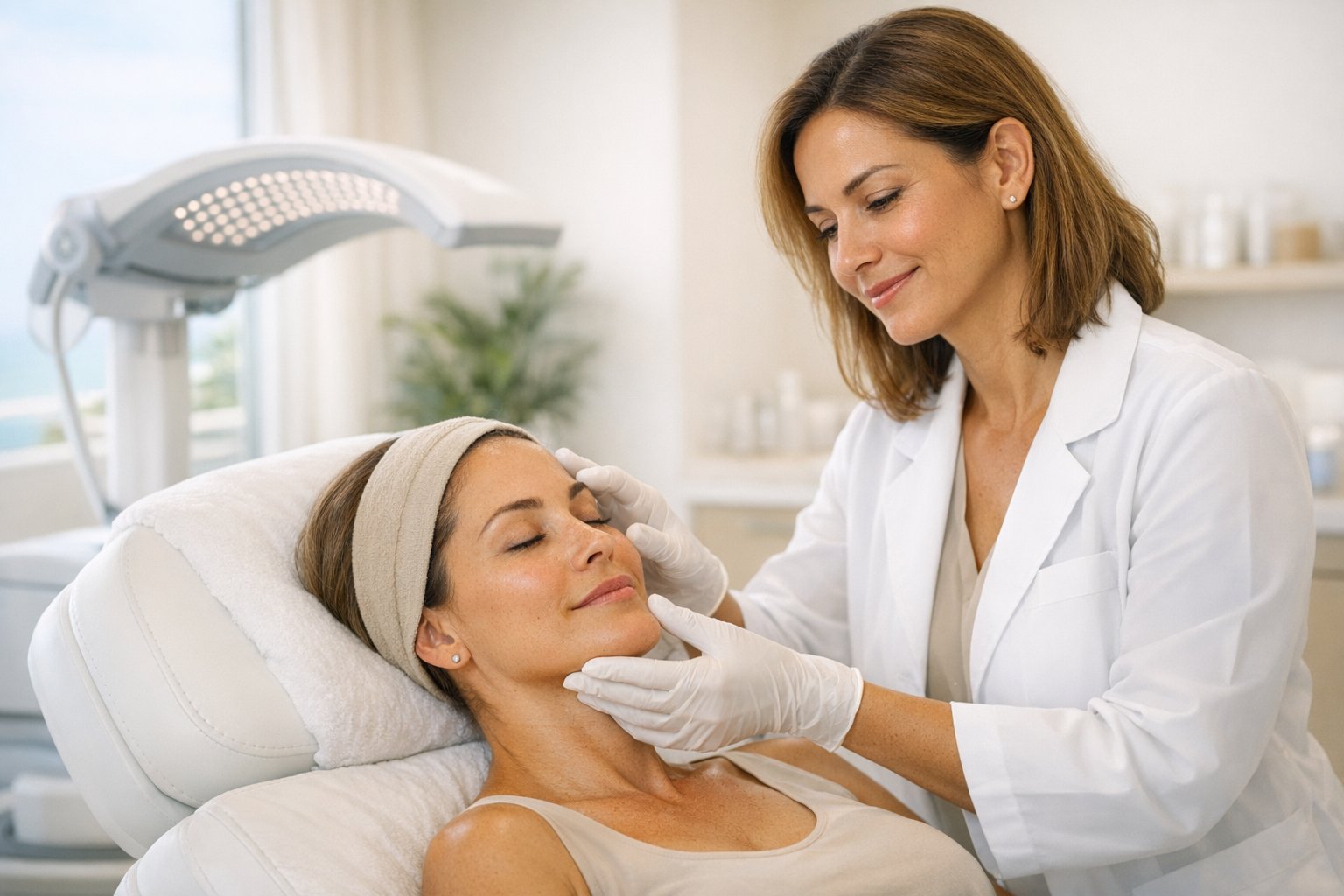
PDT is an in-office treatment that uses a light-activated medication (a photosensitizer) and a specific light source. The medication is applied to the skin and allowed to absorb, then the area is exposed to light that activates it. The goal is to treat visible actinic keratoses (AKs) and also the surrounding sun-damaged skin where early changes may not be obvious.
Common causes and triggers
Actinic keratoses and chronic sun damage are most often linked to cumulative ultraviolet (UV) exposure over time. Factors that can increase risk include:
- Years of sun exposure (work, sports, boating, or outdoor hobbies)
- History of sunburns, especially earlier in life
- Tanning bed use
- Lighter skin tones or a tendency to freckle or burn easily
- Living or spending extended time in high-UV areas (including winter sun travel and coastal climates)
- Older age (more time for UV damage to accumulate)
- Weakened immune system (for example, certain medical conditions or medications)
What you can do at home
Think of recovery as supporting your skin barrier while it calms down. Your clinician will give you specific instructions based on the medication used, the treatment area, and your skin type, so use the points below as general, conservative guidance.
- Prioritize light avoidance: Treated skin can remain very light-sensitive for a period of time. Follow your clinician’s instructions closely about avoiding sunlight and bright indoor light.
- Keep cleansing gentle: Use lukewarm water and a mild, fragrance-free cleanser. Avoid washcloth friction and exfoliating tools.
- Moisturize simply: Choose a bland, fragrance-free moisturizer to reduce dryness and tightness. If your clinician recommended a specific ointment or barrier product, use that.
- Avoid actives until fully calm: Pause retinoids, alpha hydroxy acids, beta hydroxy acids, vitamin C, scrubs, and at-home devices until your clinician says it is reasonable to restart.
- Hands off: Flaking, crusting, or a sandpapery feel can happen. Picking can prolong healing and increase irritation.
- Be careful with heat and sweating: Hot yoga, saunas, steam rooms, and intense workouts can worsen stinging in the early phase. Ease back in based on comfort.
- Sun protection is non-negotiable: Once your clinician says it is safe to resume, use a broad-spectrum sunscreen daily and add shade strategies (hat, sunglasses, and seeking cover) as part of your routine.
Professional options
AKs and sun damage exist on a spectrum, so treatment is often personalized. A dermatologist can evaluate whether you are dealing with a few discrete spots, a broader area of field sun damage, or something that needs closer assessment.
- In-office therapies: Options may include PDT, targeted freezing (cryotherapy), or other procedure-based approaches depending on the number and location of lesions.
- Prescription field treatments: Some people are candidates for topical medications that treat a wider area of sun-damaged skin. Your clinician can help you decide whether this fits your goals and tolerance for downtime.
- Combination plans: It is common for dermatology care to use more than one approach over time, especially when there are multiple AKs and diffuse sun damage.
At Waverly DermSpa, we offer Photodynamic Therapy (PDT) and can help you understand whether it may be appropriate.
When to see a dermatologist (and when to call sooner)
It is always reasonable to check in if something feels off. Reach out promptly if you notice any of the following after PDT or while monitoring sun-damaged areas:
- Rapidly worsening pain that feels out of proportion to what you were told to expect
- Spreading redness, increasing warmth, or swelling beyond the treated area
- Drainage that looks like pus, a bad odor, or significant tenderness
- Fever or feeling unwell
- Eye irritation or vision symptoms if treatment was near the eyes
- A spot that grows quickly, bleeds easily, does not heal, or looks meaningfully different from nearby skin
- Any concern about a changing lesion, especially if you have a history of skin cancer or immunosuppression
FAQ
Is PDT only for individual spots, or can it treat a broader area?
PDT is often used as a field treatment, meaning it can address visible AKs and surrounding sun-damaged skin in the treated zone. Your dermatologist can explain what area is being targeted and why.
What should I keep my routine to right after treatment?
In general, less is more: gentle cleansing, simple moisturizing, and strict light avoidance as instructed. Avoid active ingredients and friction until your skin settles and your clinician says you can resume.
How long will I look red?
Redness and sensitivity vary widely based on treatment intensity and your skin. Many people notice the most visible irritation early on, then gradual calming over time, but your personal timeline can be shorter or longer.
Can I wear makeup during recovery?
It depends on how reactive your skin is and what your clinician recommends. If makeup stings, clings to dry patches, or requires rubbing to remove, it is usually better to pause until your skin is comfortable.
Do I still need sunscreen if I already did PDT?
Yes. PDT does not replace sun protection. Consistent UV protection helps support long-term skin health and may reduce the buildup of new sun damage.
Ready to get help?
Schedule an appointment or send a message and our team will get back to you.
Prefer to call? 954-666-3736
Disclaimer
This article is for educational purposes and is not medical advice. For diagnosis and personalized treatment, please book an appointment with a board-certified dermatologist.
Sources & further reading
- Cleveland Clinic: Photodynamic Therapy (PDT): What It Is, Procedure & Recovery
- Cleveland Clinic: Actinic Keratosis
- The Skin Cancer Foundation: Actinic Keratosis Treatment Options
