

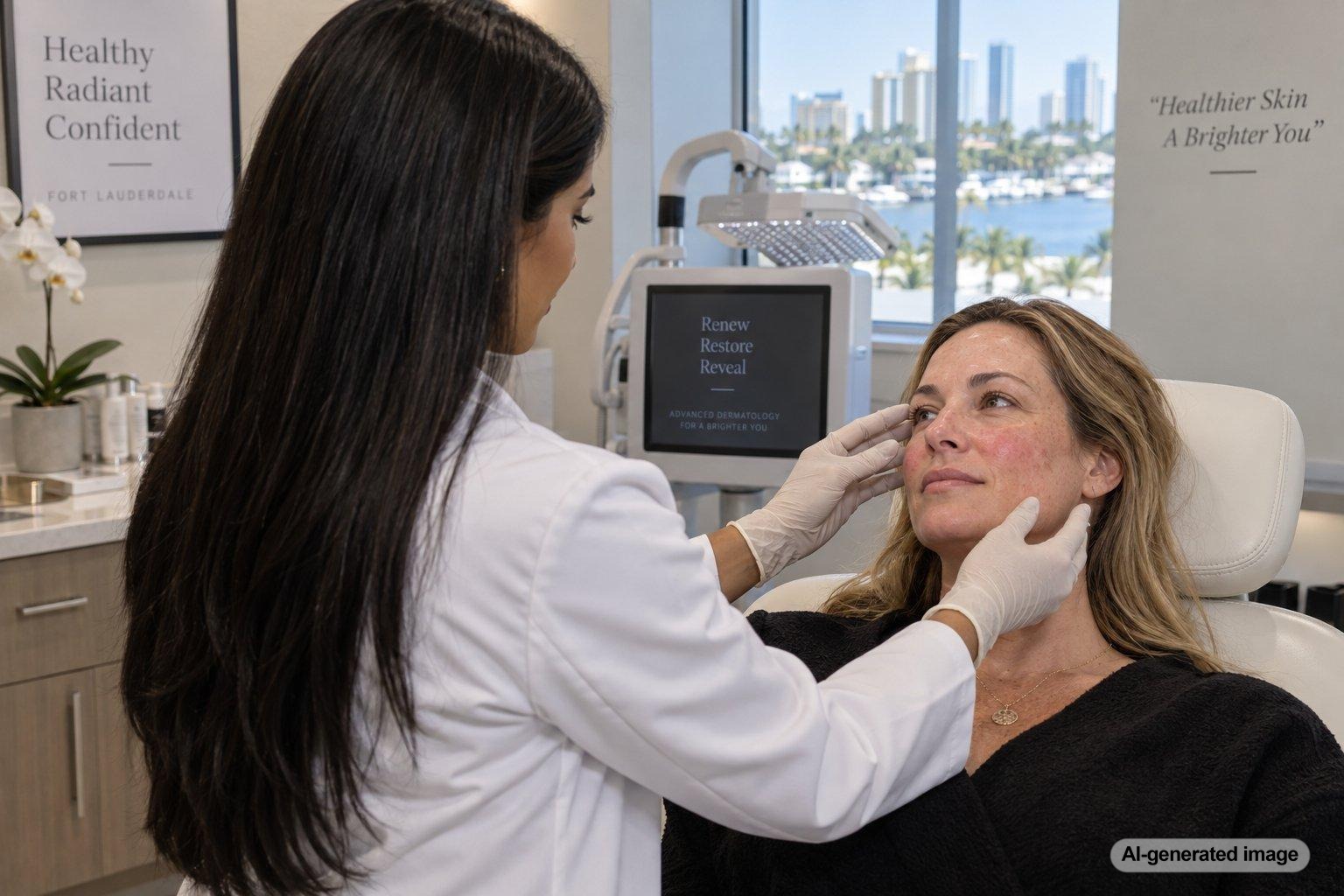
Photodynamic therapy, or PDT, can be useful for certain types of sun-damaged skin, especially when a dermatologist is treating actinic keratoses or broader areas of photodamage. When rosacea is also present, however, the question of treating both concerns in the same session becomes more nuanced. Rosacea-prone skin can be reactive, and PDT is not a standard one-size-fits-all treatment for rosacea itself.
For some patients, a dermatologist may decide that a PDT session aimed primarily at sun-damaged skin fits into a larger plan that also considers facial redness, visible vessels, sensitivity, and rosacea triggers. For others, treating the concerns separately may offer a more appropriate balance of effectiveness and tolerability.
Quick answer
- PDT is commonly used for actinic keratoses and certain forms of sun-damaged skin.
- Rosacea treatment is individualized and may involve medications, gentle skincare, sun protection, lasers, or other light-based procedures.
- Having rosacea does not automatically rule out PDT, but skin sensitivity and current inflammation matter.
- A dermatologist should evaluate which concern is being targeted and whether combining treatment goals in one session is appropriate.
What PDT actually does
Photodynamic therapy combines a photosensitizing medication with a specific light source. The medication is applied to the treatment area and allowed time to absorb. The area is then exposed to light, activating a photochemical reaction in targeted cells.
In dermatology, PDT is particularly useful for field treatment of actinic keratoses, which are rough or scaly areas caused by cumulative ultraviolet damage. Treating a field rather than one isolated spot can be helpful when sun damage is spread across an area such as the face or scalp.
Where rosacea changes the treatment conversation
Rosacea can involve persistent facial color, flushing, visible blood vessels, acne-like bumps, burning, stinging, or heightened sensitivity. Those features can influence how comfortably the skin tolerates procedures.
Light and laser treatments can be part of a rosacea treatment plan, particularly for persistent redness or visible vessels, but the specific device and treatment settings matter. PDT should not be assumed to treat rosacea simply because it uses light. Its established dermatologic uses and mechanism are different from vascular lasers and other light treatments commonly selected for rosacea.
If rosacea is actively flaring, a dermatologist may prefer to calm the skin or modify the overall treatment sequence before performing a procedure that could temporarily increase redness, tenderness, or sensitivity.
Can sun damage and rosacea be addressed during the same visit?
Sometimes the answer may be yes, but this depends on what “addressed” means. A dermatologist may perform PDT primarily for appropriate sun-damaged areas while simultaneously accounting for rosacea in the treatment plan. That does not necessarily mean PDT is being used as the primary treatment for both conditions.
The decision may depend on the extent and type of sun damage, whether actinic keratoses are present, the pattern of rosacea, current skin sensitivity, medications, history of light sensitivity, previous procedures, and the amount of downtime a patient can reasonably accommodate.
In some cases, separate sessions may make more sense. For example, PDT may be selected for widespread actinic damage, while a vascular laser or another rosacea-focused approach is scheduled separately. Separating treatments can also make it easier to evaluate how the skin responds to each procedure.
What sun damage may mean in this context
“Sun damage” can describe several different findings, from uneven pigmentation and texture changes to actinic keratoses and suspicious lesions. These are not interchangeable, and they should not automatically receive the same treatment.
A dermatologist may examine rough, persistent, changing, bleeding, tender, or otherwise concerning spots before choosing a cosmetic or field treatment. A lesion that requires closer evaluation should not simply be treated as routine discoloration.
What to expect from a PDT appointment
The exact protocol varies. Treatment commonly involves preparation of the skin, application of a photosensitizing agent, an incubation period, and exposure to an appropriate light source. Your clinician will explain the specific protocol being used.
During or after treatment, people may experience burning, stinging, redness, swelling, peeling, crusting, or temporary sensitivity. The degree of reaction can vary substantially. Patients with rosacea or sensitive skin should discuss their history of flushing and irritation before treatment so the dermatologist can factor that into planning.
Sun protection matters after light-based treatment
Careful sun protection is especially important after PDT and other light-based procedures. Your clinician may give specific instructions about avoiding bright light or direct sun for a period after the photosensitizing medication is applied. Follow those instructions closely rather than relying on a generic skincare routine.
Longer term, broad-spectrum sun protection is also an important part of managing cumulative photodamage and rosacea-prone skin. Gentle cleansing, moisturizing, and minimizing known rosacea triggers may help support the skin barrier between procedures.
Professional options for the two concerns
A dermatologist may use different treatment categories depending on what is visible during an examination. PDT may be considered for appropriate actinic keratoses or field sun damage. Rosacea management may include prescription topical or oral medications, trigger management, gentle skincare, and selected laser or light procedures for persistent color or visible blood vessels.
The goal is not necessarily to fit every concern into one appointment. A coordinated treatment sequence can sometimes be more practical than combining procedures simply for convenience.
When to see a dermatologist before scheduling PDT
Schedule a dermatologic evaluation if you have a new or changing lesion, a spot that repeatedly bleeds or does not heal, a tender or thickening scaly area, significant facial inflammation, eye symptoms associated with rosacea, or uncertainty about whether a mark is cosmetic sun damage or something that needs medical evaluation.
You should also tell your dermatologist about medications and supplements, previous reactions to light-based treatments, unusual light sensitivity, a tendency to develop cold sores, and any recent procedures. These details can affect treatment selection and preparation.
FAQ
Does PDT treat rosacea redness?
PDT should not be considered a standard substitute for established rosacea treatments. Dermatologists more commonly use individualized skincare, medications, and selected vascular laser or light treatments when persistent facial redness or visible blood vessels are the main concern.
Can I have PDT if my skin is very sensitive?
Sensitive skin does not automatically exclude PDT, but it makes personalized assessment especially important. A dermatologist can evaluate the reason for treatment, your skin’s current condition, and your history of reactions before recommending a procedure.
Is PDT mainly a cosmetic treatment for sun damage?
No. In dermatology, PDT has important medical uses, including treatment of appropriate actinic keratoses and certain superficial skin lesions. It is also sometimes used for other dermatologic purposes, but the reason for treatment should be clearly established first.
Should rosacea be calm before PDT?
That depends on the individual. Significant active irritation or inflammation may influence treatment timing, preparation, or the choice of procedure. A dermatologist can determine whether proceeding, modifying the plan, or treating the rosacea first is more appropriate.
Could separate appointments be better?
Yes. When sun damage and rosacea require different treatment technologies or goals, separating procedures may provide a clearer and more controlled approach. Your clinician can help prioritize what to treat first.
At Waverly DermSpa, we offer Photodynamic Therapy (PDT) and can help you understand whether it may be appropriate.
Ready to get help?
Schedule an appointment or send a message and our team will get back to you.
Prefer to call? 954-666-3736
This article is for educational purposes and is not medical advice. For diagnosis and personalized treatment, please book an appointment with a board-certified dermatologist.
Sources & further reading
- American Academy of Dermatology (AAD) – Rosacea: Diagnosis and treatment
- DermNet – Photodynamic therapy
