

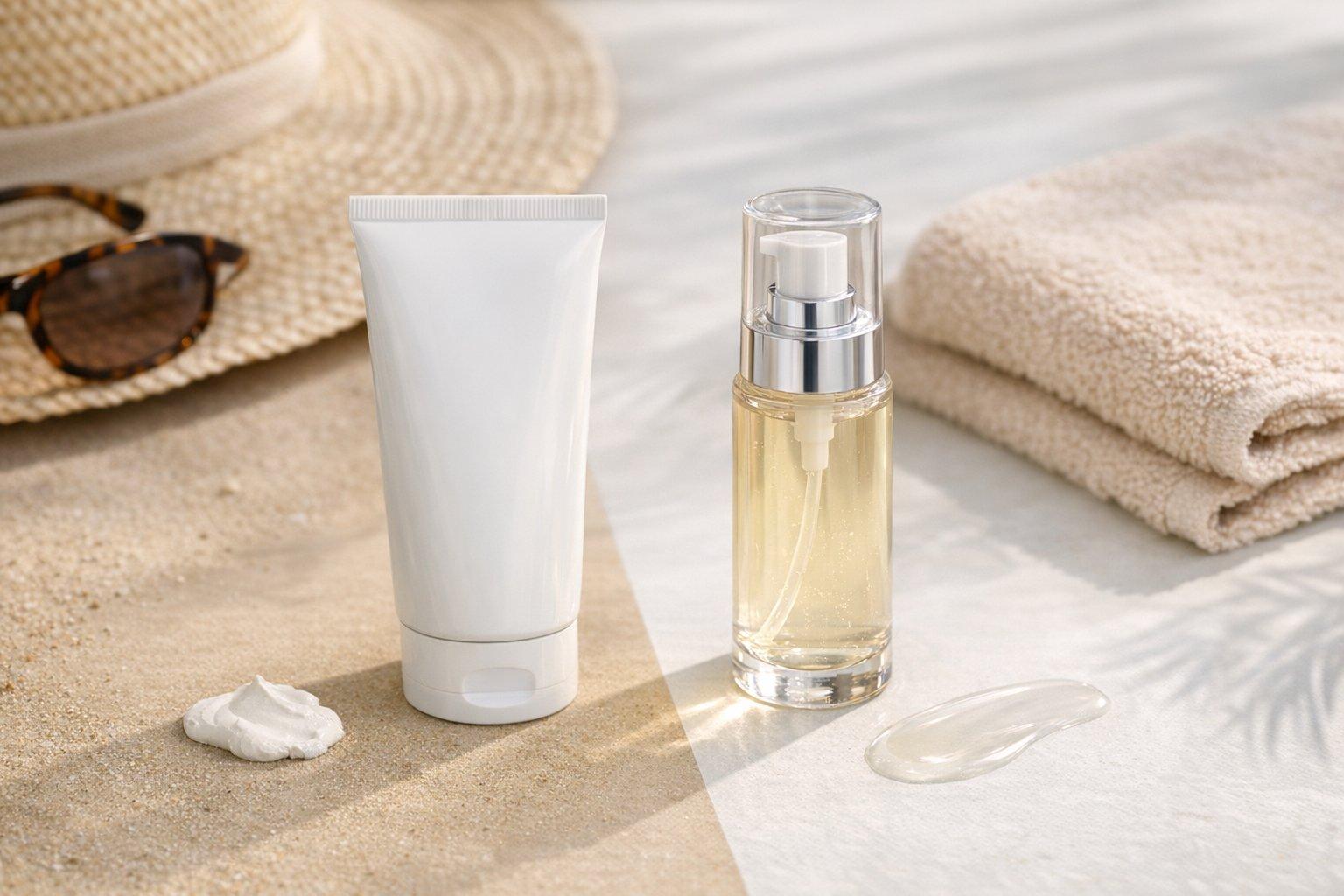
Choosing sunscreen can feel more complicated than it should. Mineral formulas, chemical formulas, tinted options, invisible finishes, and long ingredient lists can make a simple daily step feel surprisingly confusing.
The good news is that there is not one “perfect” sunscreen for everyone. In most cases, the best choice is the one you will actually wear every day, in the right amount, and reapply when needed. Understanding the difference between mineral and chemical sunscreen can help you pick a formula that feels good on your skin and fits your routine.
Quick answer
- Mineral sunscreen sits on the skin’s surface and uses zinc oxide, titanium dioxide, or both to reflect and scatter UV rays.
- Chemical sunscreen uses UV filters that absorb UV energy and convert it into heat.
- Mineral formulas are often a good fit for sensitive, reactive, or post-procedure skin.
- Chemical formulas often feel lighter, blend more easily, and work well for deeper skin tones or under makeup.
- If a sunscreen is broad spectrum, comfortable, and something you’ll use consistently, it may be the right choice for you.
| Feature | Mineral sunscreen | Chemical sunscreen |
|---|---|---|
| How it works | Forms a protective layer that reflects and scatters UV rays | Absorbs UV energy and converts it to heat |
| Skin feel | Can feel thicker or creamier | Often feels lighter and more fluid |
| Best known for | Gentle option for sensitive skin | Cosmetically elegant daily wear |
| Potential downside | May leave a white cast or feel heavier | May sting sensitive eyes or reactive skin |
What is mineral sunscreen?
Mineral sunscreen, sometimes called physical sunscreen, uses ingredients such as zinc oxide and titanium dioxide. These filters sit on the surface of the skin and help block UV exposure. Many people like mineral formulas because they are simple, straightforward, and often well tolerated.
These sunscreens can be especially appealing if your skin tends to feel reactive, if you are using strong active ingredients, or if your skin barrier feels a little stressed. The tradeoff is that some formulas can look chalky, feel thicker, or pill under makeup if the texture is not a match for your routine.
What is chemical sunscreen?
Chemical sunscreen uses organic UV filters that absorb UV radiation before it can do as much damage to the skin. These formulas are often made to feel lightweight, spread easily, and disappear more cleanly on the skin.
For many people, that lighter finish is the main reason chemical sunscreen becomes their everyday favorite. It may sit better under makeup, feel less noticeable in humid weather, and be easier to reapply during the day. Still, some people find certain formulas irritating, especially around the eyes or on very sensitive skin.
How to choose between mineral and chemical sunscreen
Think about your skin sensitivity
If your skin stings easily, flushes quickly, or feels irritated after trying new products, mineral sunscreen may be the easier starting point. Many patients also prefer mineral formulas after procedures or when using exfoliants and retinoids because the skin can feel more delicate.
Think about the finish you actually enjoy wearing
If you dislike anything heavy, greasy, or visible, a chemical sunscreen may be more realistic for daily use. Sunscreen only works when it becomes a habit, so texture matters more than many people realize.
Think about your skin tone
Some mineral formulas can leave a visible cast, especially if they are not tinted or not carefully formulated. If that has been your experience, a tinted mineral option or a sheer chemical sunscreen may be easier to wear confidently.
Think about your routine
If you wear makeup, play sports, spend time outdoors, or need something that layers well with other skincare, pay attention to how the product behaves in real life. A technically excellent sunscreen that pills, burns your eyes, or makes you avoid reapplying is probably not the right fit.
Common reasons people prefer mineral sunscreen
- Sensitive or reactive skin
- Post-procedure skincare support
- Preference for fewer active UV filter ingredients
- Comfort with zinc oxide or titanium dioxide formulas
- Interest in tinted options that can help blend more naturally
Common reasons people prefer chemical sunscreen
- Lighter texture for daily wear
- Less visible residue on the skin
- Easier layering under makeup
- More comfortable feel in heat or humidity
- Better likelihood of generous, consistent application
What matters more than the mineral vs chemical debate
It is easy to get caught up in labels, but a few basics matter most. Look for a broad spectrum sunscreen with SPF 30 or higher, apply enough to cover exposed skin, and remember to reapply as needed, especially after swimming or sweating. Daily consistency matters more than choosing the internet’s “winner” in the mineral-versus-chemical conversation.
It is also worth paying attention to the rest of your sun habits. Hats, sunglasses, shade, and sun-protective clothing can make a meaningful difference, especially in South Florida where UV exposure is part of daily life for many residents and visitors.
When to see a dermatologist
If sunscreen seems to sting every time you use it, if your skin is persistently red or inflamed, or if you are not sure how to protect skin that is acne-prone, rosacea-prone, or highly sensitive, a dermatologist can help you narrow your options. Personalized guidance can be helpful when you feel like every sunscreen is a compromise.
It is also worth getting checked if you have changing spots, unusual sun sensitivity, or questions about protecting your skin after a procedure or while using prescription products. Your clinician can help you decide what makes sense for your skin and your lifestyle.
FAQ
Is mineral sunscreen better for sensitive skin?
Often, yes. Many people with sensitive or reactive skin find mineral formulas easier to tolerate, but texture and inactive ingredients still matter, so there is no single formula that works for everyone.
Does chemical sunscreen work as well as mineral sunscreen?
Yes, both can protect your skin well when they are broad spectrum, used generously, and reapplied appropriately. The better option is usually the one you will wear consistently.
Can I use mineral sunscreen under makeup?
Yes. A tinted or more fluid mineral formula may layer more smoothly under makeup than a thicker cream, so a little experimentation can help.
Why does sunscreen sting around my eyes?
Some formulas can migrate or feel irritating in the eye area. If that happens often, switching textures or trying a mineral formula around the eyes may help.
Do I need sunscreen indoors?
Many people still benefit from daily sunscreen, especially if they spend time near windows or go in and out throughout the day. Making sunscreen part of your morning routine is often the easiest approach.
Ready to get help?
Schedule an appointment or send a message and our team will get back to you.
Prefer to call? 954-666-3736
This article is for educational purposes and is not medical advice. For diagnosis and personalized treatment, please book an appointment with a board-certified dermatologist.
