

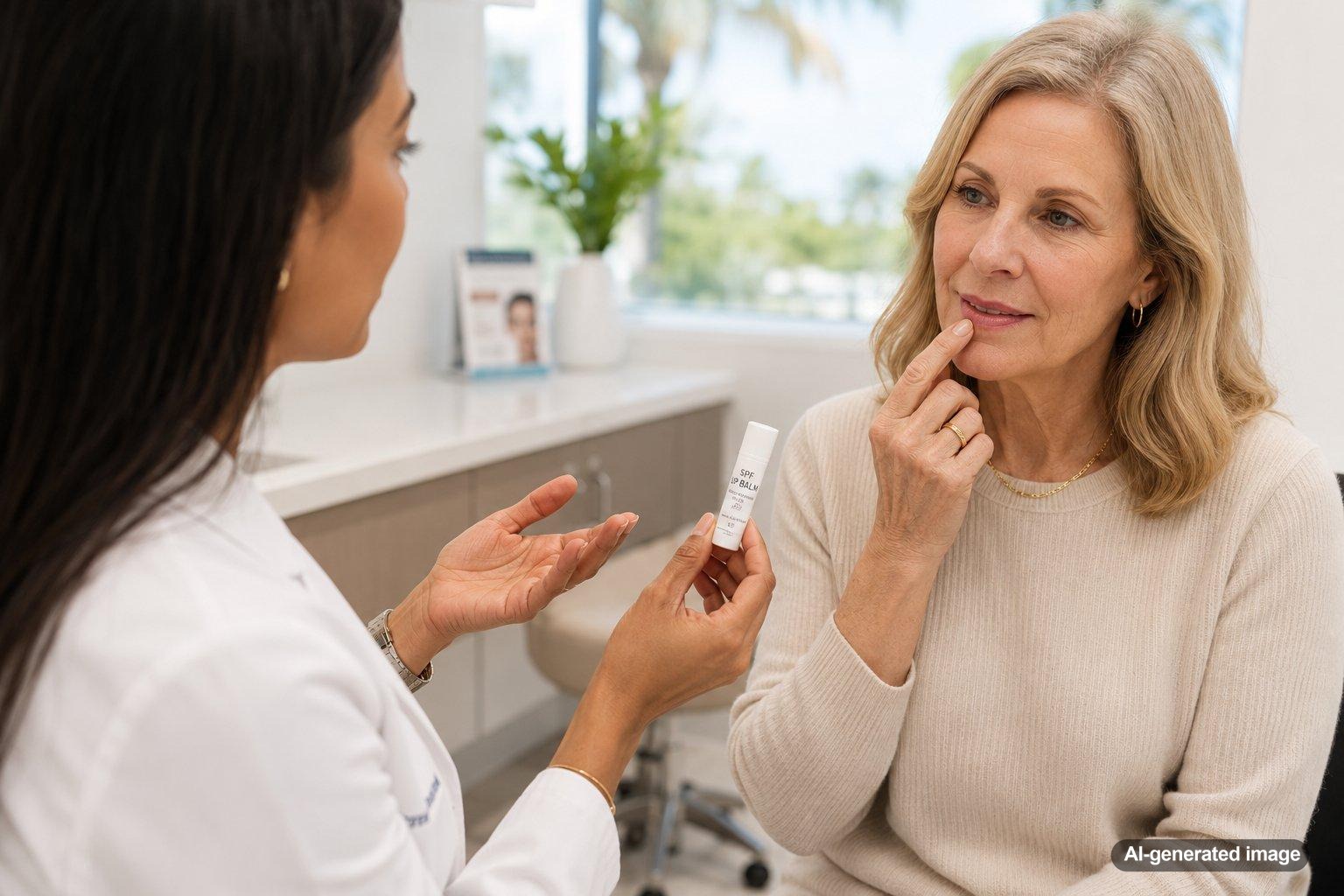
Your lips are easy to overlook when you apply sunscreen, yet they are exposed every time you walk outside, sit near a bright window, drive, play golf, boat, travel, or spend time at the beach. SPF lip balm matters because the lips have delicate skin, can burn quickly, and often lose protection faster than other areas because of eating, drinking, talking, and wiping.
In sunny Fort Lauderdale, lip sun protection is not just a vacation detail. It is a simple daily habit that may help reduce sunburn, dryness, irritation, and long-term UV damage when used consistently with other sun-smart steps.
Quick answer
- Choose a lip balm or lipstick with broad spectrum SPF 30 or higher for daytime use.
- Reapply often outdoors, especially after swimming, sweating, eating, drinking, or wiping your lips.
- Use SPF lip balm with shade, hats, sunglasses, and broad spectrum sunscreen on the rest of your exposed skin.
- If a lip spot changes, bleeds, does not heal, or feels persistently rough, a dermatologist can evaluate it.
What SPF lip balm is
SPF lip balm is a lip product that combines moisture-supporting ingredients with sunscreen filters. The SPF number mainly reflects protection from UVB rays, which are strongly associated with sunburn, while broad spectrum labeling means the product is designed to help protect against both UVA and UVB rays. For lips, many dermatology organizations recommend SPF 30 or higher because this area is exposed, delicate, and frequently missed during a normal sunscreen routine.
The best lip sunscreen is the one you will actually use. Some people prefer a clear balm, while others like a tinted lipstick with sunscreen. Either can be useful as long as the label says broad spectrum and SPF 30 or higher.
Common causes or triggers for sun-damaged lips
- Skipping the lips: Many people apply facial sunscreen but stop before the lip line.
- Outdoor dining and drinking: Eating, sipping, and wiping can remove lip SPF faster than you realize.
- Water and reflection: Beach days, boating, pools, and bright pavement can increase UV exposure.
- Dry or chapped lips: Irritated lips may feel more uncomfortable after sun exposure.
- Travel routines: Snowbirds, international visitors, and frequent flyers may spend more time in strong sun than their skin is used to.
- Cosmetic-only lip products: Glosses and balms without SPF can feel protective but may not provide UV protection.
What you can do at home
Keep SPF lip balm wherever you are most likely to use it: in your handbag, beach bag, golf bag, car console, travel pouch, or next to your morning skincare. Apply it before you go outside, then reapply during the day. A practical rhythm is to refresh after meals, drinks, swimming, sweating, or anytime your lips feel bare.
Look for broad spectrum SPF 30 or higher. If your lips are easily irritated, fragrance-free or mineral-based options with zinc oxide or titanium dioxide may feel more comfortable for some people. Avoid picking, licking, or aggressively exfoliating chapped lips, since that can worsen dryness and make your lips feel more sensitive.
SPF lip balm should be part of a broader sun routine, not the only step. Shade, a wide-brim hat, sunglasses, UPF clothing, and daily sunscreen on exposed skin all work together to support healthier-looking skin over time.
Professional options
A dermatologist can examine persistent roughness, scaling, discoloration, tenderness, or a sore on the lip that does not seem to heal. Sometimes a spot is simply irritated or dry, but other times a clinician may want to evaluate for sun damage or a skin growth that needs closer attention. If treatment is appropriate, options vary depending on the exam and may include prescription therapies, monitoring, biopsy, or other office-based care.
For cosmetic concerns around the mouth, such as texture, etched lines, or uneven tone, a dermatologist can also discuss skin-supporting options separately from medical evaluation. The right plan depends on your skin, your history, and what is seen during an in-person visit.
When to see a dermatologist
It is worth getting checked if you notice a lip spot or sore that changes, bleeds, crusts, hurts, thickens, feels persistently rough, or does not heal. You should also consider an evaluation if one area keeps chapping in the same place despite gentle care and regular SPF. Early evaluation can help clarify what is happening and what next steps, if any, may be appropriate.
People with a personal history of skin cancer, significant sun exposure, tanning bed use, many changing spots, or a weakened immune system may benefit from a more individualized screening plan. A board-certified dermatologist can help you decide what makes sense for your skin.
FAQ
Do lips really need their own sunscreen?
Yes. Facial sunscreen can be difficult to keep on the lips, and many people dislike the taste or texture. An SPF lip balm is designed to be more comfortable for that area, making it easier to reapply throughout the day.
What SPF should I use on my lips?
For daytime outdoor use, look for broad spectrum SPF 30 or higher. Reapplication matters because lip products wear off with talking, eating, drinking, and wiping.
Can I use regular sunscreen on my lips?
You can apply sunscreen carefully to the outer lip area, but many people prefer a dedicated SPF lip balm because it is easier to use and reapply. Avoid getting sunscreen inside the mouth, and follow the product label.
Does SPF lip balm help with chapped lips?
It may help protect dry lips from additional sun irritation, especially when paired with gentle moisturizing care. If chapping is persistent, painful, one-sided, bleeding, or not improving, a dermatologist can evaluate it.
Should I wear SPF lip balm on cloudy days?
Yes, UV exposure can still occur on cloudy days. Daily use is especially helpful in bright climates, during travel, and when spending time outdoors.
Ready to get help?
Schedule an appointment or send a message and our team will get back to you.
Prefer to call? 954-666-3736
Disclaimer
This article is for educational purposes and is not medical advice. For diagnosis and personalized treatment, please book an appointment with a board-certified dermatologist.
Sources & further reading
- American Academy of Dermatology (AAD) – How to apply sunscreen
- The Skin Cancer Foundation – 5 Tips for Taking Care of Your Lips
- U.S. Food and Drug Administration (FDA) – Sunscreen: How to Help Protect Your Skin from the Sun
