

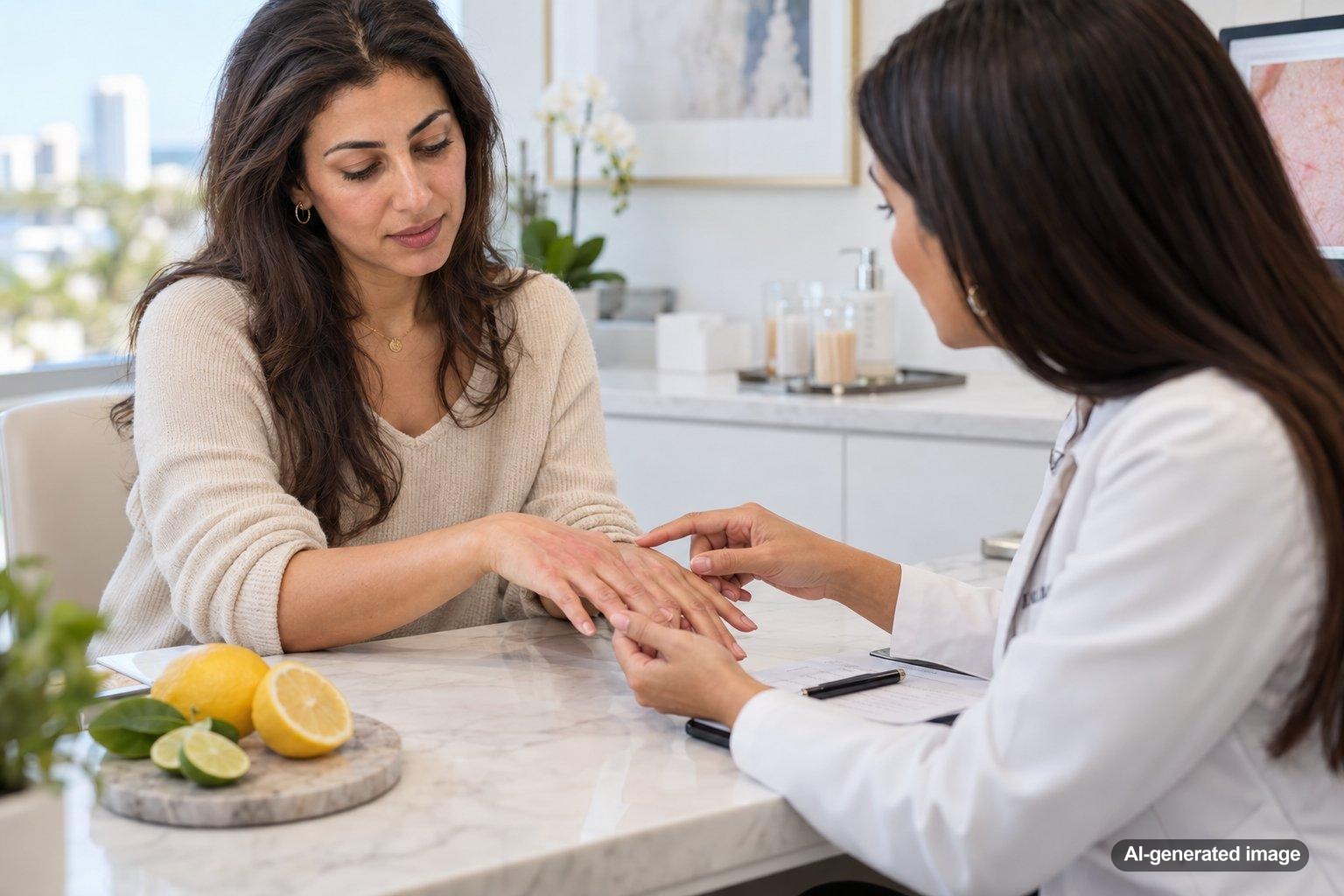
If your hands start burning, turning red, or developing unusual patches after you cut lemons, limes, or other citrus fruit and then spend time outside, the combination of citrus juice and sunlight may be responsible. One possible explanation is a phototoxic skin reaction called phytophotodermatitis.
This reaction can happen when natural chemicals in certain plants or fruits remain on the skin and are then activated by ultraviolet A, or UVA, light. Citrus fruits are well-known triggers. The resulting irritation can resemble a sunburn, and some people develop swelling, blisters, streaks, or lingering dark discoloration. A dermatologist can evaluate the skin if the reaction is significant or the cause isn’t clear.
Quick answer
- Citrus juice on the skin can interact with UVA light and cause a phototoxic reaction.
- Limes are a classic trigger, but lemons, oranges, grapefruit, and other citrus fruits may also be involved.
- The reaction may cause burning, redness, swelling, blisters, or oddly shaped patches where juice touched the skin.
- Dark discoloration can remain after the initial irritation settles.
- Severe pain, extensive blistering, signs of infection, or an uncertain diagnosis should be evaluated by a dermatologist.
What is happening to the skin?
Phytophotodermatitis occurs when certain plant chemicals called furanocoumarins get onto the skin and are subsequently exposed to UVA light. The combination can damage skin cells and trigger inflammation. This is considered a phototoxic reaction rather than a traditional allergy.
Citrus fruits, particularly limes, contain compounds that can participate in this reaction. Someone might squeeze limes for drinks, cut lemons for a meal, or handle citrus outdoors and unknowingly leave small amounts of juice on the hands. Sun exposure afterward can activate the chemicals left on the skin.
The pattern often provides an important clue. Rather than appearing evenly across both hands, the irritation may follow splashes, fingerprints, drips, or streaks where citrus juice contacted the skin.
Common triggers
Situations that can set up this type of reaction include:
- Squeezing limes or lemons while preparing food or drinks outdoors.
- Cutting citrus fruit before going to the beach, pool, patio, or garden.
- Getting juice on the hands and not washing it off before sun exposure.
- Handling citrus while bartending, cooking, grilling, or entertaining outside.
- Touching another area of skin with citrus-contaminated hands before going into the sun.
Other plants can contain similar photosensitizing substances, including celery, parsley, parsnips, figs, and some wild plants. Because several types of rashes and irritant reactions can look similar, exposure history is useful but doesn’t replace an examination when symptoms are concerning.
What can the reaction look and feel like?
The skin may feel tender, hot, irritated, or painful, similar to a burn. Visible changes can include redness, swelling, streaks, irregular spots, or blisters. Symptoms may not appear immediately after handling the fruit, so people do not always connect the later skin reaction with citrus exposure.
As the inflammation settles, the affected area may develop post-inflammatory hyperpigmentation. These darker marks can be especially noticeable because they sometimes preserve the irregular shape of a splash or drip. The amount and duration of discoloration vary from person to person.
What you can do at home
If citrus juice has just contacted your skin, washing the area promptly with soap and water and limiting additional sun exposure may reduce further exposure. For mild irritation, conservative skin care can help keep the area comfortable while it settles.
- Gently wash the affected skin without vigorous scrubbing.
- Use a cool, damp compress for comfort.
- Keep the area protected from additional sunlight with clothing when practical.
- Use broad-spectrum sunscreen on exposed skin according to the product directions.
- Avoid popping, peeling, or picking at blisters or irritated skin.
- Choose simple, fragrance-free skin care while the area is sensitive.
If blistering is present, avoid experimenting with strong acids, retinoids, exfoliating scrubs, or other potentially irritating products on the affected area until the skin has recovered or a clinician has advised you otherwise.
Professional options
A dermatologist can examine the distribution and appearance of the reaction, review recent plant, citrus, sun, skin-care, and medication exposures, and consider whether another condition could be responsible.
When inflammation is more pronounced, a clinician may discuss anti-inflammatory treatment or appropriate wound care. If discoloration remains after the active reaction has resolved, treatment options can be considered based on skin type, sensitivity, and the nature of the pigmentation. Management should be individualized rather than started while the skin is still acutely irritated.
When should you see a dermatologist?
It is worth seeking medical evaluation when the reaction is severe, widespread, unusually painful, or difficult to explain. Prompt evaluation is also appropriate if you develop substantial blistering, significant swelling, involvement around the eyes, or symptoms suggesting infection such as increasing warmth, drainage, worsening tenderness, or fever.
A dermatologist can also help when discoloration persists, similar reactions keep happening, or you are unsure whether citrus and sunlight are actually the cause. Other forms of contact dermatitis, sun sensitivity, medication-related photosensitivity, and skin conditions can sometimes resemble a phototoxic reaction.
FAQ
Is a citrus and sun reaction an allergy?
Phytophotodermatitis is generally considered a phototoxic reaction rather than an allergic reaction. Plant chemicals on the skin interact with UVA light and trigger local inflammation.
Can lemon juice cause the same problem as lime juice?
Yes. Limes are frequently associated with this reaction, but other citrus fruits, including lemons, oranges, and grapefruit, contain light-sensitizing compounds that may cause similar reactions in some circumstances.
Why are there streaks or odd shapes on my hands?
The pattern may reflect exactly where juice splashed, dripped, or was transferred across the skin. This can produce irregular marks that look different from an ordinary, evenly distributed sunburn.
Can the skin turn dark afterward?
Yes. Post-inflammatory hyperpigmentation may remain after the redness and irritation improve. The duration varies, and a dermatologist can evaluate persistent discoloration before recommending treatment.
How can I lower the chance of this happening again?
Wash your hands and any exposed skin thoroughly after handling citrus, especially before spending time outdoors. Sun-protective clothing and broad-spectrum sunscreen can provide additional protection from ultraviolet exposure.
Ready to get help?
Schedule an appointment or send a message and our team will get back to you.
Prefer to call? 954-666-3736
This article is for educational purposes and is not medical advice. For diagnosis and personalized treatment, please book an appointment with a board-certified dermatologist.
