

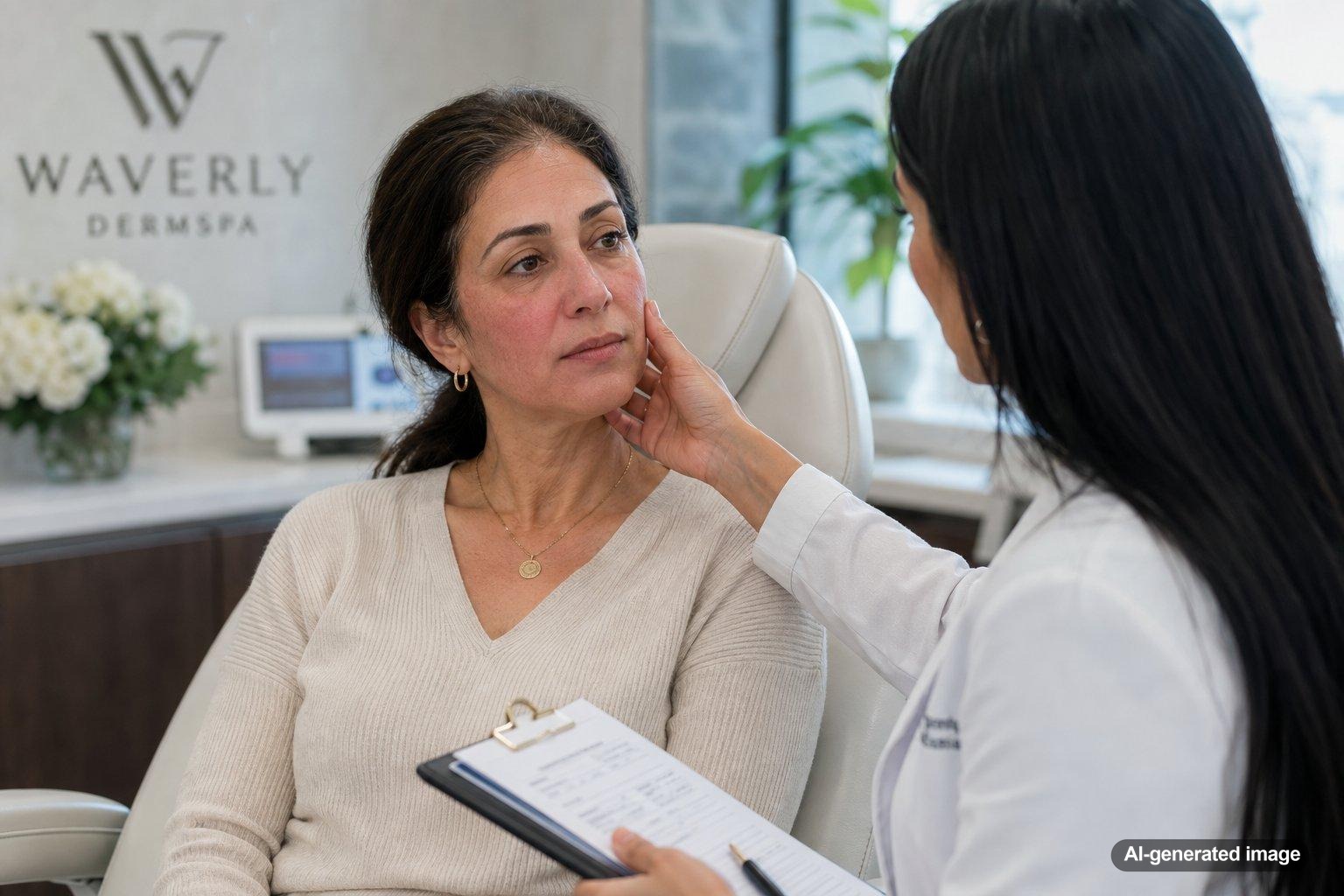
Facial redness after a deep phenol peel can remain noticeable for several weeks and, in some people, may gradually fade over a few months. Because a phenol peel reaches much deeper layers of skin than a light or medium chemical peel, recovery is longer and the skin can stay pink or red well after the initial peeling and swelling have improved.
The exact timeline varies with the depth and extent of treatment, your natural skin response, the areas treated, sun exposure, and how healing progresses. Your treating dermatologist is the best person to assess whether your redness is following an expected pattern.
Quick answer
- Redness is expected: A deep phenol peel creates a controlled injury that requires substantial healing.
- It can last for weeks: Strong redness is usually most noticeable earlier in recovery and gradually becomes less intense.
- Pinkness may linger: Residual pink or red coloration can sometimes remain visible for a few months.
- Healing varies: Treatment depth, skin characteristics, aftercare, and sun exposure can influence how quickly redness fades.
- Unexpected changes should be evaluated: Increasing pain, spreading redness, drainage, fever, or worsening swelling deserves prompt medical attention.
Why does a deep phenol peel cause so much redness?
A deep phenol peel is an intensive resurfacing procedure designed to remove damaged outer skin and reach deeper portions of the skin than lighter chemical peels. The treatment triggers a significant healing response as new surface skin forms and the treated area continues remodeling.
During this process, increased blood flow and temporary changes in the skin barrier can make the face look red, pink, or flushed. The visible peeling stage may finish before the underlying redness has completely settled, so skin can appear healed on the surface while still looking noticeably pink.
What does the redness timeline usually look like?
There is no single recovery schedule that applies to every patient. In the earliest phase, redness is often accompanied by swelling, tenderness, crusting, or significant peeling. As the surface heals, those changes typically become less prominent, while redness may remain.
Over the following weeks, the color generally softens gradually rather than disappearing overnight. Some people continue to notice pinkness for a few months, especially after a particularly deep treatment. Your dermatologist can compare your progress with the depth of your procedure and your individual healing response.
What can make redness last longer?
Several factors can influence how long post-peel redness remains visible:
- Treatment depth and area: More intensive resurfacing usually requires a longer healing period.
- Individual skin response: Some skin simply remains pink longer during repair.
- Sun exposure: Recently resurfaced skin is especially vulnerable to ultraviolet exposure, which may contribute to prolonged irritation or uneven pigmentation.
- Heat and irritation: Hot environments, vigorous activity, harsh products, or friction may temporarily intensify visible redness while the skin is sensitive.
- Aftercare: Following the specific wound-care and skincare instructions provided by your treating physician can support an orderly recovery.
What can you do at home while redness fades?
Deep phenol peel recovery should be guided by the physician who performed or is supervising the procedure. Use only cleansers, ointments, moisturizers, sunscreens, and other products your clinician has cleared for your stage of healing.
In general, freshly resurfaced skin should be handled gently. Avoid picking or peeling loose skin, scrubbing, exfoliating acids, retinoids, and other potentially irritating products until your clinician says they can be restarted. Protecting the treated skin from direct sun is especially important, and your dermatologist can tell you when and how to begin using sunscreen after the initial wound-healing period.
If heat, strenuous exercise, or certain activities make your face noticeably more flushed, ask your clinician when it is appropriate to resume them. Recovery instructions can differ substantially depending on how the peel was performed.
What can a dermatologist do for persistent redness?
If redness is lasting longer than expected, a dermatologist can examine the skin and determine whether it represents normal healing or whether another issue needs attention. Evaluation may include reviewing your skincare routine, sun exposure, medications, healing pattern, and any additional symptoms.
Management depends on the cause and stage of recovery. Your dermatologist may recommend changes to topical care, additional healing time, strict sun protection, or other office-based approaches when appropriate. Because deep phenol peels create significant skin injury, treatment decisions during recovery should be individualized rather than based on a generic timeline.
At Waverly DermSpa, we offer Chemical Peels and can help you understand whether they may be appropriate.
When should you contact a dermatologist?
Persistent pinkness by itself can be part of deep-peel recovery, but certain changes deserve medical evaluation. Contact your treating dermatologist if redness is becoming more intense instead of gradually improving, particularly if it is accompanied by increasing pain, warmth, significant swelling, drainage, blistering, fever, or new areas of skin breakdown.
You should also check in if you are concerned about new darkening, unusual light patches, scarring, or any change that does not fit the recovery expectations your physician gave you. If you’re unsure, it’s worth getting checked rather than trying to manage a complication on your own.
Frequently asked questions
Is it normal to still be red several weeks after a deep phenol peel?
It can be. Deep phenol peels require substantially more recovery than superficial peels, and visible pinkness or redness may remain for several weeks. Your dermatologist can confirm whether the appearance is appropriate for your specific stage of healing.
Can redness after a phenol peel last for months?
Yes, residual pinkness can sometimes remain noticeable for a few months and fade gradually. The duration varies, so a prolonged timeline does not automatically indicate a problem. Changes that are worsening or accompanied by concerning symptoms should be evaluated.
Can makeup cover phenol peel redness?
Makeup may eventually help camouflage residual redness, but it should not be applied until the treated skin has healed enough for your dermatologist to approve cosmetic products. Applying makeup too early may irritate healing skin.
Does more redness mean the peel worked better?
No. The amount or duration of redness is not a reliable way to judge the quality of the result. Healing responses vary, and prolonged inflammation is not something to pursue as a sign of effectiveness.
When can I restart retinol or exfoliating acids?
Do not restart retinoids, exfoliating acids, scrubs, or other potentially irritating active products until your dermatologist has evaluated your healing and specifically cleared them. Deep-peel skin can remain unusually sensitive even after visible peeling has stopped.
Should I worry if my redness suddenly gets worse?
Worsening redness, especially when combined with increasing pain, warmth, swelling, drainage, fever, or skin breakdown, should be discussed promptly with your treating dermatologist.
Ready to get help?
Schedule an appointment or send a message and our team will get back to you.
Prefer to call? 954-666-3736
This article is for educational purposes and is not medical advice. For diagnosis and personalized treatment, please book an appointment with a board-certified dermatologist.
