

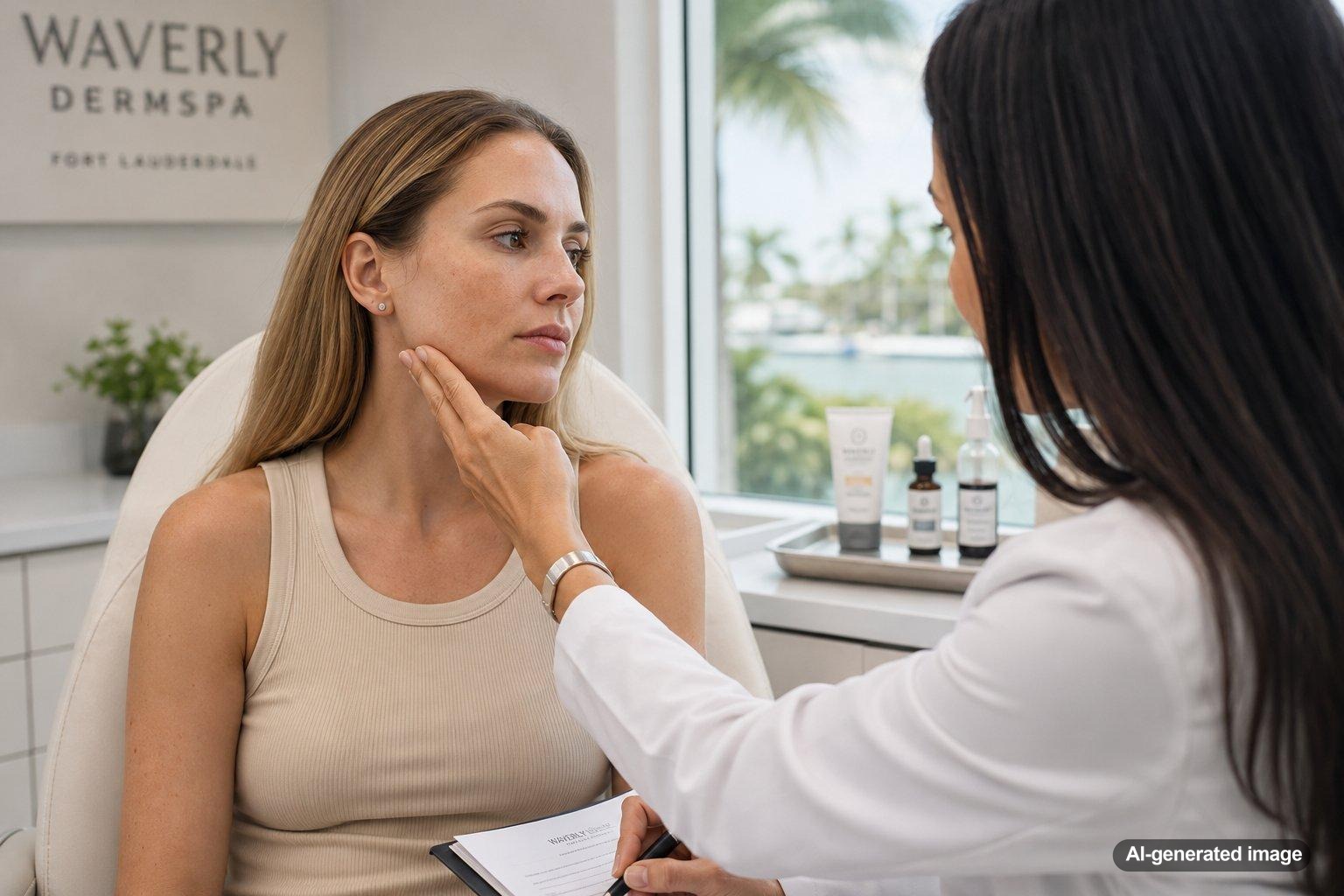
Melasma-prone skin often needs a calmer, more strategic approach than a standard glow-focused facial. In sunny, warm climates like Fort Lauderdale, sun exposure and heat can be especially relevant because they may contribute to visible uneven tone in people who are prone to pigment changes.
A facial may help support the skin barrier, improve hydration, and make a routine feel more manageable, but it should be planned thoughtfully. The goal is not to chase aggressive exfoliation. It is to choose gentle, consistent care that respects the skin and reduces avoidable irritation.
Quick answer
- A facial for melasma-prone skin should usually be gentle, barrier-supportive, and conservative.
- Sun protection matters every day, including cloudy days and short outdoor errands.
- Heat can be a trigger for some people, so saunas, hot yoga, steam, and prolonged outdoor heat may need extra caution.
- Overly aggressive exfoliation can irritate skin and may make uneven tone look more noticeable.
- A dermatologist can help determine whether prescription or in-office options may be appropriate.
What melasma-prone skin means
Melasma is a common pattern of uneven brown or gray-brown discoloration that often appears on the face. It can be influenced by multiple factors, including sun exposure, visible light, heat, hormones, genetics, and inflammation. Not every dark patch is melasma, and not every person responds the same way to skincare or treatments.
For that reason, a thoughtful facial begins with restraint. The skin should be treated as reactive to excess stimulation, even when it does not feel sensitive day to day. A calm facial may focus on cleansing, hydration, barrier support, and carefully selected exfoliation only when appropriate.
Common sun and heat triggers to consider
- Direct sun exposure: Beach days, boating, outdoor dining, tennis, golf, walking, and pool time can all add up.
- Visible light: Light that reaches the skin, including through windows, may matter for some people with pigment concerns.
- High heat: Steam rooms, saunas, hot yoga, intense workouts, and humid outdoor conditions can leave skin flushed and reactive.
- Post-facial sensitivity: Even a gentle facial may leave skin temporarily more vulnerable if exfoliation was included.
- Irritation from products: Scrubs, strong acids, fragranced products, and overuse of actives may make the skin feel stressed.
What you can do at home
At-home care for melasma-prone skin should be steady, simple, and protective. A broad-spectrum sunscreen is important, and many people with pigment concerns prefer a tinted mineral sunscreen because iron oxides may help protect against visible light. Reapply as directed on the product label, especially when sweating or spending time outdoors.
Physical protection can also make a meaningful difference. A wide-brim hat, sunglasses, shade, UV-protective clothing, and avoiding peak heat can all support a pigment-conscious routine. If you are outside often, think beyond sunscreen alone and build layers of protection.
Keep your skincare routine gentle around facial appointments. Avoid adding several strong products at once. If you use retinoids, exfoliating acids, benzoyl peroxide, or brightening products, ask your clinician or aesthetician how to pause and restart them around your visit.
How a facial can be adjusted for melasma-prone skin
A facial for melasma-prone skin may include a gentle cleanse, light exfoliation when appropriate, calming hydration, and barrier-focused finishing products. Extractions, steam, strong peels, heat-based steps, or vigorous massage may need to be minimized or avoided depending on your skin and recent history.
The most important part is communication. Tell your provider if your skin darkens after irritation, if you recently had a peel or laser, if you are using prescription skincare, or if you are pregnant, nursing, or trying to become pregnant. Those details can change what is appropriate for your skin.
Professional options
Professional care for melasma-prone skin can include skincare planning, gentle facials, pigment-focused topical routines, chemical peels, microneedling, lasers, or other in-office options. These choices should be individualized because melasma can be stubborn and reactive, and not every treatment is appropriate for every skin tone or trigger pattern.
A dermatologist can evaluate whether the discoloration is consistent with melasma or another cause of hyperpigmentation. If prescription therapies or procedures are being considered, that medical evaluation helps guide safer, more precise planning.
At Waverly DermSpa, we offer HydraFacial and can help you understand whether it may be appropriate.
When to see a dermatologist
Consider seeing a dermatologist if pigment changes are new, spreading quickly, uneven in shape or color, associated with irritation, or not responding to a careful routine. It is also worth getting checked if you are unsure whether the discoloration is melasma, post-inflammatory hyperpigmentation, sun damage, or another concern.
You should also seek professional guidance before combining strong brightening products, prescription creams, peels, lasers, or microneedling. More is not always better with pigment-prone skin, and a measured plan may reduce the chance of unnecessary irritation.
FAQ
Can I get a facial if I have melasma-prone skin?
Many people with melasma-prone skin can receive facials, but the facial should be gentle and customized. The provider may avoid aggressive exfoliation, excess heat, steam, or anything likely to irritate the skin.
Should I avoid steam during a facial?
Steam may not be ideal for every person with melasma-prone skin, especially if heat tends to leave the skin flushed or reactive. Ask your provider whether a no-steam approach makes sense for your visit.
Can a facial remove melasma?
A facial should not be viewed as a removal treatment for melasma. It may help support hydration, texture, and barrier health, while a dermatologist can discuss medical or procedural options when appropriate.
What should I do after a facial?
Keep the routine simple, use sunscreen consistently, avoid excess heat when possible, and follow any post-care instructions from your provider. It may be wise to pause strong exfoliants until your skin feels settled.
Is sunscreen enough for melasma-prone skin?
Sunscreen is important, but many people benefit from layered protection. Shade, hats, sunglasses, UV-protective clothing, and heat awareness can all be useful parts of a pigment-conscious plan.
Ready to get help?
Schedule an appointment or send a message and our team will get back to you.
Prefer to call? 954-666-3736
This article is for educational purposes and is not medical advice. For diagnosis and personalized treatment, please book an appointment with a board-certified dermatologist.
