

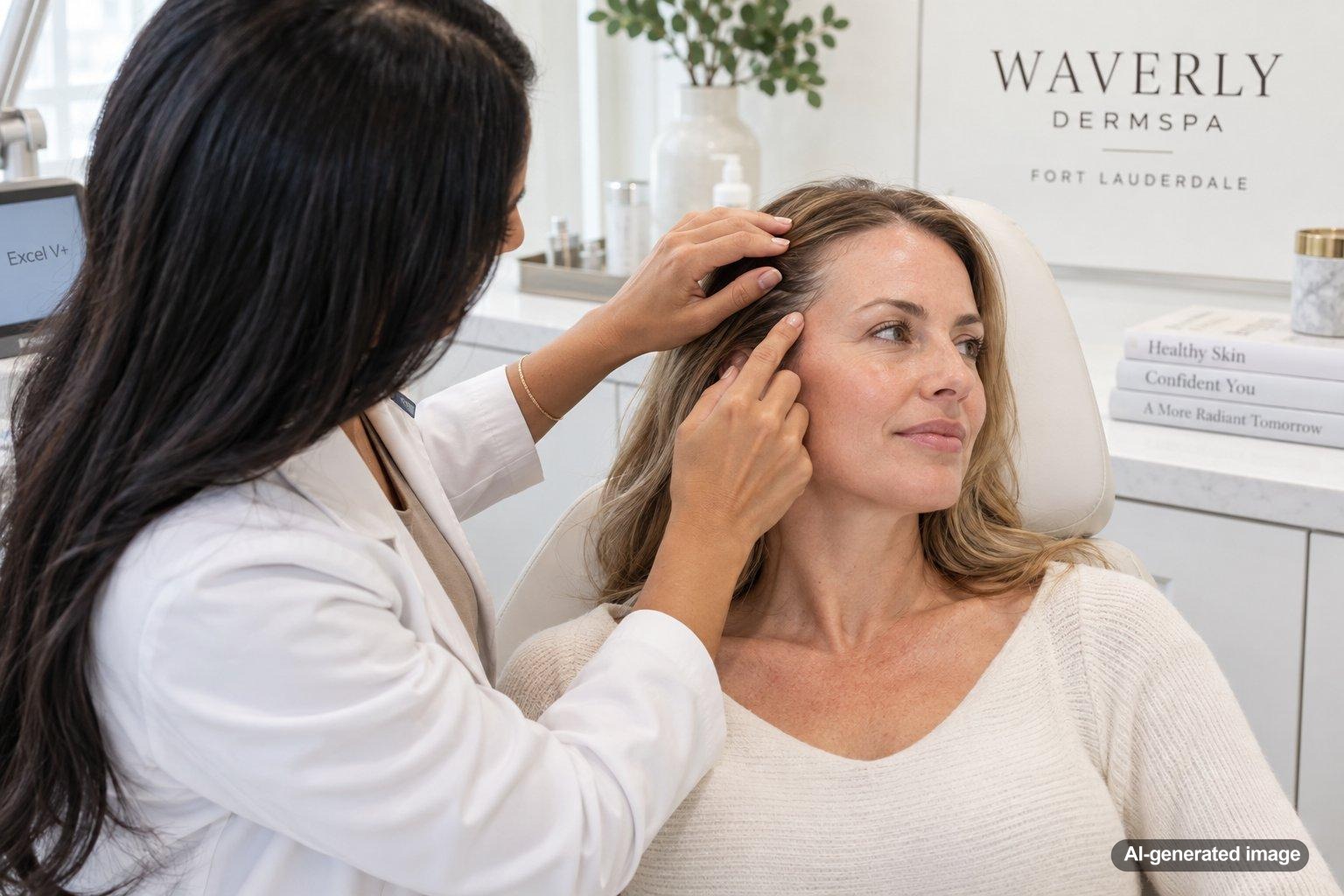
Visible veins around the temples and hairline can stand out more than expected, especially against otherwise even-toned skin. These small red, purple, or bluish vessels may become noticeable gradually, and makeup does not always conceal them well. For people who want to explore an in-office option, Excel V+ is one technology that may be considered for certain visible facial vessels.
Treatment is not identical for every vessel or skin type. The color, depth, size, location, and surrounding skin all matter, so an evaluation is useful before deciding whether a vascular laser approach makes sense.
Quick answer
- Excel V+ is a laser platform that can be used to target selected visible blood vessels in the skin.
- Veins around the temples and hairline may respond differently depending on their size, depth, and color.
- Treatment settings are selected for the individual area rather than using one approach for every facial vessel.
- Temporary redness, warmth, or swelling can occur after treatment, and recovery varies from person to person.
- A dermatologist can evaluate whether a visible vessel is appropriate for laser treatment or needs a different approach.
Why facial veins can appear around the temples and hairline
The temple and hairline areas have relatively thin skin in some people, which can make superficial vessels easier to see. Visible vessels may also become more apparent with cumulative sun exposure, natural changes in the skin over time, flushing tendencies, genetics, or other individual factors.
Not every visible line in this area is the same. Some vessels are very fine and red, while others are larger, deeper, or more blue-purple. That distinction can influence whether a vascular laser may be considered and how a clinician approaches treatment.
How Excel V+ approaches visible vessels
Excel V+ is designed to deliver laser energy to selected vascular targets. During treatment, the clinician evaluates the appearance and location of the vessel and chooses settings suited to the treatment area. The goal is to treat the vessel selectively while taking the surrounding skin into account.
Because vessels near the temples and hairline can differ in depth and diameter, a personalized assessment is important. A very fine superficial vessel may call for a different approach than a more prominent vessel beneath the skin.
What an appointment may involve
Before treatment, the area is typically examined carefully. Your clinician may ask about how long the vessels have been visible, whether they change with heat or flushing, previous laser treatments, medications, sun exposure, and your skin’s tendency to develop discoloration.
During the procedure, laser pulses are directed at selected vessels. Sensations vary, but patients may notice brief warmth or a snapping sensation. The length of an appointment depends on how many areas are being treated and how extensive the visible vessels are.
What recovery can look like
Temporary redness, mild swelling, warmth, or sensitivity may occur in the treated area. The exact response depends on the vessel, treatment settings, skin type, and individual healing pattern. Some treated vessels may look different immediately, while others may change more gradually.
It is important to follow the aftercare instructions provided by your clinician. Gentle skin care and careful sun protection are commonly emphasized after laser procedures because recently treated skin can be more sensitive.
What you can do at home
- Use broad-spectrum sun protection consistently on the temples, forehead, and hairline.
- Avoid picking, rubbing, or aggressively exfoliating an area that has recently been treated.
- Keep your routine simple if the skin feels temporarily sensitive.
- Follow the specific post-treatment instructions provided by your clinician.
- Contact the treating office if you develop an unexpected or concerning reaction.
Who should have the area evaluated first?
A consultation is especially helpful when a vessel is unusually large, newly prominent, painful, associated with a lump or skin change, or difficult to clearly identify. A dermatologist can examine the area and determine whether it appears suitable for cosmetic vascular treatment or whether another evaluation is appropriate.
Skin tone, recent sun exposure, previous pigmentation changes, medications, and medical history can also affect treatment planning. These factors are among the reasons laser parameters should be individualized.
Can the veins come back?
A treated vessel may improve, but laser treatment does not prevent every future visible vessel from developing. Genetics, sun exposure, flushing, aging-related skin changes, and other factors can continue to influence vascular visibility over time. Some people may therefore discuss additional treatment or maintenance with their clinician based on how their skin responds.
When to see a dermatologist
Consider having the area examined if you are unsure whether what you are seeing is actually a blood vessel, if the appearance is changing unexpectedly, or if there is pain, bleeding, persistent irritation, a new growth, or another skin change in the same area. Cosmetic treatment should not substitute for evaluating a spot that has concerning features.
Frequently asked questions
Can Excel V+ treat veins right at the hairline?
It may be possible to treat selected vessels close to the hairline, but the exact location and surrounding structures need to be assessed carefully. Your clinician can determine whether the vessel is an appropriate target.
Does every visible temple vein need the same laser setting?
No. Vessel color, depth, width, location, and skin characteristics can differ, so treatment parameters are selected individually.
How many sessions might I need?
The number of sessions varies. Some vessels may respond noticeably after treatment, while others may require additional sessions or may not be ideal laser targets. Your clinician can provide a more individualized expectation after examining the area.
Can I wear makeup afterward?
That depends on how your skin responds and the aftercare instructions provided by your clinician. If the area is irritated or sensitive, you may be advised to keep products minimal for a period of time.
Is sun protection important after treatment?
Yes. Consistent sun protection is a sensible part of caring for laser-treated skin and may also help reduce additional visible sun-related skin changes.
At Waverly DermSpa, we offer Excel V+ and can help you understand whether it may be appropriate.
Ready to get help?
Schedule an appointment or send a message and our team will get back to you.
Prefer to call? 954-666-3736
Disclaimer
This article is for educational purposes and is not medical advice. For diagnosis and personalized treatment, please book an appointment with a board-certified dermatologist.
