

Dark spots after acne can feel frustrating, especially when the breakout itself has finally calmed down. These flat brown, tan, gray-brown, or deeper marks are often linked to post-inflammatory hyperpigmentation, which can happen when the skin produces extra pigment after irritation.
In sunny Fort Lauderdale, prevention matters. Heat, visible light, and ultraviolet exposure may make discoloration look more noticeable or linger longer. A calm routine, consistent sun protection, and early acne control can all support a more even-looking complexion over time.
Quick answer
- Dark spots after acne are often pigment changes left behind after inflammation.
- Picking, squeezing, and harsh scrubbing may increase irritation and make marks more noticeable.
- Daily broad-spectrum sunscreen is one of the most important steps for preventing spots from looking darker.
- Gentle, consistent skin care usually works better than an aggressive routine.
- A dermatologist can evaluate whether office treatments or prescription options may be appropriate.
What dark spots after acne are
Dark spots after acne are different from active pimples and different from textured acne scars. They are usually flat areas of discoloration that remain after the skin has been inflamed. The color can vary depending on your natural skin tone, the depth of pigment, and how recently the breakout occurred.
These marks are common after inflamed pimples, cystic breakouts, or any acne lesion that has been picked or irritated. They are not a sign that the skin is dirty, and they are not something to scrub away. The goal is to reduce new inflammation, protect the skin from additional darkening, and support healthy skin renewal.
Common causes and triggers
Several everyday factors can make post-acne discoloration more likely or more noticeable:
- Inflammation from acne: The more irritated a breakout becomes, the more likely it may leave a visible mark.
- Picking or squeezing: Trauma to the skin can extend inflammation and increase the chance of discoloration.
- Sun exposure: Ultraviolet light can deepen the look of existing marks and make uneven tone harder to manage.
- Harsh products: Over-exfoliating, strong scrubs, and too many active ingredients can disrupt the skin barrier.
- Heat and irritation: Hot weather, friction, and inflamed skin can all contribute to a cycle of sensitivity and pigment changes.
- Delayed acne control: Ongoing breakouts can create new marks before older spots have had time to fade in appearance.
What you can do at home
A steady, gentle routine is often the most practical starting point. The focus should be on calming the skin, reducing new breakouts, and limiting the triggers that can make discoloration appear darker.
- Use sunscreen every morning: Choose a broad-spectrum sunscreen and reapply when you are outdoors, sweating, or near water.
- Do not pick: Leaving breakouts alone can help reduce extra irritation and lower the chance of lingering marks.
- Cleanse gently: Use a mild cleanser and avoid rough scrubbing, cleansing brushes, or abrasive exfoliants on irritated areas.
- Moisturize consistently: A balanced skin barrier can better tolerate acne care and brightening ingredients.
- Add active ingredients slowly: Products with ingredients such as azelaic acid, niacinamide, retinoids, or exfoliating acids may help some people, but they should be introduced carefully and stopped if irritation develops.
- Be patient with changes: Pigment changes can improve gradually, but the pace varies widely from person to person.
If your skin is sensitive, reactive, or prone to irritation, it may be better to simplify your routine before adding more products. Too many brightening products at once can sometimes make the skin more inflamed, which may work against the goal of an even-looking tone.
Professional options
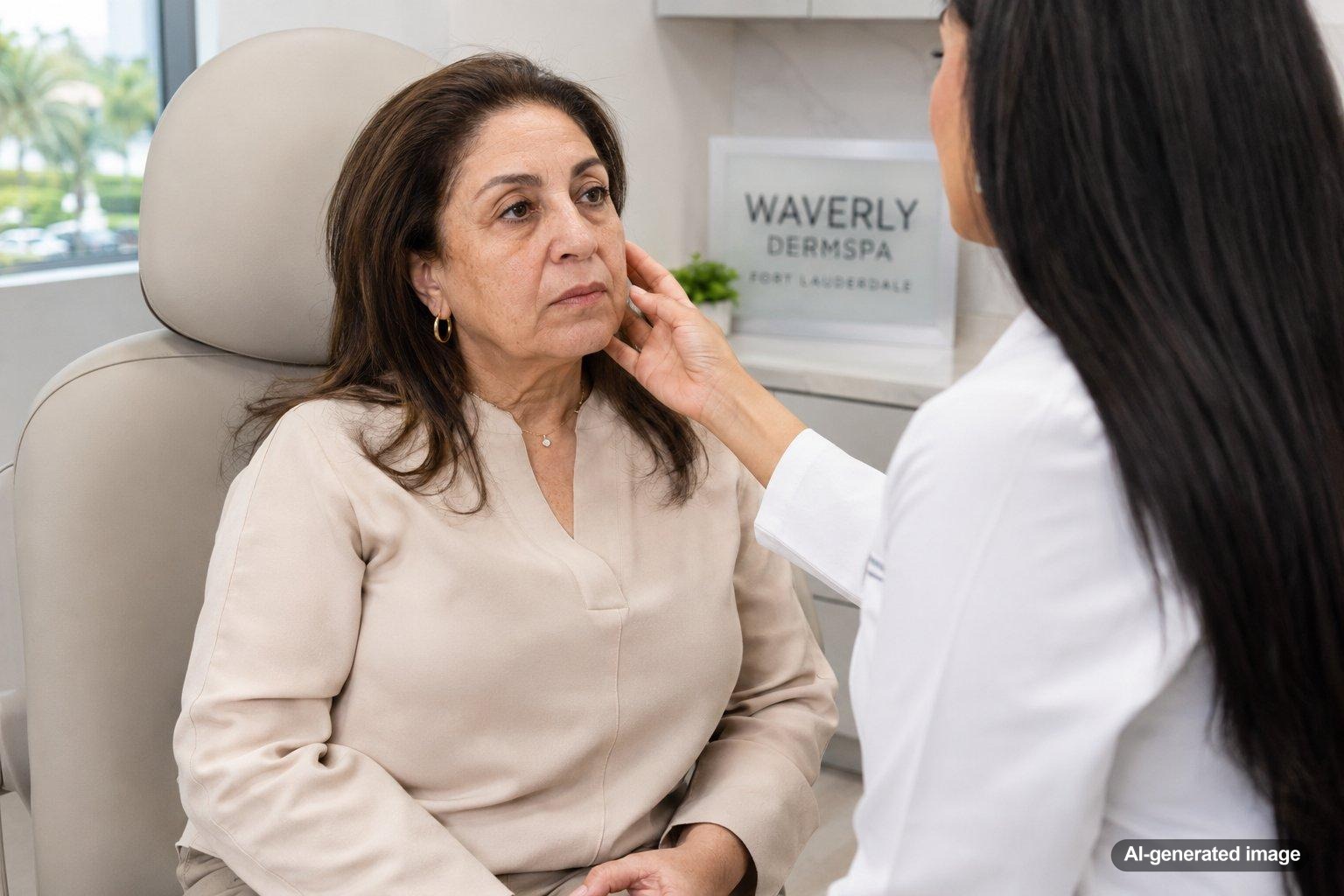
When dark spots are persistent, widespread, or paired with ongoing acne, a dermatologist can evaluate your skin and help separate pigment changes from acne scarring, melasma, medication-related changes, or other causes of discoloration. Common professional categories may include prescription acne treatment, prescription pigment-balancing topicals, chemical peels, microneedling, laser or light-based treatments, and medical-grade skin care planning.
Not every option is appropriate for every skin tone, skin type, or history of sensitivity. A careful evaluation matters, especially for deeper skin tones, active acne, recent tanning, pregnancy considerations, or a history of post-inflammatory pigment changes.
At Waverly DermSpa, we offer Chemical Peels and can help you understand whether they may be appropriate.
When to see a dermatologist
It is worth scheduling a dermatology visit if dark spots are getting darker, spreading, appearing without a clear acne trigger, or not matching your usual post-breakout pattern. You should also seek evaluation if you have painful cystic acne, frequent breakouts, scarring, irritation from over-the-counter products, or discoloration that appears alongside a changing mole, bleeding spot, or non-healing lesion.
A board-certified dermatologist can look at the pattern, review your routine, and recommend a plan that fits your skin tone, acne history, lifestyle, and comfort level.
FAQ
Are dark spots after acne the same as acne scars?
Not always. Dark spots are usually flat discoloration, while acne scars often involve texture changes such as dents, raised areas, or uneven skin surface. Some people have both, which is one reason an in-person evaluation can be helpful.
Can sunscreen really help acne marks?
Yes, sunscreen can be an important part of prevention and maintenance. It does not erase marks overnight, but consistent sun protection may help keep existing discoloration from looking darker.
Should I exfoliate dark spots more often?
More exfoliation is not always better. Over-exfoliating can irritate the skin and may make discoloration more noticeable. A dermatologist or aesthetician can help you choose a safer pace for your skin.
Do acne spot treatments help dark marks?
Acne spot treatments are usually designed for active breakouts, not leftover discoloration. Using them too often on healed skin may cause dryness or irritation. It is better to use products that match the concern.
When should I consider professional care?
Consider professional care if you are still breaking out, if marks are becoming more noticeable, if your skin is irritated from products, or if you want a personalized plan instead of guessing with multiple over-the-counter options.
Ready to get help?
Schedule an appointment or send a message and our team will get back to you.
Prefer to call? 954-666-3736
Disclaimer
This article is for educational purposes and is not medical advice. For diagnosis and personalized treatment, please book an appointment with a board-certified dermatologist.
