

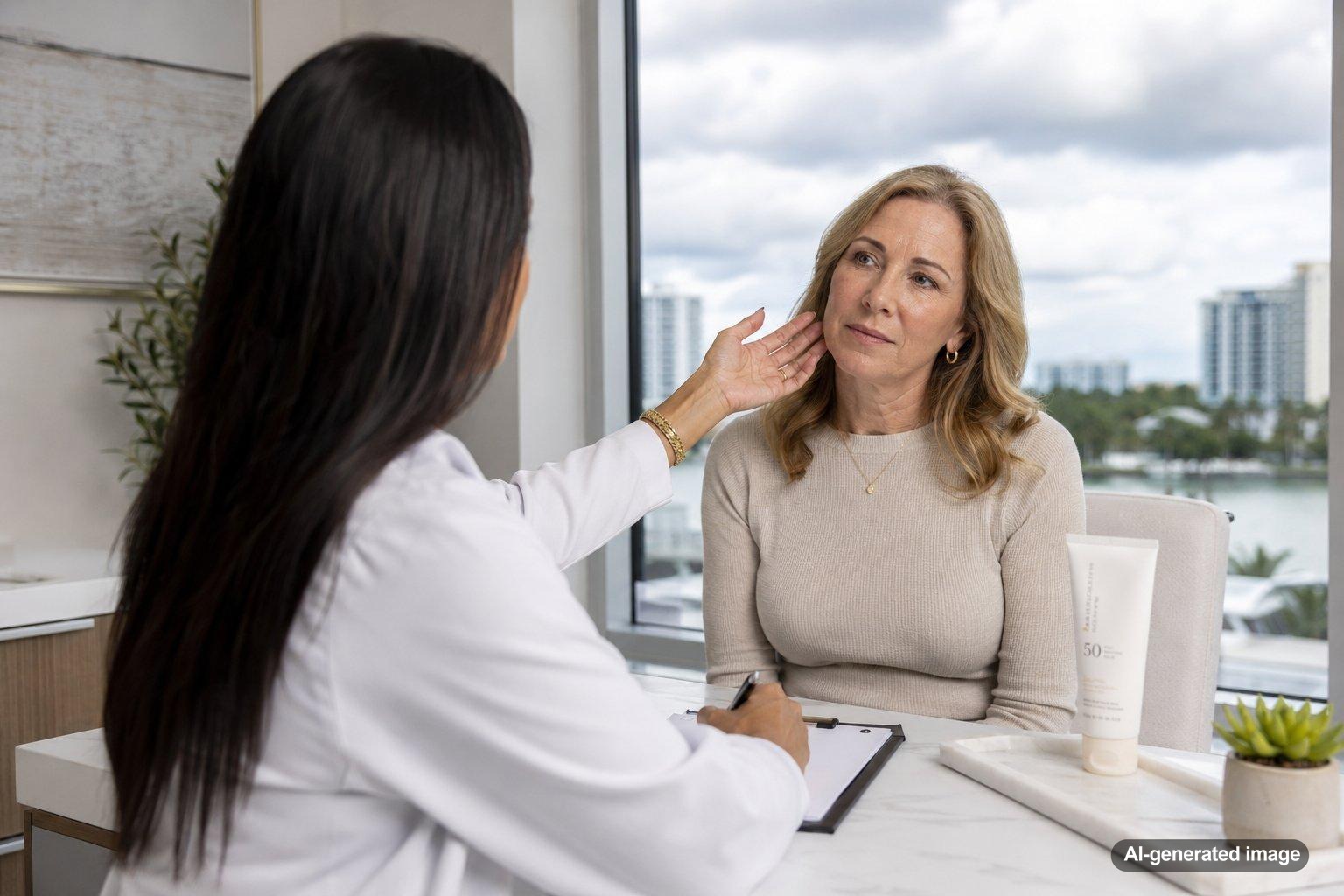
Yes. Sunscreen is still needed on cloudy days because ultraviolet (UV) light can reach your skin even when the sky looks gray. In Fort Lauderdale, where outdoor time, water, sand, driving, and year-round sun exposure are part of daily life, cloudy weather can make UV exposure easier to underestimate.
Think of sunscreen as a daily skin-protection habit, not just a beach-day product. Clouds may soften visible sunlight, but they do not make your skin invisible to UV rays. A simple, consistent routine can help reduce sunburn risk, support healthier-looking skin, and lower cumulative UV damage over time.
Quick answer
- Yes, sunscreen still matters on cloudy days. UV rays can pass through cloud cover.
- Use broad-spectrum sunscreen because it helps protect against both UVA and UVB rays.
- Choose SPF 30 or higher for everyday outdoor exposure unless your dermatologist advises otherwise.
- Reapply during outdoor time, especially after sweating, swimming, or towel drying.
- Layer your protection with shade, hats, sunglasses, and sun-protective clothing.
What cloudy day sun exposure means
Cloudy day sun exposure refers to UV exposure that happens when the sun is hidden, filtered, or softened by clouds. The day may feel cooler and less bright, but UVA and UVB rays can still affect exposed skin.
UVA rays are often discussed in relation to photoaging and deeper skin effects, while UVB rays are more closely associated with sunburn. Both are reasons to choose a broad-spectrum sunscreen and to avoid relying on how hot or sunny the day feels.
Why clouds can be misleading
- Visible light is not the same as UV light. A gray sky may look mild while UV exposure is still present.
- Cooler weather can lower your guard. You may stay outside longer because you feel more comfortable.
- Reflected light adds up. Water, sand, pavement, and bright surfaces can reflect UV rays toward the skin.
- Daily exposure is cumulative. Short walks, errands, outdoor meals, and driving can all contribute over time.
- Clouds vary. Thin or broken cloud cover may block less UV than you expect.
What you can do at home
- Apply broad-spectrum sunscreen with SPF 30 or higher before outdoor time.
- Use enough product to cover exposed areas, including ears, neck, chest, hands, and the tops of the feet.
- Reapply about every two hours when outdoors, and sooner after swimming or sweating.
- Use a lip balm with SPF for exposed lips.
- Keep a sunscreen in your bag, car, or beach tote so cloudy weather does not catch you unprepared.
- Add a wide-brimmed hat, UV-blocking sunglasses, UPF clothing, and shade when you will be outside longer.
Professional options
A dermatologist can help you build a realistic sun-protection plan based on your skin type, history, lifestyle, and sensitivity. This may include guidance on sunscreen texture, mineral versus chemical formulas, acne-prone or sensitive-skin options, and how to pair sunscreen with topical prescriptions or cosmetic treatments.
If you already notice sun spots, uneven tone, redness, rough patches, or texture changes, a dermatology visit can help separate routine sun damage from concerns that deserve closer evaluation.
When to see a dermatologist
Schedule a dermatology visit if you notice a mole or spot that is changing, bleeding, not healing, becoming painful, or looking different from your other spots. It is also worth being checked if you have a history of frequent sunburns, tanning bed use, significant sun exposure, or a personal or family history of skin cancer.
If you’re unsure whether a spot is normal, it is better to have it evaluated rather than trying to decide from photos or online descriptions alone.
FAQ
Do I need sunscreen if I am only outside for a short time?
For many people, yes. Short exposures can add up, especially in sunny climates or when outdoor time happens daily.
Is sunscreen needed when driving on a cloudy day?
It can be. UVA exposure may still occur through window glass, especially during frequent or longer drives. Sunscreen and protective clothing can help reduce exposure on the face, neck, chest, and hands.
Can I skip sunscreen if my makeup has SPF?
Makeup with SPF can be helpful, but many people do not apply enough makeup to get the full labeled protection. A dedicated sunscreen under makeup is often more reliable for daily use.
What SPF should I use on cloudy days?
For everyday use, broad-spectrum SPF 30 or higher is a common recommendation. Your dermatologist can help you choose a formula that fits your skin and routine.
Does darker skin need sunscreen on cloudy days?
Yes. Melanin offers some natural protection, but it does not block all UV damage. Sunscreen can also help reduce uneven tone, dark spots, and long-term UV-related changes.
Ready to get help?
Schedule an appointment or send a message and our team will get back to you.
Prefer to call? 954-666-3736
This article is for educational purposes and is not medical advice. For diagnosis and personalized treatment, please book an appointment with a board-certified dermatologist.
Sources & further reading
- American Academy of Dermatology (AAD) – 5 common sunscreen mistakes – and how to avoid them
- Centers for Disease Control and Prevention (CDC) – Reducing Risk for Skin Cancer
- The Skin Cancer Foundation – Sunscreen
