

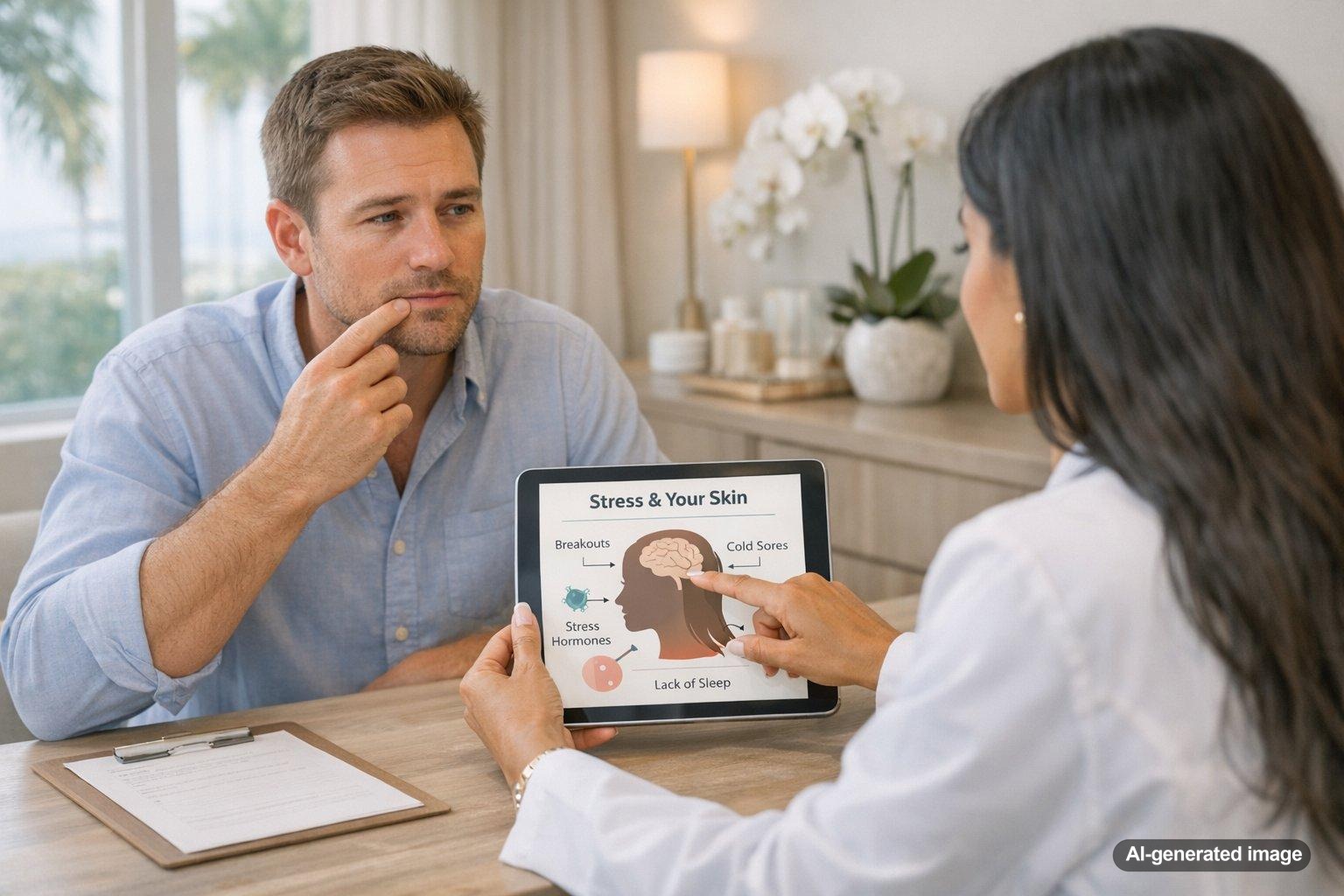
Yes, stress can be associated with cold sore outbreaks in some people. Cold sores are caused by the herpes simplex virus, most often HSV-1. After the first infection, the virus can stay quiet in the body and later reactivate, which is why cold sores can seem to appear during busy, exhausting, or emotionally demanding seasons.
Stress is not the only possible trigger, and not every lip bump is a cold sore. Sun exposure, illness, fatigue, skin irritation, and hormonal shifts may also play a role. If outbreaks are frequent, severe, spreading, or uncertain, a board-certified dermatologist can evaluate what is happening and discuss appropriate options.
Quick answer
- Stress may contribute to cold sore flare-ups in people who already carry the herpes simplex virus.
- Cold sores often begin with tingling, burning, tenderness, or itching before a blister appears.
- They can be contagious, especially when blisters or open sores are present.
- Early care may help reduce discomfort, and prescription antiviral options may be considered for some patients.
- Dermatology evaluation is especially important if outbreaks are frequent, severe, near the eye, or difficult to identify.
What cold sores are
Cold sores are small blisters that usually appear on or around the lips. They are commonly linked to herpes simplex virus infection. After the virus enters the body, it can remain inactive in nerve cells and later become active again. This is why someone may have long stretches without a sore and then notice an outbreak during a period of stress, illness, sun exposure, or fatigue.
A typical cold sore may start with a warning sensation before the skin visibly changes. The area may tingle, itch, burn, or feel tender. A blister can then form, break, crust, and gradually heal. Because other conditions can mimic cold sores, a clinician may sometimes examine the area or perform testing when the diagnosis is unclear.
Common causes or triggers
Cold sore triggers vary from person to person. Some people can identify a clear pattern, while others cannot.
- Stress: Emotional or physical stress may be associated with outbreaks in some people.
- Sun exposure: Intense sun or sunburn can be a trigger for some patients.
- Illness: Colds, fevers, or other infections may coincide with flares.
- Fatigue: Poor sleep and overextension may make outbreaks more likely for some people.
- Skin irritation: Chapped lips, procedures, friction, or trauma around the mouth may contribute.
- Hormonal shifts: Some people notice a pattern around menstrual cycles or other hormonal changes.
What you can do at home
At-home care should be gentle, practical, and focused on comfort while lowering the chance of spreading the virus to others.
- Try not to pick, squeeze, or peel the sore, which can irritate the skin.
- Wash your hands after touching the area or applying any product.
- Avoid sharing lip balm, towels, razors, utensils, or cups during an outbreak.
- Avoid kissing and oral contact while a sore is active, especially when blisters are present.
- Use lip sunscreen or sun-protective habits if sun exposure seems to trigger outbreaks.
- Consider bland lip protection, such as petrolatum, to reduce dryness and cracking.
- Pay attention to your personal pattern, including stress, travel, sleep, sun, illness, and timing.
Stress care can be part of the bigger picture. Sleep, regular meals, hydration, movement, and downtime may support overall skin health, though they should not be framed as a substitute for medical evaluation when symptoms are concerning.
Professional options
A dermatologist can help confirm whether the lesion is consistent with a cold sore and discuss options based on frequency, severity, medical history, and timing. Common options may include prescription antiviral medication for active outbreaks, episodic treatment used early when warning symptoms begin, or preventive antiviral strategies for selected patients with recurrent outbreaks.
Professional guidance is particularly helpful if you have frequent flares, outbreaks that interfere with daily life, uncertainty about the diagnosis, or concerns about contagiousness. Your clinician can help you decide what approach may be appropriate and how early treatment should be started if medication is recommended.
When to see a dermatologist
It is worth getting checked if something does not look or feel typical for you. Seek prompt medical attention if a sore is near the eye, if you have eye pain or vision changes, if lesions are widespread, if symptoms are severe, if you are immunocompromised, or if the sore is not improving as expected.
You should also schedule a dermatology visit if outbreaks are recurring, if you are unsure whether the spot is a cold sore, or if you want to discuss prescription options. A board-certified dermatologist can evaluate the area and help create a plan that fits your skin, health history, and lifestyle.
FAQ
Can stress alone create a cold sore?
Stress does not create the herpes simplex virus. However, in someone who already carries the virus, stress may be one factor associated with reactivation and an outbreak.
How do I know if stress is my trigger?
Look for patterns over time. If outbreaks tend to follow high-pressure periods, poor sleep, travel, illness, or sun exposure, those clues can help guide a prevention conversation with your dermatologist.
Are cold sores contagious?
Cold sores can spread through close contact, especially when blisters or open sores are present. Avoid sharing personal items and avoid kissing or oral contact during an active outbreak.
Should I treat a cold sore right away?
Many antiviral approaches work best when started early, often when tingling or burning first begins. A dermatologist can help you understand whether prescription treatment is appropriate for your situation.
Can sunscreen help if I get cold sores?
If sun exposure seems to trigger outbreaks, lip sunscreen and sun-protective habits may help reduce that trigger. This is especially relevant in sunny climates and during travel.
When should I worry about a cold sore?
Get medical care if the sore is near your eye, symptoms are severe, lesions are spreading, you have a weakened immune system, or you are unsure what the lesion is.
Ready to get help?
Schedule an appointment or send a message and our team will get back to you.
Prefer to call? 954-666-3736
This article is for educational purposes and is not medical advice. For diagnosis and personalized treatment, please book an appointment with a board-certified dermatologist.
Sources & further reading
- American Academy of Dermatology (AAD) – Cold sores: Who gets and causes
- MedlinePlus (NIH) – Cold Sores
- Cleveland Clinic – Cold Sore: Symptoms, Causes & Treatment
- Mayo Clinic – Cold sore: Symptoms and causes
