

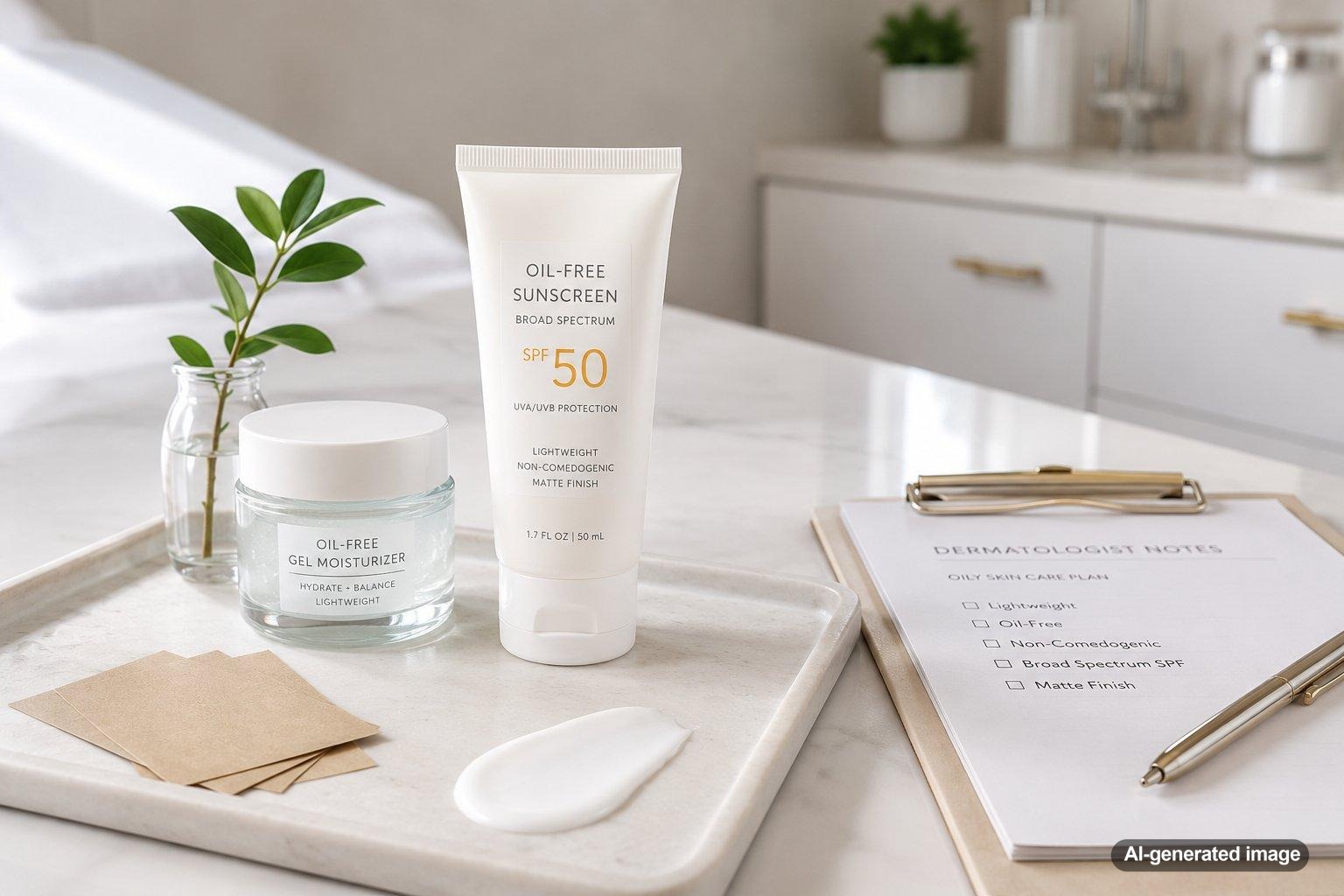
The best sunscreen for oily skin is usually one you can wear every day without feeling shiny, heavy, or congested. For many people, that means a lightweight, broad-spectrum SPF 30 or higher with a matte, gel, fluid, or oil-free finish. The goal is not to find the most complicated formula. It is to find a sunscreen that protects well, layers comfortably, and does not make your skin feel like it needs to be washed again by noon.
In Fort Lauderdale, where sun exposure can be part of daily life, sunscreen matters even when you’re commuting, walking outside, sitting near windows, or spending a short time outdoors. If oily skin, acne-prone skin, or makeup slippage makes sunscreen frustrating, a few label and texture clues can make the choice much easier.
Quick answer
- Choose a broad-spectrum sunscreen with SPF 30 or higher.
- Look for words like oil-free, noncomedogenic, lightweight, matte, gel, fluid, or water-based.
- Consider a tinted sunscreen if you are prone to dark spots or want less visible residue.
- Use water-resistant sunscreen for sweating, beach time, swimming, or outdoor activity.
- If sunscreen often stings, pills, breaks you out, or worsens irritation, a dermatologist can help you narrow the options.
What sunscreen for oily skin means
Sunscreen for oily skin is not a separate medical category. It usually refers to sunscreen formulas designed to feel lighter, absorb more comfortably, or leave a less shiny finish. These products may be labeled as oil-free, noncomedogenic, matte, gel, serum, fluid, or invisible finish.
For daily use, the most important protective features are still broad-spectrum coverage and SPF 30 or higher. Broad-spectrum means the product helps protect against both UVA and UVB rays. SPF mainly reflects UVB protection, which relates to sunburn, while UVA exposure is associated with longer-term visible skin changes. Sunscreen should be part of a broader sun protection routine that may also include shade, hats, sunglasses, and protective clothing.
Why some sunscreens feel greasy on oily skin
Some sunscreens feel heavy because of their base, finish, or how they layer with the rest of your routine. Oily skin can also feel slicker in heat and humidity, which matters in South Florida.
- Rich creams: Some moisturizing sunscreens are better suited to dry skin and may feel too occlusive on oily areas.
- Layering too many products: Heavy moisturizer, primer, makeup, and sunscreen can create a slippery feel.
- Incorrect amount or poor dry-down: Sunscreen needs to be applied generously, but applying it over damp skincare can increase pilling or shine.
- Humidity and sweat: Heat can make even a good sunscreen feel less comfortable.
- Acne-prone skin: Some people are more reactive to certain textures, fragrances, or occlusive-feeling formulas.
What to look for on the label
When you are choosing sunscreen for oily skin, start with protection, then refine by texture.
- Broad spectrum: This is important for UVA and UVB coverage.
- SPF 30 or higher: This is a practical daily baseline recommended by dermatology organizations.
- Water resistant: This matters if you will sweat, swim, exercise, or spend time outdoors. Labels typically specify 40 or 80 minutes.
- Oil-free or noncomedogenic: These labels may be helpful if you are acne-prone, though individual reactions can vary.
- Matte or soft-focus finish: These are often more comfortable for oily T-zones.
- Fragrance-free: This may be better for sensitive or irritation-prone skin.
- Tinted: Tinted formulas can help reduce white cast and may be useful for people concerned about visible-light-related discoloration.
What you can do at home
A few simple routine adjustments may help sunscreen wear better on oily skin.
- Use a gentle cleanser instead of stripping the skin. Over-cleansing can leave skin feeling tight and may make oiliness feel harder to manage.
- Keep morning skincare simple. A lightweight moisturizer or hydrating serum may be enough before sunscreen for some oily skin types.
- Let skincare dry before applying sunscreen. This can reduce pilling and patchiness.
- Apply sunscreen as the last skincare step before makeup.
- Try blotting papers or a light powder during the day instead of skipping sunscreen.
- Reapply when needed, especially after sweating, swimming, toweling off, or extended outdoor time.
If a sunscreen repeatedly causes stinging, itching, clogged-feeling skin, or visible irritation, stop using that product and consider getting individualized guidance.
Professional options
A dermatologist or skincare professional can help you sort out whether your sunscreen problem is mostly texture, acne tendency, sensitivity, rosacea-prone skin, melasma, post-inflammatory hyperpigmentation, or a routine mismatch. Common professional guidance may include:
- Reviewing your current cleanser, moisturizer, sunscreen, and makeup together.
- Helping you choose between mineral, chemical, hybrid, tinted, gel, or fluid formulas.
- Identifying ingredients that may be irritating for your skin.
- Adjusting acne, redness, or pigmentation care so sunscreen is easier to tolerate.
- Discussing safe ways to support the skin barrier without adding heaviness.
At Waverly DermSpa, we can help you understand whether your sunscreen and daily skincare routine are aligned with your skin type, goals, and sensitivity level.
When to see a dermatologist
It is worth seeing a dermatologist if sunscreen causes repeated irritation, if acne is worsening despite careful product choices, or if you have persistent redness, burning, scaling, or new sensitivity. You should also schedule a dermatology visit for changing moles, spots that bleed, non-healing lesions, or areas that look unusual to you.
Daily sunscreen is important, but it does not replace skin checks or personalized medical care. If you are unsure whether a product is right for your skin, a board-certified dermatologist can evaluate your skin and help you choose a safer, more comfortable plan.
FAQ
Is mineral or chemical sunscreen better for oily skin?
Either can work. Mineral formulas may be helpful for some sensitive skin types, while chemical or hybrid formulas may feel lighter or more invisible on some complexions. Texture and tolerance matter as much as the filter type.
Can sunscreen make oily skin break out?
Some formulas may feel too heavy or may not suit acne-prone skin. Look for oil-free or noncomedogenic options, and consider a dermatologist visit if breakouts continue.
Should oily skin still use moisturizer under sunscreen?
Sometimes, but not always. If your sunscreen is hydrating enough, you may not need a separate morning moisturizer. If your skin feels tight or irritated, a lightweight moisturizer may help.
Is matte sunscreen drying?
It can be for some people, especially if the skin barrier is sensitive. If matte formulas feel tight or flaky, try a lightweight fluid sunscreen instead of a very oil-absorbing one.
Does tinted sunscreen help oily skin?
Tint does not reduce oil by itself, but it can help even the look of the skin, reduce visible residue, and may be useful for people prone to discoloration.
How much sunscreen should I use on my face?
Use enough to cover all exposed skin evenly, including often-missed areas like the ears, hairline, neck, and around the eyes if the product is tolerated there. Follow the product label and reapply as directed.
Ready to get help?
Schedule an appointment or send a message and our team will get back to you.
Prefer to call? 954-666-3736
Disclaimer
This article is for educational purposes and is not medical advice. For diagnosis and personalized treatment, please book an appointment with a board-certified dermatologist.
Sources & further reading
- American Academy of Dermatology (AAD) – How to select a sunscreen
- U.S. Food and Drug Administration (FDA) – Sunscreen: How to Help Protect Your Skin from the Sun
- The Skin Cancer Foundation – Sunscreen
