

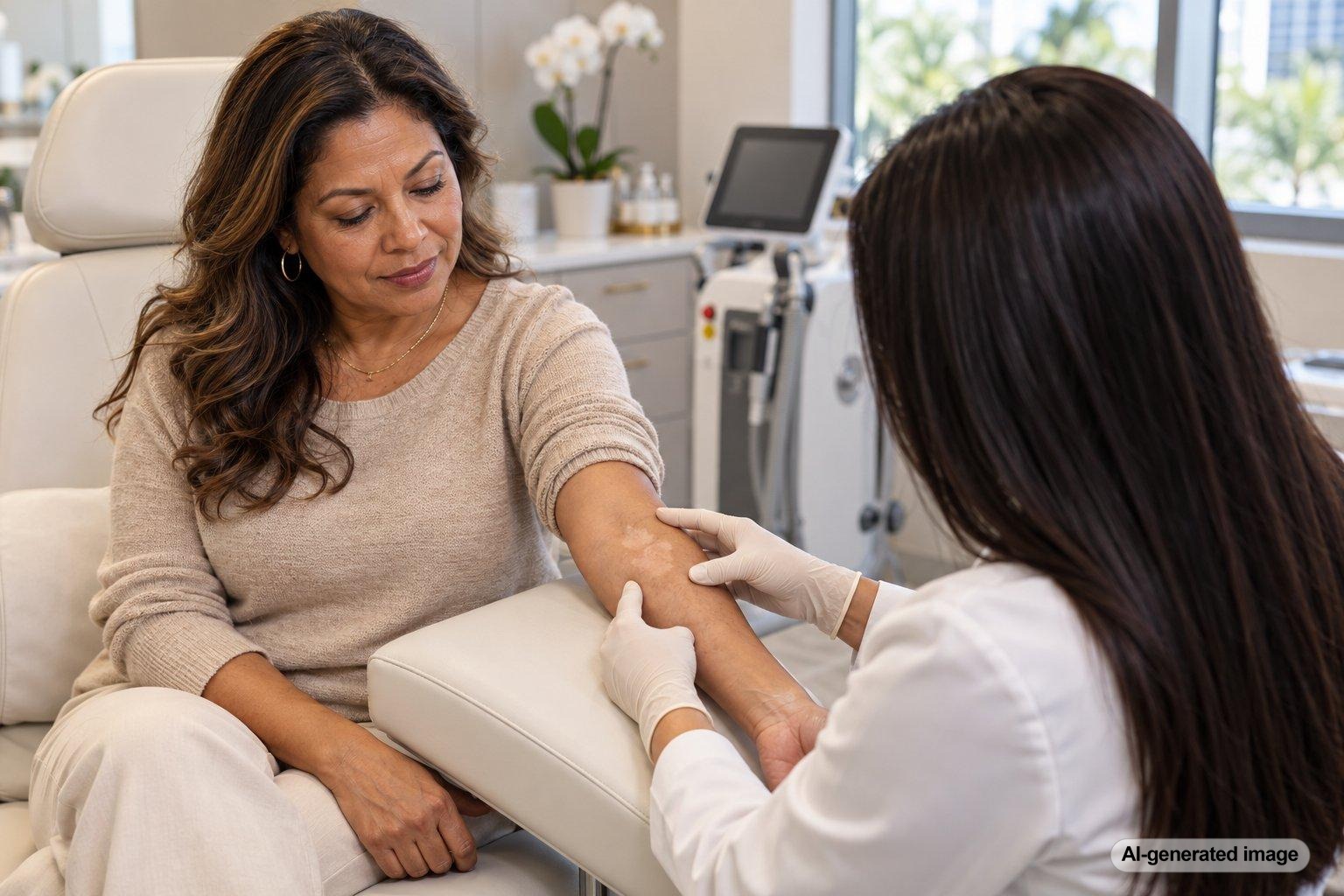
Yes, skin of color can develop hypopigmentation after a laser procedure. Hypopigmentation occurs when an area of skin produces less pigment than the surrounding skin, creating lighter spots or patches. Although laser treatments can address concerns such as unwanted hair, uneven texture, and certain pigmentation changes, they can occasionally disrupt normal pigment production. This possibility deserves particular attention in patients with naturally deeper skin tones.
Not every light patch following a laser treatment represents lasting pigment damage. Some changes are temporary, while others may persist. The appearance of the area, type of procedure, degree of skin inflammation, and healing pattern all matter. Understanding these differences can help patients approach laser treatment thoughtfully and recognize when a dermatologist should evaluate an unexpected change.
Quick Answer: Can Laser Treatments Cause Light Patches?
- Yes. Laser energy can sometimes affect pigment-producing cells, resulting in lighter areas of skin.
- Skin of color requires particular care. Greater epidermal melanin can influence how laser energy interacts with the skin.
- Not all pigment changes are lasting. Some areas gradually regain color, while others may remain lighter.
- Laser selection matters. Wavelength, energy settings, cooling, treatment technique, and individual skin characteristics influence risk.
- Professional evaluation is important. A dermatologist can assess changes in pigmentation and recommend an appropriate approach.
What Is Hypopigmentation After a Laser Procedure?
Melanin is the pigment responsible for much of the natural color of skin and hair. Specialized cells called melanocytes produce melanin and distribute it within the skin.
Laser procedures deliver concentrated light energy to selected targets. Depending on the procedure, these targets may include hair follicles, blood vessels, pigment, or water within the skin. The energy produces a controlled biological effect, but surrounding tissue can also experience heat or inflammation.
When this response interferes with melanocyte activity or damages pigment-producing cells, the treated area may develop hypopigmentation. The result can appear as a pale spot, an irregular patch, or an area that follows the pattern of treatment.
Hypopigmentation is different from hyperpigmentation. Hypopigmentation means reduced pigmentation, while hyperpigmentation means increased pigmentation. Both can follow skin inflammation or certain cosmetic procedures, but they involve different changes and may require different management.
Why Can Skin of Color Be More Susceptible?
Skin of color encompasses a wide range of complexions and individual characteristics. It should not be treated as a single uniform skin type. However, melanin plays an important role in laser interactions, particularly in skin with more epidermal pigmentation.
Some laser wavelengths are absorbed by melanin. When the skin contains more melanin, additional energy may be absorbed in the surrounding epidermis rather than exclusively by the intended target. Depending on the treatment, this can increase the possibility of unwanted heat-related injury and subsequent pigment changes.
People with deeper skin tones may also experience more noticeable contrast between a hypopigmented patch and the surrounding complexion. A relatively subtle loss of pigment can therefore become visually prominent.
These considerations do not mean that laser treatment is automatically inappropriate for skin of color. They emphasize the importance of individualized treatment planning and experience with diverse skin tones.
What Factors Can Trigger Hypopigmentation?
Several factors may contribute to reduced pigmentation following a laser procedure:
- Excessive thermal injury: Heat affecting surrounding skin may disrupt normal pigment production.
- Laser wavelength: Different wavelengths interact differently with melanin and other skin components.
- Treatment intensity: Energy levels, pulse duration, overlapping passes, and treatment density can influence tissue response.
- Inflammation: A pronounced inflammatory reaction may contribute to post-inflammatory pigment changes.
- Blistering or burns: More significant skin injury can increase concern about lasting pigment alteration.
- Recent tanning or sun exposure: Changes in skin pigmentation before treatment may affect how energy is absorbed.
- Individual healing characteristics: Previous reactions to procedures, pigment changes, and skin injury can help inform risk assessment.
Hypopigmentation can occur after different categories of laser treatment, including certain resurfacing, pigment-targeting, tattoo removal, and hair removal procedures. The risk is not identical across devices or treatment techniques.
Is Hypopigmentation Temporary or Long Lasting?
The duration of hypopigmentation varies. In some cases, melanocytes remain present but temporarily produce less pigment following inflammation. Pigmentation may gradually return as the skin recovers.
When pigment-producing cells have sustained more substantial damage, recovery may be incomplete. Certain laser-related pigment changes can persist for an extended period, and some may not fully resolve.
There is no reliable universal timeline for repigmentation. The depth and extent of injury, treatment history, individual skin response, and underlying cause all influence the outlook.
A dermatologist may assess the distribution of the lighter areas, examine the surrounding skin, review photographs, and consider whether the change is consistent with a treatment-related reaction or another skin condition.
Because pale patches can have several causes, their appearance alone cannot establish the diagnosis or predict whether normal pigmentation will return.
What Can You Do at Home?
If lighter areas appear following a laser procedure, gentle skin care and appropriate follow-up are sensible first steps. Trying multiple corrective products without understanding the cause may introduce additional irritation.
- Follow the treating clinician’s aftercare instructions. Different laser procedures require different approaches to cleansing, moisturizing, and protecting the treated skin.
- Protect the area from sunlight. Use shade, protective clothing, and a broad-spectrum sunscreen with SPF 30 or higher when appropriate for the stage of healing. Sun exposure may darken surrounding skin and make contrast more noticeable.
- Choose gentle skin care. A mild cleanser and a suitable moisturizer may help support comfort and the skin barrier once permitted by the treating clinician.
- Avoid unnecessary irritation. Do not introduce exfoliating acids, harsh scrubs, strong retinoids, or additional cosmetic procedures to the affected area without professional guidance.
- Document changes. Photographs taken under consistent lighting may help your dermatologist understand how the area is evolving.
Do not attempt to darken hypopigmented skin through intentional tanning. Additional ultraviolet exposure can damage the skin and increase uneven pigmentation.
What Professional Options May Be Considered?
Management begins with determining why the skin has become lighter. A dermatologist can assess whether the change is related to temporary suppression of pigment production, more substantial melanocyte injury, or an unrelated skin condition.
For some patients, observation and careful skin protection may be appropriate while the skin heals. Other situations may warrant a more detailed evaluation or individualized management.
Depending on the findings, professional considerations may include:
- Clinical monitoring: Reviewing healing patterns and changes in pigmentation over time.
- Barrier-focused care: Addressing irritation and supporting recovery after the original procedure.
- Selected dermatologic therapies: Certain physician-directed topical or light-based approaches may be considered in specific circumstances, although responses vary and evidence depends on the cause.
- Cosmetic camouflage: Skin-compatible makeup or camouflage products may help reduce the visible contrast while further evaluation or recovery takes place.
Additional laser treatment should not be assumed to correct laser-induced hypopigmentation. Further energy exposure can potentially aggravate pigment disturbances, so any proposed procedure requires an individualized discussion of potential benefits and risks.
At Waverly DermSpa, we offer Excel HR Laser Hair Removal and can help you understand whether it may be appropriate.
How Can Pigment Changes Be Minimized Before Laser Treatment?
Thoughtful treatment planning is particularly important for patients with deeper skin tones. Before undergoing a procedure, discuss your natural complexion, recent tanning, previous pigment changes, and any history of unusual reactions to lasers or skin injuries.
A dermatologist experienced in treating skin of color can select an appropriate device and technique for the treatment goal. For certain hair removal indications in darker skin, longer-wavelength technologies, such as long-pulsed Nd:YAG lasers, may offer advantages in limiting epidermal melanin absorption. However, no laser approach is entirely without risk.
Other precautions may include appropriate epidermal cooling, conservative treatment parameters, careful monitoring of the skin’s immediate response, and a test spot when clinically appropriate. A test spot can provide useful information but cannot predict every delayed reaction.
Discuss expected recovery, possible pigment changes, and aftercare before the procedure. The appropriate approach depends on the specific device, treatment area, indication, and patient.
When Should You See a Dermatologist?
Contact the treating clinician if a new light patch develops after laser treatment, particularly when the change is pronounced, expanding, or accompanied by unusual symptoms.
Prompt medical assessment is especially important when the treated area develops significant pain, increasing redness, spreading warmth, blistering, drainage, or delayed healing. These findings may indicate a complication requiring attention rather than an uncomplicated pigment change.
Even when the area is comfortable, persistent or evolving hypopigmentation warrants evaluation. A dermatologist can help distinguish treatment-related changes from other explanations and discuss realistic next steps.
Frequently Asked Questions
Can dark skin develop white spots after laser hair removal?
Yes. Laser hair removal can occasionally lead to lighter patches when treatment affects pigmentation in surrounding skin. Device selection and treatment technique are important considerations, particularly in skin with greater epidermal melanin.
Will the pigment return after laser-induced hypopigmentation?
Some areas may gradually regain pigment, but recovery depends on the extent and nature of the injury. Other changes may persist. A dermatologist can assess the affected skin and explain why the outcome cannot always be predicted.
Does hypopigmentation mean the laser was used incorrectly?
Not necessarily. Pigment changes are recognized potential complications of laser procedures and can occur despite appropriate precautions. However, device selection, settings, operator experience, and treatment technique can influence risk.
Can hypopigmentation appear weeks after a procedure?
Yes. Some pigmentation changes become more apparent as initial redness and inflammation resolve. Certain resurfacing-related pigment changes can also develop later in the healing process. Any new or changing patches should be discussed with the treating clinician.
Can another laser treatment restore the missing pigment?
Additional laser treatment is not a universal solution. Certain specialist approaches may be considered for selected pigment disorders, but they are not appropriate for every case and can introduce further risks. Evaluation should come before attempting another procedure.
Is laser treatment safe for all skin tones?
Laser procedures can be performed across a broad range of skin tones, but suitability and risk depend on the indication, specific technology, treatment parameters, and individual skin characteristics. Consultation with a dermatologist experienced in treating skin of color is an important part of planning.
Ready to get help?
Schedule an appointment or send a message and our team will get back to you.
Prefer to call? 954-666-3736
Disclaimer
This article is for educational purposes and is not medical advice. For diagnosis and personalized treatment, please book an appointment with a board-certified dermatologist.
Sources & further reading
- DermNet – Laser therapy in skin of colour
- American Academy of Dermatology (AAD) – Treating light spots in brown or black skin
- DermNet – Lasers in dermatology
- American Academy of Dermatology (AAD) – Skin conditions that lasers can treat
