

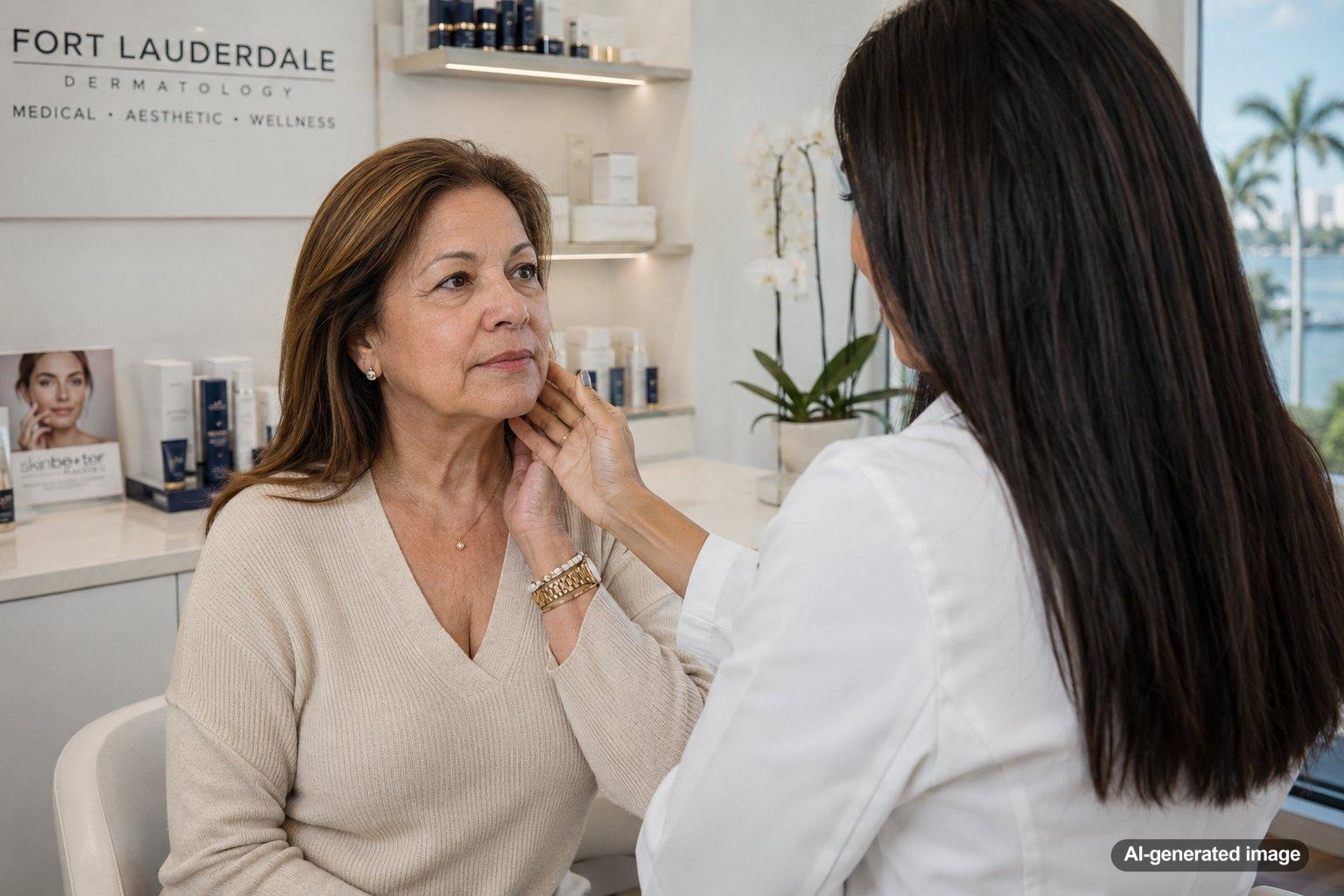
Peeling after photodynamic therapy (PDT) commonly lasts several days, but the exact timeline varies with the treatment area, the condition being treated, the intensity of the reaction, and your individual skin response. Redness, sensitivity, dryness, flaking, or peeling may develop during the early recovery period and then gradually settle.
In Florida, recovery also requires special attention to light and sun exposure. Your dermatologist’s post-treatment instructions should take priority because PDT can leave treated skin temporarily more sensitive to light.
Quick answer
- Peeling and flaking after PDT may continue for several days and sometimes longer depending on your skin’s response.
- Redness, tightness, tenderness, dryness, and temporary swelling can occur alongside peeling.
- The most noticeable reaction often develops during the first few days rather than immediately after treatment.
- Gentle skincare and careful protection from sunlight are important while the skin barrier recovers.
- If your reaction seems unusually painful, prolonged, or concerning, contact your treating dermatologist.
Why does skin peel after PDT?
Photodynamic therapy combines a photosensitizing medication with a controlled light treatment. The process is used in dermatology for specific skin concerns and can produce a temporary inflammatory response in the treated area.
As the skin recovers, it may become red, dry, rough, flaky, or visibly peel. The amount of peeling isn’t identical for everyone. Some people experience mostly redness and dryness, while others develop more obvious scaling or crusting.
When does peeling usually start?
Visible peeling may not begin immediately. During the first part of recovery, the skin may feel warm, tight, sensitive, or sunburn-like. Flaking can become more apparent over the following days as the surface begins to recover.
Your treatment area matters as well. Facial skin, scalp skin, and other treated areas can respond differently, and the extent of the treated area can influence how noticeable the recovery period feels.
How long can peeling continue?
For many patients, the most noticeable peeling is limited to the early recovery period and improves progressively. However, there isn’t one exact number of days that applies to everyone. Mild dryness or residual flaking can outlast the more obvious redness and peeling.
A stronger visible reaction doesn’t automatically indicate a better result, and a milder reaction doesn’t automatically indicate that treatment was ineffective. Your dermatologist can evaluate your response in the context of why PDT was performed and what was treated.
Why Florida sun exposure matters after PDT
Florida’s bright outdoor environment can make post-PDT precautions especially important. Even routine activities such as walking to the car, sitting near bright outdoor areas, exercising outside, or spending time around a pool may involve substantial light exposure.
Follow the light-avoidance instructions provided by your treating clinician carefully. Don’t assume that sunscreen alone replaces instructions to avoid sunlight or other intense light sources during the photosensitive period.
After the immediate photosensitivity precautions have passed, your clinician may recommend ongoing sun-protective habits to protect recovering skin. These can include seeking shade, wearing protective clothing or a hat when appropriate, and using a sunscreen suitable for your skin once your clinician says it is appropriate.
What can you do while your skin is peeling?
Keep your routine simple while the treated area recovers. Your dermatologist may provide specific instructions based on the treatment performed. Conservative skin-care habits commonly include:
- Use only gentle cleansers and moisturizers approved for your recovery period.
- Avoid picking, peeling, rubbing, or deliberately removing loose skin.
- Pause scrubs, exfoliating acids, retinoids, and other potentially irritating products unless your clinician tells you otherwise.
- Avoid adding new active skincare products while the skin is visibly irritated.
- Follow your clinician’s instructions regarding exercise, heat, sweating, makeup, and other activities during recovery.
Trying to speed up peeling can irritate the skin barrier and make the recovery period less comfortable. Allow loose skin to shed naturally.
What is normal versus worth calling about?
Some redness, dryness, flaking, tenderness, and temporary swelling may occur after PDT. Because treatment plans and expected reactions vary, your own post-procedure instructions are the best reference for what your dermatologist expects.
Contact your treating dermatologist if symptoms seem substantially more intense than expected, continue worsening instead of gradually improving, or include significant pain, extensive blistering, drainage, spreading redness, fever, or another change that concerns you. A dermatologist can determine whether the reaction is within the expected recovery range or needs evaluation.
When can you return to your regular skincare routine?
Don’t use peeling alone as the signal that your skin is ready for every product you normally use. Even after visible flakes disappear, the skin may still feel sensitive or dry. Reintroducing active ingredients too quickly may increase irritation.
Your clinician can tell you when to restart products such as retinoids, exfoliating acids, acne treatments, brightening products, or other potentially irritating skincare. A gradual return to your routine may be more comfortable than restarting everything at once.
FAQ
Is it normal not to peel much after PDT?
Yes, visible reactions can vary. Some people mainly notice redness, sensitivity, or dryness rather than substantial peeling. The appearance of the recovery period alone doesn’t determine the treatment outcome.
Can I pull off loose skin after PDT?
It’s generally better to avoid picking or manually peeling the treated area. Let loose skin shed naturally and follow the skincare instructions given by your clinician.
Can I use exfoliating products to make the peeling finish faster?
Avoid using scrubs, exfoliating acids, retinoids, or other potentially irritating products unless your dermatologist has specifically cleared them during recovery.
Can I go outside after PDT in Florida?
Your clinician should give you specific instructions about avoiding sunlight and intense light after treatment. Follow those instructions closely, especially in Florida, where incidental outdoor exposure can be substantial.
What if my skin is still flaky after the main peeling stops?
Mild dryness or residual flaking may continue as the skin barrier settles. If symptoms aren’t improving, seem unusually prolonged, or are accompanied by worsening discomfort, contact your dermatologist.
At Waverly DermSpa, we offer Photodynamic Therapy (PDT) and can help you understand whether it may be appropriate.
Ready to get help?
Schedule an appointment or send a message and our team will get back to you.
Prefer to call? 954-666-3736
This article is for educational purposes and is not medical advice. For diagnosis and personalized treatment, please book an appointment with a board-certified dermatologist.
