

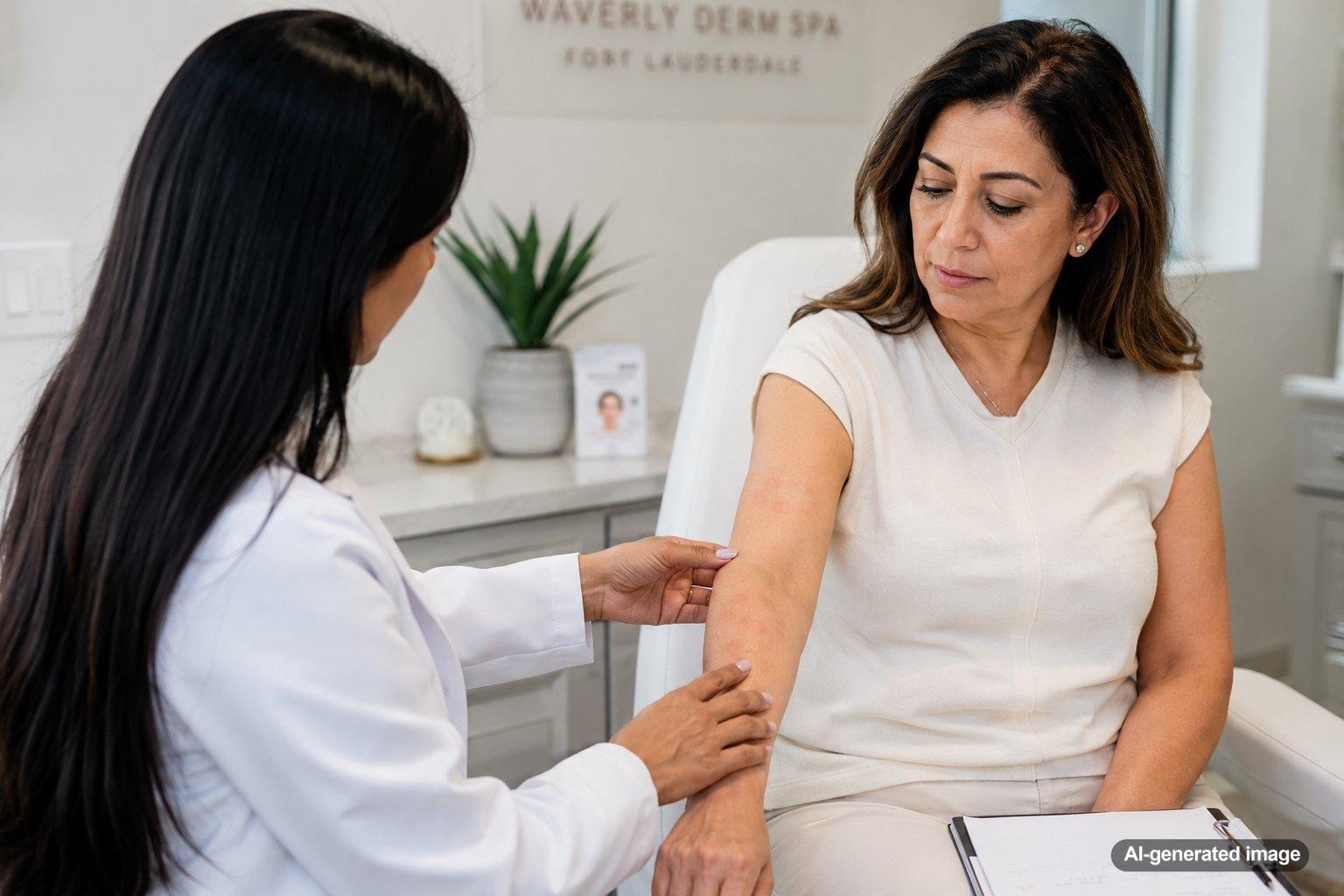
If you notice itchy, raised, or even ring-like bumps after spending time in the sun, one possible explanation is polymorphous light eruption, commonly shortened to PMLE. This photosensitive skin reaction can appear after ultraviolet light exposure, particularly when skin has not been exposed to much sun for a while. PMLE can take several forms, so one person’s eruption may look like small bumps while another person’s may appear as patches, plaques, tiny blisters, or target-like areas.
That said, appearance alone cannot confirm PMLE. Ring-shaped and sun-related rashes can have several causes, and a dermatologist can evaluate the pattern, timing, medications, skincare products, and other factors to determine what may be happening.
Quick answer
- PMLE is a photosensitivity reaction in which ultraviolet exposure can trigger an inflammatory skin eruption.
- The rash may include small raised bumps, patches, plaques, tiny blisters, or occasionally target-like or ring-like areas.
- It often affects recently sun-exposed areas such as the upper chest, neck, arms, or legs.
- Episodes commonly occur after increased sun exposure, especially after a period of relatively little exposure.
- Because several other skin conditions can resemble PMLE, a new, persistent, painful, widespread, or otherwise concerning rash is worth having evaluated.
What is PMLE?
Polymorphous light eruption is a skin reaction associated with sensitivity to ultraviolet radiation. The word polymorphous reflects an important feature of the condition: the eruption can have different appearances in different people. Possible patterns include clusters of small bumps, raised patches, tiny fluid-filled areas, or lesions with a target-like appearance.
The reaction tends to occur on skin that has recently received more ultraviolet exposure than it is accustomed to. Areas such as the upper chest, front of the neck, arms, and lower legs may be involved. The face and hands may be less commonly affected in some people because those areas receive more regular sun exposure throughout the year.
PMLE is not the same thing as an ordinary sunburn. Instead, ultraviolet exposure appears to trigger an immune-related inflammatory response in susceptible skin. The exact reason some people develop this sensitivity is not fully understood.
Why can the bumps look ring-like?
PMLE does not have one universal appearance. In some cases, lesions may develop a target-like shape or merge into larger areas that can seem circular or ring-like. That variability is one reason photographs or descriptions alone are not enough to establish a diagnosis.
A dermatologist may consider the timing of the eruption, where it appears, how quickly it follows ultraviolet exposure, whether it itches or hurts, whether it has happened before, and whether anything else could be contributing. Certain medications, topical products, fragrances, plants, and other skin disorders can also be associated with reactions that become noticeable after sun exposure.
Common triggers and patterns
PMLE is typically associated with ultraviolet exposure, but the circumstances surrounding an episode can vary. Patterns that may be relevant include:
- A sudden increase in sun exposure: A beach trip, outdoor event, vacation, or long afternoon outside may expose skin to much more ultraviolet radiation than usual.
- Seasonal changes: Some people notice episodes when stronger or longer sun exposure returns after months of covering their skin or spending more time indoors.
- Travel: Visiting a sunnier destination can represent a significant change in ultraviolet exposure, which is especially relevant for seasonal visitors and travelers in South Florida.
- Previously covered skin: The upper chest, shoulders, arms, and legs may react when suddenly exposed after being covered for an extended period.
- Continued ultraviolet exposure: Additional sun exposure while an eruption is active may aggravate symptoms in some people.
What you can do at home
If you develop a mild rash after sun exposure and otherwise feel well, conservative skin care and sun avoidance may help reduce additional irritation while you arrange evaluation if needed. Avoid intentionally exposing the affected area to more ultraviolet light. Seek shade and use protective clothing such as long sleeves, lightweight pants, and a wide-brimmed hat when practical.
A broad-spectrum sunscreen can be an important part of sun protection, but sunscreen should not be your only strategy when you are prone to photosensitive eruptions. Apply it generously to exposed skin and reapply according to the product directions, particularly after swimming or sweating. Keep in mind that ultraviolet A radiation can pass through window glass, so exposure is not limited to direct outdoor sunlight.
For uncomfortable skin, a cool compress or cool bath may feel soothing. Try to avoid scratching or picking at bumps and blisters, since damaged skin can become more irritated. Simple, fragrance-free skincare products may also be easier to tolerate while the skin is reactive.
Professional evaluation and treatment options
If PMLE is suspected, a dermatologist can examine the eruption and review its relationship to ultraviolet exposure. In some situations, additional evaluation may be used to distinguish PMLE from other photosensitive disorders or skin conditions. Depending on the clinical picture, this can include laboratory testing, phototesting, or occasionally a skin biopsy.
Treatment is individualized. A clinician may discuss strategies for controlling inflammation during an episode, reducing ultraviolet exposure, reviewing medications or products that could contribute to photosensitivity, and planning prevention for future periods of stronger sun exposure. Prescription therapies or medically supervised approaches may be considered in selected cases, but those decisions should be based on an individual dermatologic evaluation.
When should you see a dermatologist?
It is worth getting checked when a rash repeatedly appears after sun exposure, when you are unsure what is causing it, or when the appearance is new or unusual for you. Because PMLE can resemble other conditions, an accurate diagnosis is particularly useful before assuming every future sun-related eruption has the same cause.
Seek prompt medical attention for a rash that is widespread, significantly painful, rapidly worsening, associated with fever or other systemic symptoms, or accompanied by severe swelling, extensive blistering, breathing difficulty, or other concerning symptoms. You should also tell your clinician about recently started medications, supplements, topical treatments, fragrances, or skincare products, since these details can be relevant when evaluating photosensitivity.
FAQ
Can PMLE look like circles or rings?
It can. PMLE has several possible appearances, including target-like lesions in some people. However, a ring-like shape is not specific to PMLE, so a dermatologist should evaluate an unexplained or recurring ring-shaped rash rather than relying on shape alone.
Is PMLE the same as a sunburn?
No. A sunburn is direct ultraviolet injury to the skin, while PMLE is a photosensitive inflammatory eruption associated with ultraviolet exposure. The appearance, timing, and symptoms can differ.
Why does the rash happen after I have been indoors for months?
PMLE often becomes noticeable after skin that has had relatively little recent ultraviolet exposure is suddenly exposed to more sunlight. This is one reason episodes may appear during seasonal changes or sunny vacations.
Can sunlight through a window trigger a reaction?
Potentially. Ultraviolet A radiation can pass through ordinary window glass, so susceptible people may receive relevant ultraviolet exposure even when they are not standing outdoors in direct sunlight.
Should I stop a medication if I think it is making me sensitive to the sun?
Do not stop a prescribed medication solely because you suspect photosensitivity without discussing it with the prescribing clinician. Some medications can contribute to sun sensitivity, and your clinician can help determine whether a medication review or another approach is appropriate.
Can a dermatologist confirm whether my rash is PMLE?
A dermatologist can evaluate the pattern and consider PMLE along with other possible causes. Diagnosis may be based on the clinical history and examination, while selected cases may require additional testing to clarify the cause.
Ready to get help?
Schedule an appointment or send a message and our team will get back to you.
Prefer to call? 954-666-3736
This article is for educational purposes and is not medical advice. For diagnosis and personalized treatment, please book an appointment with a board-certified dermatologist.
Sources & further reading
- DermNet – Polymorphic light eruption (PMLE)
- Mayo Clinic – Polymorphous light eruption – Symptoms & causes
- Mayo Clinic – Polymorphous light eruption – Diagnosis & treatment
