

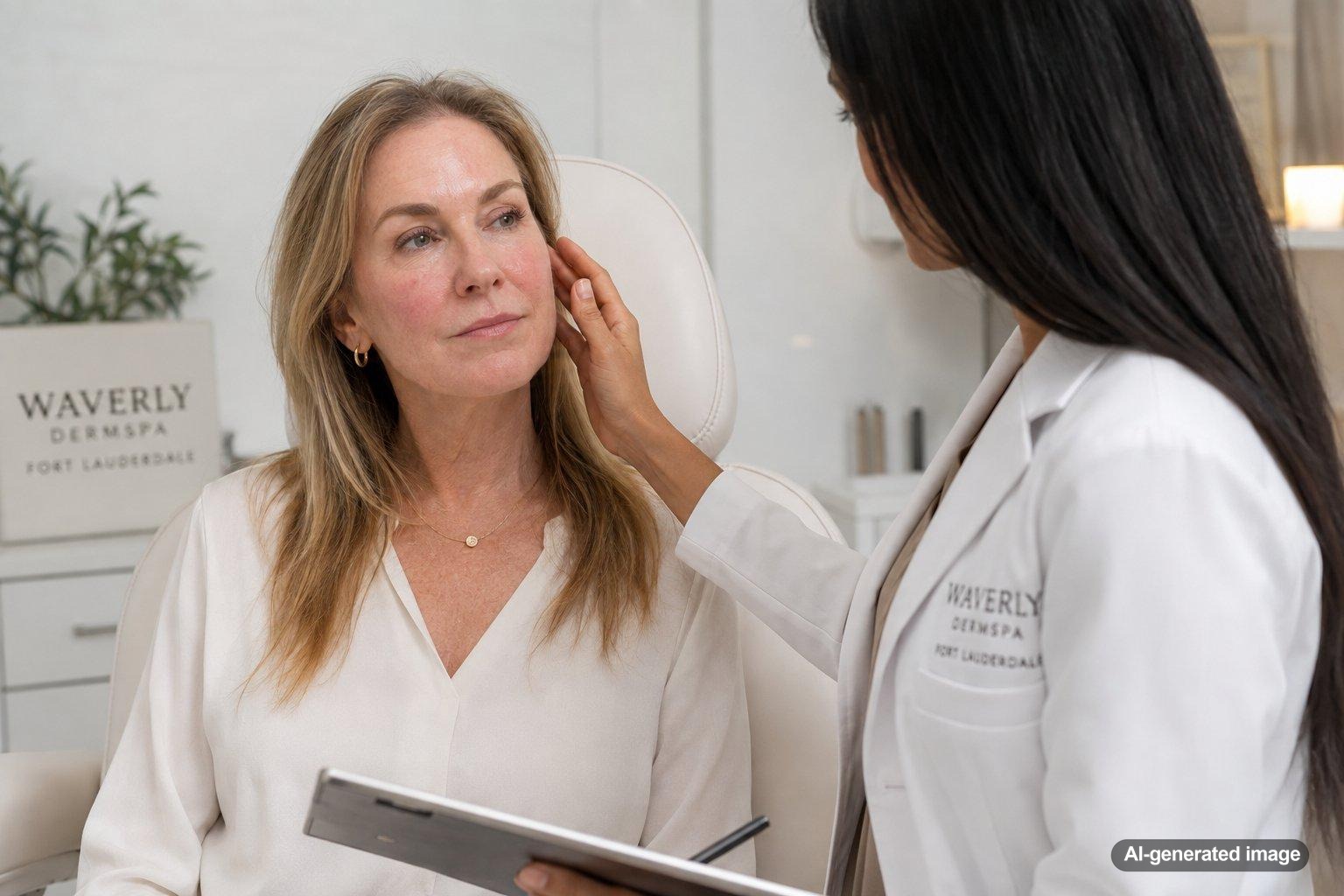
Tiny red, pink, or purple lines can appear when small blood vessels near the surface of the skin become widened and visible. Dermatologists often call these vessels telangiectasias. They may develop gradually around the nose, across the cheeks, or on the chin, and they can become easier to notice over time.
These visible vessels do not necessarily mean that anything serious is wrong. Common influences include genetics, cumulative sun exposure, repeated flushing, skin sensitivity, and rosacea. Because several skin concerns can create a similar appearance, a dermatologist can determine what is contributing to the changes and discuss appropriate options.
Quick answer
- Facial blood vessels may become visible after repeated widening from flushing, heat, sun exposure, or irritation.
- Rosacea is a common condition associated with persistent facial color and visible vessels, but not every visible vessel is caused by rosacea.
- Gentle skin care and consistent sun protection may help limit irritation and reduce avoidable triggers.
- Established vessels usually do not disappear with ordinary skin care products, although professional vascular treatments may help make them less noticeable.
- New, changing, bleeding, painful, or widespread marks should be evaluated by a dermatologist.
What are these tiny facial blood vessels?
Telangiectasias are small, widened blood vessels that can be seen through the skin. They may look like fine individual lines, branching threads, or small clusters. On lighter skin tones, they often appear red or pink. On deeper skin tones, they may look red, violet, or darker than the surrounding skin and can be more difficult to distinguish from general discoloration.
People often call them broken capillaries, although the vessels are usually enlarged and visible rather than literally broken. Their appearance can fluctuate temporarily when the face becomes warm or flushed. Once a vessel remains widened, however, it may continue to be visible even after the skin cools.
Why do they keep appearing?
There is rarely one universal explanation. Several factors can affect how visible the vessels become and whether additional ones develop.
- Rosacea: This facial skin condition can be associated with easy flushing, persistent color, sensitivity, acne-like bumps, and visible vessels. A dermatologist can evaluate whether the overall pattern is consistent with rosacea.
- Sun exposure: Repeated ultraviolet exposure can affect the skin and the delicate vessels beneath it. In sunny South Florida, incidental exposure during driving, walking, boating, and outdoor dining can add up.
- Frequent flushing: Heat, strenuous activity, spicy foods, hot beverages, alcohol, stress, and rapid temperature changes can temporarily widen facial vessels. Individual triggers vary.
- Genetics and skin characteristics: Some people naturally have more visible superficial vessels or a greater tendency toward facial redness.
- Age-related skin changes: As skin changes over time, vessels that were once difficult to see may become more noticeable.
- Irritation or inflammation: Aggressive exfoliation, harsh products, and repeated rubbing can make reactive skin look redder and may emphasize vessels that are already present.
- Environmental changes: Moving repeatedly between Florida heat and strongly air-conditioned spaces may contribute to flushing in sensitive skin. Snowbirds and international visitors may also notice changes as their skin adjusts to a different climate and level of sun exposure.
Can skin care make the vessels go away?
Skin care can support the barrier, reduce irritation, and help manage visible redness, but it generally cannot remove an established facial vessel. Be cautious with products that claim to erase broken capillaries. A calm, consistent routine is usually more useful than frequently adding strong active ingredients.
Conservative steps that may help include:
- Wash with lukewarm water and a mild, fragrance-free cleanser.
- Apply a simple moisturizer that does not sting or burn.
- Use broad-spectrum sunscreen with an SPF of 30 or higher every day and reapply as directed when outdoors.
- Add a hat and shade when spending extended time in the Florida sun.
- Avoid scrubbing, rough cleansing tools, and forceful facial massage over sensitive areas.
- Introduce exfoliating acids, retinoids, and other active ingredients gradually if your skin tolerates them.
- Notice whether particular foods, beverages, temperatures, activities, or products repeatedly bring on flushing.
If sunscreen or skin care products consistently cause stinging, a dermatologist can help you build a simpler routine and look for an underlying reason for the sensitivity.
What professional options may help?
Professional treatment depends on the vessel’s size, color, depth, location, and suspected cause, as well as the surrounding skin tone and medical history. Common options include vascular lasers, light-based treatments, and electrodesiccation. These approaches deliver controlled energy to selected vessels so the body can gradually clear the treated tissue.
Results and the number of sessions vary. Some vessels may respond more readily than others, and additional vessels can develop later if the underlying tendency remains. Temporary redness, swelling, bruising, pigment changes, and other effects are possible, so treatment should follow an in-person assessment with a qualified clinician. Sun exposure before and after certain procedures may also affect treatment planning.
If rosacea is contributing to the appearance, the plan may also include gentle skin care, trigger management, or prescription therapy for other symptoms. Treating visible vessels alone may not address flushing, sensitivity, bumps, or eye irritation.
At Waverly DermSpa, we offer Excel V+ and can help you understand whether it may be appropriate.
When should you see a dermatologist?
A routine appointment is reasonable when facial vessels continue to appear, the redness is persistent, your skin frequently burns or stings, or you would like to discuss treatment. An evaluation is especially helpful before applying strong products or pursuing a laser or light procedure.
Arrange a prompt assessment if a mark is new and changing, repeatedly bleeds, becomes painful, develops a sore that does not heal, or looks different from your other spots. Widespread vessels accompanied by frequent nosebleeds, unexplained bruising, breathing symptoms, or other health changes also warrant medical attention. These features do not establish a diagnosis, but they should not be assessed through cosmetic appearance alone.
Frequently asked questions
Are facial blood vessels the same as rosacea?
No. Visible vessels can be one feature of rosacea, particularly when they appear with frequent flushing, persistent facial color, sensitive skin, or acne-like bumps. They can also occur without rosacea. A dermatologist can evaluate the complete pattern.
Why are the vessels most noticeable around my nose?
The nose has many superficial vessels and is frequently exposed to sunlight, temperature changes, rubbing, and irritation. This combination can make fine vessels around the nostrils and sides of the nose particularly noticeable.
Will vitamin C, retinol, or another serum remove them?
Topical products may support overall skin appearance, but they are not expected to close an established visible vessel. Strong products can also increase irritation when introduced too quickly. Ask your clinician how to incorporate active ingredients if your skin flushes or stings easily.
Can facial vessels return after professional treatment?
Treated vessels may become less noticeable, but outcomes vary and new vessels may appear over time. Genetics, sun exposure, flushing, and an underlying condition such as rosacea can continue to influence the skin.
Should I avoid exercise, spicy food, or coffee?
Not everyone has the same flushing triggers. Instead of eliminating several activities or foods at once, consider tracking when flushing occurs and discussing consistent patterns with your dermatologist. Practical adjustments may be enough for some people.
Can the vessels be treated during a short visit to Fort Lauderdale?
Timing depends on your skin, recent sun exposure, treatment history, and travel plans. Some procedures require preparation, aftercare, or follow-up. Schedule an evaluation early in your stay so your clinician can recommend a plan that fits your circumstances without rushing treatment.
Ready to get help?
Schedule an appointment or send a message and our team will get back to you.
Prefer to call? 954-666-3736
Disclaimer
This article is for educational purposes and is not medical advice. For diagnosis and personalized treatment, please book an appointment with a board-certified dermatologist.
Sources & further reading
- DermNet – Telangiectasia
- American Academy of Dermatology (AAD) – Rosacea: Diagnosis and treatment
- Cleveland Clinic – Spider Veins: Causes, Symptoms & Treatment
