

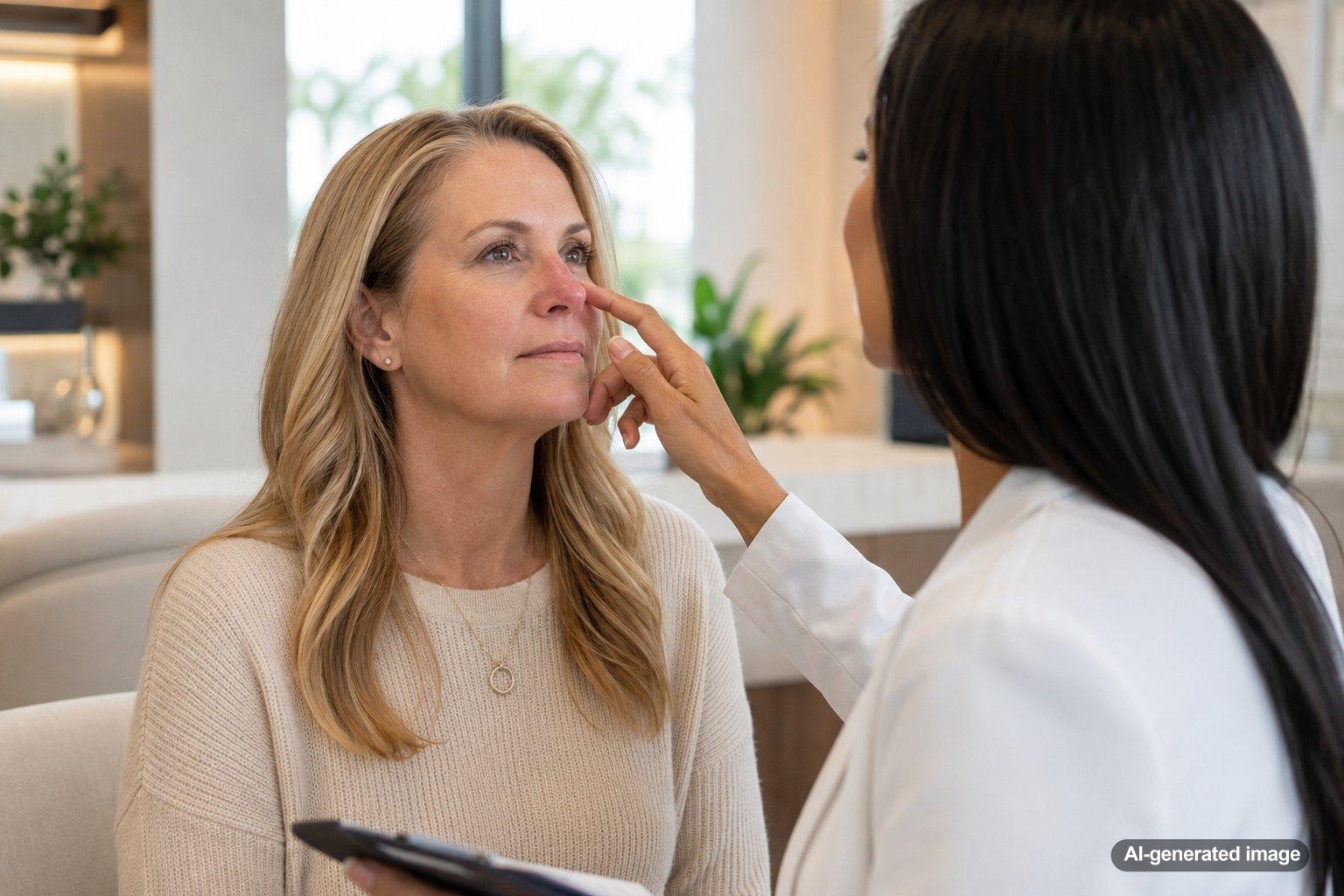
A nose that seems to stay red can feel frustrating, especially when it does not match how your skin feels or how carefully you care for it. Persistent redness on the nose can happen for several reasons, and it does not automatically point to one diagnosis.
One of the more common possibilities is rosacea, a chronic inflammatory skin condition that often affects the center of the face, including the nose and cheeks. Irritation, sun exposure, visible blood vessels, sensitivity to skincare products, and certain medical conditions can also play a role. A dermatologist can evaluate the pattern, texture, symptoms, and triggers to help narrow down what may be contributing.
Quick answer
- A red nose can be associated with rosacea, especially when redness comes with flushing, visible vessels, warmth, stinging, or acne-like bumps.
- Redness may also come from irritation, over-exfoliation, sun damage, seborrheic dermatitis, allergies, or frequent rubbing.
- Alcohol, spicy foods, heat, exercise, sun, wind, and hot drinks can trigger redness for some people, especially if rosacea is involved.
- Gentle skincare and daily sun protection may help calm visible redness, but persistent or changing redness should be evaluated.
- If redness is painful, scaly, bleeding, rapidly changing, one-sided, or associated with eye symptoms, it is worth getting checked promptly.
What persistent nose redness can mean
Persistent redness often means that the small blood vessels in the skin are becoming more reactive or more visible. On the nose, this can be especially noticeable because the skin is exposed to sun, weather, friction, masks, skincare products, and temperature changes.
Rosacea is a common consideration when redness sits across the central face. It may appear as flushing, long-lasting redness, visible vessels, sensitivity, swelling, or acne-like bumps. Some people mainly notice a red nose and cheeks, while others also feel burning, stinging, or unusual sensitivity. Skin tone matters too: redness may look pink or red on lighter skin, while discoloration can appear more violet, brown, or dusky on deeper skin tones.
Common causes and triggers
A dermatologist looks at the full picture because several issues can overlap. Common contributors include:
- Rosacea: Often affects the nose, cheeks, chin, and forehead, with flushing or redness that may linger.
- Visible blood vessels: Tiny facial vessels can become more noticeable over time, especially after sun exposure or repeated flushing.
- Skin barrier irritation: Scrubs, acids, retinoids, fragranced products, or too many active ingredients may leave the nose red and reactive.
- Sun exposure: Ultraviolet light can aggravate redness and contribute to broken-looking vessels.
- Seborrheic dermatitis: Redness with flaking around the nose, eyebrows, scalp, or ears may suggest a different inflammatory pattern.
- Allergies or contact dermatitis: Skincare, sunscreen, fragrance, nasal sprays, tissues, or mask materials can irritate the area.
- Frequent rubbing or blowing the nose: Friction can keep the skin inflamed, especially during allergy season or after illness.
- Heat and lifestyle triggers: Hot weather, saunas, hot drinks, alcohol, spicy foods, and intense exercise can make flushing more noticeable for some people.
What you can do at home
At-home care should focus on calming the skin rather than trying to aggressively remove the redness. A simple routine is often the best starting point.
- Use a gentle, fragrance-free cleanser and avoid scrubbing the nose.
- Moisturize consistently to support the skin barrier.
- Apply broad-spectrum sunscreen every morning, especially in sunny climates like South Florida.
- Pause harsh exfoliants or strong active ingredients if your skin feels hot, tight, stinging, or raw.
- Track possible triggers such as heat, alcohol, spicy foods, hot beverages, workouts, and sun exposure.
- Choose makeup and skincare labeled for sensitive skin when possible.
- Avoid picking at bumps or texture, since this can increase inflammation.
These steps may help reduce irritation, but they are not a substitute for an exam if redness is persistent, worsening, or uncomfortable.
Professional options
Professional care depends on what is causing the redness. If rosacea is suspected, a dermatologist may discuss prescription topical medications, oral medications in select cases, skincare adjustments, and trigger management. If visible vessels or long-lasting background redness are prominent, light- or laser-based treatments may be discussed as part of a broader plan.
At Waverly DermSpa, we offer Excel V+ and can help you understand whether it may be appropriate.
The right option depends on your skin tone, medical history, symptoms, medications, sun exposure, and whether bumps, scaling, eye symptoms, or visible vessels are present. Results and response vary, so an in-person evaluation is the safest way to choose a plan.
When to see a dermatologist
It is worth booking a dermatology visit if your nose redness has lasted more than a few weeks, keeps returning, or is becoming more noticeable. You should also seek evaluation if you notice:
- Redness with burning, stinging, swelling, or tenderness
- Acne-like bumps that do not respond to gentle care
- Flaking, crusting, bleeding, or a sore that does not heal
- One-sided redness or a rapidly changing area
- Eye redness, dryness, burning, itching, light sensitivity, or blurred vision
- A new or changing spot on or near the nose
Because the nose is a common site for both inflammatory skin conditions and sun-related concerns, persistent changes deserve a careful look rather than guesswork.
FAQ
Is a red nose always rosacea?
No. Rosacea is a common possibility, but irritation, sun exposure, visible vessels, seborrheic dermatitis, allergies, and friction can also contribute. A dermatologist can help distinguish among these patterns.
Why is only my nose red?
The nose is exposed to sun, wind, temperature changes, skincare products, masks, and friction. It also has visible blood vessels that can make redness more obvious than on other parts of the face.
Can skincare make nose redness worse?
Yes. Strong exfoliants, fragrance, alcohol-based toners, aggressive scrubbing, and layering too many active ingredients can irritate the skin barrier and make redness more noticeable.
Can laser treatment help a red nose?
Laser or light-based treatments may help certain types of visible redness or vessels, but they are not the right choice for every cause. A dermatologist can evaluate whether this type of approach fits your skin and goals.
Should I be worried if my nose redness is changing?
Changing, bleeding, crusting, painful, or non-healing areas should be evaluated. It may still be something common and manageable, but it is better to have a dermatologist examine it.
Ready to get help?
Schedule an appointment or send a message and our team will get back to you.
Prefer to call? 954-666-3736
Disclaimer: This article is for educational purposes and is not medical advice. For diagnosis and personalized treatment, please book an appointment with a board-certified dermatologist.
Sources & further reading
- American Academy of Dermatology (AAD) – Rosacea: Signs and symptoms
- American Academy of Dermatology (AAD) – Rosacea: Diagnosis and treatment
- Mayo Clinic – Rosacea: Symptoms and causes
- Cleveland Clinic – Rosacea: Symptoms, Causes, Triggers & Treatment
