

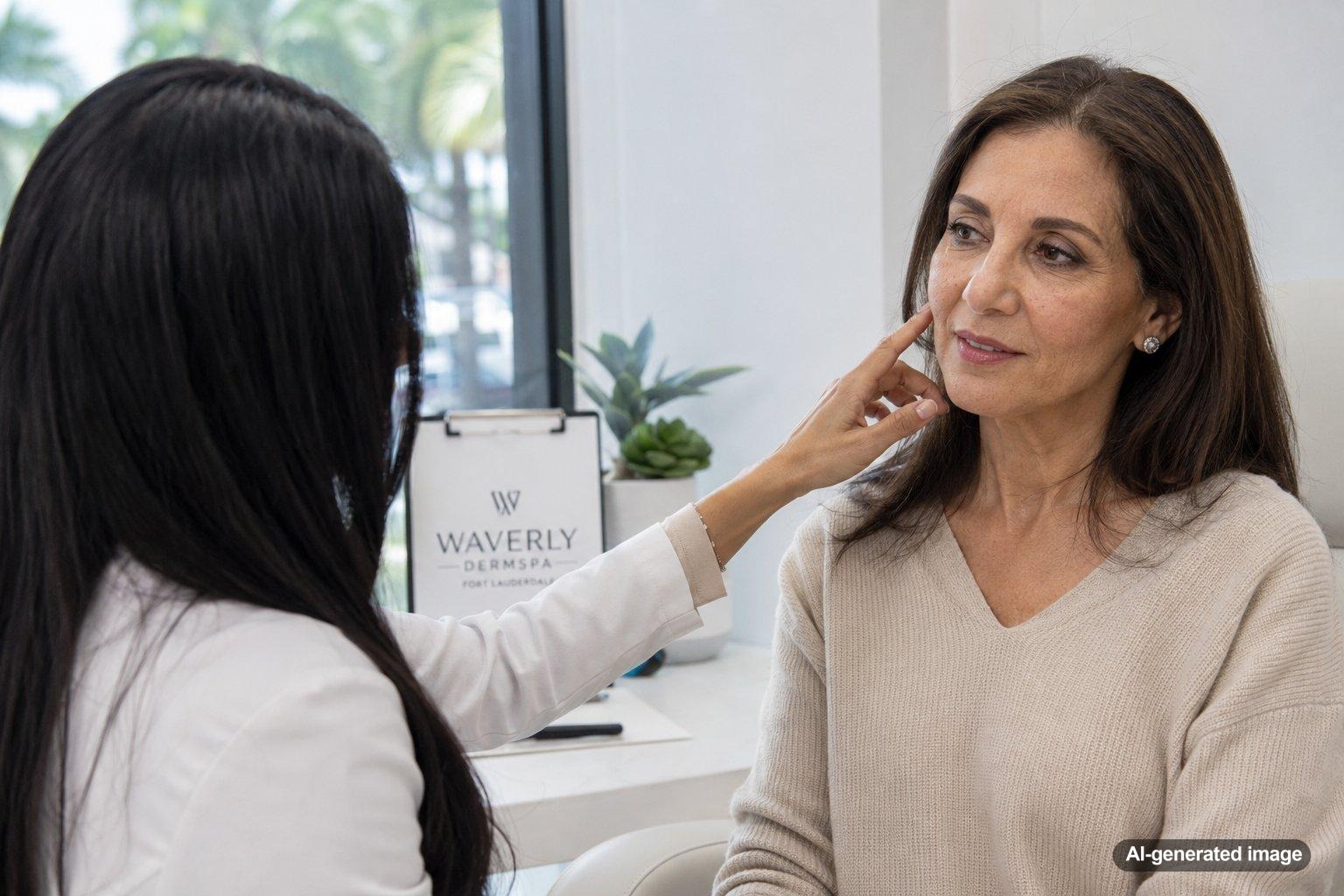
If you’re considering XERF for sun spots or rough patches, your first visit should feel measured, thoughtful, and personalized. In Fort Lauderdale, where year-round sun exposure, boating, beach days, and seasonal travel can all influence the skin, a careful evaluation matters before any cosmetic treatment begins.
During your first XERF appointment, your clinician will typically look at the areas that bother you, discuss your skin history, review your goals, and explain what the treatment may and may not be able to do. The goal is not to rush into a procedure. It is to make sure the plan fits your skin, your lifestyle, and any findings that may need medical attention first.
Quick answer
- Your first visit usually begins with a skin evaluation and conversation about your sun exposure, skincare routine, and treatment goals.
- Sun spots and rough patches are not all the same, so a dermatologist may need to rule out concerns before cosmetic treatment.
- XERF may be discussed as an energy-based option for visible tone and texture concerns, depending on your skin and exam.
- You may receive pre-treatment and aftercare instructions, especially around sun protection and gentle skincare.
- Results and downtime can vary, so your clinician should set realistic expectations rather than promise a fixed outcome.
What XERF is
XERF is an in-office, energy-based treatment that may be used as part of a plan for visible sun-related tone and texture concerns. Depending on the device settings, treatment area, and your skin type, your clinician may use it to help address the appearance of uneven pigmentation, roughness, or dull surface texture.
It is important to understand that brown spots and rough patches can come from different causes. Some are cosmetic, such as age spots or sun-related pigmentation. Others can be associated with actinic damage or other skin changes that need a dermatologist’s attention. That is why your first visit should include more than a quick look at the surface.
Why rough patches should be evaluated first
A rough patch on sun-exposed skin may be dryness, irritation, a benign growth, or another common concern. It can also sometimes resemble a precancerous or cancerous change. For that reason, cosmetic treatment should not replace a medical skin evaluation when a spot is new, changing, tender, bleeding, crusting, or not healing.
Your clinician may ask when the patch appeared, whether it has changed, whether it feels sore or itchy, and what products or treatments you have already tried. If a lesion looks suspicious, the appropriate next step may be medical evaluation rather than cosmetic treatment that day.
What happens before the treatment
Your appointment may begin with a review of your medical history, medications, recent procedures, sun exposure, and skincare products. Please mention if you are using prescription creams, exfoliating acids, retinoids, photosensitizing medications, or if you have a history of cold sores or pigment changes after procedures.
The treatment area is usually cleansed, and photos may be taken for documentation. Your clinician may explain what XERF can reasonably target, what it cannot diagnose, and whether another option may be better for your specific concern. Common professional options for sun-related skin changes can include prescription topicals, chemical peels, laser or energy-based treatments, photodynamic therapy, or biopsy when medically indicated.
What the treatment may feel like
During an energy-based treatment, many people describe warmth, mild prickling, or a controlled heat sensation. The exact feeling can vary based on the area treated, the settings used, and your individual sensitivity. Your team should talk you through the process and check in during treatment so adjustments can be made when appropriate.
The visit may be relatively straightforward, but it should still be handled with care. Eye protection, skin preparation, device settings, and post-treatment instructions are all part of a safe, professional experience.
What to expect afterward
After treatment, the skin may look pink, feel warm, or seem temporarily sensitive. Some areas may feel dry or textured as the skin responds. Your clinician will give you aftercare instructions based on the treatment performed and your skin’s response.
- Use gentle cleanser and moisturizer unless your clinician gives different instructions.
- Avoid unnecessary rubbing, scrubbing, or harsh exfoliation while the skin feels sensitive.
- Use daily broad-spectrum sunscreen and protective clothing, especially in Fort Lauderdale’s strong sun.
- Follow your clinician’s guidance about when to restart retinoids, acids, or active skincare.
- Call the office if you notice increasing pain, blistering, drainage, unusual swelling, or a spot that is not healing as expected.
How to prepare for your first visit
Bring a list of your skincare products, prescriptions, prior cosmetic treatments, and any history of pigment changes after procedures. It can also help to arrive with clean skin and avoid heavy makeup over the areas you want evaluated, unless you have been instructed otherwise.
If you are a seasonal resident or visiting Fort Lauderdale from another climate, mention your travel schedule. Sun exposure before and after energy-based treatments can affect timing, aftercare, and the overall plan.
When to see a dermatologist before cosmetic treatment
Schedule a dermatology evaluation before treating a spot cosmetically if it is changing, bleeding, crusting, painful, rapidly growing, unusually dark, irregular, or not healing. You should also be cautious with any rough patch on sun-exposed skin that keeps returning in the same place.
A dermatologist can help distinguish between cosmetic pigmentation, benign growths, inflammatory irritation, and lesions that may require medical evaluation. This is especially important before treating sun spots, because fading the appearance of a concerning lesion without diagnosing it can delay appropriate care.
FAQ
Can XERF remove all sun spots?
No treatment should be expected to remove every spot or create a guaranteed result. XERF may be one option for certain tone and texture concerns, but your clinician will help determine whether it fits your skin and goals.
Is a rough patch always sun damage?
No. Rough patches can have many causes, including dryness, irritation, benign growths, precancerous changes, or other skin conditions. A dermatologist can evaluate the area and guide the next step.
Will I need more than one treatment?
Some patients may be advised to consider a series or maintenance plan, while others may need a different approach. The number of visits depends on the skin concern, treatment response, and your clinician’s recommendation.
Can I go in the sun after treatment?
You should be careful with sun exposure after energy-based treatments. Your clinician may recommend broad-spectrum sunscreen, hats, shade, and delaying treatment if you recently had significant sun exposure or have upcoming intense sun exposure.
Can XERF be done if I have sensitive skin?
Possibly, but sensitive skin needs a thoughtful plan. Your clinician may adjust settings, recommend preparation, or suggest a different option if your skin is irritated or not a good fit that day.
At Waverly DermSpa, we offer XERF and can help you understand whether it may be appropriate.
Ready to get help?
Schedule an appointment or send a message and our team will get back to you.
Prefer to call? 954-666-3736
Disclaimer: This article is for educational purposes and is not medical advice. For diagnosis and personalized treatment, please book an appointment with a board-certified dermatologist.
Sources & further reading
- American Academy of Dermatology (AAD) – What can get rid of age spots?
- American Academy of Dermatology (AAD) – How dermatologists treat sun-damaged skin
- DermNet – Actinic keratoses
- U.S. Food and Drug Administration (FDA) – Medical Lasers
