

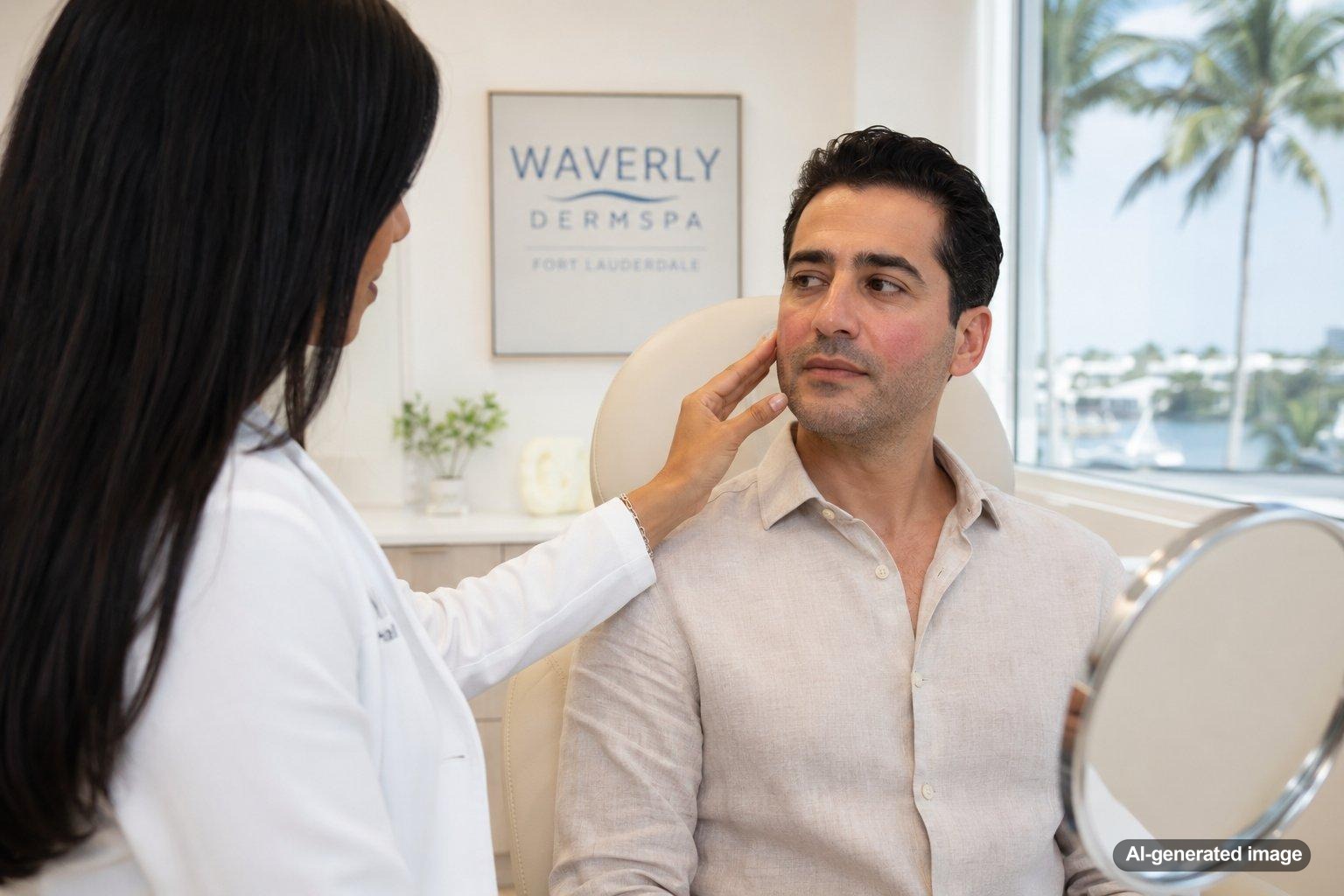
Redness after photodynamic therapy, often called PDT, can feel more noticeable when you live in or visit a sunny place like Fort Lauderdale. The goal is not to avoid life completely after treatment, but to understand why your skin may look and feel reactive, how to protect it, and when to call your dermatologist.
PDT is commonly used in dermatology for certain sun-damaged areas and actinic keratoses. Because the treatment temporarily makes treated skin more sensitive to light, planning around South Florida’s strong sun, reflective water, outdoor dining, golf, beach days, and travel schedules matters.
Quick answer
- Redness, tenderness, mild swelling, flaking, peeling, or a sunburn-like feeling can occur after PDT.
- Light sensitivity is an important part of aftercare, especially in South Florida, where incidental sun exposure can happen quickly.
- Your dermatologist’s specific instructions should guide when you resume outdoor activities, skincare products, exercise, and makeup.
- A wide-brimmed hat, shade, protective clothing, and careful planning are often more useful than relying on sunscreen alone immediately after treatment.
- Call your dermatology office if redness is worsening instead of settling, pain feels intense, blisters develop, or you are unsure whether your healing looks expected.
What PDT is
Photodynamic therapy is an in-office treatment that uses a photosensitizing medication and a specific light source. The medication is applied to targeted skin, allowed to sit for a period of time, and then activated with light. In dermatology, PDT may be discussed for certain sun-damaged areas, including actinic keratoses, depending on the person’s skin findings and medical history.
Because the medication is designed to react with light, the treated area can be extra sensitive afterward. That is why aftercare is not just about comfort. It is also about avoiding unnecessary light exposure while the skin is in a more vulnerable phase.
Why redness can happen after PDT
Redness after PDT is related to the treatment process itself. The medication and light interaction creates a localized skin response in the treated areas. Many people describe it as a sunburn-like reaction, though the intensity can vary from subtle pinkness to more obvious redness and tenderness.
How your skin responds can depend on the treatment area, the amount of sun damage present, the medication used, the light source, your skin sensitivity, and your dermatologist’s treatment plan. A stronger-looking reaction does not automatically mean something is wrong, and a milder reaction does not automatically mean the treatment was ineffective. Your clinician can help interpret what is expected for your situation.
What can make downtime more noticeable in South Florida
- Strong year-round UV exposure: Fort Lauderdale sun can be intense even when the weather feels pleasant.
- Reflected light: Water, sand, pavement, glass, and boats can increase incidental exposure.
- Outdoor routines: Walking, golfing, tennis, pickleball, swimming, gardening, patio meals, and errands can add up.
- Travel schedules: Snowbird and international visitors may need to coordinate PDT around flights, social plans, and outdoor activities.
- Heat and sweating: Warm weather may make treated skin feel more flushed or irritated, especially early in recovery.
- Active skincare products: Retinoids, exfoliating acids, scrubs, and certain brightening products may be too irritating until your clinician says they are appropriate again.
What you can do at home
Follow the aftercare instructions provided by your dermatology team. General comfort-focused steps may include keeping the routine simple, using a gentle cleanser, applying bland moisturizer if recommended, and avoiding unnecessary heat, friction, or active skincare products while the skin feels sensitive.
Sun planning is especially important. Stay indoors or in deep shade as directed, wear a wide-brimmed hat when you need to leave home, choose protective clothing, and avoid intentional sun exposure. Sunscreen may still be part of your long-term routine, but right after PDT, physical coverage and avoidance of direct light are often central because treated skin may remain unusually light-sensitive for a limited period.
Do not pick peeling areas or scrub the skin to speed up flaking. Let the surface settle naturally. If makeup, shaving, exercise, swimming, or returning to your usual skincare routine matters for an event or travel plan, ask your clinician for timing that fits your treatment area and skin response.
Professional options and follow-up
Your dermatologist may recommend PDT as part of a broader plan for sun-damaged skin or actinic keratoses, or may discuss other approaches such as cryotherapy, topical medications, procedures, or monitoring, depending on the findings. The right plan is individualized and should come from an in-person evaluation.
If you are scheduling PDT in South Florida, it can help to choose a time when you can avoid outdoor events, beach plans, boating, and prolonged driving during the most sensitive period. At Waverly DermSpa, we offer Photodynamic Therapy (PDT) and can help you understand whether it may be appropriate.
When to see a dermatologist
Contact your dermatology office if you have severe pain, spreading redness, increasing swelling, blistering, pus, fever, eye symptoms, or a reaction that feels unusual for you. You should also keep regular skin checks if you have a history of significant sun damage, actinic keratoses, skin cancer, changing spots, or lesions that bleed, crust, grow, or do not heal.
In a sunny climate, it is easy to normalize rough or red patches as just sun damage. A dermatologist can evaluate whether a spot is benign, precancerous, inflammatory, or something that needs a different type of care.
FAQ
How red is too red after PDT?
Some redness can be expected, but the degree varies. Call your dermatologist if redness is rapidly worsening, very painful, spreading beyond the treated area, blistering, draining, or paired with symptoms that concern you.
Can I go outside after PDT?
Your clinician will give specific timing. In general, treated skin can be unusually sensitive to light after PDT, so direct sun and intense light exposure should be avoided as instructed. In South Florida, that may require more planning than in cooler or less sunny climates.
Can I wear sunscreen right after PDT?
Ask your dermatology team what to use and when. Sunscreen is important for long-term sun protection, but immediately after PDT, avoiding light exposure and using physical protection such as hats, shade, and clothing may be especially important.
When can I restart retinoids or exfoliating products?
Do not restart irritating products until your clinician says your skin is ready. Retinoids, exfoliating acids, scrubs, and strong brightening products may increase discomfort while the skin is healing.
Is PDT only for cosmetic improvement?
No. In dermatology, PDT may be used for certain medical skin concerns, including some sun-damaged precancerous areas, depending on the diagnosis and treatment plan. A dermatologist can explain why it is being recommended in your case.
Ready to get help?
Schedule an appointment or send a message and our team will get back to you.
Prefer to call? 954-666-3736
Disclaimer
This article is for educational purposes and is not medical advice. For diagnosis and personalized treatment, please book an appointment with a board-certified dermatologist.
Sources & further reading
- American Academy of Dermatology (AAD) – Actinic keratosis: Diagnosis and treatment
- Cleveland Clinic – Photodynamic Therapy: What It Is, Procedure & Recovery
- The Skin Cancer Foundation – Actinic Keratosis Treatment
