

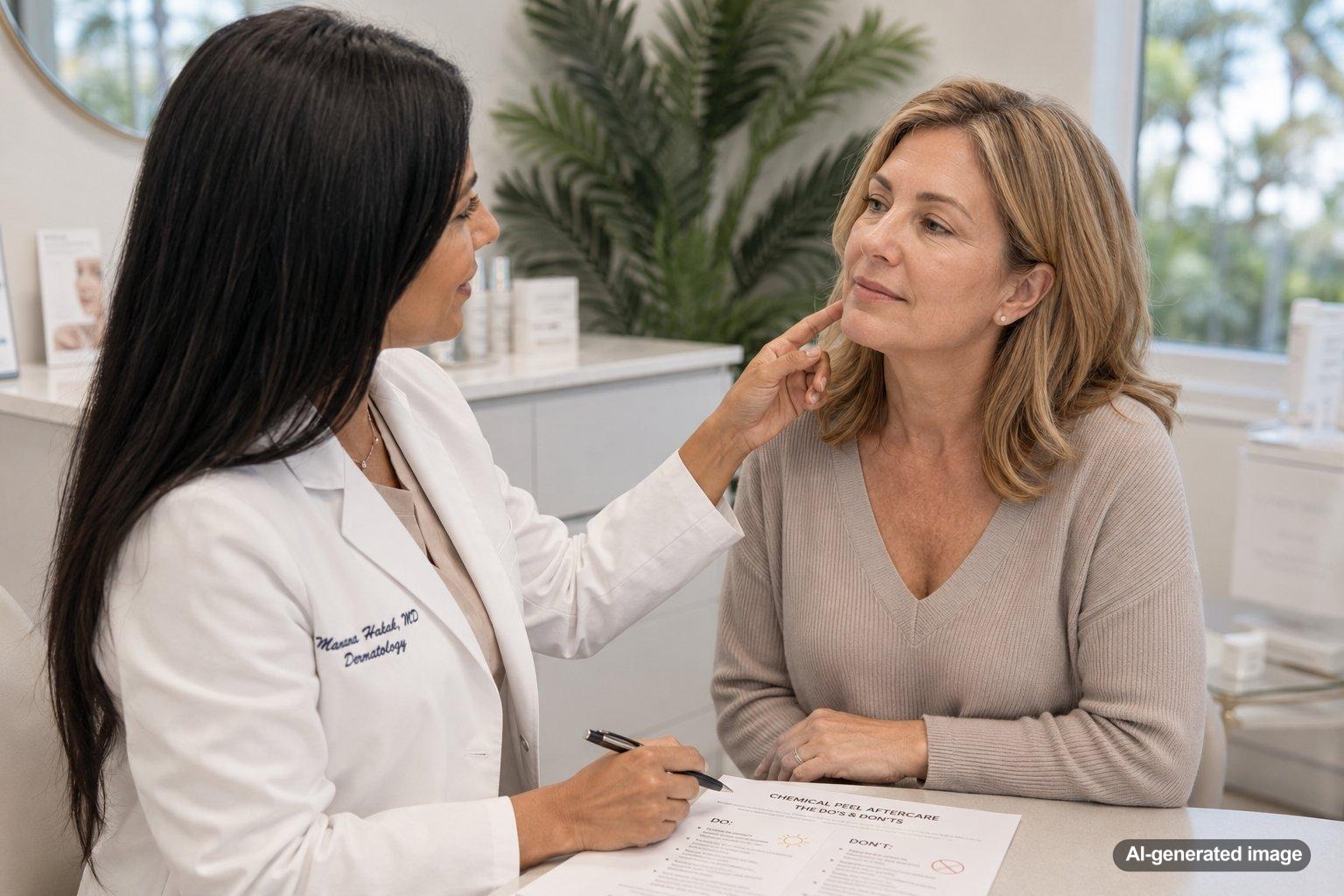
Chemical peel aftercare is simple, but it matters. The days after a peel are not the time to test a new serum, scrub away flaking skin, or rush back into intense sun exposure. Your skin is in a more delicate phase, and calm, consistent care can help support comfort while your clinician’s instructions guide the process.
At Waverly DermSpa in Fort Lauderdale, we often see patients who want clearer, smoother, more even-looking skin without a complicated routine. After a chemical peel, the best approach is usually gentle: protect the skin barrier, keep skin comfortable, avoid unnecessary irritation, and contact your dermatology team if anything feels unusual.
Quick answer
- Do follow the exact aftercare instructions given by your clinician.
- Do use gentle cleanser, moisturizer, and daily broad-spectrum sunscreen as directed.
- Don’t pick, peel, scrub, wax, or exfoliate flaking skin.
- Don’t restart retinoids, acids, or strong active ingredients until your clinician says it is appropriate.
- Do call the office if you have increasing pain, marked swelling, pus-like drainage, blistering, or symptoms that concern you.
What chemical peel aftercare is really about
A chemical peel uses a selected solution to exfoliate the outer layers of the skin in a controlled way. Depending on the peel type and your skin goals, peeling may be very subtle or more noticeable. Some people experience tightness, dryness, mild redness, or flaking, while others notice only a light roughness before the skin settles.
Aftercare is meant to support the skin while it is more sensitive. This typically means reducing friction, avoiding unnecessary heat and sun, keeping the skin moisturized, and pausing products that may sting or over-exfoliate. Your clinician may adjust recommendations based on the depth of the peel, your skin type, your history of sensitivity, and the products you already use.
The do’s after a chemical peel
- Do keep your routine simple. A gentle cleanser, a bland moisturizer, and sunscreen are often the core of post-peel care unless your clinician gives you different instructions.
- Do moisturize consistently. Dryness and tightness are common after many peels, and a simple moisturizer can help support the skin barrier.
- Do protect your skin from the sun. Use broad-spectrum sunscreen as directed, wear a wide-brimmed hat, and seek shade when possible, especially in Fort Lauderdale’s bright climate.
- Do let flaking happen naturally. Peeling skin should be allowed to shed on its own. Pulling at it can increase irritation and may affect how evenly the skin looks as it heals.
- Do use cool, gentle care if skin feels warm. A cool compress may feel soothing for some people, but avoid ice directly on the skin unless your clinician specifically recommends it.
- Do ask before restarting active products. Retinoids, exfoliating acids, benzoyl peroxide, vitamin C, and brightening products may need to be paused until your skin is ready.
The don’ts after a chemical peel
- Don’t pick, scrub, or speed up peeling. This is one of the most important aftercare rules. Let the skin renew at its own pace.
- Don’t use harsh exfoliants. Skip scrubs, cleansing brushes, at-home peels, exfoliating toners, and strong active ingredients until cleared by your clinician.
- Don’t wax or use depilatory creams on treated areas. These can be too irritating while the skin is recovering.
- Don’t schedule facial treatments too soon. Facials, microdermabrasion, microneedling, lasers, and other procedures should be timed with professional guidance.
- Don’t overheat your skin. Saunas, steam rooms, hot yoga, intense workouts, and hot showers may increase flushing or discomfort soon after certain peels.
- Don’t assume more product means better recovery. Layering multiple serums or occlusive products without guidance can irritate some skin types.
What you can do at home
Think of your at-home routine as a quiet recovery plan. Wash with lukewarm water and a gentle cleanser, pat the skin dry, and apply moisturizer without rubbing aggressively. During the day, sunscreen is especially important. Reapply as directed if you are outdoors, sweating, or near bright windows for long periods.
Makeup may be allowed at different times depending on the peel and your skin’s response. If your skin feels tender, raw, or actively peeling, ask your clinician before applying makeup. When you do resume makeup, choose gentle formulas and remove them carefully at night.
Professional guidance after a peel
The right aftercare depends on the peel performed. A superficial peel may call for a short, gentle routine, while a stronger peel may require more detailed instructions and closer follow-up. Your dermatologist or aesthetic provider can help you understand when to resume your usual skincare, when to schedule another treatment if appropriate, and how to adjust your routine if you are prone to dryness, redness, hyperpigmentation, acne, or sensitivity.
At Waverly DermSpa, we offer Chemical Peels and can help you understand whether they may be appropriate.
When to see a dermatologist
Some dryness, tightness, mild redness, and flaking can be expected after many chemical peels, but certain symptoms deserve prompt attention. Contact your dermatology office if you notice worsening pain, significant swelling, spreading redness, pus-like drainage, blistering, fever, or any reaction that feels out of proportion to the aftercare instructions you received.
You should also check in if you develop dark patches, prolonged irritation, or a flare of a known skin condition. A board-certified dermatologist can evaluate your skin, review what was used, and guide next steps in a personalized way.
FAQ
How long should I avoid exfoliating after a chemical peel?
The timing varies based on the peel and your skin’s response. In general, avoid scrubs, acids, retinoids, and at-home exfoliating treatments until your clinician tells you it is appropriate to restart them.
Can I pull off peeling skin if it is already loose?
It is better not to pull or pick. Even loose-looking flakes can still be attached to sensitive skin underneath. Moisturize and allow the skin to shed naturally.
Can I go in the sun after a chemical peel?
It is wise to be especially careful with sun exposure after a peel. Use broad-spectrum sunscreen as directed, wear protective clothing, and seek shade when possible. This is particularly important in South Florida, where UV exposure can be strong year-round.
When can I wear makeup again?
This depends on the peel type and how your skin feels. Some people may be able to use gentle makeup relatively soon, while others may need to wait. Ask your clinician, especially if your skin is tender, raw, or actively flaking.
What moisturizer should I use after a peel?
A simple, fragrance-free moisturizer is often a good starting point, but your clinician may recommend a specific product based on your peel and skin type. Avoid experimenting with new active products during the early aftercare window.
Ready to get help?
Schedule an appointment or send a message and our team will get back to you.
Prefer to call? 954-666-3736
Disclaimer
This article is for educational purposes and is not medical advice. For diagnosis and personalized treatment, please book an appointment with a board-certified dermatologist.
