

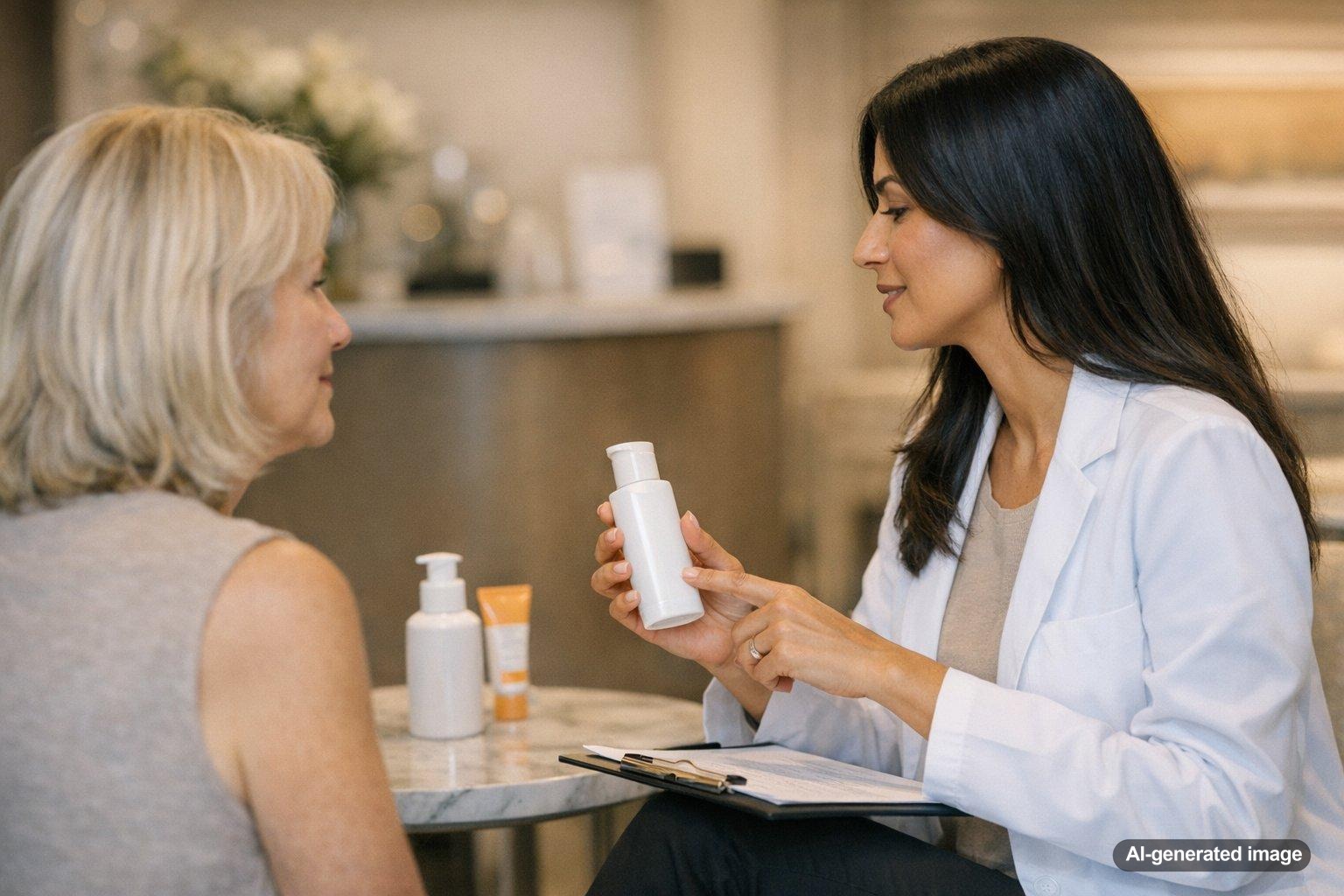
Sunscreen is one of the most useful daily skin habits, but reapplication is where real life gets complicated. Between makeup, humidity, beach bags, school pickup, lunch outside, golf, boating, and long drives in South Florida, it is easy for a morning layer to become the only layer.
The practical goal is not perfection. It is building a simple, repeatable routine that helps keep exposed skin better protected throughout the day, especially when you are outdoors, sweating, swimming, or sitting near bright windows.
Quick answer
- When outdoors, many dermatology organizations recommend reapplying sunscreen about every two hours, or sooner after swimming or sweating.
- Use a broad-spectrum sunscreen with SPF 30 or higher for everyday exposed skin.
- Water-resistant does not mean waterproof, so check the label for the listed water-resistance time.
- Keep a reapplication option where you will actually use it: bag, car console, golf bag, boat tote, desk, or travel pouch.
- For makeup days, consider a layered plan: morning lotion or cream sunscreen, then a practical touch-up format later.
1. Set the timer before you need it
The easiest reapplication is the one you do before your skin feels hot or looks pink. If you are spending time outdoors, set a phone reminder for about two hours after your first application. For beach, pool, tennis, golf, boating, or sightseeing days, it can help to set the reminder before you leave home so you are not relying on memory once the day gets busy.
2. Match the formula to the moment
A cream or lotion may be ideal for the first full application because it is easier to apply generously and evenly. Later in the day, a stick, compact, or brush-on powder may be more convenient for small exposed areas, especially the nose, ears, hairline, and backs of hands. Sprays can be convenient for body touch-ups, but they still need enough product and even coverage. Avoid spraying directly into the face; spray into hands first, then apply.
3. Make makeup touch-ups realistic
If sunscreen over makeup feels impossible, plan for a less disruptive option. A tinted mineral sunscreen, sunscreen compact, or powder sunscreen can make touch-ups feel more polished. These formats should not replace a thorough morning application, but they may make midday reapplication more likely. Focus on the high-exposure zones first: cheeks, nose, forehead, upper lip, jawline, ears, neck, and chest.
4. Do not let water-resistant labels fool you
Water-resistant sunscreen can be helpful for swimming, sweating, and humid weather, but it still has limits. Labels commonly specify a water-resistance time such as 40 or 80 minutes. After swimming, towel drying, or heavy sweating, reapply according to the product directions rather than assuming the morning layer is still intact.
5. Keep sunscreen in the places you forget it
Most people do not skip reapplication because they do not care. They skip it because the sunscreen is not nearby. Keep a small tube in your bag, a stick in your sports pouch, and a travel-size option in your toiletry kit. In Fort Lauderdale, this is especially useful for quick outdoor lunches, valet lines, walking Las Olas, airport days, visiting family, and winter guests who are not used to intense sun exposure.
6. Remember the small areas that get missed
The ears, lips, scalp part, hairline, neck, chest, shoulders, tops of feet, and backs of hands are easy to overlook. A lip balm with SPF 30 or higher can help with lip coverage. For the scalp part, consider a hat, UPF clothing, or a sunscreen format that works with your hair. If you are driving often, the hands, forearms, and left side of the face may need extra attention.
7. Pair sunscreen with shade and clothing
Sunscreen works best as part of a broader sun-protection plan. Shade, wide-brimmed hats, sunglasses, and UPF clothing can reduce how much exposed skin you need to cover and re-cover. This is especially helpful for children, sensitive skin, melasma-prone skin, and anyone who finds frequent reapplication challenging.
What you can do at home
- Apply sunscreen to dry skin before outdoor exposure.
- Choose broad-spectrum SPF 30 or higher for exposed skin.
- Use enough product to cover the area evenly.
- Reapply about every two hours outdoors, and sooner after swimming, sweating, or towel drying.
- Check expiration dates and replace sunscreen that has changed texture, smell, or color.
- Keep hats, sunglasses, and lightweight sun-protective clothing in your regular routine.
Professional options
A dermatologist can help you choose sunscreen textures and ingredients that fit your skin type, especially if you deal with acne, rosacea, sensitivity, melasma, hyperpigmentation, or a history of skin cancer. A personalized plan may include sunscreen selection, pigment-safe skincare, routine skin checks, and guidance on when a spot should be evaluated.
When to see a dermatologist
Book an evaluation if you notice a new, changing, bleeding, non-healing, painful, or unusual spot on your skin. It is also worth getting personalized guidance if you burn easily, have a personal or family history of skin cancer, take medications that may increase sun sensitivity, or struggle to find sunscreen your skin can tolerate.
FAQ
Do I need to reapply sunscreen if I am indoors?
If you are indoors all day and away from windows, you may not need the same reapplication schedule as an outdoor day. If you sit near bright windows, drive often, or move in and out of the sun, reapplication may still be useful.
Can I reapply sunscreen over makeup?
Yes, but the format matters. Many people prefer a tinted sunscreen, compact, stick, or powder for touch-ups. The most protective approach is still a thorough base layer in the morning, with practical touch-ups later.
Is SPF 50 enough for the whole day?
Higher SPF does not remove the need to reapply. Sunscreen can wear off with time, sweat, water, rubbing, and towel drying. Follow the product directions and reapply when outdoors.
What is the easiest sunscreen to reapply?
The easiest sunscreen is the one you will use consistently. For many people, that means a cream for the morning and a portable stick, compact, or spray for later touch-ups.
Should kids reapply sunscreen more often?
Children who swim, sweat, towel off, or play outdoors may need careful reapplication. Protective clothing, hats, shade, and timing outdoor activities outside peak sun can also help reduce exposure.
Ready to get help?
Schedule an appointment or send a message and our team will get back to you.
Prefer to call? 954-666-3736
Disclaimer
This article is for educational purposes and is not medical advice. For diagnosis and personalized treatment, please book an appointment with a board-certified dermatologist.
Sources & further reading
- American Academy of Dermatology (AAD) – Sunscreen FAQs
- U.S. Food and Drug Administration (FDA) – Sunscreen: How to Help Protect Your Skin from the Sun
- The Skin Cancer Foundation – Sunscreen
