

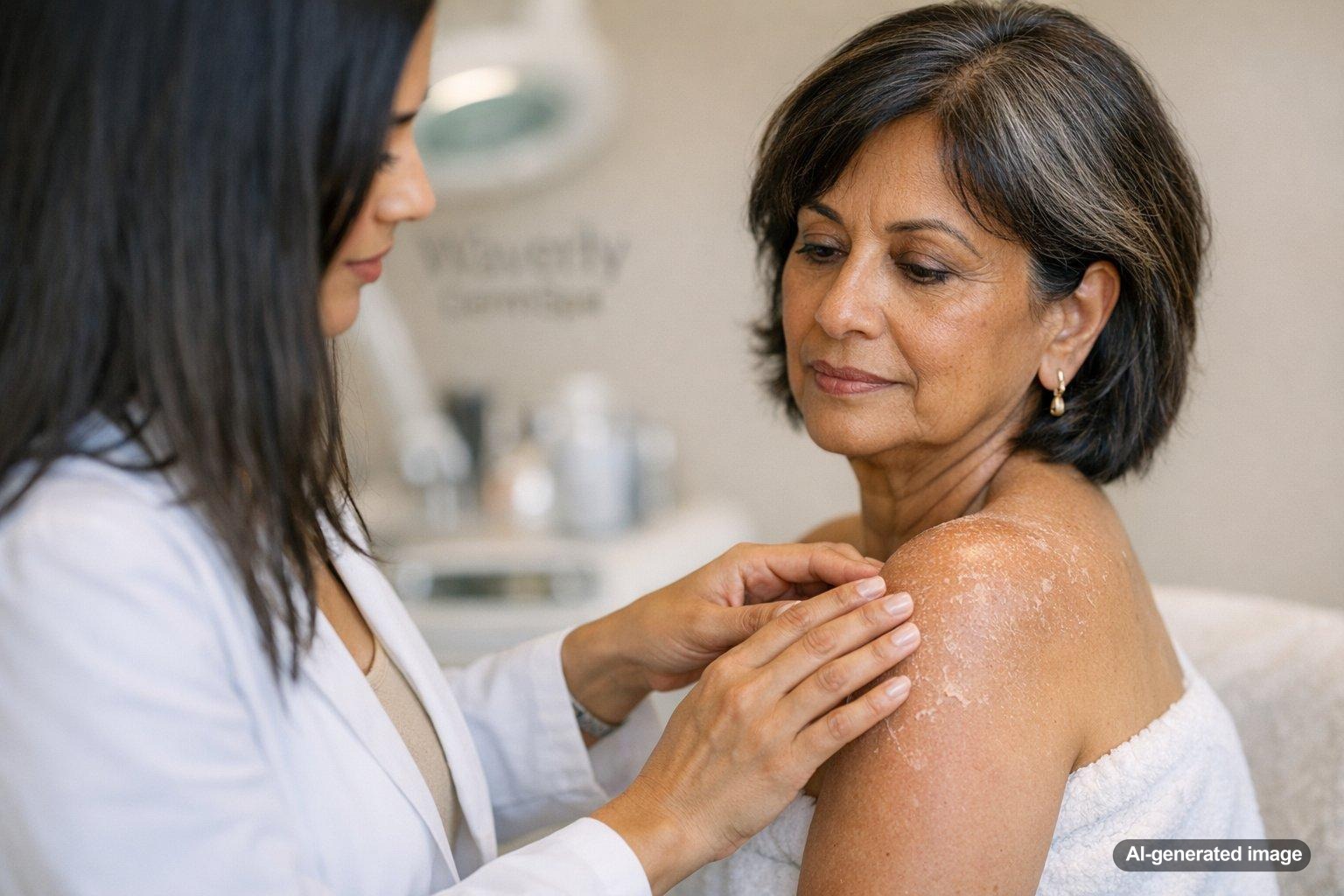
Yes, in many cases, skin shedding after a sunburn is simply peeling. It usually happens when the top layers of sun-damaged skin begin to dry out and separate as your body clears away injured cells. While that can look dramatic, peeling does not always mean something more serious is happening.
That said, not every sunburn should be brushed off. Severe pain, significant blistering, fever, chills, or a burn that covers a large area can call for medical attention. If you are unsure whether what you are seeing is routine peeling or a stronger reaction, a dermatologist can evaluate your skin and help you protect the skin barrier as it heals.
Quick answer
- Peeling is common after a sunburn and often means the damaged outer skin is shedding.
- Do not pull it off, since that can irritate the skin and slow recovery.
- Focus on gentle care with cool compresses, bland moisturizer, and sun avoidance while the skin heals.
- Watch for red flags like severe blistering, swelling, fever, or worsening pain.
- If it keeps happening often, it is worth checking in with a dermatologist about prevention and skin health.
What is actually happening when sunburned skin peels?
Peeling is your skin’s response to ultraviolet damage. After too much sun exposure, the outermost layer of skin can become inflamed and injured. As that damaged skin dries and loosens, it may flake, shed, or come off in thin sheets. Many people describe this as their skin “shedding,” but in plain terms, it is usually peeling from a burn.
Peeling can happen on the shoulders, chest, back, nose, and scalp line, though it can show up anywhere that had strong exposure. The area may feel dry, tight, itchy, tender, or warm while it heals.
Common causes or triggers
- Spending more time in the sun than your skin can tolerate
- Midday sun exposure, especially near water or sand
- Skipping sunscreen reapplication
- Using too little sunscreen or missing easy-to-forget areas
- Travel, outdoor sports, boating, and pool days that add up quickly
- Certain skin types that burn more easily
What you can do at home
Simple, gentle care is usually the best approach. The goal is to support healing and avoid making the skin more irritated.
- Take cool, not icy, showers or use a cool compress for comfort.
- Apply a fragrance-free moisturizer while the skin is still slightly damp.
- Use a gentle cleanser and avoid scrubs, acids, retinoids, or exfoliating brushes on the area until it settles.
- Do not pick, peel, or rub loose skin.
- Wear soft clothing that does not chafe the area.
- Stay out of direct sun as much as possible while the skin recovers.
- When you do go outside, use broad-spectrum sun protection and protective clothing.
What to avoid while it heals
It can be tempting to speed things along, but over-treating a peeling sunburn often makes skin feel worse.
- Avoid popping blisters or pulling off peeling skin.
- Avoid harsh actives, strong peels, or abrasive exfoliation.
- Avoid very hot showers, steam, and anything that increases stinging.
- Avoid tanning or trying to “even out” the burn with more sun exposure.
Professional options
If your skin is especially uncomfortable, repeatedly sunburned, or healing unevenly, a dermatologist can help assess the degree of irritation and guide next steps. Common options include an in-office evaluation, recommendations for barrier-supportive skincare, and discussion of prevention strategies tailored to your skin type and lifestyle. If there is blistering, concern for infection, or a reaction that seems more severe than a routine burn, prompt evaluation is a smart next step.
When to see a dermatologist
- Large blisters or widespread peeling
- Fever, chills, nausea, dizziness, or feeling unwell after the burn
- Increasing redness, swelling, drainage, or tenderness
- Pain that feels severe or does not seem to be improving
- Sunburns that happen often or are followed by lingering dark marks
- Any spot that does not heal as expected or leaves you unsure what you are seeing
FAQ
How long does peeling usually last?
It varies. Many people notice peeling for several days after the initial burn, depending on how irritated the skin became and how well the area is protected during recovery.
Is peeling a sign that the sunburn is healing?
Often, yes. Peeling can be part of the recovery process as the skin clears damaged surface cells. It does not mean the burn was harmless, though, so gentle care still matters.
Should I exfoliate the peeling skin?
No. It is better to let the skin come away on its own. Scrubbing or forcing it off can increase irritation and leave the skin feeling more raw.
Can I still use my usual skincare routine?
Usually it is best to simplify for a bit. A gentle cleanser and bland moisturizer are often better tolerated than active products while the skin barrier is recovering.
Does peeling mean I need treatment in the office?
Not always. Mild peeling can happen with routine sunburn recovery. But if symptoms feel intense, are getting worse, or you are not sure what is normal, it is worth getting checked.
Ready to get help?
Schedule an appointment or send a message and our team will get back to you.
Prefer to call? 954-666-3736
This article is for educational purposes and is not medical advice. For diagnosis and personalized treatment, please book an appointment with a board-certified dermatologist.
