

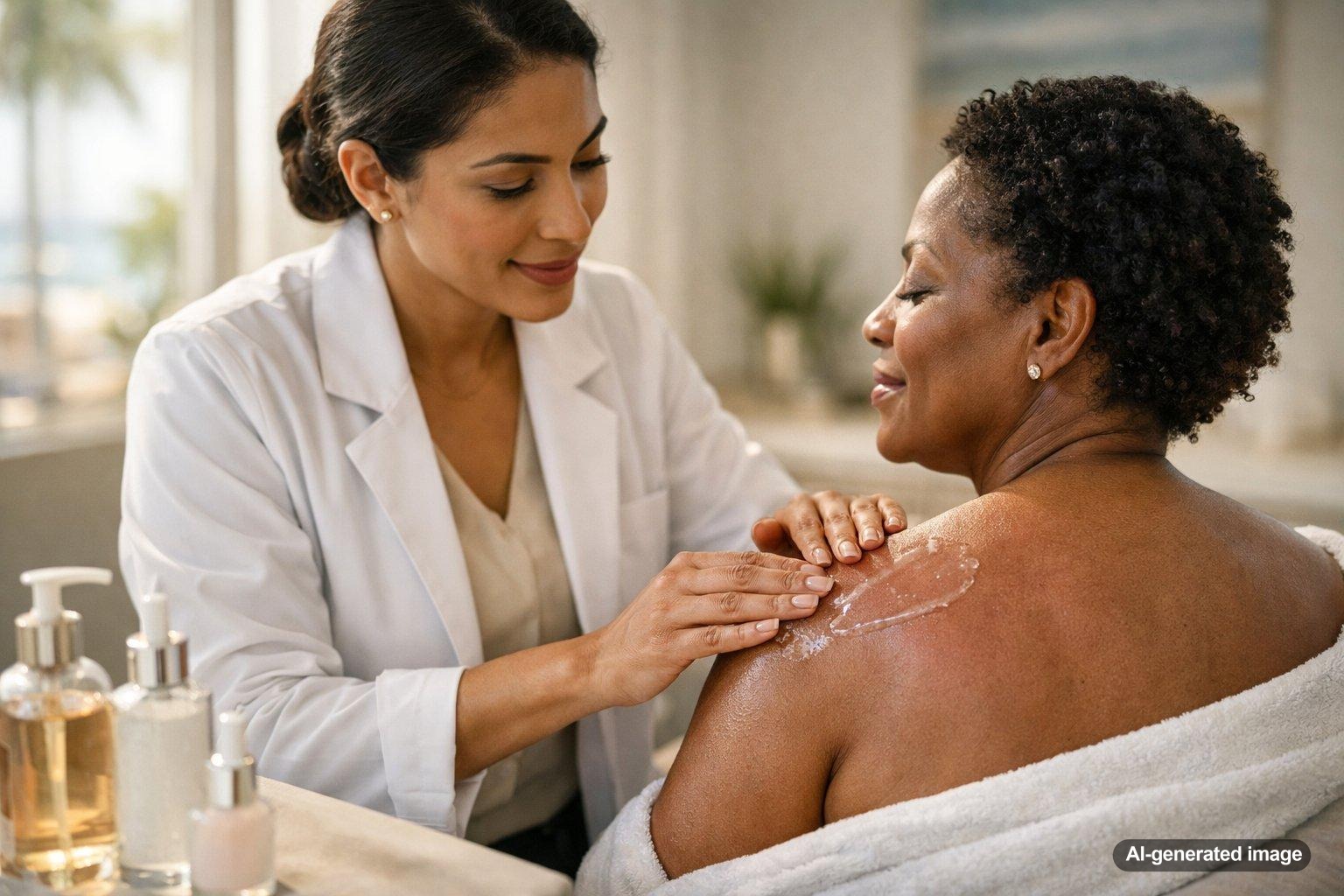
Too much sun can leave skin feeling hot, tight, dry, and easily irritated. In many cases, the goal is not to do more, but to do less and choose simple, gentle steps that support the skin barrier while things settle down.
What helps most often comes down to cooling the skin, reducing friction, avoiding strong actives for a few days, and keeping moisture in. If redness, swelling, blistering, or pain feels more intense than expected, it is worth getting checked instead of trying to push through it at home.
Quick answer
- Cool compresses and a lukewarm shower may help skin feel more comfortable.
- A bland, fragrance-free moisturizer can support a dry, stressed skin barrier.
- Pause exfoliants, retinoids, strong acids, and scrubs until skin feels calm again.
- Loose clothing, shade, and mineral sunscreen can help reduce further irritation.
- If you notice blistering, significant swelling, fever, or worsening pain, a dermatologist can evaluate what is going on.
What after-sun skin calming really means
After-sun care is about helping overheated, irritated skin recover with as little added stress as possible. Sun exposure can leave the surface of the skin temporarily more reactive, which is why products that normally feel fine may suddenly sting or burn. This is also why a minimalist routine often works best for a few days.
Think in terms of comfort and barrier support: cool the skin, hydrate it, protect it from more sun, and avoid ingredients or habits that can make inflammation linger.
Common triggers that can make it feel worse
- Hot showers or baths
- Fragranced lotions or heavily perfumed body products
- Scrubs, cleansing brushes, or rough washcloths
- Retinoids, exfoliating acids, benzoyl peroxide, or strong vitamin C formulas
- Tight clothing that rubs warm, sensitive skin
- More direct sun before the area has settled down
What you can do at home
Start with cool, not icy, care. A cool compress or a brief lukewarm shower may help take the heat down without shocking the skin. Pat dry gently rather than rubbing.
Next, apply a simple fragrance-free moisturizer while the skin is still slightly damp. Creams and lotions with a bland, soothing feel are often easier to tolerate than highly active products. If the skin on your face feels especially reactive, a stripped-down routine for a few days can help: gentle cleanser, moisturizer, sunscreen, and not much else.
Hydration can matter too, especially if you have been out in the Florida heat. Many people also notice less discomfort when they stay in air conditioning, wear loose breathable fabrics, and avoid workouts or extra heat for the rest of the day.
If the area is exposed, keep protecting it. A broad-spectrum mineral sunscreen may be easier to tolerate on irritated skin than more active-feeling formulas, but comfort varies from person to person. Hats, shade, and sun-protective clothing are often the easiest options while skin is settling.
What to avoid for now
This is usually not the moment for a peel, scrub, mask, or a long list of treatment products. Even well-intended skincare can sting when the barrier is stressed. It may help to pause retinoids, exfoliating acids, acne spot treatments, and any product that feels hot, tingly, or drying until your skin feels more normal again.
Try not to pick at peeling skin. It can be tempting, but pulling at loose skin can leave the area more raw and uneven. Let it shed naturally while you keep the area moisturized and protected.
Professional options
If skin stays red, uncomfortable, or unusually reactive, professional evaluation can help sort out whether you are dealing with straightforward irritation or something that needs more tailored care. Common options may include a dermatologist-guided plan for barrier repair, inflammation control, or help choosing products that are less likely to sting while your skin recovers.
If sun exposure seems to leave behind uneven tone or lingering discoloration, treatment decisions are best made after the skin has fully calmed. At Waverly DermSpa, we offer Chemical Peels and can help you understand whether it may be appropriate.
When to see a dermatologist
- Blistering or significant swelling
- Pain that feels severe or keeps getting worse
- Fever, chills, dizziness, or feeling unwell overall
- Redness that is spreading or not settling
- Persistent darkening or discoloration after the skin has healed
- You are unsure whether it is simple irritation, a burn, or a reaction to a product
FAQ
Is aloe always the best choice?
Not necessarily. Some people find it soothing, while others react to fragranced or heavily preserved formulas. A simple fragrance-free moisturizer is often a safe starting point.
Should I keep using my retinol or exfoliating pads?
It is usually more comfortable to pause them until the skin barrier feels calm again. Restart slowly once the skin no longer feels tender, hot, or unusually reactive.
Can I wear makeup on irritated skin?
Many people prefer to keep things minimal for a day or two. If you do wear makeup, choose gentle products and remove them without scrubbing.
What if my skin starts peeling?
Peeling can happen after sun exposure. The main goal is to keep the area moisturized, avoid picking, and protect it from more sun while it recovers.
Ready to get help?
Schedule an appointment or send a message and our team will get back to you.
Prefer to call? 954-666-3736
This article is for educational purposes and is not medical advice. For diagnosis and personalized treatment, please book an appointment with a board-certified dermatologist.
