

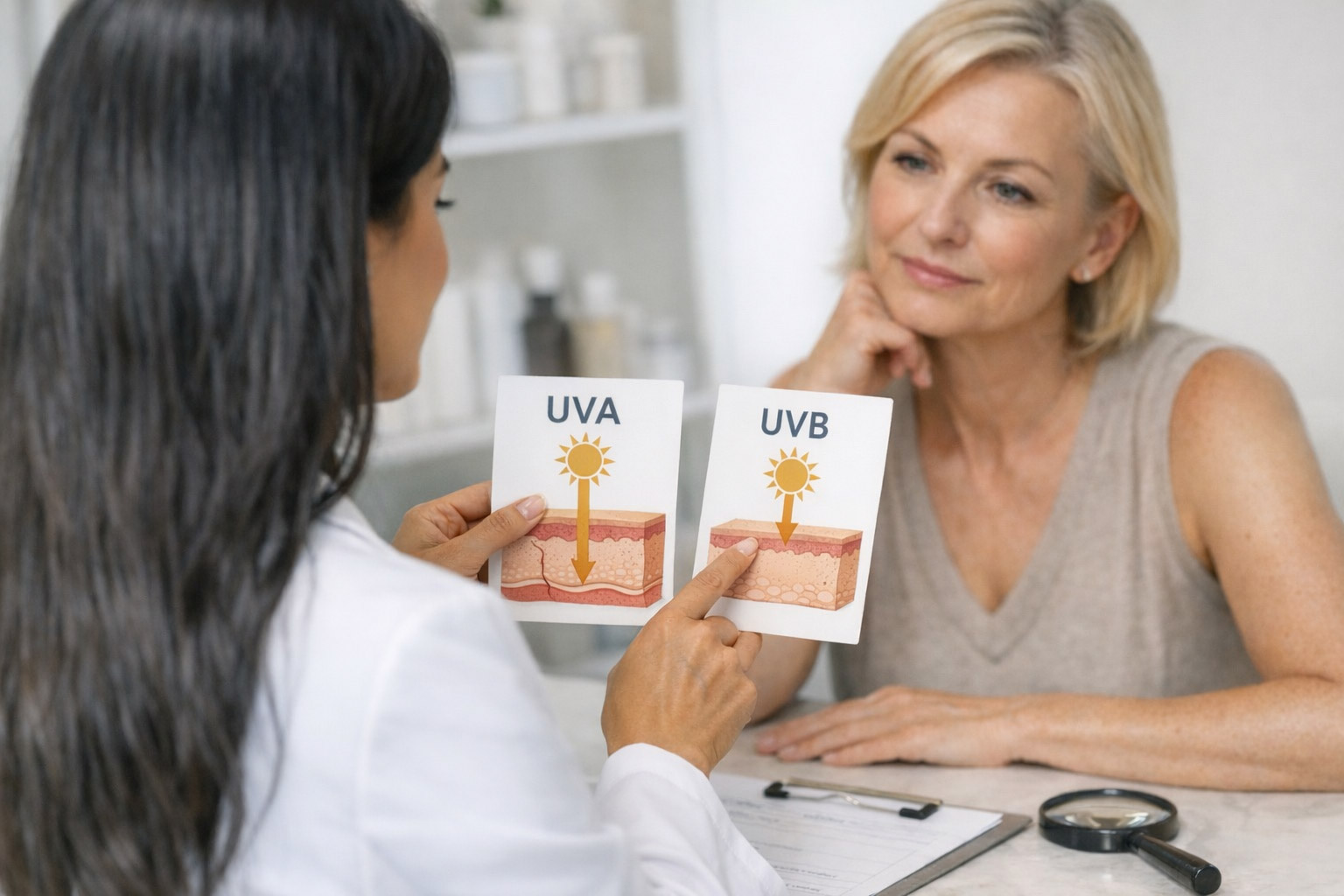
When you are choosing sunscreen, the letters on the label can feel more technical than helpful. The good news is that the difference between UVA and UVB is fairly simple once you know what each one does and why both matter.
In general, UVA is more closely linked with deeper, longer-term skin changes like visible aging and discoloration, while UVB is more strongly associated with sunburn. Both can affect skin health, which is why broad-spectrum protection is worth making part of your daily routine, even in a sunny, year-round climate like South Florida.
Quick answer
- UVA penetrates more deeply and is commonly associated with premature skin aging and visible pigment changes.
- UVB affects the more superficial layers of skin and is more closely associated with sunburn.
- Both types of ultraviolet light can contribute to skin damage over time.
- Broad-spectrum sunscreen is designed to protect against both UVA and UVB.
- Daily sun protection matters even on cloudy days and during brief outdoor exposure.
How UVA and UVB are different
UVA: the aging-focused rays
UVA rays are often thought of as the rays more closely connected with gradual, cumulative skin changes. They can play a role in fine lines, uneven tone, and a loss of skin freshness over time. Many people also notice that UVA exposure can make discoloration look more stubborn, especially if they are already prone to hyperpigmentation or melasma.
UVB: the burning-focused rays
UVB rays are more strongly linked with the redness and tenderness of sunburn. They tend to affect the outer layers of the skin more directly, which is why overexposure often shows up faster and more visibly. If you have ever spent more time in the sun than expected and noticed your skin feeling hot or turning pink later that day, UVB was likely part of the picture.
What they have in common
Although UVA and UVB behave differently, they are not an either-or issue. Both are forms of ultraviolet light, both can stress the skin, and both matter when you are thinking about prevention. That is why a sunscreen that only addresses one type is not enough for most people. Broad-spectrum formulas are labeled that way because they are made to cover both.
Why this matters for daily skin health
Understanding UVA and UVB can make sunscreen shopping much less confusing. If your main concern is visible aging, dark spots, or keeping your results looking polished after in-office treatments, UVA protection matters. If your main concern is avoiding a burn during beach days, golf, tennis, boating, or travel, UVB protection matters. In real life, most people need both at the same time.
This is especially relevant in Fort Lauderdale, where strong daylight exposure is part of everyday life for many residents, snowbirds, and visitors. Even short periods outside can add up when sun protection is inconsistent.
How to choose better protection
- Look for the words broad-spectrum on the label.
- Choose an SPF you will actually wear consistently.
- Reapply when you are outdoors for extended periods, sweating, or spending time near water.
- Do not forget commonly missed areas like the ears, neck, chest, and hands.
- Pair sunscreen with practical habits like shade, sunglasses, and sun-protective clothing when possible.
FAQ
Is UVA or UVB worse?
They are different, not interchangeable. UVA is more commonly associated with longer-term visible aging and discoloration, while UVB is more strongly associated with sunburn. Both matter, which is why broad-spectrum protection is the better approach.
Does a higher SPF mean better UVA protection?
Not necessarily. SPF mainly reflects UVB protection. For everyday use, it helps to choose a broad-spectrum sunscreen so you are covering both UVA and UVB.
Can you get UV exposure on cloudy days?
Yes, you still can. That is one reason daily sunscreen use tends to work better than saving it only for obvious beach or pool days.
Do darker skin tones still need protection from UVA and UVB?
Yes. While sun response can vary from person to person, daily protection is still important for helping reduce cumulative damage, discoloration, and other unwanted skin changes.
Ready to get help?
Schedule an appointment or send a message and our team will get back to you.
Prefer to call? 954-666-3736
This article is for educational purposes and is not medical advice. For diagnosis and personalized treatment, please book an appointment with a board-certified dermatologist.
