

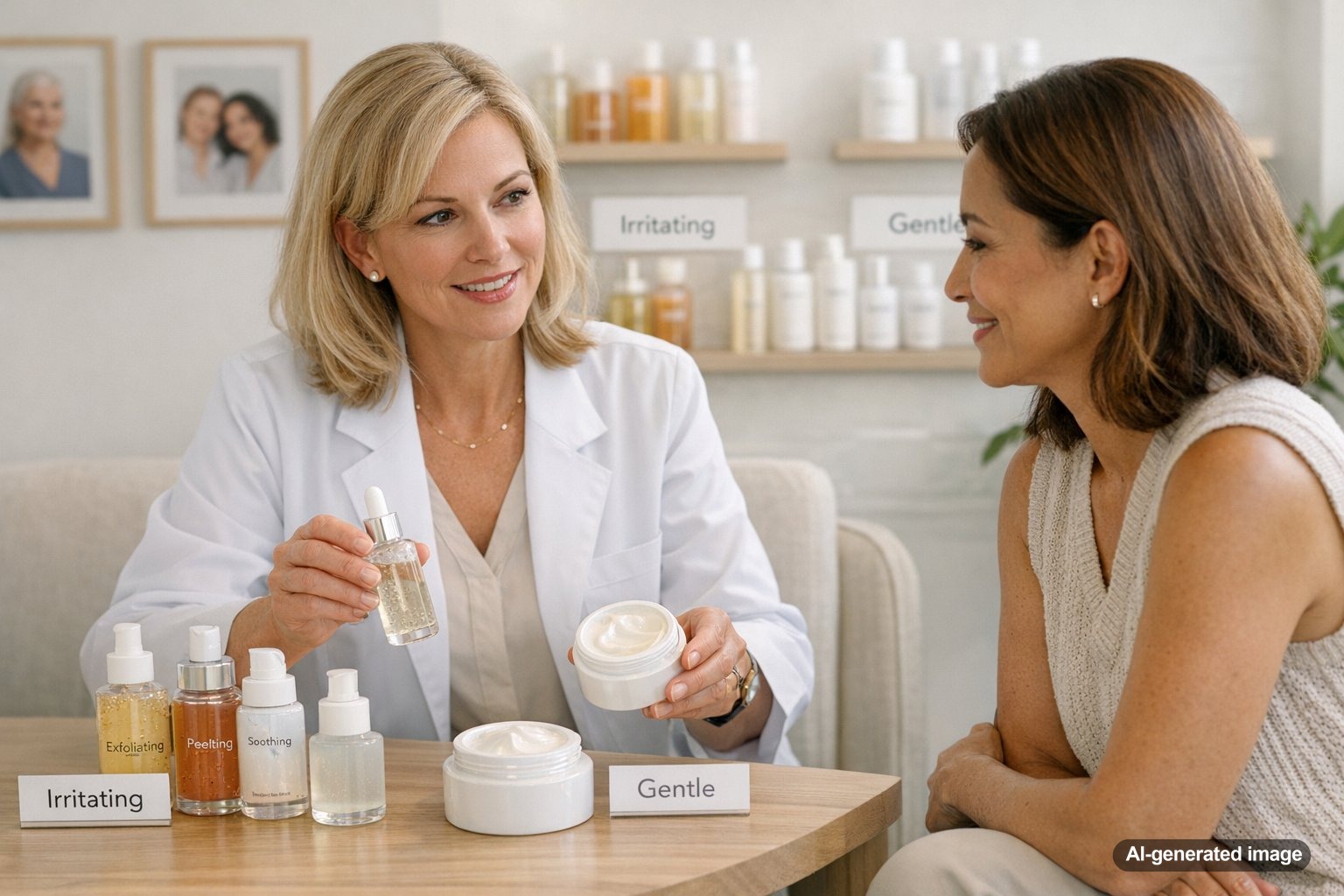
Rosacea-prone skin often does best with fewer moving parts. If your face flushes easily or feels stingy after products that seem fine on others, it may help to look closely at what is in your routine and pare it back to the essentials.
Quick answer: common ingredients that can irritate rosacea
- Fragrance (including essential oils) and high-alcohol formulas that can sting and dry the skin
- Harsh exfoliants and frequent scrubbing that can disrupt the skin barrier
- Strong actives used too often or layered together (acids, retinoids, vitamin C, benzoyl peroxide)
- Heat-and-tingle products (warming masks, menthol, camphor, strong minty balms) that can worsen redness for some people
What rosacea is (in plain English)
Rosacea is a common condition that tends to show up as facial redness, flushing, and sometimes bumps that can look like acne. Many people notice their skin feels more reactive than it used to, especially on the cheeks, nose, chin, and forehead. It can come and go, and it can be influenced by both lifestyle triggers and what touches the skin.
Common causes and triggers (including product-related triggers)
Rosacea is not caused by being unclean, and it is not your fault. It is often linked to increased skin sensitivity and changes in the blood vessels and barrier function. Triggers vary person to person, but these are common themes.
- Sun exposure, heat, and sudden temperature changes (hot showers, saunas, hot yoga)
- Spicy foods, hot beverages, and alcohol for some people
- Stress, vigorous exercise, and overheating
- Wind, cold, and low humidity that dry the skin
- Over-exfoliation, cleansing too often, or using multiple strong actives at once
- Fragrance, essential oils, and high-alcohol products that can sting or dry
- Physical scrubs, cleansing brushes, and rough washcloths
Skincare ingredients to approach with caution
Not everyone with rosacea reacts to the same ingredients. The goal is not to fear products, but to reduce the chance of irritation. If you are unsure, patch testing and a simple routine can be a calm way to learn what your skin tolerates.
- Fragrance and essential oils: These can be irritating in leave-on products, even when they are labeled as natural. Look for fragrance-free (not just unscented).
- Alcohol-heavy formulas: Alcohol can be drying and sting on compromised skin, especially in toners, astringents, and some acne products.
- Exfoliating acids and peels: AHAs (glycolic, lactic), BHAs (salicylic), and stronger at-home peels may cause burning or increased redness if used too often or at high strength.
- Retinoids: Retinoids can be helpful for many concerns, but they can also cause dryness and irritation when introduced too quickly or layered with other actives.
- Vitamin C (especially low-pH forms): Some vitamin C serums tingle and may be too active for reactive skin when the barrier is fragile.
- Benzoyl peroxide and strong acne actives: These can be drying and may worsen sensitivity if rosacea is the main issue.
- Menthol, camphor, peppermint, and warming agents: Cooling or warming sensations can feel soothing in the moment but may aggravate redness for some people.
- Harsh surfactants: Strong foaming cleansers can strip oils and leave skin tight, which can amplify reactivity.
What you can do at home (safe, conservative steps)
A calmer routine is often a better starting point than adding more products. Consider these gentle moves that support comfort and the skin barrier.
- Simplify to the basics: Cleanser, moisturizer, and sunscreen. If your skin is flaring, you may do best pausing non-essential actives until things feel stable.
- Choose fragrance-free and gentle: Look for plain, barrier-supportive formulas. If a product burns on application, that is useful information.
- Use lukewarm water: Hot water can trigger flushing and dryness. Pat dry instead of rubbing.
- Avoid scrubbing: Skip gritty scrubs, cleansing brushes, and aggressive exfoliation. If you exfoliate at all, do it sparingly and gently.
- Introduce one change at a time: Test a new product for several days before adding another. This makes it easier to pinpoint irritants.
- Prioritize daily sun protection: Sun can be a major rosacea trigger. A mineral sunscreen can be a good option for sensitive skin, but the best sunscreen is the one you can wear consistently.
- Watch for hidden irritants: Haircare, aftershaves, and fragranced laundry products can migrate to facial skin and irritate it.
Professional options (high-level, no promises)
If redness, flushing, or bumps persist, a dermatologist can evaluate what is driving your symptoms and tailor a plan that fits your skin and lifestyle. Common options can include prescription topicals, oral medications when appropriate, and in-office treatments designed to reduce visible redness and support overall skin clarity. Your clinician can also help you build a routine that keeps results steady without overwhelming sensitive skin.
At Waverly DermSpa, Dr. Maryann Mikhail, MD can review your skin history, triggers, and current products, then guide you toward a simpler approach and appropriate in-office options when needed.
When to see a dermatologist (red flags)
It is worth scheduling an evaluation if you notice any of the following:
- Stinging, burning, or redness that does not calm with a simplified routine
- Frequent flushing or new, persistent facial redness
- Bumps that look like acne but do not respond to typical acne products
- Eye symptoms like gritty feeling, redness, or eyelid irritation
- Skin that becomes increasingly reactive to products you previously tolerated
- Any sudden change that concerns you, especially if symptoms are worsening
FAQ
Is it better to stop all skincare when rosacea flares?
Often, reducing to the basics can help: a gentle cleanser, a plain moisturizer, and daily sunscreen. Once your skin feels calmer, you can reintroduce other products slowly, one at a time.
Are natural products always safer for rosacea?
Not necessarily. Essential oils and botanical extracts can be irritating for reactive skin. Fragrance-free and simple formulas are often easier to tolerate.
Can exfoliation make rosacea worse?
It can. Over-exfoliation may weaken the skin barrier and increase stinging and redness. If you exfoliate, keep it gentle and infrequent, and avoid stacking multiple exfoliating products.
What should I look for on ingredient labels?
Start by scanning for fragrance (including parfum) and essential oils, strong alcohols high on the list, and multiple strong actives combined in one routine. If you react to a product, bring the ingredient list to your visit so your clinician can help you spot patterns.
Do I need prescription treatment for rosacea?
Some people do well with careful trigger management and a gentle routine, while others benefit from prescription options or in-office care. A dermatologist can evaluate what type of rosacea features you have and recommend appropriate options.
Ready to get help?
Schedule an appointment or send a message and our team will get back to you.
Prefer to call? 954-666-3736
Disclaimer
This article is for educational purposes and is not medical advice. For diagnosis and personalized treatment, please book an appointment with a board-certified dermatologist.
