

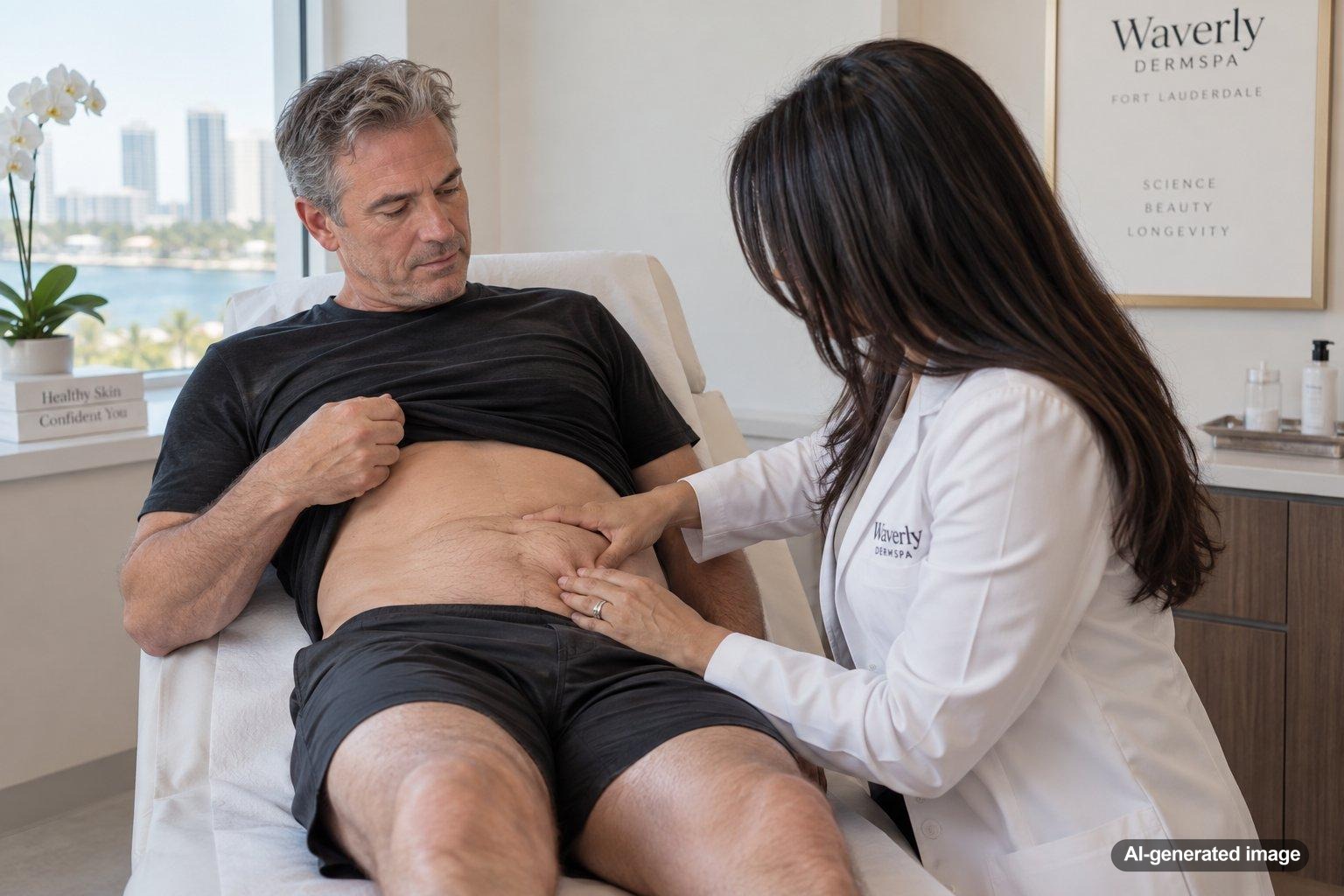
Loose skin after abdominal liposuction can be frustrating, especially when the underlying fat reduction looks good but the skin does not contract as much as expected. XERF is an energy-based treatment that may be considered when the concern is mild to moderate skin laxity rather than remaining fat alone. It uses radiofrequency energy to heat targeted tissue in a controlled way, with the goal of supporting a firmer-looking skin envelope over time.
Whether it makes sense after liposuction depends on how much looseness is present, the quality and thickness of the skin, healing status, scar tissue, and whether the concern could be better addressed with another approach. A personalized examination is important before treating a previously operated area.
Quick answer
- XERF may be considered for mild to moderate loose abdominal skin after liposuction.
- It uses radiofrequency energy rather than removing additional fat.
- It is not a substitute for surgical skin removal when there is substantial excess skin.
- The abdomen should be appropriately healed before an energy-based treatment is considered.
- A clinician should review previous surgery, scars, implants, sensation changes, and treatment goals before proceeding.
What is XERF?
XERF is an energy-based system that delivers monopolar radiofrequency energy into tissue. FDA documentation for the device identifies operating frequencies of 2 MHz and 6.78 MHz. In cosmetic care, controlled radiofrequency heating may be used to support gradual changes in the appearance and firmness of treated skin.
The treatment is different from liposuction. Liposuction removes or reduces localized fat, while radiofrequency treatment is aimed at tissue heating and skin-related concerns. That distinction matters when someone is evaluating what still bothers them after body contouring.
Why can the abdomen look loose after liposuction?
Liposuction can improve contour by reducing fat, but it does not remove a large amount of excess skin. How well the skin adapts afterward varies from person to person.
- Skin elasticity: Skin with stronger natural elasticity may contract more readily than thinner or more lax skin.
- Amount of prior stretching: Pregnancy, weight changes, and aging can affect how much the abdominal skin has been stretched.
- Amount of fat removed: A noticeable reduction in volume can make preexisting skin laxity more apparent.
- Scar tissue and healing: Previous procedures may leave firmness, tethering, swelling, or uneven texture that changes how the area should be assessed.
- Muscle or abdominal wall changes: Not every contour concern is caused by the skin itself.
When XERF may be considered after liposuction
XERF may be worth discussing when the main concern is a somewhat loose or crepey appearance of the abdominal skin and additional fat removal is not the primary goal. It may be more appropriate for modest laxity than for a significant fold or substantial amount of hanging skin.
A clinician may also evaluate whether the looseness is evenly distributed or concentrated around the lower abdomen, navel, or areas where liposuction was more aggressive. Treatment planning can vary because previously treated tissue may not behave exactly like untreated skin.
When another approach may make more sense
Energy-based treatments have limits. Someone with a substantial amount of excess abdominal skin may need a surgical consultation to understand the difference between non-surgical tightening and skin removal. Likewise, contour irregularities, persistent swelling, significant scar tethering, or suspected abdominal wall concerns may require evaluation before a cosmetic skin treatment is considered.
The most useful consultation starts by identifying what is actually creating the appearance: skin laxity, remaining fat, scar tissue, muscle separation, or a combination of factors.
How long should you wait after liposuction?
There is no single waiting period that is appropriate for everyone. Swelling and tissue remodeling can continue after liposuction, and treating too early may make it harder to judge the final contour. Your clinician can review how the abdomen is healing and whether the tissue appears stable enough to consider an additional procedure.
If your liposuction was recent, it is also useful to involve the physician who performed the procedure when there are questions about healing, persistent tenderness, fluid collections, unusual firmness, or other postoperative concerns.
What can you do at home?
Home care cannot remove significant loose skin, but protecting the area while it heals can support overall skin health. Follow the postoperative instructions provided by your surgical team, avoid introducing aggressive massage or devices without clearance, protect exposed skin from excessive sun, and use a simple moisturizer if the skin feels dry or irritated.
Stable weight can also make it easier to evaluate the long-term contour. Repeated weight fluctuations may change the appearance of both the skin and underlying tissue.
What to expect from a professional evaluation
A clinician may examine the skin while you are standing and lying down, assess how easily it can be lifted or pinched, look for scars and contour changes, and ask when the liposuction was performed. Medical history, implanted devices, prior abdominal surgery, current medications, and changes in skin sensation can also be relevant.
If XERF is being considered, the discussion should include the expected degree of improvement, alternative treatments, treatment limitations, and device-specific precautions. The goal is to choose an approach that fits the tissue rather than selecting a treatment based on the device name alone.
Device-specific safety considerations
The FDA’s 510(k) database identifies XERF as a monopolar radiofrequency device. The FDA also currently lists a Class II recall involving specified XERF EFFECTOR 60 units manufactured from April 1 through August 20, 2025 because of a manufacturing issue. The recall applies to identified units rather than automatically applying to every XERF system.
If you are considering treatment, it is reasonable to ask the clinic which equipment and applicators will be used and whether they are affected by any current manufacturer or FDA notices. Your clinician can also review whether radiofrequency treatment is appropriate based on your medical history and previous abdominal procedures.
When to see a dermatologist or your surgeon
Arrange an evaluation if you are unsure whether the appearance is caused by loose skin, scar tissue, remaining fat, or another postoperative change. Contact the physician who performed your liposuction promptly if you develop new or worsening pain, significant redness, drainage, marked swelling, an open area, fever, or another unexpected change during recovery.
For a stable cosmetic concern after healing, an in-person assessment can help determine whether an energy-based treatment is reasonable or whether another approach would better match the amount and type of laxity.
FAQ
Can XERF remove loose abdominal skin?
XERF does not surgically remove skin. It may help improve the appearance of some mild to moderate laxity through controlled radiofrequency treatment, but the degree of change varies. Significant excess skin may require a surgical consultation.
Can XERF remove leftover fat after liposuction?
The main reason to consider XERF in this setting is usually skin-related improvement rather than additional liposuction-style fat removal. A clinician can determine whether the concern is primarily skin, fat, scar tissue, or a combination.
Can XERF be used over liposuction scars?
Previous scars and treated tissue should be examined before treatment. The location, maturity, sensitivity, and surrounding tissue can influence whether and how an energy-based procedure is approached.
Is XERF enough for severe abdominal skin laxity?
Non-surgical energy treatments generally have practical limits. If there is substantial excess or hanging skin, a surgical evaluation may provide a clearer understanding of the available options.
Does XERF require evaluation before treatment?
Yes. A clinician should review your abdominal anatomy, healing after liposuction, previous procedures, relevant medical history, and treatment goals before deciding whether XERF may be appropriate.
At Waverly DermSpa, we offer XERF and can help you understand whether it may be appropriate.
Ready to get help?
Schedule an appointment or send a message and our team will get back to you.
Prefer to call? 954-666-3736
Disclaimer
This article is for educational purposes and is not medical advice. For diagnosis and personalized treatment, please book an appointment with a board-certified dermatologist.
Sources & further reading
- U.S. Food and Drug Administration (FDA) – 510(k) Premarket Notification: XERF
- U.S. Food and Drug Administration (FDA) – Class 2 Device Recall XERF EFFECTOR 60
