

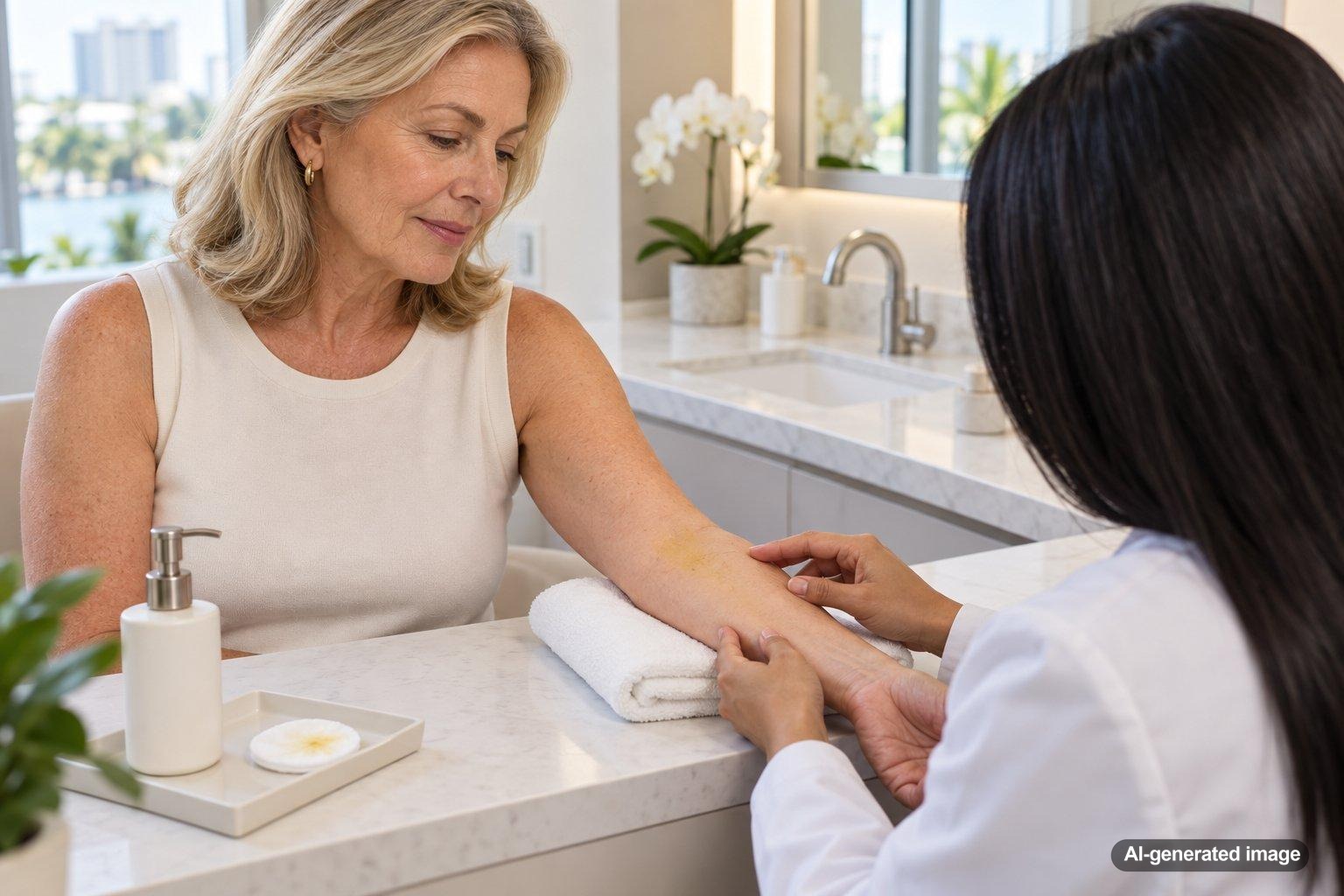
Noticing yellow marks on your skin after sweating can be confusing, especially when your skin looks completely normal beforehand. You might see a faint yellow film around your neck, underarms, chest, or skin folds after exercising, spending time outdoors, or wearing certain clothing. Sometimes the color wipes away easily, while other times it seems to linger until you shower.
Yellow marks associated with sweating can develop for several reasons, including product residue, transferred clothing dyes, and less common conditions that affect the color of sweat or the skin’s surface. The important distinction is whether the yellow material is sitting on your skin, appearing in the sweat itself, or representing a change in your underlying skin color. Understanding that difference can help you decide whether a simple adjustment is reasonable or a dermatology evaluation would be more appropriate.
Quick Answer: Why Does Sweat Sometimes Leave Yellow Marks?
- Skincare and antiperspirant residue: Sweat can mix with products already on your skin, making a yellowish film or residue more noticeable.
- Clothing dye transfer: Moisture and friction can transfer pigment from certain fabrics onto damp skin.
- Surface discoloration: Certain microorganisms or external substances may alter the appearance of otherwise ordinary sweat on the skin.
- Rare colored-sweat conditions: Chromhidrosis can produce visibly colored sweat, while pseudochromhidrosis occurs when initially colorless sweat becomes colored after reaching the skin.
- Underlying skin discoloration: Yellow skin that remains after washing may not be related to sweat and deserves closer attention.
Is Sweat Normally Yellow?
Most sweat is essentially colorless. Its primary function is to help regulate body temperature through evaporation. Sweat contains water and dissolved substances, including electrolytes, but these ordinarily do not create obvious yellow marks on the skin.
However, sweat can interact with materials it encounters. When moisture combines with deodorant, sunscreen, cosmetics, oils, environmental particles, or fabric dyes, the resulting residue may appear yellowish even though the sweat itself is not yellow.
There are also uncommon conditions involving visibly colored perspiration. Distinguishing those conditions from ordinary surface residue generally requires a review of the pattern, timing, and appearance of the discoloration.
Common Reasons Yellow Marks Appear After Sweating
Skincare Products and Antiperspirants
Products applied before sweating can change how residue looks and feels on the skin. Antiperspirants, deodorants, sunscreens, tinted cosmetics, and certain body products may leave films that become more visible when mixed with perspiration and natural skin oils.
For example, a faint yellowish deposit around the underarms may reflect a combination of product residue, skin oils, and moisture rather than unusually colored sweat.
Some ingredients can also contribute to yellow staining on clothing. However, yellow fabric stains alone do not establish that the sweat or skin is producing yellow pigment.
Color Transfer From Clothing
Dyes from clothing, particularly newer or heavily colored fabrics, may transfer onto the skin when exposed to sweat and friction. This can happen around shirt collars, underarms, waistbands, and other areas where damp fabric repeatedly touches the body.
A useful clue is whether the yellow marks follow the shape of a garment or appear only after wearing particular clothing. If the residue disappears after gentle washing and does not recur with different fabrics, external color transfer becomes a more plausible explanation.
Environmental Residue and Skin Oils
Sweat may make ordinary surface material more noticeable. Skin oils, dust, occupational residues, self-tanning products, and other external substances can mix with moisture and create a temporary yellow or yellow-brown appearance.
This is especially relevant when discoloration appears only after a specific activity, such as working outdoors, exercising, or spending time in an environment where airborne particles may settle on exposed skin.
Pseudochromhidrosis
Pseudochromhidrosis describes a situation in which sweat is initially colorless but develops a visible color after reaching the skin. The color change may involve substances on the skin surface, including pigments produced by certain microorganisms or contact with external chemicals.
Although colored perspiration can appear yellow, orange, red, blue, green, or other shades depending on the cause, pseudochromhidrosis is uncommon. A yellow mark after sweating does not automatically suggest this condition.
A dermatologist may consider pseudochromhidrosis when discoloration repeatedly appears with sweating, especially when routine explanations such as clothing transfer and skincare residue do not fit the pattern.
Chromhidrosis
Chromhidrosis is a rare condition associated with visibly colored sweat. One recognized form involves pigment-containing secretions from apocrine sweat glands, which are found in areas such as the underarms. Another form involves eccrine sweating and can be associated with certain water-soluble substances.
The appearance and location of colored perspiration can vary. Chromhidrosis is not the same as ordinary yellow staining on a shirt, and its identification requires medical assessment rather than conclusions based on color alone.
How to Tell Whether the Yellow Color Is on Your Skin or in Your Sweat
Observing when the discoloration appears can provide useful context. Rather than trying to identify a condition from one isolated episode, consider the relationship between sweating, products, clothing, and washing.
- If the color wipes away: Surface residue, transferred dye, or discoloration involving sweat on the skin may be possibilities.
- If it happens with one shirt: Fabric dye or another clothing-related factor may explain the pattern.
- If it occurs after using a particular product: A product residue or interaction is worth considering.
- If colored moisture repeatedly appears without an obvious external source: A dermatologist can evaluate whether a colored-sweat condition is involved.
- If the skin itself stays yellow after bathing: The discoloration may not be a sweat problem and should be assessed separately.
These clues are not diagnostic. More than one factor may be present, and the appearance of a stain alone cannot reliably distinguish between different causes.
What Can You Do at Home?
If the marks are mild, temporary, and clearly associated with sweating, a few conservative steps may help you identify whether an external factor is contributing.
- Cleanse gently: Wash affected areas with a mild cleanser and lukewarm water. Avoid aggressive scrubbing or abrasive tools.
- Review recently introduced products: Consider whether the discoloration started after changing deodorant, sunscreen, body lotion, cosmetics, or self-tanning products.
- Pay attention to clothing: Notice whether yellow marks occur with particular fabrics, colors, or newly purchased garments.
- Change out of damp clothing: Keeping the skin clean and reasonably dry may reduce prolonged contact with sweat, product residue, and fabric dyes.
- Document recurring episodes: A photograph taken before washing can help a dermatologist understand the appearance and distribution of the discoloration.
- Avoid harsh home remedies: Bleach, strong acids, household solvents, and abrasive cleansing techniques can irritate or injure the skin.
Do not attempt to deliberately provoke sweating or use chemicals to test for chromhidrosis at home. If yellow residue repeatedly returns without an identifiable explanation, professional evaluation is more useful than increasingly aggressive cleansing.
Can Yellow Sweat Marks Be a Sign of a Medical Problem?
Many episodes of yellow residue after sweating have relatively straightforward external explanations. Still, persistent or unexplained discoloration should not automatically be dismissed as a cosmetic issue.
One important distinction is whether the yellow appearance is confined to a removable surface stain or involves the skin itself. Persistent yellowing of the skin, particularly when accompanied by yellowing of the whites of the eyes, can be associated with jaundice and other medical concerns unrelated to ordinary perspiration.
If your skin or eyes are newly yellow, seek prompt medical evaluation rather than assuming sweat is responsible. Additional symptoms such as dark urine, pale stools, abdominal discomfort, or significant fatigue make timely assessment particularly important.
Yellow-orange coloration can also occasionally reflect substances deposited in the skin rather than colored sweat. The distribution, associated symptoms, medical history, and physical examination help clinicians determine what further assessment may be appropriate.
How a Dermatologist Evaluates Unusual Sweat Discoloration
A dermatology evaluation generally begins with questions about when the marks appear, where they occur, whether they wash away, and whether they coincide with particular products, medications, supplements, foods, or clothing.
The clinician may examine the affected skin and consider whether the discoloration originates from sweat, surface substances, or the skin itself. Depending on the findings, additional assessment may be appropriate for suspected pigment changes, irritation, or microorganisms associated with surface discoloration.
When a true colored-sweat condition is suspected, management depends on the underlying mechanism. Approaches may include addressing contributing external substances, reviewing relevant exposures, or considering clinician-directed treatment when appropriate.
Not every case requires laboratory testing, and no single approach is suitable for every pattern of discoloration. An accurate assessment helps avoid unnecessary treatments and potentially irritating home remedies.
When Should You See a Dermatologist?
Consider scheduling a dermatology appointment if yellow marks repeatedly appear after sweating without a clear explanation, especially when they occur despite changes in clothing and skincare products.
Additional reasons for evaluation include:
- Discoloration that persists after gentle washing.
- Recurring visibly colored moisture on the skin or clothing without an identifiable source.
- New irritation, tenderness, itching, or other skin changes accompanying the marks.
- Discoloration that spreads, becomes more pronounced, or changes in character.
- Concern that a medication, supplement, or medical condition may be contributing.
New yellowing of the skin or eyes requires prompt general medical assessment, even if the change was first noticed after sweating. That presentation should not be managed as a routine cosmetic skin concern.
Frequently Asked Questions
Can sweat itself be yellow?
Most sweat is colorless, but rare conditions can produce visibly colored perspiration. Yellow marks are more commonly noticed when moisture interacts with substances on the skin or clothing. A dermatologist can help investigate recurring unexplained color changes.
Why do yellow marks appear under my arms after sweating?
The underarms contain sweat glands and are common sites for deodorant and antiperspirant application. Moisture, skin oils, product residue, and fabric contact can contribute to yellowish deposits or stains. Persistent colored perspiration without an obvious external cause warrants assessment.
Is yellow sweat the same as chromhidrosis?
No. Chromhidrosis refers to a specific group of rare conditions involving colored sweat. Yellow residue on the skin or clothing does not, by itself, establish chromhidrosis. Surface staining and pseudochromhidrosis are different possibilities.
Can bacteria make sweat look yellow?
Certain microorganisms on the skin can produce pigments that alter the appearance of sweat after it reaches the surface. This is one possible mechanism of pseudochromhidrosis, but it cannot be confirmed from the stain’s color alone. A dermatologist can determine whether further evaluation is appropriate.
Should I stop using deodorant if I notice yellow marks?
Not necessarily. It may be useful to observe whether the discoloration is associated with a recently introduced product, but deodorant is not responsible for every yellow mark. If the area is irritated or the discoloration continues, a dermatologist can review possible contributing factors.
Does yellow skin after sweating mean I have jaundice?
A temporary mark that washes off is different from persistent yellowing of the skin. Jaundice typically involves a change in the underlying color of the skin and may also affect the whites of the eyes. New yellowing of the skin or eyes deserves prompt medical evaluation.
Ready to get help?
Schedule an appointment or send a message and our team will get back to you.
Prefer to call? 954-666-3736
Disclaimer
This article is for educational purposes and is not medical advice. For diagnosis and personalized treatment, please book an appointment with a board-certified dermatologist.
