

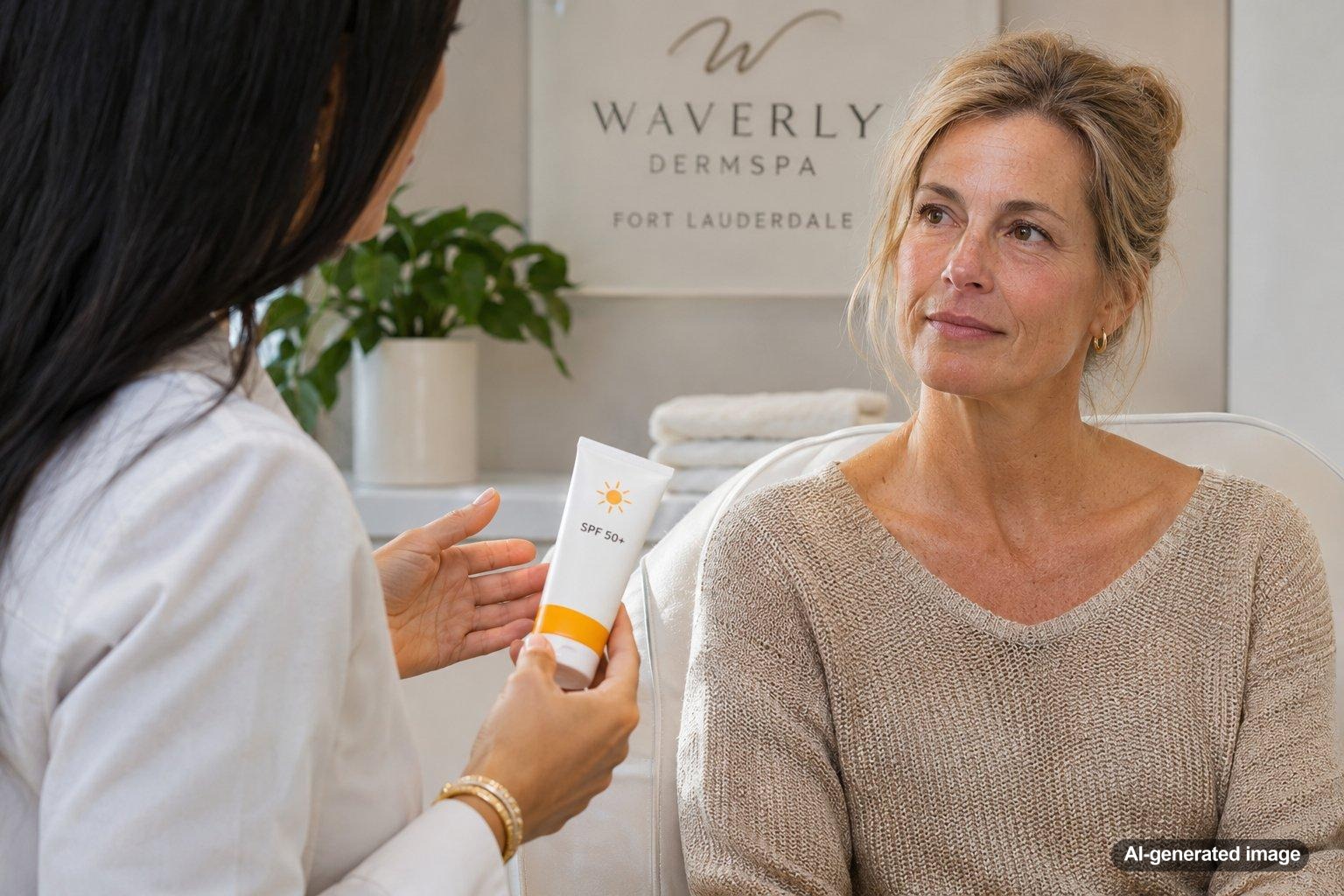
Sun avoidance is an important part of recovery after CO2 laser resurfacing because newly treated skin is especially vulnerable to ultraviolet (UV) exposure. The laser creates controlled injury in the skin to encourage renewal, and the healing surface temporarily has less protection against environmental stress. Sun exposure during this period can contribute to irritation, prolonged redness, uneven pigmentation, and other complications that may affect the appearance of the treated area.
For patients in Fort Lauderdale, where bright sunshine and outdoor activities are part of everyday life, planning for sun protection deserves as much attention as the procedure itself. Understanding why sunlight matters, when sunscreen may be appropriate, and how to protect healing skin can make the recovery process more manageable.
Quick Answer: Why Should You Avoid the Sun After CO2 Laser Resurfacing?
- Healing skin is more vulnerable: CO2 laser resurfacing temporarily disrupts the skin’s protective surface, making it more sensitive to UV exposure and irritation.
- Sunlight can worsen discoloration: UV exposure may contribute to post-inflammatory hyperpigmentation, particularly in people who are more prone to pigment changes.
- Sunburn can complicate recovery: Newly treated skin may be less able to tolerate additional injury from sunlight.
- Protection extends beyond the first few days: Even after the surface has healed, the skin may remain pink, sensitive, or susceptible to pigment changes.
- Timing matters: Your dermatologist should determine when sunscreen can be applied directly to treated skin and how long enhanced sun precautions should continue.
What Happens to Your Skin During CO2 Laser Resurfacing?
CO2 laser resurfacing uses a carbon dioxide laser to deliver controlled energy into the skin. Depending on the device and treatment settings, the procedure removes or creates microscopic zones of injury in portions of the outer skin while producing a thermal effect in deeper tissue.
This controlled process is intended to stimulate repair and remodeling. Dermatologists may consider CO2 laser resurfacing for concerns such as uneven texture, certain scars, fine lines, and visible signs of sun damage.
However, the same process that makes resurfacing useful also creates a temporary healing period. The outer protective barrier needs time to recover, and the skin may appear red, pink, swollen, or flaky. More intensive treatments may involve noticeable crusting or peeling.
During this phase, the treated area is not functioning exactly like untreated skin. Its response to sunlight, skincare ingredients, heat, and friction may be different. This is why individualized aftercare instructions are essential.
How Can Sun Exposure Affect Healing Skin?
It May Increase the Risk of Dark Spots
One of the main concerns after laser resurfacing is post-inflammatory hyperpigmentation. This occurs when inflammation or injury stimulates excess pigment production, leaving areas of skin darker than the surrounding tissue.
UV exposure can further stimulate pigment production during recovery. The resulting discoloration may become more noticeable or take additional time to fade.
People with medium to deep skin tones, a history of melasma, or previous post-inflammatory pigmentation may have a greater tendency toward certain pigment changes. However, anyone undergoing resurfacing should take sun protection seriously.
It Can Add Irritation to Already Sensitive Skin
Following CO2 laser treatment, the skin may feel warm, tight, tender, or unusually sensitive. Additional UV exposure can contribute to inflammation, discomfort, and redness.
Although some redness is expected after resurfacing, unnecessary sun exposure may make the recovery experience more uncomfortable. Avoiding sunlight helps prevent an additional source of irritation while the treated surface heals.
It May Contribute to Uneven Healing or Visible Color Changes
Laser resurfacing is designed to produce a controlled response. Sunburn introduces an additional injury that can interfere with the expected healing process.
Depending on the severity of the exposure and the condition of the skin, complications may include more pronounced inflammation, changes in pigmentation, or persistent visible marks. Sun protection reduces avoidable environmental stress, although it cannot eliminate every possible complication.
How Long Should You Avoid Direct Sunlight After CO2 Laser Resurfacing?
There is no single sun-avoidance schedule that applies to every CO2 laser procedure. Recovery depends on the treatment depth, the amount of skin treated, the individual’s skin characteristics, and the specific resurfacing technique.
More intensive ablative treatments generally require greater recovery precautions than lighter fractional approaches. Some patients may experience surface healing within approximately one to three weeks, while lingering redness or sensitivity may continue much longer. These are broad ranges rather than a personalized recovery timetable.
During the initial healing period, direct sunlight should be avoided as closely as possible. Once the skin has re-epithelialized, meaning the protective outer surface has closed, diligent UV protection remains important. Your dermatologist may recommend continued heightened precautions for weeks or months, depending on your treatment and individual risk factors.
Do not assume that skin is fully recovered simply because peeling has stopped or visible redness has decreased. Follow the specific restrictions provided by your treating clinician.
Should You Wear Sunscreen Immediately After CO2 Laser Treatment?
Sunscreen is essential for long-term protection after resurfacing, but the timing of its application deserves special attention.
Immediately after an ablative CO2 procedure, the skin may have areas that are raw, fragile, or not fully closed. Applying ordinary sunscreen to these areas before your clinician approves it may cause irritation or interfere with the prescribed wound-care routine.
During this early stage, protection generally relies on staying indoors or away from direct sunlight and following the dressing, cleansing, and ointment instructions supplied by your dermatologist.
Once the treated surface has healed sufficiently, your clinician may recommend a gentle, broad-spectrum sunscreen with SPF 30 or higher. Mineral-based formulas containing zinc oxide or titanium dioxide are sometimes considered for sensitive skin, although the best choice depends on the individual and the product’s formulation.
Even after sunscreen is permitted, it should complement shade and protective clothing rather than replace them.
What Are Practical Ways to Protect Your Skin During Recovery?
Thoughtful planning can reduce unnecessary sun exposure without making the recovery period more complicated than it needs to be.
- Prioritize indoor activities: Arrange appointments, errands, and social plans to minimize time outdoors during the early healing period.
- Choose protective shade: When outdoor travel is unavoidable, use covered walkways, shaded entrances, and other protected routes.
- Wear a wide-brimmed hat when appropriate: A hat can help shade the face, ears, and neck, but avoid materials or fits that rub against tender treatment areas.
- Consider UV-protective clothing: Lightweight, tightly woven fabrics can help shield treated areas without relying solely on topical products.
- Be mindful of car windows: Some UVA radiation can pass through ordinary side windows, making longer drives a potential source of exposure.
- Avoid intentional tanning: Tanning beds, sunbathing, and attempts to develop a tan are inappropriate during recovery.
- Follow your prescribed skincare routine: Use only the cleansing products, moisturizers, ointments, and sunscreen approved for your stage of healing.
For people recovering in South Florida, it may also help to postpone beach visits, poolside relaxation, boating, and extended outdoor dining until the treating dermatologist determines those activities are appropriate.
Does Cloudy Weather Make Sun Exposure Safe After Laser Resurfacing?
No. Clouds can reduce some sunlight, but they do not completely block ultraviolet radiation. UV exposure can occur even when the sky is overcast or the temperature feels comfortable.
This distinction is particularly relevant for patients who associate sun protection only with bright, hot afternoons. UV exposure is not determined by how warm the air feels, and a cloudy day does not automatically make prolonged outdoor activity appropriate after resurfacing.
Reflected sunlight from water, sand, and surrounding surfaces can also contribute to exposure. The safest approach during the early recovery period is to follow the same avoidance precautions regardless of whether the day looks sunny or cloudy.
What If You Accidentally Get Sun Exposure After CO2 Laser Treatment?
Brief, unintended exposure does not necessarily mean that a complication will develop. The appropriate response depends on how much exposure occurred, whether the skin was already healed, and whether symptoms are present.
Move out of direct sunlight and avoid further exposure. Continue the aftercare plan provided by your treating dermatologist rather than applying unfamiliar soothing products or active ingredients.
If you develop increased pain, significant redness, blistering, or other unexpected changes, contact your treating clinician promptly. Do not attempt to manage a suspected burn on freshly resurfaced skin with exfoliants, acids, retinoids, or other potentially irritating products.
Your dermatologist can assess whether the exposure has affected healing and whether your aftercare instructions need adjustment.
What Professional Guidance Helps Protect Your Results?
Laser resurfacing aftercare is not identical for every patient. A dermatologist can help establish a plan based on skin tone, pigmentation history, the treatment settings, existing skincare products, and lifestyle considerations.
Professional follow-up may include assessing skin barrier recovery, determining when protective products can be introduced, evaluating persistent redness, and checking for unwanted pigmentation changes.
If discoloration develops, your dermatologist may discuss appropriate management options after examining the skin. Introducing pigment-correcting products before the skin has adequately healed may cause additional irritation, so treatment decisions should be individualized.
At Waverly DermSpa, we offer Tetra CoolPeel CO2 and can help you understand whether it may be appropriate.
When Should You Contact a Dermatologist During Recovery?
Mild redness, swelling, tenderness, and peeling can be expected after certain CO2 resurfacing procedures, but symptoms should be interpreted in the context of the treatment performed.
Contact your dermatologist if you notice:
- Increasing pain rather than gradually improving discomfort.
- Spreading redness, worsening swelling, or unusual warmth around the treated area.
- New blisters, unexpected skin breakdown, or significant irritation after sun exposure.
- Yellow or cloudy drainage, a foul odor, or fever.
- New or progressively worsening dark or unusually pale patches.
- Healing that appears to be progressing differently from the expectations provided by your clinician.
Severe symptoms, rapidly worsening changes, or symptoms involving the eyes warrant urgent medical evaluation. Early communication with your treating dermatologist can help identify complications and guide appropriate next steps.
Frequently Asked Questions
Can I Go Outside for a Few Minutes After CO2 Laser Resurfacing?
Short periods outdoors may sometimes be unavoidable, but direct sun exposure should be minimized during early healing. Your dermatologist can explain the precautions appropriate for your specific treatment. Brief exposure is not automatically harmless, especially when the skin is still raw or sensitive.
Will Sun Exposure Cause Hyperpigmentation After CO2 Laser Treatment?
Not necessarily. However, UV exposure can increase the likelihood of pigment changes in vulnerable healing skin. Individual risk varies with skin tone, pigmentation history, treatment intensity, and other factors. Careful sun protection helps reduce an avoidable risk.
Can I Use SPF 50 Instead of Avoiding the Sun?
No sunscreen provides complete UV protection. Even a high-SPF product should not replace direct sun avoidance during early recovery. Once your dermatologist confirms that sunscreen is appropriate, combine it with protective clothing, shade, and reduced outdoor exposure.
When Can I Return to the Beach or Pool After CO2 Resurfacing?
The timing depends on the extent of your treatment and how your skin heals. Beach and pool activities may involve UV exposure, heat, water, and potential irritation, making them unsuitable during early recovery. Ask your treating clinician before resuming these activities.
Is Sun Protection Still Important Once the Redness Has Faded?
Yes. A reduction in visible redness does not mean that all aspects of recovery are complete. Consistent sun protection remains valuable for preventing UV-related damage and supporting the appearance of resurfaced skin over time.
Can I Schedule CO2 Laser Resurfacing While Visiting Fort Lauderdale?
Visitors may be able to schedule an evaluation, but recovery planning is particularly important when travel includes beaches, boating, outdoor excursions, or an upcoming flight. Discuss your itinerary, expected downtime, and follow-up availability with your dermatologist before deciding on treatment timing.
Protecting the skin from sunlight after CO2 laser resurfacing is a practical part of allowing the treated surface to recover. By limiting UV exposure, following individualized aftercare instructions, and maintaining appropriate sun protection after healing, patients can reduce preventable irritation and pigmentation concerns during recovery.
Ready to get help?
Schedule an appointment or send a message and our team will get back to you.
Prefer to call? 954-666-3736
This article is for educational purposes and is not medical advice. For diagnosis and personalized treatment, please book an appointment with a board-certified dermatologist.
Sources & further reading
- Cleveland Clinic – Laser Skin Resurfacing: Lasers Types, Skin Conditions, What to Expect
- American Academy of Dermatology (AAD) – 10 things to know before having laser treatment for your scar
- DermNet – Fractional laser treatment
