

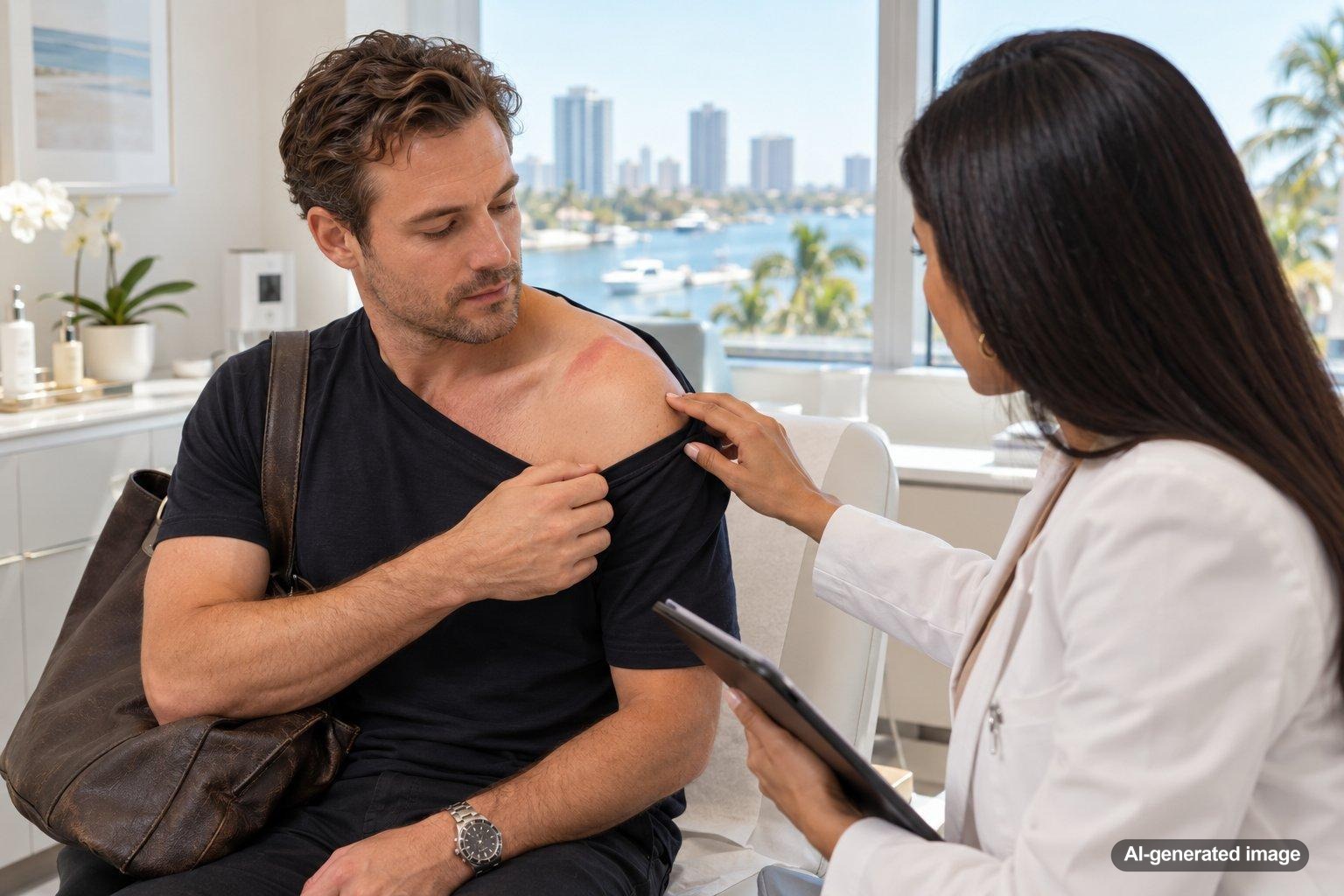
If your shoulder, forearm, hand, or another area turns red wherever a heavy bag presses against your skin, the most common explanation is a temporary response to pressure, friction, heat, or a combination of these factors. A heavy strap can compress the skin and then leave the area looking pink or red once the pressure is removed.
For many people, the color gradually settles after the pressure stops. However, redness that is unusually intense, painful, itchy, swollen, slow to fade, or happening with very light pressure may be worth discussing with a dermatologist.
Quick answer
- Heavy straps can temporarily compress the skin and change how blood flows through tiny surface vessels.
- Friction from a moving strap can add irritation, especially during hot or humid weather.
- Sweat, rough fabrics, hardware, or residues on the bag may make sensitive skin react more noticeably.
- Redness that persists, hurts, swells, blisters, bruises easily, or appears without meaningful pressure deserves closer evaluation.
What causes the redness?
Skin contains many small blood vessels close to the surface. When a heavy bag strap presses firmly against an area, that pressure can temporarily compress the tissue. Once the bag is removed, normal circulation returns, and the area may look redder for a while.
The effect can be more noticeable where a narrow strap concentrates weight over a small area. Your shoulder may therefore become much redder from a thin, heavy strap than from the same weight carried with a broad, padded strap.
Common causes and triggers
- Direct pressure: A heavy tote, backpack strap, purse, laptop bag, or shopping bag can leave a visible pressure mark.
- Friction: Repeated rubbing as the strap shifts against your skin or clothing can contribute to redness and tenderness.
- Heat and sweat: Warm, humid conditions can make the skin feel more reactive and increase rubbing beneath straps.
- Narrow straps: A smaller contact area concentrates more pressure on one section of skin.
- Rough materials or hardware: Textured fabric, seams, buckles, or edges can irritate skin where they repeatedly make contact.
- Skin sensitivity: Some people simply develop more visible flushing or redness after pressure than others.
- Contact irritation: Dyes, metals, cleaning products, fragrances, or other substances on a bag may contribute if the area also becomes itchy, scaly, or irritated.
What you can do at home
If the redness is mild and clearly follows pressure from a heavy bag, simple changes may reduce how often it happens.
- Choose wider or padded straps that distribute weight over a larger area.
- Reduce the amount of weight you carry when practical.
- Alternate shoulders instead of repeatedly loading the same spot.
- Adjust backpack straps so the bag sits securely instead of rubbing back and forth.
- Wear a soft layer of clothing between your skin and a rough strap.
- Keep sweaty areas dry when possible, especially in South Florida heat and humidity.
- Use a gentle, fragrance-free moisturizer if repeated friction leaves the skin feeling dry or sensitive.
Avoid aggressively scrubbing or exfoliating an area that already looks irritated. That can add more friction to skin that has just been compressed or rubbed.
Could the bag material be part of the problem?
It can be. Pressure alone often causes temporary redness, but the material touching your skin may matter when redness is accompanied by itching, scaling, small bumps, burning, or a rash that follows the exact shape of a strap or piece of hardware.
Pay attention to whether the problem happens with every heavy bag or only one particular bag. If one strap consistently causes irritation while others do not, its fabric, metal hardware, surface coating, detergent residue, or another contact factor could be contributing.
Professional options
If the redness keeps returning, lasts longer than expected, or has symptoms beyond a simple pressure mark, a dermatologist can examine the skin and consider whether pressure, friction, contact irritation, an inflammatory reaction, or another process may be involved.
The next step depends on what the skin looks and feels like during an episode. Your clinician may ask what triggers the redness, how long it lasts, whether it itches or hurts, and whether similar marks appear elsewhere on your body. Photos taken while the redness is visible can also be useful because temporary changes may fade before an appointment.
When to see a dermatologist
Consider scheduling an evaluation if you notice any of the following:
- Redness that does not fade after the pressure has been removed.
- Significant pain, burning, itching, warmth, or swelling.
- Blisters, open skin, scaling, or repeated rash-like changes.
- Frequent bruising or discoloration after very minor pressure.
- Red marks that begin appearing without a clear pressure or friction trigger.
- A pattern that is becoming more intense or affecting daily activities.
If you’re unsure whether you’re seeing a routine pressure mark or something that deserves closer attention, it’s worth getting checked.
FAQ
Is it normal for a heavy bag strap to leave a red mark?
Temporary redness can happen after a heavy strap presses against the skin, particularly when the strap is narrow or the bag is carried for a long time. The color should generally improve after the pressure is removed. Persistent or uncomfortable changes deserve evaluation.
Why does the redness sometimes look worse in hot weather?
Heat can make surface blood vessels more noticeable, while sweat increases moisture and friction underneath a strap. That combination can make pressure-related redness look or feel more pronounced.
Why does one bag irritate my skin while another does not?
Strap width, weight distribution, texture, seams, hardware, dyes, and surface residues can all differ between bags. A narrow or rough strap may create considerably more pressure and friction than a softer, wider one.
Should I take a picture of the redness before my appointment?
That may be helpful when the redness disappears before you can be examined. A clear photo taken in normal lighting can show your dermatologist what the area looked like during an episode.
Ready to get help?
Schedule an appointment or send a message and our team will get back to you.
Prefer to call? 954-666-3736
This article is for educational purposes and is not medical advice. For diagnosis and personalized treatment, please book an appointment with a board-certified dermatologist.
