

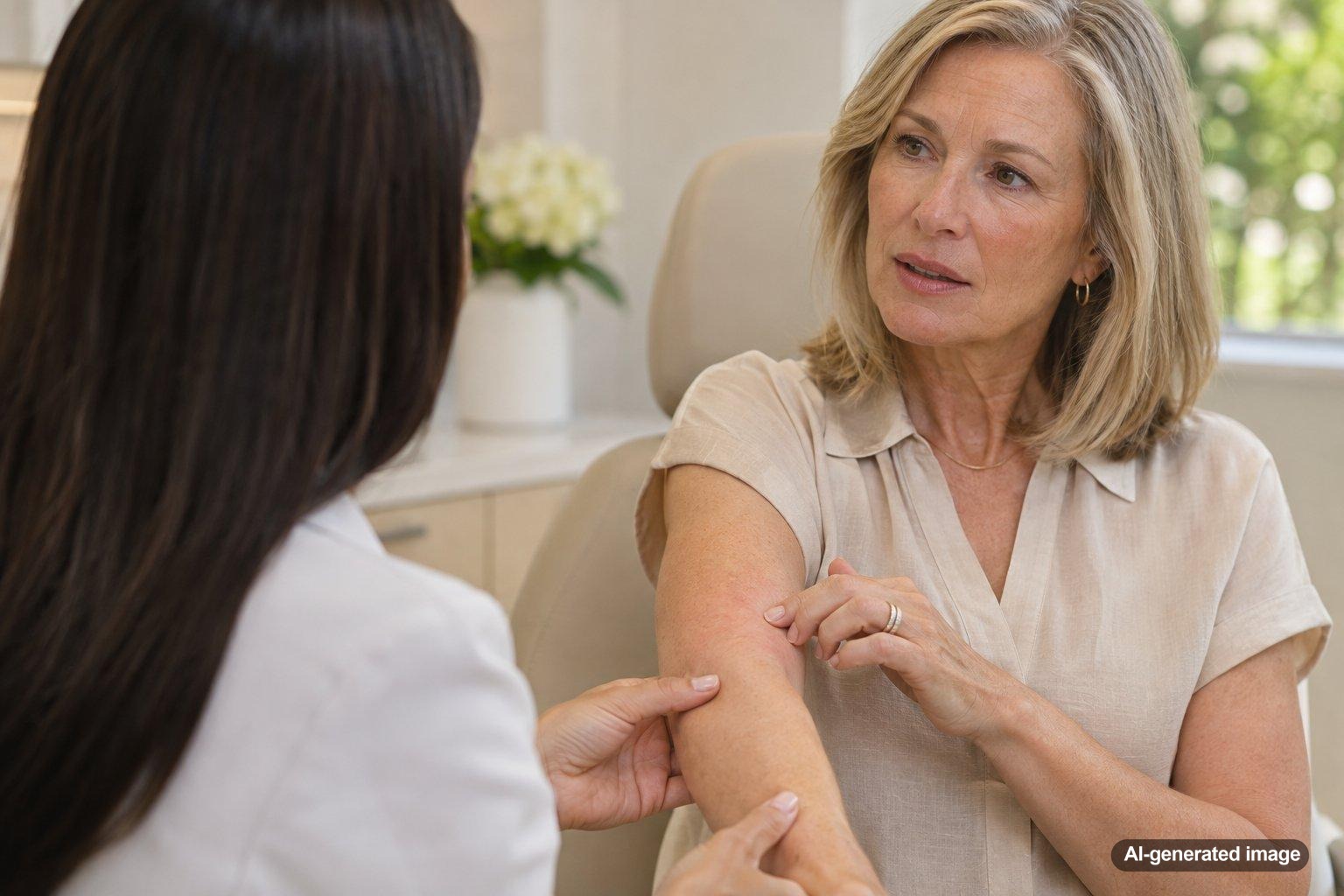
Walking from a cool, air-conditioned space into a warm room can sometimes produce an unexpected sensation: your skin suddenly feels prickly, tingly, itchy, or as though tiny needles are touching it. The feeling may appear across your chest, back, arms, or neck, sometimes before you notice any visible change in your skin.
This sensation can happen as your body responds to rising temperatures and begins preparing to sweat. In some people, heat-sensitive nerve endings, skin irritation, or a condition called cholinergic urticaria may contribute. The important distinction is whether the prickling is brief and isolated or repeatedly accompanied by itching, bumps, redness, or other symptoms. Understanding that pattern can help determine whether simple environmental adjustments are enough or a dermatologic evaluation would be worthwhile.
Quick Answer: Why Does Warm Air Make Skin Feel Prickly?
- Temperature changes activate skin responses. Moving into warmth triggers processes that help regulate body temperature, including increased skin blood flow and sweating.
- Early sweating may coincide with tingling. Some people notice prickling as their body warms up, even before visible perspiration develops.
- Cholinergic urticaria is one possibility. This form of heat-triggered hives can cause itching, burning, tingling, and small raised bumps as body temperature rises.
- Skin sensitivity can make warmth uncomfortable. Dryness, friction, and an irritated skin barrier may increase discomfort when heat and perspiration are present.
- The accompanying symptoms matter. Repeated episodes, visible welts, or symptoms beyond the skin deserve closer attention.
What Happens to Your Skin When You Enter a Warm Room?
Your skin plays an important role in temperature regulation. When you move from a cooler environment into a warmer one, your nervous system coordinates several responses that help your body release heat.
Blood vessels near the skin surface may widen, allowing more blood to circulate through the skin. Sweat glands can also become more active as your body attempts to maintain a comfortable internal temperature.
These changes do not ordinarily cause significant discomfort. However, skin contains sensory nerve endings that respond to temperature, touch, and irritation. Some people become particularly aware of these sensations during abrupt environmental changes.
A prickling feeling is not necessarily evidence of an allergic reaction or a skin disease. What matters is whether the sensation settles as you adjust to the temperature, whether it returns consistently, and whether visible skin changes develop.
Could Cholinergic Urticaria Be Responsible?
Cholinergic urticaria is a type of inducible hives associated with an increase in body temperature, particularly when that increase leads to sweating. It is one of the more recognizable dermatologic explanations for recurrent prickling or itching that begins when someone gets warm.
Unlike reactions caused by touching a hot object, cholinergic urticaria is generally associated with the body’s internal warming response. Entering a hot room, exercising, taking a warm shower, experiencing emotional stress, or eating spicy foods may trigger an episode.
What Does Cholinergic Urticaria Feel Like?
People may describe a sudden feeling of tiny pinpricks, itching, burning, or stinging. Small raised hives can appear, often surrounded by redness or flushing. The chest, upper back, neck, and arms are commonly involved.
The bumps may be subtle and can disappear relatively quickly after the triggering activity stops. Their appearance can vary across skin tones, and some people notice the sensation before recognizing any visible bumps.
Importantly, not every episode of heat-related prickling is cholinergic urticaria. A dermatologist considers the complete symptom pattern rather than relying on the sensation alone.
How Is It Different From Ordinary Warmth?
Normal temperature adjustment may cause temporary warmth or mild tingling without an obvious rash. Cholinergic urticaria is more suggestive when similar episodes repeatedly follow activities that raise body temperature and are accompanied by distinct itching or small, temporary welts.
If the skin feels prickly without visible hives, other explanations remain possible. A clinician may also consider conditions affecting sweating, sensory nerves, or the skin barrier.
Other Reasons Your Skin May Prickle When You Get Warm
Several factors can produce similar sensations, and more than one may be present at the same time.
- Sudden temperature transitions: Moving quickly from strong air conditioning into a heated environment may make temperature-related skin sensations more noticeable.
- Sweat and friction: Perspiration, tight clothing, and rubbing can create localized stinging or irritation, especially around the chest, back, waist, or skin folds.
- Heat rash: Blocked sweat ducts can produce small bumps and a prickly or itchy sensation, particularly in hot, humid conditions. Unlike short-lived heat-triggered hives, heat rash may remain visible after the body cools.
- Dry or irritated skin: A compromised skin barrier may be more reactive to warmth, perspiration, and friction.
- Contact irritation: Fragranced products, detergents, or skincare ingredients may contribute to discomfort that becomes more apparent when sweating starts.
- Altered skin sensation: Persistent tingling without a rash can sometimes reflect a sensory or nerve-related issue rather than a primary skin condition.
These possibilities cannot be reliably distinguished by temperature sensitivity alone. The distribution, duration, visible findings, and additional symptoms help guide an evaluation.
Why Does It Happen More Often After Being in Air Conditioning?
In Fort Lauderdale, moving between heavily air-conditioned interiors and warm outdoor environments is part of everyday life. Similar transitions can happen when entering a heated room after spending time in cooler weather, particularly for seasonal visitors.
The contrast between environments may make normal temperature adjustments feel especially noticeable. Air conditioning can also contribute to skin dryness in some settings, while warmer, more humid air may increase perspiration.
For someone prone to heat-sensitive hives, it is not necessarily the air conditioning itself that triggers symptoms. Instead, the subsequent rise in body temperature may be the relevant factor.
Repeated episodes when entering warm spaces do not automatically indicate a serious problem. However, a consistent pattern of pronounced itching, welts, or burning deserves consideration because it may point to a recognizable trigger-related condition.
What Can You Do at Home to Reduce Heat-Related Prickling?
Conservative adjustments may improve comfort while helping you identify whether temperature, clothing, or skincare products influence your symptoms.
- Make temperature changes more gradual. When practical, avoid moving directly into excessively heated spaces, especially if abrupt transitions consistently cause discomfort.
- Choose breathable clothing. Lightweight fabrics and looser fits may reduce friction and trapped heat.
- Cool down gently. Moving to a comfortable environment and allowing your body temperature to settle may help when symptoms are associated with overheating.
- Use mild skincare products. A fragrance-free cleanser and moisturizer may support comfort when dryness or irritation contributes to sensitivity.
- Avoid excessively hot showers. Lukewarm water may be more comfortable for skin that becomes itchy or reactive with warmth.
- Notice recurring triggers. Pay attention to whether episodes follow exercise, emotional stress, hot drinks, spicy meals, or the beginning of sweating.
If symptoms recur, consider keeping a simple record of what you were doing, the approximate temperature conditions, where the sensation appeared, and whether visible bumps developed. Photographs of a rash taken when it is present can also be useful during an appointment.
Avoid deliberately overheating yourself to reproduce symptoms, particularly if previous episodes involved dizziness, breathing changes, or widespread hives.
How Can a Dermatologist Evaluate Prickly Skin Triggered by Heat?
A dermatologic evaluation generally begins with a discussion of symptom timing and triggers, followed by an examination of the skin. The clinician may ask whether the sensation appears immediately upon entering a warm room or only after your body has had time to heat up.
Other useful details include whether you develop bumps, how long they remain visible, whether cooling changes the symptoms, and whether the same sensation occurs during exercise or warm showers.
If cholinergic urticaria is suspected, its characteristic history and appearance may help guide the assessment. In selected situations, a clinician may consider supervised testing. Such testing is not appropriate to attempt independently when a significant reaction is possible.
If there are no visible skin changes, the evaluation may focus more closely on dryness, irritant exposure, sweating patterns, or potential causes of altered skin sensation. Depending on the findings, evaluation by another medical specialist may be appropriate.
What Professional Treatment Options Are Available?
The appropriate approach depends on the underlying cause rather than the prickling sensation itself.
When the concern is primarily skin dryness or irritation, management may focus on simplifying the skincare routine, improving barrier support, and reducing exposure to irritating products.
For confirmed cholinergic urticaria, treatment may involve trigger management and clinician-directed medications, including antihistamines when appropriate. Persistent or difficult-to-control cases may require a more individualized medical plan.
Heat rash and other inflammatory skin conditions have different management considerations. A dermatologist can help distinguish these conditions and discuss options suited to the specific findings.
There is no single skincare product or cosmetic procedure that addresses every cause of heat-related prickling. Accurate evaluation is especially useful before investing in treatments that may not target the underlying problem.
When Should You See a Dermatologist?
Consider scheduling a dermatology appointment if the sensation happens frequently, becomes increasingly uncomfortable, interferes with exercise or everyday activities, or repeatedly produces visible bumps or welts.
Evaluation is also worthwhile when symptoms persist after cooling down, occur without an identifiable heat trigger, involve an ongoing rash, or are accompanied by unusual sweating patterns.
Seek emergency medical attention if a heat-related episode occurs with difficulty breathing, throat or tongue swelling, fainting, or severe dizziness. These symptoms can indicate a serious systemic reaction and should not be treated as routine skin sensitivity.
If you notice persistent numbness, weakness, or other neurological symptoms, seek appropriate medical assessment rather than assuming the issue is dermatologic.
Frequently Asked Questions
Why does my skin feel like tiny needles are poking it when I get hot?
A pinprick sensation during warming may be associated with temperature-sensitive sensory responses, sweating, skin irritation, or heat-triggered hives. The presence of itching, redness, or small raised bumps can provide useful clues, but the sensation alone does not establish a diagnosis.
Can cholinergic urticaria happen without obvious hives?
Some people notice itching, tingling, or burning before they recognize visible hives. Small or short-lived bumps can also be difficult to see. However, recurrent prickling without a visible rash should not automatically be labeled cholinergic urticaria because other causes are possible.
Is prickly skin in a warm room the same as heat rash?
Not necessarily. Heat rash is associated with blocked sweat ducts and can leave bumps that persist beyond the initial warming episode. Cholinergic urticaria is associated with rising body temperature and typically produces temporary hives. A dermatologist can assess the appearance and timing when the distinction is unclear.
Can stress make heat-related prickling worse?
Stress can contribute to increased body temperature and sweating, which may trigger symptoms in people with cholinergic urticaria. However, stress is not the only possible explanation for prickling, and recurring symptoms should not be dismissed as emotional sensitivity.
Why does my skin itch when I start sweating but stop when I cool down?
That pattern may be associated with heat-triggered hives or irritation from sweat and friction. The presence or absence of temporary welts, the affected areas, and how consistently the symptoms recur can help a dermatologist evaluate the cause.
Should I avoid exercise if warming up makes my skin prickly?
Not everyone with heat-related prickling needs to avoid exercise. However, if activity repeatedly causes significant hives or discomfort, discuss safe activity adjustments with a clinician. If an episode has involved breathing difficulty, faintness, or swelling, avoid attempting to reproduce it and obtain medical guidance before resuming triggering activities.
Understanding Your Skin’s Response to Warmth
A brief prickling sensation when entering a warm room can sometimes reflect the body’s response to a temperature change. When it happens repeatedly, especially alongside itching or small raised bumps, conditions such as cholinergic urticaria become important possibilities to consider.
At Waverly DermSpa in Fort Lauderdale, Dr. Maryann Mikhail, MD, can evaluate recurrent heat-related skin symptoms and help clarify whether the concern involves hives, irritation, or another skin condition. A thoughtful assessment can guide appropriate next steps without unnecessary treatments.
Ready to get help?
Schedule an appointment or send a message and our team will get back to you.
Prefer to call? 954-666-3736
This article is for educational purposes and is not medical advice. For diagnosis and personalized treatment, please book an appointment with a board-certified dermatologist.
