

Skin that smells, peels, or feels soft between the toes is often related to moisture, friction, and overgrowth of fungus or bacteria in a warm, closed-in area. It can be uncomfortable, embarrassing, and persistent, especially in humid weather, after travel, or when shoes stay damp for long stretches.
A common possibility is athlete’s foot, also called tinea pedis, but peeling between the toes can also overlap with irritation, eczema-like inflammation, maceration from sweat, or a secondary infection. The safest next step is to look at the pattern, keep the area clean and dry, and schedule a dermatology visit if symptoms are painful, spreading, recurrent, or not improving.
Quick answer
- Smell and peeling between the toes can be associated with moisture, sweat, friction, and fungal overgrowth.
- Athlete’s foot often starts between the toes and may look scaly, cracked, white, soggy, itchy, or irritated.
- Odor may come from trapped moisture, skin breakdown, bacteria, fungus, or shoes that are not drying fully.
- Keeping feet dry, changing socks, rotating shoes, and avoiding shared damp surfaces may help reduce recurrence.
- See a dermatologist if there is pain, swelling, drainage, bleeding, diabetes, immune suppression, or repeated episodes.
What it is
The skin between the toes is naturally prone to trapping sweat because the toes sit close together and shoes limit airflow. When that space stays damp, the outer skin layer can soften and break down, which may lead to peeling, cracking, itching, stinging, or a whitish, soggy appearance. Fungi that cause athlete’s foot tend to do well in warm, moist environments, and bacteria can contribute to odor when moisture and skin debris build up.
This does not mean every case of toe peeling is fungal. Irritant dermatitis from soaps, occlusive footwear, foot sprays, adhesives, or friction can look similar. Some people also have eczema, psoriasis, or sensitivity that affects the feet. Because several conditions can overlap, persistent symptoms are worth evaluating rather than guessing.
Common causes or triggers
- Moisture and sweat: Closed shoes, humid weather, workouts, and long days on your feet can keep the toe spaces damp.
- Athlete’s foot: This fungal infection commonly affects the spaces between toes and may be associated with peeling, scaling, cracking, itching, burning, or odor.
- Friction: Tight shoes, repeated rubbing, or toes pressing together can weaken the skin barrier.
- Damp public areas: Locker rooms, pool decks, hotel bathrooms, and shared showers can expose feet to fungi.
- Footwear that does not dry: Rewearing damp shoes can create a cycle of moisture and irritation.
- Skin barrier irritation: Harsh cleansers, over-scrubbing, fragranced products, and certain topical products can make peeling worse.
- Nail involvement: Fungal changes in the toenails may coexist with or contribute to recurrent athlete’s foot.
What you can do at home
Conservative care focuses on reducing moisture and protecting the skin barrier. Wash gently, dry carefully between the toes, and put on clean, dry socks. Consider changing socks during the day if your feet sweat, and rotate shoes so each pair has time to dry fully before the next wear.
- Use breathable socks and avoid staying in damp socks after exercise, rain, or travel.
- Wear shower shoes or sandals in shared wet areas such as gyms, pools, and hotel bathrooms.
- Do not share towels, socks, or shoes.
- Avoid picking at peeling skin, which can create cracks and make irritation worse.
- Be cautious with steroid-containing creams unless a clinician has recommended them for your specific condition, because some rashes can worsen when treated incorrectly.
- For mild symptoms that look consistent with athlete’s foot, nonprescription antifungal products are common options, but it is wise to seek care if you are unsure or symptoms do not improve.
Professional options
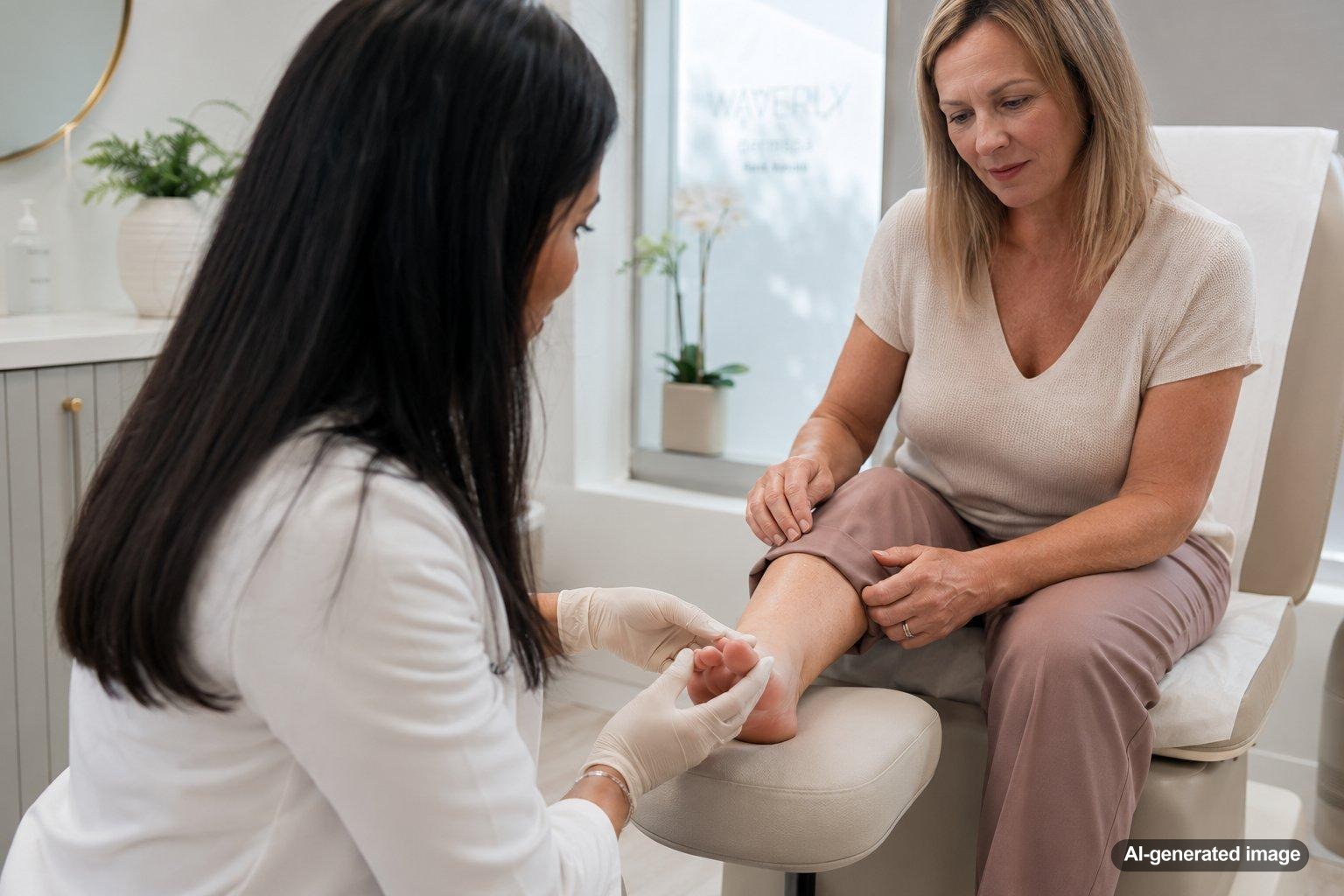
A dermatologist can examine the area and help distinguish athlete’s foot from irritation, eczema, psoriasis, bacterial involvement, or other causes of peeling. In some cases, your clinician may perform a simple in-office check or send a small sample for lab testing to clarify whether fungus is present.
Common professional options may include guidance on antifungal treatment, evaluation of the toenails, prescription medication when appropriate, barrier-supportive care, or treatment for inflammation if the issue is not fungal. The right plan depends on what is actually causing the peeling and odor.
When to see a dermatologist
Schedule an appointment if the skin between your toes is painful, swollen, bleeding, draining, spreading, or repeatedly coming back. It is also important to get checked promptly if you have diabetes, circulation problems, immune suppression, a history of foot ulcers, or numbness in the feet.
You should also consider a visit if the problem involves thick, discolored, brittle, or lifting toenails, because nail fungus and athlete’s foot can occur together and may need a more complete strategy.
FAQ
Does peeling between the toes always mean athlete’s foot?
No. Athlete’s foot is common, but peeling can also be related to sweat, friction, dermatitis, eczema-like irritation, psoriasis, or skin barrier damage. A dermatologist can evaluate the pattern and help identify the most likely cause.
Why does it smell bad?
Odor often develops when sweat, dead skin, bacteria, and sometimes fungus collect in a low-airflow space. Drying the area well and rotating shoes may help, but persistent odor with peeling or cracking deserves evaluation.
Can I use moisturizer between my toes?
Use caution. Heavy moisturizer between the toes can trap moisture in some people. If the skin is cracked or irritated, ask a dermatologist what type of barrier support is appropriate and where to apply it.
Is it contagious?
If a fungal infection is involved, it can spread through direct contact or contaminated surfaces such as towels, floors, or shoes. Wearing sandals in shared wet areas and avoiding shared towels can help reduce risk.
When should I stop trying to manage it at home?
Get checked if symptoms are not improving, keep returning, spread to the toenails or other areas, or come with pain, swelling, open skin, drainage, or significant tenderness.
Ready to get help?
Schedule an appointment or send a message and our team will get back to you.
Prefer to call? 954-666-3736
Disclaimer
This article is for educational purposes and is not medical advice. For diagnosis and personalized treatment, please book an appointment with a board-certified dermatologist.
Sources & further reading
- American Academy of Dermatology (AAD) – Ringworm: Signs and symptoms
- Centers for Disease Control and Prevention (CDC) – Treatment of Ringworm
- Mayo Clinic – Athlete’s foot – Symptoms and causes
