

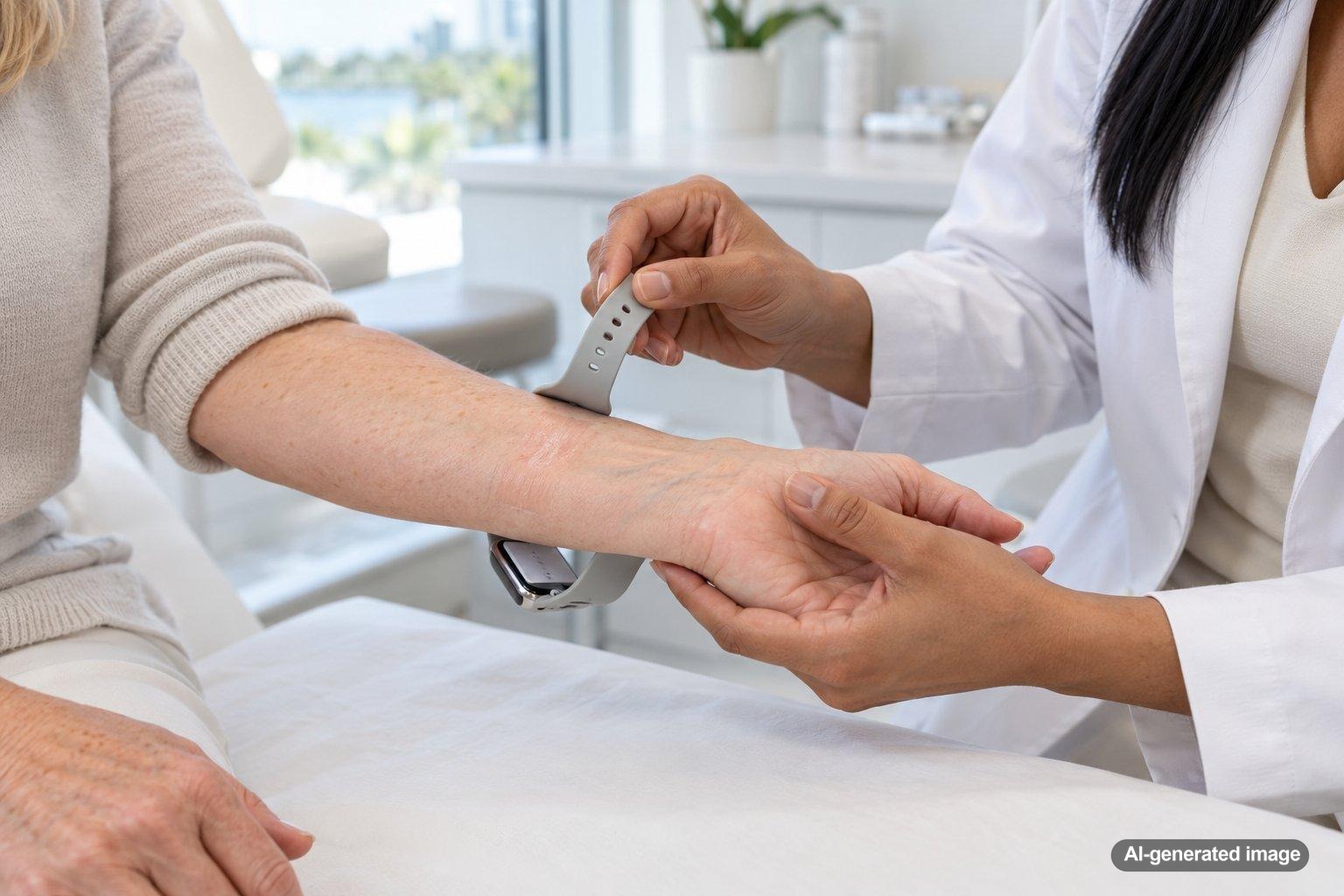
A silicone watch band can look perfectly clean while the skin beneath it feels slippery, sticky, or unexpectedly unpleasant. You might notice an odor when removing your smartwatch after a workout, a long workday, or several hours outdoors. Sometimes the wrist looks normal. Other times, the skin appears pale, wrinkled, red, or irritated.
The most likely explanation is moisture becoming trapped between the band and your skin, combined with skin oils, everyday residue, friction, and odor-producing microorganisms. Silicone is generally easy to maintain, but a close-fitting band can create a warm, poorly ventilated environment. In South Florida’s humid climate, that combination can become particularly noticeable. Understanding what is happening beneath the band can help you distinguish an ordinary hygiene issue from skin irritation that deserves closer attention.
Quick Answer: Why Does a Silicone Watch Band Make Your Wrist Smell or Feel Slimy?
- Trapped perspiration: A snug silicone band can prevent sweat from evaporating efficiently, leaving moisture against the skin.
- Skin oils and residue: Natural oils, sunscreen, lotion, soap, and other products can accumulate beneath the band and contribute to a slippery sensation.
- Microbial activity: Skin bacteria can break down components of sweat and skin secretions, contributing to unpleasant odors.
- Prolonged moisture exposure: Skin that stays wet may become softened or macerated, sometimes appearing pale, wrinkled, or unusually delicate.
- Contact irritation: Friction, retained cleansing products, or sensitivity to materials touching the wrist may cause redness, itching, or discomfort.
The important distinction: Odor or moisture alone does not necessarily indicate an infection or a silicone allergy. Persistent inflammation, tenderness, drainage, or worsening skin changes deserve a different level of attention.
What Is Happening to the Skin Under Your Watch Band?
Your skin continuously releases moisture and small amounts of oil. Normally, much of that moisture evaporates into the surrounding air. A close-fitting silicone band changes that environment by limiting airflow and holding moisture near the skin.
The result can feel similar to the damp sensation beneath a tight wristband or other nonbreathable material. Perspiration combines with natural skin oils and any substances already present on the wrist or band. Because the mixture has relatively little opportunity to dry, it may feel slick or slimy when you remove your watch.
Extended exposure to moisture can also affect the outermost skin barrier. When the skin absorbs more water than usual, it may temporarily appear pale, soft, or wrinkled. This process is called maceration. Repeated moisture exposure and rubbing can make skin more vulnerable to irritation.
Silicone itself does not need to be visibly dirty for these changes to occur. The main issue is often the environment created where the band meets the wrist, rather than the band material alone.
Common Reasons Silicone Watch Bands Develop an Odor
1. Sweat becomes trapped against the wrist
Perspiration is particularly relevant during exercise, outdoor activities, and extended periods in warm weather. A band that stays snug throughout the day may retain moisture even after the rest of your skin feels dry.
Fresh sweat is not necessarily strongly odorous. Odor develops partly when microorganisms naturally present on the skin interact with sweat and other skin secretions. The resulting smell can become more apparent when the covered area is exposed to air.
2. Sunscreen and moisturizer collect beneath the band
Products applied to the wrist can mix with perspiration and skin oils. Sunscreen, body lotion, and certain moisturizers may leave a noticeable film, especially when the watch is worn immediately after application.
This does not mean these products are inherently harmful. Sunscreen remains important for protecting exposed skin. However, residue collecting beneath a tightly fitted band can contribute to stickiness and may be irritating for some individuals.
3. The band is worn continuously
People who use a smartwatch for sleep tracking, activity monitoring, and notifications may wear the same band for nearly the entire day. Without opportunities for cleaning and drying, moisture and residue can accumulate on both the wrist and the band.
Repeated contact also means that minor friction can affect the same area over and over. What begins as a simple damp sensation may eventually become uncomfortable, especially if the skin is already sensitive.
4. Soap or cleaning products remain underneath
Handwashing, showering, and cleaning the watch can introduce water or cleansing products beneath the band. If these substances are not thoroughly rinsed away, they may contribute to irritation.
Soap residue can be especially relevant for someone who washes their hands frequently while continuing to wear a snug watch. Even products marketed as gentle can irritate skin when they remain trapped against it for prolonged periods.
5. The band is too tight
A band does not need to feel painfully tight to create problems. Continuous pressure can reduce ventilation and increase friction during everyday wrist movement.
A comfortable fit generally allows the watch to remain secure without persistent indentation, pinching, or rubbing. Follow the manufacturer’s fit guidance, particularly when accurate sensor contact matters.
Does a Smelly Wrist Mean You Have a Silicone Allergy?
Not usually. Odor by itself is not a typical sign of an allergic reaction. A wrist that smells unpleasant after wearing a silicone band may simply have accumulated sweat and residue.
However, some people develop contact dermatitis in areas covered by watches or jewelry. Contact dermatitis refers to inflammation caused by direct exposure to an irritating substance or an allergen.
Irritant contact dermatitis may develop when moisture, friction, repeated washing, or cleaning products disrupt the skin barrier. It can cause burning, redness, dryness, tenderness, or cracking.
Allergic contact dermatitis involves an immune reaction to a particular substance. Potential triggers associated with watches include certain metals in the case or clasp, adhesives, colorants, or other components. True allergy to the silicone material itself is less common than everyday moisture-related irritation, but the exact cause cannot be determined from symptoms alone.
One useful clue is whether the problem is limited to unpleasant moisture or includes an itchy, persistent rash. Even then, appearance alone cannot reliably distinguish irritation from allergy. A dermatologist may recommend patch testing when allergic contact dermatitis is suspected.
Why Does the Skin Sometimes Look White or Wrinkled?
Skin that has remained wet for an extended period can become temporarily softened and waterlogged. This is called maceration, and it may make the covered wrist appear lighter, wrinkled, or unusually delicate.
Mild moisture-related changes may improve after the area is gently cleaned and allowed to dry. However, repeated maceration can weaken the protective outer skin barrier and increase susceptibility to friction-related damage.
White or softened skin is not automatically a fungal infection. If the area also develops persistent redness, cracking, pain, drainage, or an increasingly strong odor, a clinical examination can help identify whether dermatitis or an infection is involved.
What You Can Do at Home to Reduce Wrist Odor and Sliminess
Simple changes in watch hygiene and wearing habits may help prevent moisture from remaining against the skin. The goal is to keep the wrist clean and dry without introducing harsh products or excessive friction.
Clean the band according to its manufacturer’s instructions
Remove the watch before cleaning whenever its design permits. Follow the device manufacturer’s directions for the band material and for protecting the watch’s electronic components.
For bands that permit washing, gentle cleaning can help remove accumulated sweat, skin oils, and product residue. Rinse away any approved cleanser thoroughly and allow the band to dry completely before wearing it again.
Avoid assuming that alcohol, bleach, abrasive cleaners, or strong fragrances are suitable for every silicone band. Some products may damage materials or leave residue that irritates the skin.
Wash and dry the wrist gently
Clean the skin with a mild, fragrance-free cleanser as needed, particularly after sweating. Rinse thoroughly and pat the wrist dry with a clean towel.
Do not scrub aggressively to remove odor. Repeated scrubbing can disrupt the skin barrier and may make irritation worse. Allow the skin to dry fully before replacing the band.
Give your wrist periodic breaks
Removing the watch during appropriate periods can give trapped moisture an opportunity to evaporate. This may be especially helpful after exercise or in humid weather.
If the skin is already red or irritated, consider leaving the watch off the affected area until the skin has settled. Continuing to wear a band over inflamed skin may prolong the problem.
Check the fit
A watch band should feel secure without creating unnecessary pressure. Adjusting a band that feels consistently tight may reduce moisture retention and friction.
If the watch requires closer contact during certain activities, follow the manufacturer’s recommendations rather than wearing it excessively tight throughout the day.
Consider a different band material
Some individuals find that a breathable, washable textile band is more comfortable for extended wear. Others prefer switching bands after exercise or alternating between different materials.
Choose options compatible with the watch, appropriate for your skin, and easy to clean. A different material is not automatically better for everyone. Fabric can also retain moisture if it remains damp, and certain metal components may cause allergic reactions in susceptible individuals.
Avoid covering irritated skin with heavy products
Applying thick creams or ointments immediately before putting on a snug band may increase the feeling of moisture or occlusion. If your skin needs moisturizing, a fragrance-free product may be appropriate, but allow it to absorb and avoid trapping it beneath an irritating band.
If there is an active rash, persistent discomfort, or broken skin, it is preferable to have the cause assessed rather than repeatedly experimenting with products.
When Professional Dermatology Care May Be Helpful
Most uncomplicated wrist odor does not require a dermatology appointment. However, a recurring rash, persistent inflammation, or skin that becomes uncomfortable despite changes in hygiene and band use may benefit from professional evaluation.
A dermatologist can examine the distribution and appearance of the affected skin, discuss possible exposures, and help distinguish moisture-related irritation from allergic contact dermatitis or other conditions.
Depending on the findings, professional options may include:
- Skin barrier assessment: Reviewing potential irritants and recommending a gentle skin care approach.
- Contact allergy evaluation: Considering patch testing when a specific ingredient or material is suspected of triggering recurring dermatitis.
- Targeted treatment: Discussing appropriate topical treatments when inflammation requires more than avoiding the suspected trigger.
- Infection assessment: Evaluating symptoms that suggest a bacterial or fungal complication and determining whether specific treatment is needed.
Not every rash under a smartwatch is caused by the same process. Identifying the likely cause is often more useful than repeatedly switching soaps, creams, or watch bands without a clear plan.
When Should You See a Dermatologist?
Consider scheduling a dermatology evaluation if the area beneath your watch develops symptoms that do not improve with gentle care and avoiding the suspected trigger.
Reasons to seek an evaluation include:
- Persistent itching, burning, or tenderness.
- Repeated rashes whenever the watch is worn.
- Cracking, scaling, blisters, or broken skin.
- Unusual skin discoloration that does not settle after the area dries.
- Odor accompanied by ongoing redness, moisture, or drainage.
- Symptoms that continue despite cleaning the band and allowing the wrist to dry.
Seek prompt medical attention for rapidly spreading redness, increasing warmth or swelling, pus, fever, or significant pain. These findings can be associated with infection and should not be managed as a routine watch hygiene issue.
Individuals with diabetes, impaired circulation, or a weakened immune system may need earlier evaluation when skin breakdown or suspected infection develops.
Frequently Asked Questions
Why does my wrist smell bad even when my silicone watch band looks clean?
A band can appear clean while retaining small amounts of sweat, skin oil, sunscreen, or other residue. Moisture trapped against the wrist may also contribute to odor-producing microbial activity. Cleaning both the wrist and the band, then allowing them to dry thoroughly, may help.
Is the slimy feeling under my smartwatch caused by bacteria?
Not necessarily. The slippery feeling may result from perspiration mixed with skin oils or product residue. Bacteria can contribute to odor, but a slimy sensation by itself does not identify a bacterial infection.
Can wearing a silicone watch band all day cause a rash?
Yes, prolonged wear can contribute to irritation when heat, moisture, and friction accumulate beneath the band. Some individuals may also develop allergic contact dermatitis related to a watch component. A persistent rash should be evaluated rather than assumed to have one particular cause.
Should I use rubbing alcohol to clean my wrist after removing my watch?
Routine use of rubbing alcohol on the skin is generally unnecessary and may increase dryness or irritation. Gentle cleansing, thorough rinsing, and complete drying are usually more appropriate for ordinary sweat and residue. Follow the manufacturer’s separate instructions for cleaning the watch itself.
Will switching to a fabric or nylon watch band help?
It may help if the alternative allows better ventilation and reduces moisture accumulation. However, fabric bands can also absorb sweat and require regular cleaning and drying. Comfort depends on fit, material, personal sensitivity, and wearing habits.
Can a watch band cause a fungal infection?
Warmth and prolonged moisture can create conditions that favor microbial overgrowth, particularly when skin is already irritated or damaged. However, an unpleasant smell or damp wrist does not establish a fungal infection. Persistent inflammation, scaling, or other concerning symptoms should be examined before using antifungal medication.
Keeping Your Skin Comfortable Under a Smartwatch
Silicone watch bands are convenient for everyday wear, but the covered skin still needs opportunities to stay clean, dry, and comfortable. Sweat, skin oils, product residue, and limited airflow often explain why a wrist develops an unpleasant smell or slippery sensation, particularly in warm and humid weather.
Gentle cleaning, careful drying, a comfortable fit, and occasional breaks from continuous wear may make a meaningful difference. If redness, itching, cracking, or tenderness becomes a recurring problem, a dermatologist can help determine whether simple irritation, contact allergy, or another skin condition is contributing.
Ready to get help?
Schedule an appointment or send a message and our team will get back to you.
Prefer to call? 954-666-3736
Disclaimer
This article is for educational purposes and is not medical advice. For diagnosis and personalized treatment, please book an appointment with a board-certified dermatologist.
Sources & further reading
- DermNet – Irritant contact dermatitis
- American Academy of Dermatology (AAD) – Eczema types: Contact dermatitis diagnosis and treatment
- Cleveland Clinic – Intertrigo: What Is It, Causes, Symptoms & Treatment
- American Academy of Dermatology (AAD) – Nickel allergy: How to avoid exposure and reduce symptoms
