

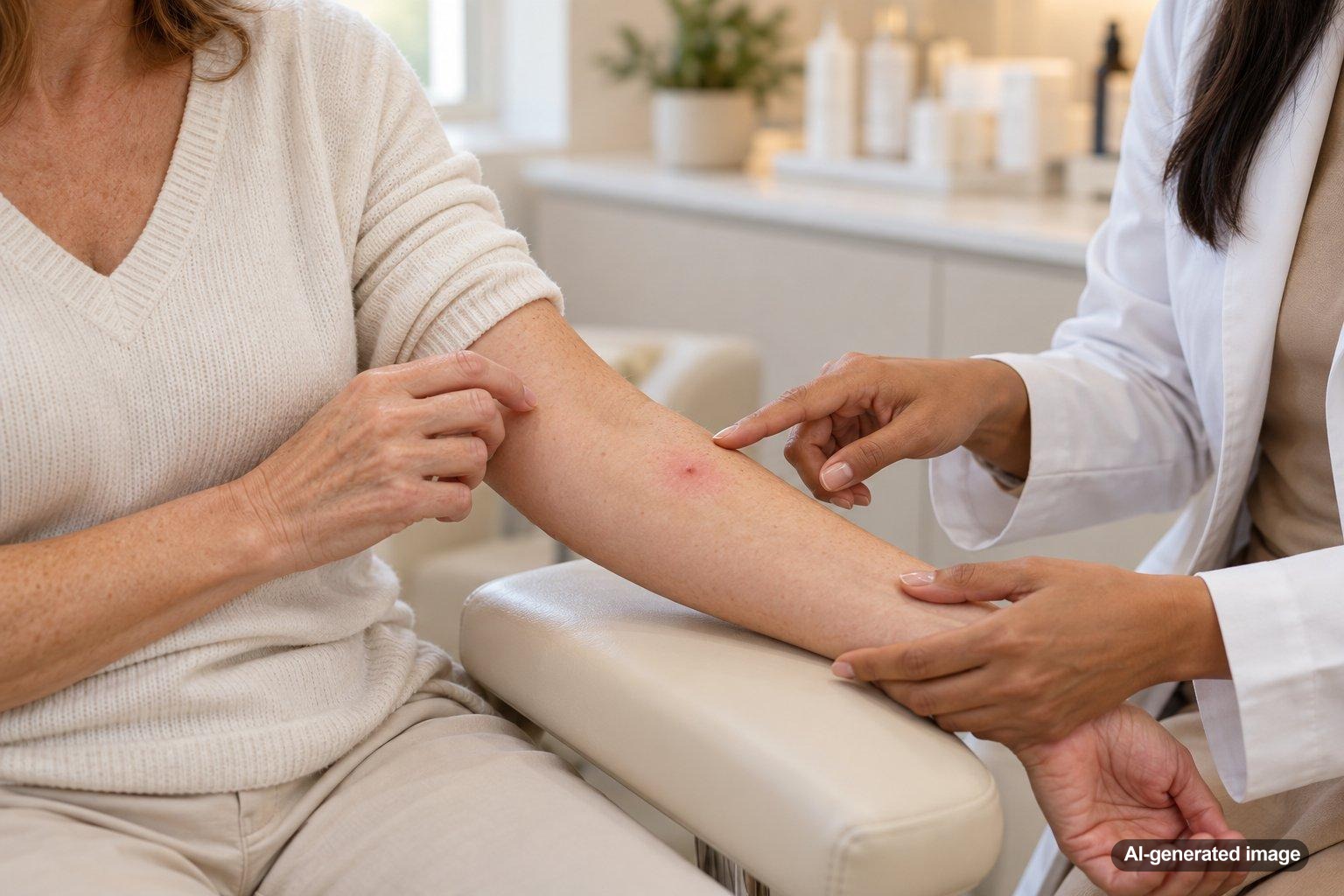
One moment, a bug bite looks like a small, slightly raised bump. A few scratches later, the surrounding skin appears puffy, red, and noticeably larger. It can seem as though the bite itself is expanding, even though the insect is long gone. This happens because scratching adds physical irritation to an immune reaction that has already begun beneath the skin.
In Fort Lauderdale, where warm weather and outdoor activities make insect encounters common, this familiar cycle can be especially frustrating. Mosquito bites are a frequent example, although other insects can produce similar symptoms. Understanding why the swelling increases can help you respond more gently, recognize when a reaction is unusual, and avoid making an itchy spot more uncomfortable.
Quick Answer: Why Scratching Makes Swelling Worse
- The bite starts an immune response. Substances introduced by an insect can trigger inflammation, itching, and localized fluid accumulation.
- Scratching adds mechanical irritation. Friction and pressure can intensify redness and swelling around the original bite.
- Itching can reinforce itself. Scratching may provide temporary relief while making the surrounding skin more irritated afterward.
- Repeated scratching can damage the skin barrier. Broken skin creates an opportunity for bacteria to enter.
- A larger bump does not automatically mean infection. Some people develop substantial local inflammatory reactions without an infection.
What Happens Beneath the Skin After a Bug Bite?
When a mosquito feeds, it introduces saliva containing proteins and other substances into the skin. The immune system recognizes these substances and responds by activating inflammatory pathways. Histamine is one of the chemicals involved in producing the familiar itch, redness, and raised bump.
Inflammation also affects tiny blood vessels near the bite. These vessels can become more permeable, allowing fluid to move into nearby tissues. The result is localized swelling, sometimes called edema.
This response is not identical for everyone. One person may develop a tiny bump, while another experiences a broad, raised patch from a similar exposure. Previous sensitization, individual immune responses, the type of insect, and the location of the bite can all influence its appearance.
Importantly, the visible swelling reflects the body’s response to the bite rather than simply the size of the original puncture.
How Scratching Makes the Original Bump Larger
Scratching Creates Additional Inflammation
Scratching is a form of minor physical trauma. Fingernails drag across an already inflamed area, creating friction and pressure that can further irritate the superficial skin and underlying tissues.
The irritated area may become warmer, redder, and more swollen. In some people, rubbing or scratching can also provoke a temporary hive-like response in the surrounding skin.
As a result, a bite that initially occupied a small area may seem to spread outward after repeated scratching. The change is often an amplification of local inflammation rather than evidence that something is moving beneath the skin.
The Itch-Scratch Cycle Keeps the Reaction Going
Scratching briefly competes with the itch sensation by stimulating other nerve signals. That momentary relief can make scratching feel helpful.
Unfortunately, the mechanical irritation can intensify the discomfort once the immediate sensation fades. The skin itches again, another scratch follows, and the cycle continues.
This pattern is particularly noticeable when someone scratches absentmindedly while watching television, working outdoors, or sleeping. By the time the person notices the area, the swelling may be considerably more pronounced.
Skin Barrier Damage Adds Another Concern
The skin barrier helps protect the body from environmental irritants and microorganisms. Repeated scratching can produce tiny abrasions or visible breaks in that protective surface.
Damaged skin may sting, become crusted, or remain irritated longer. Open areas can also provide a route for bacteria to enter, raising the possibility of a secondary skin infection.
That is why protecting the surface of an itchy bite matters, even when the initial reaction seems minor.
Why Some Bug Bites Swell More Than Others
Several factors can contribute to a disproportionately large reaction:
- Individual immune sensitivity: Some people mount a stronger local response to insect saliva or venom.
- Type of insect: Mosquitoes, biting flies, ants, and stinging insects introduce different substances into the skin.
- Repeated scratching: Ongoing friction can enlarge the irritated area.
- Body location: Areas with loose tissue, including the eyelids, may show especially noticeable puffiness.
- Multiple nearby bites: Several reactions close together may resemble one larger swollen patch.
- Existing skin sensitivity: Dry, reactive, or already irritated skin may feel more uncomfortable after a bite.
Some mosquito bites cause an exaggerated local inflammatory response sometimes called skeeter syndrome. This can involve substantial swelling, redness, warmth, and itching. Its appearance can resemble an infection, which is one reason unusually large reactions deserve careful assessment rather than assumptions based on size alone.
What Can Help Calm an Itchy, Swollen Bite?
For an uncomplicated bite, simple measures may help reduce discomfort while allowing the skin to recover.
Use a Cool Compress
A clean, cool, damp washcloth can soothe the area. A cold pack wrapped in a towel may also help with swelling. Avoid placing ice directly against bare skin, and remove the compress if the skin becomes painful or excessively cold.
Replace Scratching With Gentle Pressure
When the urge to scratch becomes distracting, briefly applying gentle pressure around an intact bite may be less irritating than dragging fingernails across it. The goal is to interrupt the scratching habit without adding further trauma.
Keep the Area Clean
Gently washing the bite with mild soap and water can help remove surface debris. Pat the area dry rather than rubbing it. If scratching has broken the skin, avoid applying irritating products to the open surface.
Consider Appropriate Anti-Itch Products
Common nonprescription options include calamine lotion and certain anti-itch creams. A short course of an over-the-counter topical hydrocortisone product may be appropriate for some uncomplicated bites on intact skin. Oral antihistamines are another option sometimes used for troublesome itching.
These products are not suitable for everyone. Follow package directions, consider age restrictions and existing medical conditions, and ask a pharmacist or clinician when uncertain. Avoid using topical corticosteroids on infected or broken skin unless specifically directed by a healthcare professional.
Protect the Skin From Repeated Irritation
Keeping fingernails short and wearing loose clothing over the area may reduce accidental scratching. If a bite is particularly tempting to scratch, a simple protective covering may help, provided the skin is kept clean and the covering does not cause additional irritation.
Avoid aggressive rubbing, hot water, harsh exfoliants, and improvised chemical treatments. These can create additional irritation without addressing the underlying itch.
When Swelling May Signal Something More Serious
A large reaction can still be inflammatory rather than infectious. However, certain changes warrant medical attention.
Arrange a prompt medical evaluation if the area develops:
- Redness or swelling that continues spreading or becomes progressively worse.
- Increasing pain, tenderness, or pronounced warmth.
- Pus, drainage, or a worsening open sore.
- Fever, chills, or a general feeling of illness.
- Red streaking extending away from the affected area.
- Marked swelling near an eye or another sensitive location.
These features may be associated with infection or another reaction requiring professional assessment. A dermatologist can evaluate the appearance, timing, and associated symptoms to help distinguish among possible causes.
Seek emergency medical care immediately if a bite or sting is followed by difficulty breathing, throat tightness, swelling of the tongue or lips, faintness, or other symptoms suggesting a severe allergic reaction. Do not wait for a routine dermatology appointment in that situation.
After insect exposure, unexplained fever, significant headache, body aches, or an unusual spreading rash also deserves timely medical attention, particularly following travel to an area where insect-borne illnesses occur.
How a Dermatologist Can Help With Persistent Reactions
Most ordinary bites do not require an office visit. A professional evaluation becomes more useful when swelling is unusually pronounced, symptoms persist or worsen, reactions repeatedly interfere with daily activities, or it is unclear whether the skin is infected.
A dermatologist may examine the skin, review recent exposures, and consider whether the reaction is consistent with an insect bite, another inflammatory condition, or a secondary infection.
Depending on the findings, professional options may include prescription anti-inflammatory treatments, appropriate itch management, wound care recommendations, or treatment directed at an identified infection. These decisions depend on the clinical assessment rather than the size of the bump alone.
For South Florida residents, seasonal visitors, and international travelers, sharing information about recent outdoor activities and travel destinations can be helpful when evaluating an unusual bite reaction.
Frequently Asked Questions
Why does my mosquito bite get bigger immediately after I scratch it?
Scratching physically irritates tissue that is already reacting to substances in mosquito saliva. This additional stimulation can increase temporary redness, puffiness, and itching. The reaction may look much larger even without a new bite.
Does a large swollen bug bite mean it is infected?
Not necessarily. A strong local immune reaction can produce substantial swelling without infection. Increasing pain, spreading redness, drainage, fever, or worsening warmth raises greater concern and warrants medical assessment.
Why does scratching a bite feel good at first?
Scratching activates touch and discomfort signals that can briefly interfere with the sensation of itching. However, repeated friction can irritate the skin further, allowing the itch-scratch cycle to continue.
Can a bug bite swell again after it starts improving?
Swelling and itching can fluctuate as inflammation develops or as the area experiences additional friction. If the reaction begins worsening significantly after initial improvement, especially with increasing pain or warmth, a clinician should evaluate it.
Should I pop a blister that forms on a bug bite?
Generally, avoid deliberately opening a blister. Its surface helps protect the underlying skin. Large, painful, unusual, or worsening blisters deserve professional evaluation, particularly if they are accompanied by drainage or other concerning symptoms.
How long should swelling from a scratched bug bite last?
Many uncomplicated bites improve over several days, although the course varies with the insect, individual immune response, and amount of skin irritation. Larger local reactions may take longer to settle. Swelling that continues to worsen or fails to improve merits evaluation rather than relying on a fixed timeline.
The Bottom Line
Scratching can make a bug bite swell much larger because it adds physical irritation to an existing immune response. Histamine-related itching, local inflammation, increased fluid in the tissues, and repeated skin trauma can combine to make a small bump look surprisingly dramatic.
Gentle cooling, avoiding scratching, and protecting the skin barrier may help uncomplicated reactions settle. When swelling is unusually extensive, symptoms are worsening, or signs of infection appear, a dermatologist can help determine what is happening and whether additional care is needed.
Ready to get help?
Schedule an appointment or send a message and our team will get back to you.
Prefer to call? 954-666-3736
This article is for educational purposes and is not medical advice. For diagnosis and personalized treatment, please book an appointment with a board-certified dermatologist.
Sources & Further Reading
- American Academy of Dermatology (AAD) – Tips to prevent and treat bug bites
- Mayo Clinic – Mosquito bites: Symptoms and causes
- Mayo Clinic – Insect bites and stings: First aid
