

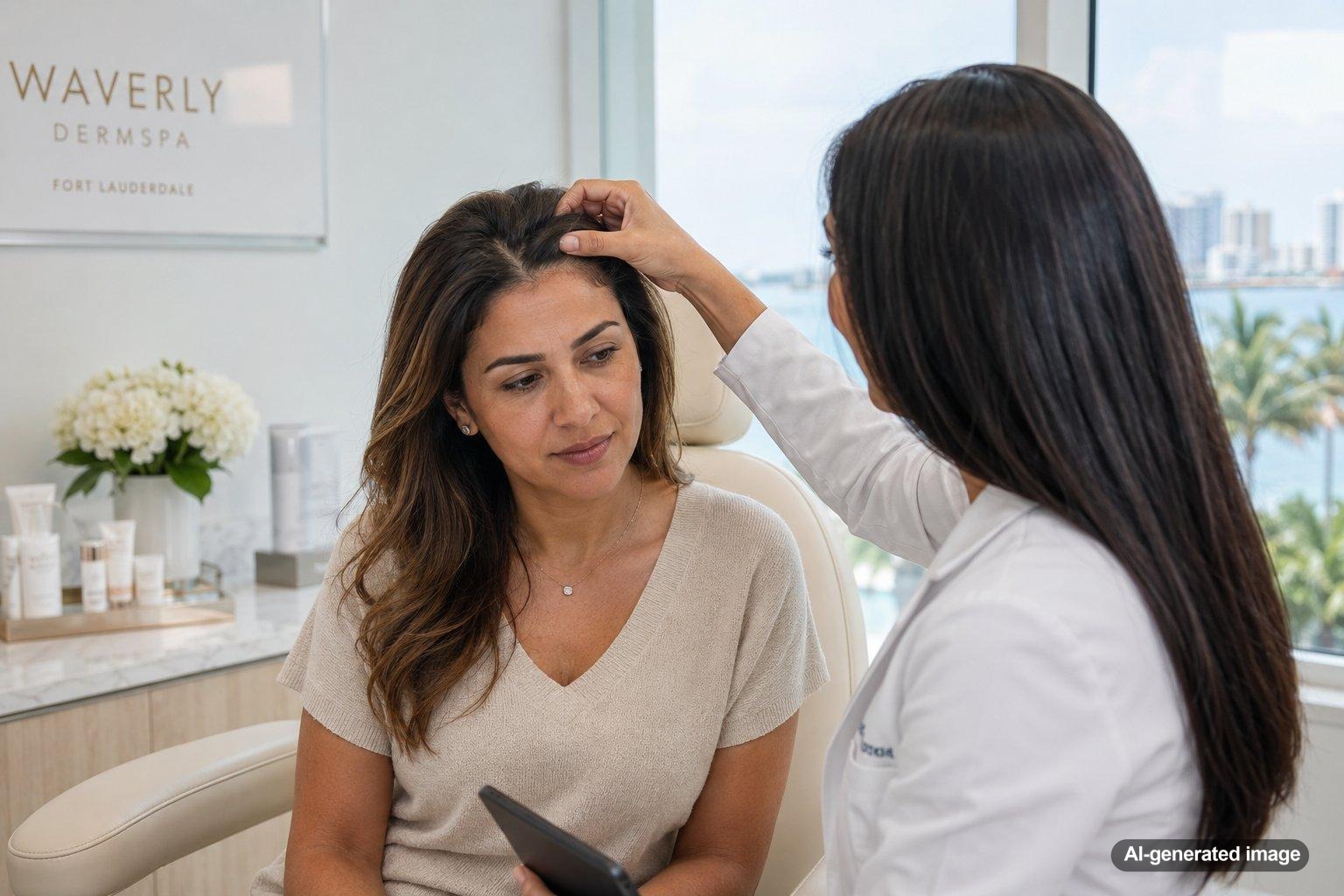
A tight or sore scalp can feel confusing, especially when there is no obvious rash, bump, or injury. Some people describe it as tenderness when brushing, a pulling sensation near the hairline, discomfort after wearing a ponytail, or a sensitive feeling that comes and goes.
Often, scalp tightness is related to styling tension, dryness, irritation, buildup, sun exposure, or inflammation. It can also be associated with conditions such as seborrheic dermatitis, eczema, psoriasis, folliculitis, or certain types of hair shedding. A dermatologist can evaluate the scalp, look for subtle clues, and help separate a temporary irritation from something that may need treatment.
Quick answer
- A tight or sore scalp may come from hairstyle tension, irritation, dryness, product buildup, inflammation, or sensitivity.
- Discomfort with flaking, redness, itching, bumps, crusting, hair shedding, or patchy hair loss is worth having checked.
- Gentle hair care and avoiding tight styles may help when the cause is mild irritation or pulling.
- A dermatologist can examine the scalp and discuss options if symptoms persist, recur, or worsen.
What scalp tightness or soreness can feel like
Scalp tightness is not one single symptom. It may feel like pressure, tenderness, burning, stinging, pulling, aching, or sensitivity when the hair is moved. Some people notice it only in one area, such as the crown, temples, hairline, or part line. Others feel it more diffusely across the scalp.
The scalp has many nerve endings, oil glands, hair follicles, and blood vessels, so small changes in the skin barrier or follicle environment can feel more noticeable than expected. The pattern, timing, visible skin changes, and hair care routine all matter.
Common causes or triggers
- Tight hairstyles: Ponytails, buns, braids, extensions, clips, and headbands can create traction and tenderness, especially when worn for long periods.
- Product irritation: Fragrance, dyes, sprays, dry shampoo, gels, or leave-in products may irritate sensitive skin or trigger contact dermatitis in some people.
- Dryness or barrier disruption: Over-washing, harsh shampoos, hot water, sun exposure, and low humidity can leave the scalp feeling tight.
- Dandruff or seborrheic dermatitis: Flaking, itching, redness, or greasy scale can be associated with soreness or sensitivity.
- Psoriasis or eczema: Inflammatory skin conditions may affect the scalp and can be associated with itching, scale, tenderness, or irritation.
- Follicle irritation or inflammation: Tender bumps, pustules, crusting, or soreness around hair follicles may suggest inflammation that should be evaluated.
- Hair shedding episodes: Some people notice scalp sensitivity during periods of increased shedding, though the cause can vary.
- Stress, headaches, or muscle tension: Scalp discomfort can sometimes overlap with tension-type sensations, jaw tightness, or neck strain.
What you can do at home
When symptoms are mild and there are no concerning skin changes, a conservative reset may help. Keep the routine simple for a short period and avoid anything that seems to trigger stinging, burning, or tenderness.
- Loosen hairstyles and avoid repeated pulling at the same area of the scalp.
- Pause new styling products, fragranced products, or harsh treatments if irritation began after a product change.
- Use a gentle shampoo and rinse thoroughly so residue does not remain on the scalp.
- Avoid very hot water, aggressive scrubbing, and scratching, which can make sensitivity worse.
- Protect the part line and exposed scalp from sun exposure with a hat or scalp-friendly sun protection.
- Do not pick at flakes, scabs, or tender bumps, since that can increase irritation.
If symptoms improve after simplifying your routine, you may be able to identify a styling habit or product that was contributing. If symptoms continue, return, or include visible changes, it is safer to have the scalp examined.
Professional options
Professional care starts with an exam and a careful history. Your dermatologist may ask when the soreness began, whether it is linked to styling, whether there is itching or flaking, and whether you have noticed shedding or patchy hair loss. In some cases, they may evaluate for inflammatory scalp conditions, contact irritation, follicle inflammation, or hair loss patterns.
Common options may include adjusting the hair care routine, using medicated shampoos, discussing prescription therapies when appropriate, or treating an underlying scalp condition. If hair shedding or thinning is part of the concern, your clinician can help decide whether additional evaluation is useful. At Waverly DermSpa, we offer PRFM for Hair Loss and can help you understand whether it may be appropriate.
When to see a dermatologist
Book an appointment if scalp tightness or soreness is persistent, worsening, or paired with other symptoms. A dermatologist can look closely at the scalp and help determine whether the discomfort is related to irritation, inflammation, infection, hair loss, or another cause.
- Redness, scaling, crusting, bleeding, or open areas
- Tender bumps, pustules, drainage, or warmth
- Patchy hair loss, widening part, or increased shedding
- Pain that is one-sided, severe, or new without a clear trigger
- Symptoms after a chemical service, hair dye, relaxer, or new product
- Scalp discomfort with fever, rapidly spreading redness, or significant swelling
FAQ
Can tight hairstyles make my scalp sore?
Yes. Pulling from tight ponytails, buns, braids, clips, or extensions can make the scalp feel tender or tight. Repeated tension may also contribute to hairline stress in some people, so loosening styles and changing where tension falls can be helpful.
Can dandruff make the scalp feel painful?
Dandruff and seborrheic dermatitis can be associated with itching, flaking, redness, and sensitivity. If over-the-counter approaches are not helping or the scalp feels sore, a dermatologist can evaluate whether another condition is contributing.
Why does my scalp hurt when I move my hair?
Tenderness when moving the hair may occur when the follicles or surrounding skin are irritated, inflamed, or under tension. Product buildup, tight styling, scalp inflammation, and certain shedding episodes can all be associated with this type of discomfort.
Should I be worried if my scalp soreness comes with hair loss?
Hair shedding or patchy hair loss with soreness deserves a dermatology evaluation. Many causes are manageable, but the right next step depends on the pattern, scalp findings, and medical history.
Can stress make my scalp feel tight?
Stress may contribute to muscle tension, headache patterns, or changes in skin sensitivity for some people. However, scalp discomfort should not automatically be assumed to be stress-related, especially if there are visible skin changes or hair loss.
Ready to get help?
Schedule an appointment or send a message and our team will get back to you.
Prefer to call? 954-666-3736
Disclaimer: This article is for educational purposes and is not medical advice. For diagnosis and personalized treatment, please book an appointment with a board-certified dermatologist.
Sources & further reading
- American Academy of Dermatology (AAD) – Seborrheic dermatitis: Overview
- DermNet – Scalp psoriasis
- Cleveland Clinic – Folliculitis
- American Academy of Dermatology (AAD) – Contact dermatitis
