

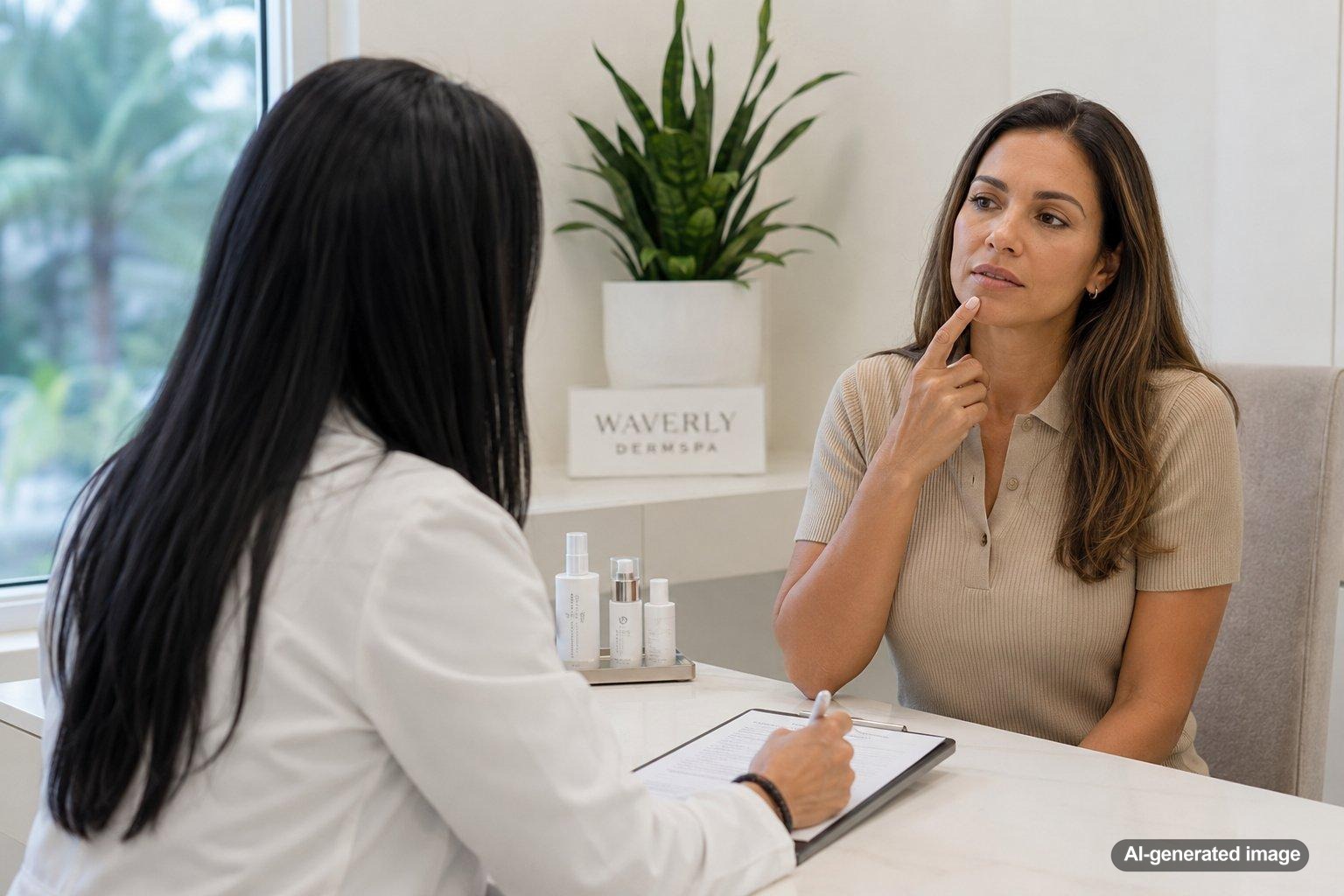
Pimples around the mouth can be frustrating because the area is exposed to so many everyday triggers: lip products, toothpaste, shaving, masks, food residue, and skin care that may be too active for the skin barrier. The answer is not always simple acne. Sometimes bumps around the lips or chin are clogged pores, and sometimes they may be irritation or a rash that only looks like acne.
A dermatologist can help distinguish between acne, perioral dermatitis, rosacea-like irritation, folliculitis, or another cause. That distinction matters because the most helpful plan for one condition may not be ideal for another.
Quick answer
- Pimples around the mouth may be related to clogged pores, irritation, hormonal patterns, shaving, lip products, or toothpaste residue.
- Small acne-like bumps with dryness, burning, or sensitivity around the mouth may be associated with perioral dermatitis.
- Heavy balms, comedogenic makeup, friction, and frequent touching can contribute to breakouts in this area.
- A gentle, simplified routine is often a good first step while you avoid picking or over-treating the skin.
- If the bumps are persistent, painful, spreading, crusting, or recurring, it is worth seeing a board-certified dermatologist.
What pimples around the mouth may be
True acne happens when pores become clogged with oil, dead skin cells, and inflammation. Around the mouth, this can show up as whiteheads, blackheads, inflamed bumps, or deeper tender spots along the chin and jawline. The pattern may flare around certain skin care products, makeup, sweating, hormonal shifts, or friction.
Another common possibility is perioral dermatitis, a rash-like condition that can cause small bumps around the mouth and sometimes near the nose or eyes. It can look similar to acne, but many people also notice dryness, sensitivity, scaling, burning, or a tight feeling. Because these conditions can overlap visually, guessing at home can lead to too many products and more irritation.
Common causes or triggers
- Heavy lip balms or ointments: Thick products can migrate beyond the lip line and may contribute to clogged pores in some people.
- Toothpaste or mouth products: Foam, flavoring, whitening ingredients, or residue around the lips can irritate sensitive skin.
- Skin care overload: Retinoids, exfoliating acids, scrubs, benzoyl peroxide, and multiple active products may be too much when the barrier is already stressed.
- Makeup and sunscreen buildup: Long-wear formulas, occlusive textures, or incomplete cleansing can leave residue around the mouth and chin.
- Friction: Masks, phones, chin straps, sports gear, instruments, or frequent touching can aggravate the area.
- Shaving or hair removal: Razor irritation, ingrown hairs, or post-wax sensitivity can create bumps that resemble acne.
- Hormonal patterns: Breakouts around the chin and lower face can be associated with hormonal fluctuations, though a clinician should evaluate persistent or severe patterns.
- Topical steroid exposure: Steroid creams used near the face may be associated with perioral dermatitis in some cases, so it is best to review use with a clinician.
What you can do at home
Start by simplifying. Use a gentle cleanser, a lightweight non-comedogenic moisturizer, and a broad-spectrum sunscreen that your skin tolerates. Avoid scrubs, picking, and layering several active ingredients at once. Around the mouth, less can be more, especially when the skin feels dry, tight, or reactive.
- Cleanse gently after sweating, wearing makeup, or using heavy sunscreen.
- Keep lip balm on the lips rather than spreading it onto surrounding skin.
- Rinse toothpaste residue from the corners of the mouth and chin after brushing.
- Pause harsh exfoliants if the area is stinging, peeling, or unusually sensitive.
- Choose products labeled non-comedogenic when possible.
- Change pillowcases regularly and avoid resting your chin in your hands.
If you already use prescription products, do not stop or change them without guidance from your prescribing clinician. If a product seems to trigger irritation, make a note of when it started and bring that information to your appointment.
Professional options
Professional care begins with identifying what the bumps most likely are. A dermatologist may evaluate the pattern, texture, symptoms, product history, medication history, and whether the bumps include clogged pores, pustules, scaling, or irritation.
Common options may include adjusting the skin care routine, recommending acne-focused topicals, discussing prescription therapies, or treating an acne-like rash differently if perioral dermatitis is suspected. For some patients, gentle in-office treatments may be part of a broader plan, but the right approach depends on the diagnosis and skin tolerance.
When to see a dermatologist
Consider scheduling an evaluation if bumps around the mouth keep recurring, are worsening, leave dark marks or scars, feel painful, burn, crust, ooze, or spread toward the nose or eyes. You should also get checked if you have tried multiple over-the-counter acne products and the area feels more irritated instead of calmer.
A dermatologist can help determine whether this is acne, perioral dermatitis, irritation, rosacea-like inflammation, folliculitis, or another concern. That clarity can help you avoid over-treating the area and choose a plan that fits your skin.
FAQ
Is acne around the mouth hormonal?
It can be, especially when breakouts cluster around the chin and jawline or flare in a pattern. However, mouth-area bumps can also come from irritation, product residue, friction, shaving, or perioral dermatitis. A dermatologist can help sort out the likely cause.
Can toothpaste cause pimples around my mouth?
Toothpaste does not cause acne for everyone, but residue around the lips and chin can irritate some people’s skin. Rinsing the area after brushing and keeping the skin care routine simple may help reduce irritation.
Should I use acne spot treatments around my mouth?
Use caution. Strong spot treatments can be drying, and the skin around the mouth may become irritated quickly. If the bumps are actually perioral dermatitis or irritation, aggressive acne products may make the area feel worse.
Why do the bumps come back in the same area?
Recurring bumps may be linked to repeated exposure, such as a lip product, shaving routine, mask friction, makeup, toothpaste residue, or hormonal patterns. Tracking products and habits for a few weeks can be useful to discuss with your clinician.
Can I cover the area with makeup?
Many people do, but choose non-comedogenic products when possible and remove them gently at night. If makeup stings, flakes, or seems to worsen the bumps, take a break and ask a dermatologist for guidance.
Ready to get help?
Schedule an appointment or send a message and our team will get back to you.
Prefer to call? 954-666-3736
This article is for educational purposes and is not medical advice. For diagnosis and personalized treatment, please book an appointment with a board-certified dermatologist.
Sources & further reading
- American Academy of Dermatology (AAD) – Red rash around your mouth could be perioral dermatitis
- Cleveland Clinic – Perioral Dermatitis: Treatment, Symptoms & Causes
- Mayo Clinic – Acne: Symptoms and causes
