

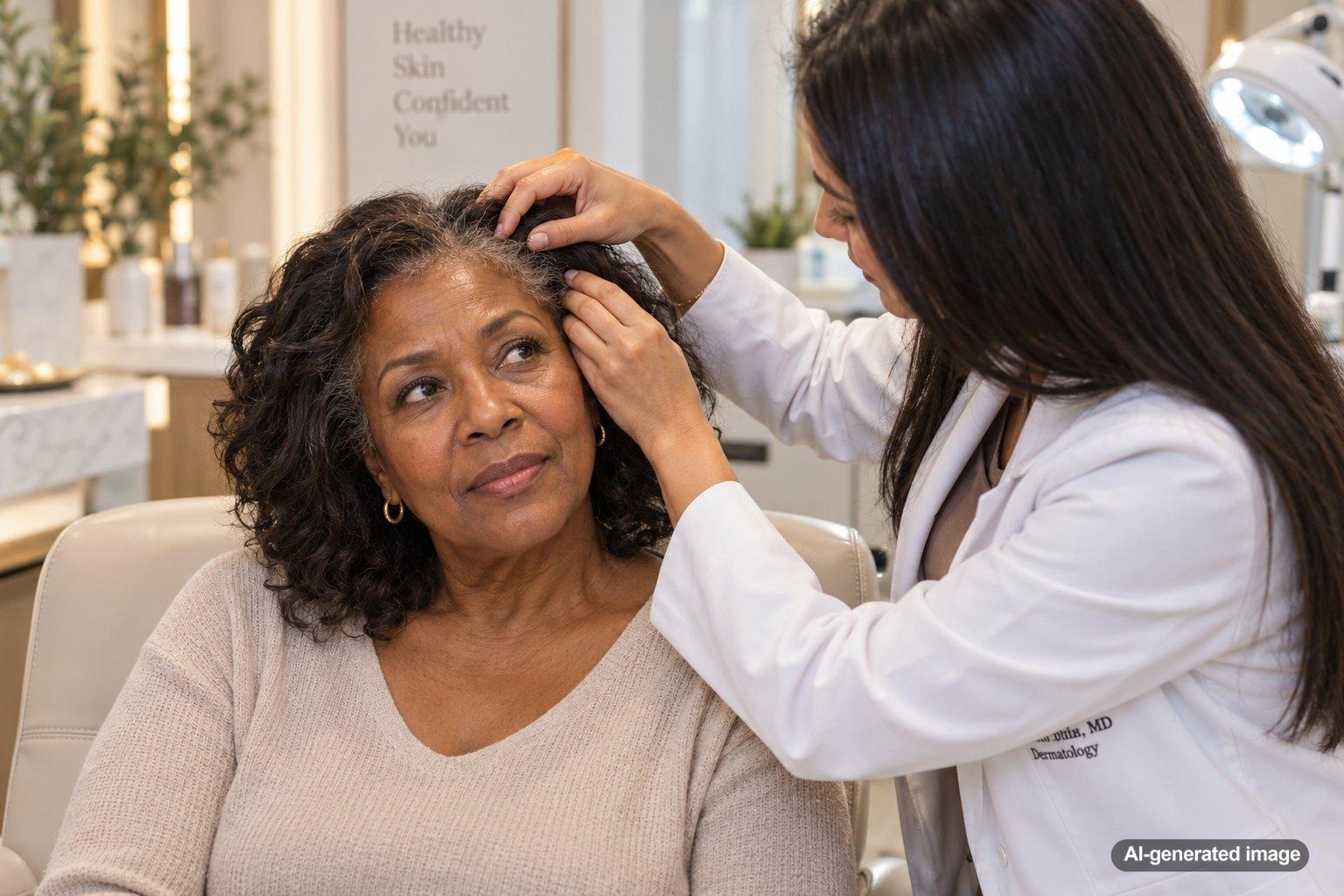
A single spot on your scalp can sometimes feel bruised, sore, or unusually sensitive even when you cannot remember bumping your head. That sensation does not necessarily mean there is a hidden bruise. Tenderness can come from the skin itself, an irritated hair follicle, repeated pressure, inflammation, or sensitivity involving nearby muscles or nerves.
What matters most is what the area looks and feels like, whether there are bumps, scaling, redness, hair changes, or drainage, and whether the discomfort is improving or becoming more noticeable. A dermatologist can examine the scalp directly when the cause is not obvious.
Quick answer
- A sore scalp spot can occur without any remembered injury.
- Common possibilities include friction or pressure, irritated hair follicles, reactions to hair products, or inflammatory scalp conditions.
- Tight hairstyles, hats, headbands, headphones, or sleeping repeatedly on the same area can sometimes contribute to localized tenderness.
- Persistent pain, swelling, drainage, a new lump, significant scaling, or hair loss deserves a closer look.
- If the area keeps returning or you are unsure what is causing it, a dermatologist can evaluate the scalp and help determine the next step.
Why can the scalp feel bruised without an injury?
The scalp contains many hair follicles, oil glands, small blood vessels, sensory nerves, and muscles beneath the skin. Because it is densely supplied with nerves, relatively minor irritation can sometimes feel surprisingly sore.
A tender area may therefore feel similar to a bruise even when there is no visible discoloration. The source can be superficial, such as irritated skin or a follicle, or it may relate to pressure and sensitivity in tissues beneath the scalp.
Common causes and triggers
- Pressure or friction: Tight hats, helmets, headbands, headphones, hair clips, extensions, or sleeping against the same spot may irritate a small area.
- Tight hairstyles: Ponytails, buns, braids, or other styles that pull on the hair can create tenderness around the follicles.
- Inflamed hair follicles: Folliculitis involves inflammation of one or more hair follicles. It may produce tenderness along with small bumps, redness, itching, or pustules.
- Hair product irritation: Hair dye, fragranced products, styling products, or a new shampoo can sometimes irritate the scalp. Tenderness may occur along with itching, dryness, or redness.
- Dry or irritated scalp: A compromised scalp barrier can become sensitive, especially after vigorous washing, scratching, chemical services, or environmental exposure.
- Scalp psoriasis: Psoriasis can cause inflamed, scaly areas of the scalp that may burn or feel sore. Some people develop only a relatively small patch.
- Muscle or nerve sensitivity: Occasionally, discomfort perceived on the scalp can be related to tension or sensitivity in nearby tissues rather than a visible skin problem.
What you can do at home
If the area is mildly tender and there are no concerning changes, start by reducing anything that might be irritating it. Avoid tight hairstyles, clips, hats, or headphones that put pressure on the spot. Handle the area gently when brushing or washing your hair.
Use a mild shampoo and avoid introducing several new scalp products at once. If a particular hair dye, spray, dry shampoo, or styling product seemed to precede the tenderness, consider pausing it until you understand whether it is contributing.
Try not to repeatedly press, pick, scratch, or massage the tender spot to check whether it still hurts. Frequent touching can prolong irritation and can make an inflamed follicle or sensitive patch more noticeable.
What a dermatologist may look for
A scalp examination can often provide useful clues. Your dermatologist may look for redness, follicular bumps, pustules, scaling, crusting, swelling, hair breakage, or localized hair loss. They may also ask whether you recently changed hair products, wore a tight hairstyle, had a chemical treatment, developed a rash elsewhere, or noticed other symptoms.
If inflammation, infection, psoriasis, or another scalp disorder is suspected, treatment depends on the underlying cause. Options can include changes in scalp care, medicated topical products, prescription therapies, or additional evaluation when needed. Because several conditions can look similar on the scalp, choosing treatment before identifying the cause can sometimes make irritation worse.
When should you see a dermatologist?
Consider scheduling an evaluation if the tenderness persists, repeatedly returns in the same location, or is accompanied by visible scalp changes.
It is particularly worth getting checked if you notice a growing or firm lump, spreading redness, warmth, swelling, drainage, crusting, open sores, significant scaling, unexplained hair loss, or worsening pain. Prompt medical attention is also appropriate if scalp symptoms occur with fever or you otherwise feel unwell.
A new scalp lesion that changes, bleeds, does not heal, or looks distinctly different from the surrounding skin should also be examined rather than assumed to be simple irritation.
FAQ
Can a tight ponytail make one part of my scalp feel bruised?
Yes. Repeated pulling on the same hair follicles can make a localized area feel tender. Loosening the hairstyle and giving the scalp a break may help if tension is the trigger.
Can an irritated hair follicle cause a sore spot?
It can. An inflamed follicle may feel tender before or along with a visible bump. If there is increasing redness, pus, spreading discomfort, or repeated episodes, a dermatologist can evaluate the area.
What if the scalp looks completely normal?
Scalp tenderness does not always produce an obvious visible change. Pressure, pulling, muscle tension, or nerve sensitivity may sometimes cause discomfort without a clear rash or bump. Persistent unexplained tenderness is still reasonable to have evaluated.
Can psoriasis make the scalp hurt rather than itch?
Yes. Scalp psoriasis can cause soreness or burning in addition to itching, flaking, and scale. A dermatologist can distinguish psoriasis from dandruff and other conditions that can look similar.
Should I squeeze a tender bump on my scalp?
It is generally better not to squeeze, pick, or puncture a scalp bump. Manipulating an inflamed follicle or lesion can increase irritation and may complicate an infection if one is present.
How long should I wait before having the spot checked?
There is no single timeline that fits every situation. Mild tenderness related to obvious pressure may settle after the trigger is removed. If the spot is persistent, worsening, recurrent, visibly changing, or associated with other symptoms, it is worth getting checked rather than continuing to watch it indefinitely.
Ready to get help?
Schedule an appointment or send a message and our team will get back to you.
Prefer to call? 954-666-3736
This article is for educational purposes and is not medical advice. For diagnosis and personalized treatment, please book an appointment with a board-certified dermatologist.
