

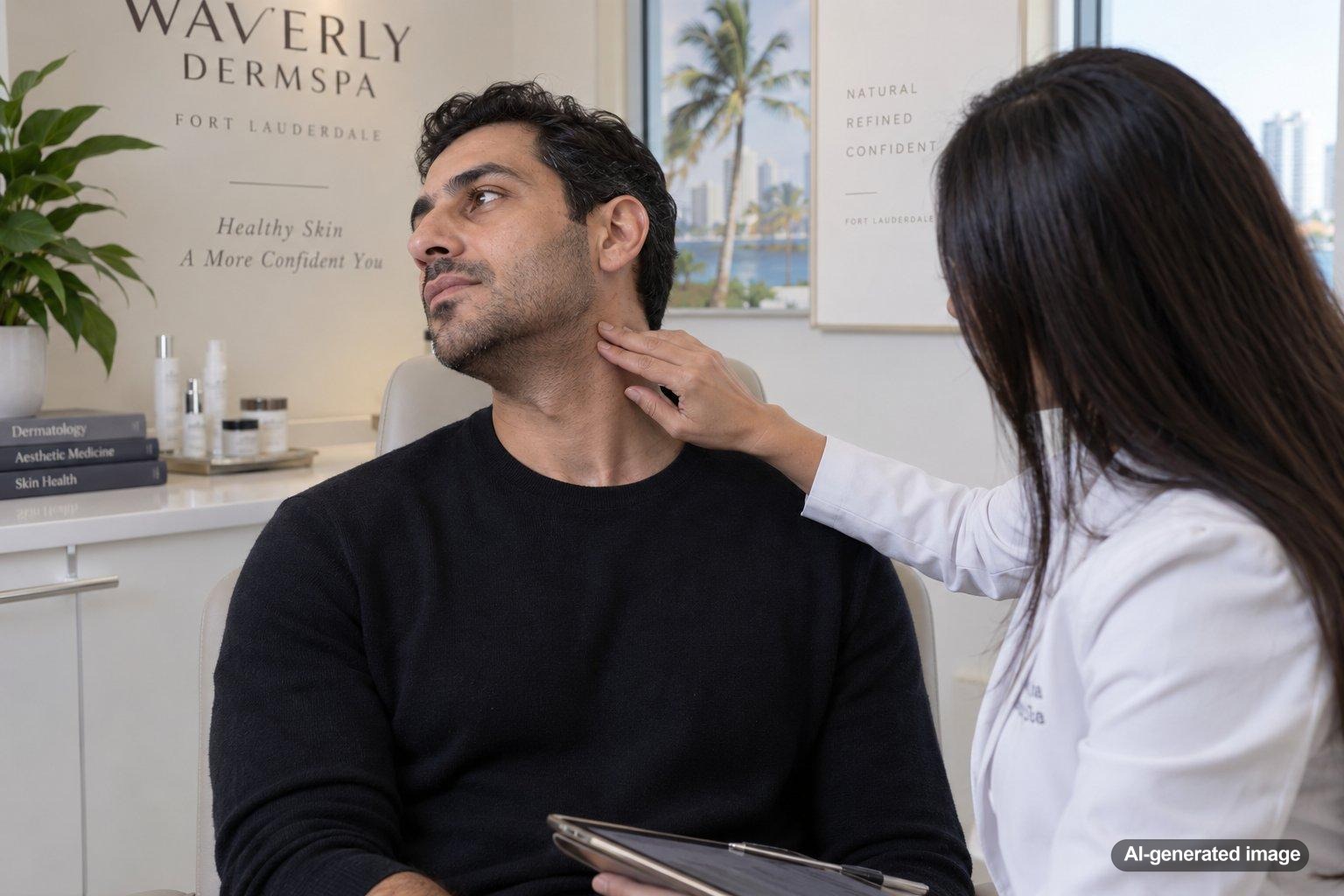
Your neck does not have to age symmetrically. It is common for one side to develop more visible lines, creases, or texture than the other because the two sides may receive different amounts of pressure, sunlight, movement, and daily friction over many years. Natural differences in skin, underlying tissue, and posture can add to the effect.
In many cases, mild asymmetry is simply part of how skin changes with time. What matters most is whether the difference developed gradually or appeared suddenly, and whether there are other skin changes that deserve a closer look.
Quick answer
- Sleeping repeatedly on the same side may reinforce creases where the neck folds against a pillow or bedding.
- One side of the neck may receive more cumulative sun exposure, especially during driving or regular outdoor routines.
- Posture, head position, muscle movement, and everyday habits can make folds more noticeable on one side.
- Natural differences in skin thickness, volume, and facial or neck anatomy can contribute to asymmetry.
- A sudden change, new lump, unusual discoloration, persistent irritation, or changing skin lesion should be evaluated rather than assumed to be ordinary aging.
Why neck wrinkles can be uneven
The skin of the neck is relatively thin and moves constantly as you turn, look down, sleep, exercise, drive, and use electronic devices. Over time, repeated folding can make certain lines easier to see. At the same time, age-related changes in collagen, elasticity, hydration, and the tissues beneath the skin may make existing folds more persistent.
Those influences are rarely identical on both sides. Even small differences repeated for years can create visible asymmetry.
Your sleeping position may play a role
If you usually sleep on one side, the same area of your neck may be compressed or folded for hours at a time. This does not mean side sleeping automatically causes significant wrinkles, but repeated mechanical pressure may make existing creases more noticeable in some people.
You do not need to completely redesign your sleep habits solely because of a few neck lines. If you notice a strong connection between your usual sleep position and the side with deeper folds, experimenting with comfortable position changes may reduce repetitive pressure.
One side may get more sun exposure
Ultraviolet exposure contributes to visible skin aging, including changes in texture, pigmentation, elasticity, and fine lines. Daily exposure is not always symmetrical. Driving, sitting near a bright window, walking the same route, or spending time outdoors with your body oriented in a familiar direction may expose one side more consistently.
Broad-spectrum sunscreen on the neck and other exposed areas, along with shade and protective clothing when practical, can help limit additional sun-related skin changes. Applying protection evenly matters, including along the sides of the neck rather than only the center.
Posture and repetitive movement can emphasize certain folds
People rarely hold their heads perfectly centered throughout the day. You may tilt toward one monitor, cradle a phone on the same side, turn toward a television, sleep with your head rotated, or habitually look over one shoulder while working or driving.
These movements can repeatedly fold the skin along slightly different patterns. Looking downward for long periods may also make horizontal neck creases appear deeper while the neck is flexed. Posture is only one factor, but it can help explain why lines do not look identical from side to side.
Natural anatomy is not perfectly symmetrical
Most people have subtle differences between the right and left sides of the face, jawline, neck, shoulders, and underlying soft tissues. As skin becomes less firm with age, those preexisting differences can become easier to see.
Changes in facial or neck volume may also alter how the skin drapes. Because these differences are individualized, photographs taken several years apart can sometimes be more useful than comparing the two sides in a mirror on a single day.
Daily skincare habits can be surprisingly uneven
It is easy to apply moisturizer, sunscreen, or other skincare products more thoroughly to one side without realizing it. Hair, clothing, jewelry, fragrance, collars, and cleansing habits can also create different amounts of friction or exposure across the neck.
A simple approach is to extend a gentle facial skincare routine down the entire neck, using products that your skin tolerates well. Moisturizer can support hydration and make dry fine lines appear less prominent, while consistent sun protection helps reduce additional ultraviolet exposure.
What you can do at home
- Apply broad-spectrum sunscreen evenly to exposed neck skin.
- Use a gentle moisturizer if the area tends to feel dry.
- Avoid aggressive scrubbing or repeatedly stretching the skin while applying products.
- Pay attention to habitual head positions during computer work, reading, driving, and phone use.
- If comfortable, vary sleeping positions rather than placing pressure on exactly the same area every night.
- Introduce active skincare products cautiously because neck skin may be more sensitive than facial skin.
More aggressive treatment is not automatically better. If a product repeatedly causes burning, significant peeling, or persistent irritation, it may be worth stopping it and discussing your routine with a dermatologist.
Professional options for uneven neck wrinkles
If neck lines bother you despite consistent skincare, a dermatologist can assess whether the main issue is fine surface texture, deeper creases, laxity, sun-related change, volume distribution, muscle activity, or a combination of factors. That distinction matters because different concerns may call for different approaches.
Depending on the individual, professional options may include topical skincare recommendations, resurfacing procedures, microneedling or other collagen-supporting treatments, energy-based treatments, or injectable approaches for carefully selected concerns. Neck skin requires thoughtful treatment planning, and not every procedure is appropriate for every person or every area of the neck.
At Waverly DermSpa, we offer Tetra CoolPeel CO2 and can help you understand whether it may be appropriate.
When to see a dermatologist
Gradually developing asymmetry in otherwise normal-looking skin is often different from a new or rapidly changing skin finding. Consider a dermatology evaluation if one side changes suddenly, becomes persistently swollen, develops a new lump, becomes painful, or has an area of skin that repeatedly bleeds, crusts, changes color, or otherwise looks distinctly different from the surrounding skin.
A dermatologist can also evaluate cosmetic asymmetry when you simply want to understand what is contributing to it and which options make sense for your skin.
FAQ
Can sleeping on one side cause deeper neck wrinkles?
Repeated pressure and folding during sleep may contribute to visible creases in some people, especially when combined with normal changes in skin elasticity. Sleep position is only one possible factor.
Can driving make one side of my neck look older?
Regular driving can create uneven patterns of sun exposure depending on vehicle position, window exposure, route, and time of day. Consistent sun protection on the entire neck is a practical way to reduce additional ultraviolet exposure.
Will changing my sleeping position erase the wrinkles?
Changing position may reduce repeated compression, but established wrinkles can have several causes and may not disappear simply from changing how you sleep.
Why are my neck lines deeper when I look down?
Looking downward naturally folds the neck skin. Existing horizontal creases can appear deeper in that position and become less prominent when the neck returns to a neutral posture.
Should I use the same anti-aging products on my neck as my face?
Some facial products can also be used on the neck, but neck skin may be more prone to irritation. Starting gradually and choosing gentle formulations can be helpful. A dermatologist can guide you if you are considering stronger active ingredients.
Can professional treatment make both sides look exactly the same?
The goal of cosmetic treatment is generally improvement rather than perfect symmetry. A clinician can assess the different factors affecting each side and discuss realistic options and limitations.
Ready to get help?
Schedule an appointment or send a message and our team will get back to you.
Prefer to call? 954-666-3736
This article is for educational purposes and is not medical advice. For diagnosis and personalized treatment, please book an appointment with a board-certified dermatologist.
